Share
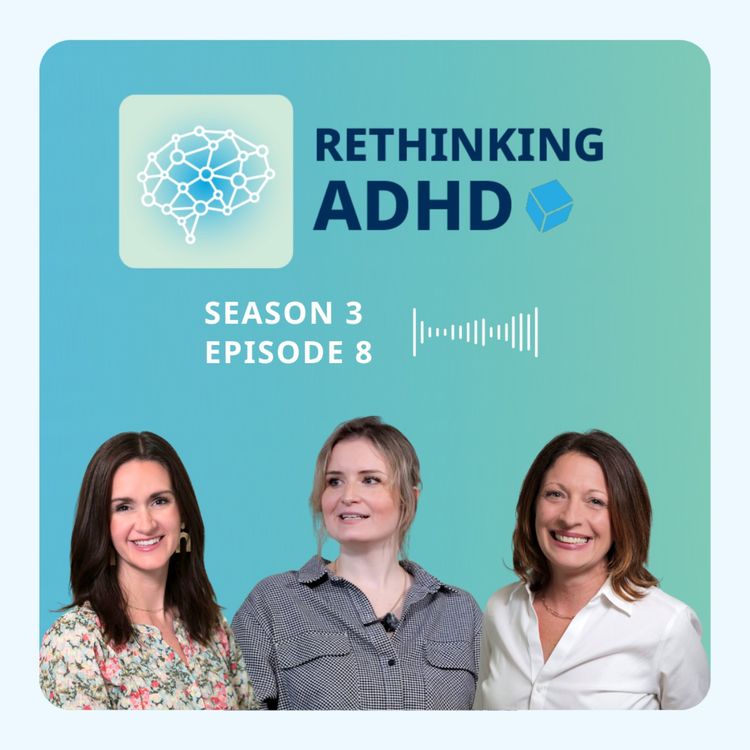
Rethinking ADHD Podcast
How virtual ADHD care helps clinicians reach more patients
Season 3, Ep. 8
•
In this video, we explore how virtual ADHD care delivery can help clinicians break down barriers for accessibility and quality of care for both providers and patients.
Watch the podcast: https://bit.ly/4tZWzeH
Topics covered:
– Why adopt a telehealth or virtual care model?
– Impact of virtual care on patient experience
– Role of technology and AI in ADHD care
Speaker Info:
🌟 Katie Hathaway: Development Manager, Qbtech
🌟 Charlotte Coates: Psychiatric Mental Health Nurse Practitioner, Founder & Clinical Lead, Legion Health
🌟 Danielle Vaeth: Head of Strategic Market Development, Qbtech
Who this is for:
Clinicians, pediatricians, psychiatrists, mental health professionals.
More episodes
View all episodes

What's a clinician's responsibility towards gathering patient history? | Mini episode
07:57||Season 3Accurately tracking ADHD symptoms from a patient’s early life can be challenging, especially if developmental history isn’t properly recorded. In this mini episode, our ADHD experts, Jess Brunet and Penny Lazell discuss what a clinician's responsibility is when gathering a patient's developmental history. For more insights into the ADHD world, check out our complete podcast discography – https://bit.ly/4wlNein
Growing an ADHD Practice: Marketing Tips for Clinics | Bonus episode
11:44||Season 3How do successful ADHD clinics attract the right patients while building trust with families?In this bonus episode of the Rethinking ADHD Podcast, Sadaf Hassan, Content Marketing Manager at Qbtech, is joined by Dr. Aaron Dodini to explore how ADHD clinics can grow through ethical marketing, clear patient communication, and a strong digital presence.In this episode, you'll learn:• Why marketing and branding matter for ADHD clinics• How to communicate ADHD services with empathy and clarity• Ways to build trust with prospective patients and families• Common marketing mistakes healthcare providers should avoid• Practical ideas for improving your clinic's digital presenceThis episode complements our guide, Marketing ADHD Services to Patients: A Guide to Branding and Communication Strategy, which explores practical marketing approaches for ADHD providers, including SEO, patient education, testimonials, and digital communications – https://bit.ly/44v8plKGuest: Dr. Aaron DodiniHost: Sadaf Hassan, Content Marketing Manager at Qbtech
10. The Future of ADHD Assessment with Qbtech: Research, Technology and Better Patient Care
22:08||Season 3, Ep. 10How do you turn promising research into technology that genuinely improves ADHD care?In this episode of Rethinking ADHD, Danielle Vaeth, Ragini Sanyal, and Robert Nolen explore the journey from clinical research to real-world implementation, and why innovation depends on both scientific evidence and feedback from clinicians and patients.The discussion covers the development of QbMobile, a new smartphone-based approach to ADHD testing, insights gained from Qbtech's global database of more than 1 million patient assessments, and how remote treatment monitoring is helping make ADHD care more accessible while supporting informed clinical decisions.If you're interested in digital health, ADHD assessment, objective testing, or the future of evidence-based ADHD care, this episode offers an inside look at how innovation is shaping the next generation of clinical practice.If you prefer watching podcasts, explore our YouTube Rethinking ADHD Podcast - https://bit.ly/4ydu0wF
How can Qb testing help empower ADHD patients? | Mini Episode
08:00||Season 3Katie Hathaway, Charlotte Coates, and Danielle Vaeth explore how virtual ADHD care and objective testing can help patients become more involved in their own treatment journey. Our experts discuss how virtual care models and tools such as QbCheck can make symptom data more accessible and easier for patients to understand. Helping patients to visualize symptoms as measurable data over time can empower them to become more involved in decisions over their ADHD care. The panel also considers what the future of virtual ADHD care may look like, including improved provider training, scalable care models, and using technology to support clinicians while preserving personalized care and clinical judgment. To watch their full podcast, visit: https://bit.ly/4avnNCd
How can technology support ADHD care delivery? | Mini episode
08:02||Season 3In this video, our expert panel discusses the changing role of technology in the ADHD clinic. Our experts discuss how technology can support measurement-based care, improve patient-clinician communication channels, and help standardize ADHD care. They see the clinician and technology co-piloting ADHD care, with clinical judgment supported by efficiency improvements and additional data, so that clinicians can use their time more effectively to care for patients. To watch their full podcast, visit: https://bit.ly/43UshyrSpeaker Info: 🌟 Katie Hathaway: Development Manager, Qbtech🌟 Charlotte Coates: Psychiatric Mental Health Nurse Practitioner, Founder & Clinical Lead, Legion Health🌟 Danielle Vaeth: Head of Strategic Market Development, Qbtech
Traditional ADHD care vs virtual ADHD care | Mini episode
07:44||Season 3In this video, Katie Hathaway, Charlotte Coates, and Danielle Vaeth explore how virtual models of ADHD care compare with traditional in-clinic workflows. The panel discusses how virtual ADHD assessment and treatment can help improve accessibility for patients in rural areas or those with transportation barriers. They also share experiences of how virtual care can improve flexibility around appointments and scheduling for both patients and clinicians, while giving patients more choice over the clinician they see. To watch their full podcast, visit: https://bit.ly/4eaZQ5h
What the future of ADHD looks like | Mini episode
15:24||Season 3ADHD care is evolving and clinicians are leading the change The shift toward data-driven titration reflects a broader evolution in ADHD care. Clinicians are no longer just managing symptoms; they’re optimizing outcomes, empowering families, and advocating for more precise standards of care. Watch the full discussion: https://bit.ly/4g4NYmE
My experience with Qb testing | Mini episode
11:58||Season 3Dr. James Wiley, Dr. David Aversa, and Qbtech's medical expert, Ragini Sanyal, discuss patient and clinician experiences of objective testing. Dr. Wiley shares the story of a patient experiencing worsening mood and anxiety problems, despite being on several psychotropic medications and ADHD stimulants. Insights from objective testing helped clinicians to adjust stimulant type and dose, allowing the patient to come off psychotropic medications and improve school performance. The panel also discusses how objective measures can support dose optimization, helping clinicians balance effectiveness without overmedication. Ragini Sanyal also shares insights from research on using QbCheck to monitor treatment response.Interested in such insights? Check out our Rethinking ADHD podcast hub for the latest episodes, practical insights, and honest conversations, by clinicians for clinicians: https://bit.ly/4vrK0J5
ADHD Medication Titration: Common Challenges Clinicians Face | Mini Episode
09:04||Season 3In this episode of Rethinking ADHD, leading ADHD experts discuss common challenges with titrating ADHD medication. They also discuss the role of objective ADHD measures in dose optimization and improving treatment confidence for clinicians, parents, and patients.Watch the full podcast: https://bit.ly/3RBdw0yTopics covered:– Why ADHD medication titration is highly individualized– The importance of finding the right dose for the right patient– Challenges with parent and teacher feedback during treatment– How objective measures can support clinical decision-making– Common concerns parents have about stimulant medication– Why “start low and go slow” matters in ADHD care– The role of metabolism, symptom response, and functional improvement in medication effectivenessWho this is for:Clinicians, pediatricians, psychiatrists, mental health professionals.