Share
The Reorient! Podcast
Episode 23/ Full Interview: Bryce Whitwam, China ad guru, on why China has leapfrogged the world in digital marketing
Published December 26, 2021
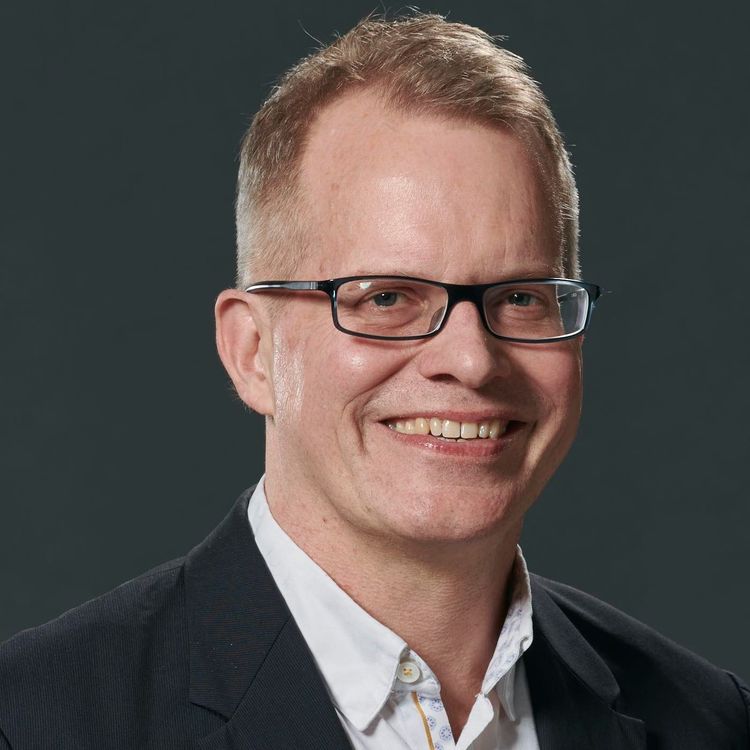
Shanghai-based Bryce Whitwam is an adjunct instructor of integrated marketing and communications at New York University. Prior to that he was the China CEO of MRM/ McCann, a leading data science, technology innovation and creatively-driven relationship marketing agency, and before that still, the CEO of Wunderman Greater China. He is a fluent Mandarin speaker and a 25-year veteran of the marketing communications business.
Whitwam is one of Asia's pioneers of non-traditional advertising, specializing in digital and data-driven marketing, retail communications and brand activation. His experience spans key categories, including automotive and telecommunications, and he has held senior management roles at Nielsen, Lowe and Ogilvy.
A keyboardist when he's not working, he has recorded 2 records in China and Taiwan with the band, "Identity Crisis." Recorded September 1, 2021.
Transcript
Jesse: All right, everyone. Good day. Good evening, everyone. Today is the 1st of September, 2021. And today I'm very pleased to have a very interesting guest named Bryce to have a very interesting guest Bryce Whitman, uh, join us who is an expert in marketing and advertising and China.
Bryce. Welcome to the reorient podcast.
Bryce W: Thanks, Jesse. I'm really happy to be here.
Jesse: Great. Well, um, so, uh, Bryce, I think people can tell from your name and your accent, that you're not originally Chinese, but your, uh, you spent a couple of decades, uh, even more in, in [00:01:00] China and the greater China region. Um, but you're originally from, I believe, South Dakota. Uh, so maybe share with us, uh, sort of briefly how a young man from South Dakota sort of unlikely journey to become a, uh, advertising and marketing guru in China.
Bryce W: Okay, so thanks Jesse. Appreciate it. And I will try to answer your question in the briefest, most interesting way possible, because anytime you tell your life story, you always, uh, always this tendency to go on and on and on. And normally my wife is next to me and she'll kick me under the table and say that’s enough.
Um, so yeah, so I, I. It literally, uh, I was, I graduated, uh, from the university of Minnesota with a Russian area studies degree. I was a Russia guy. Uh, I was unable to find any opportunities, uh, to go to the then Soviet union. So a professor [00:02:00] recommended that I go to China instead and it turned out. I found a teaching job in Beijing, uh, and that was a really enlightening experience. Uh, it wasn't a, let's say a financially viable one, but it really essentially changed my life. And after that, I moved to Taiwan, uh, for about three years where I studied Chinese. And later after that, I went back to the US and got my master's degree.
And that kind of started out my whole career plans. It was in my master's degree program that I found a love for marketing. Or you could say, I found that I wasn't very good at finance. So usually at that time you usually have this choice to do marketing or you do finance. And surprisingly, I was really good at marketing.
So I immediately thought, well, that's what I'm going to do. Uh, so I went back to Taiwan after graduating and I got a job at Nielsen, the marketing research company. I was pretty much in [00:03:00] retail software. Uh, I thought it was a very interesting, uh, chance to, to really, to get into, uh, marketing and advertising.
And it was there for about three years before I joined a company in Hong Kong that primarily did retail displays and merchandising for big brands like Coca-Cola and Procter and. And then later I was in Thailand and that was my real first advertising advertising job. I was at Lowe in Bangkok for five years.
Uh, after that, uh, I was recruited to, to China for obviously at that time, my, my, my Chinese is easily better than my Thai. And I took a job, uh, with Ogilvy in, in, in Shanghai about 2005. And I've been in Shanghai now for almost 16 years, doing various jobs in advertising and marketing. I've always stayed on the non-traditional advertising side because like in 2005, it was very niche.
Most [00:04:00] people in advertising business were doing television and print ads and doing the more, you know, Mad Men, Don Draper stuff. I was much more into digital and retail. I saw that as the kind of the future and about 2010, 2012, the market flipped. And suddenly the guys that were doing the digital and retail parts of the presentations to the clients, they got bumped up to the, to the front seat and the other guys got kind of pushed back.
And in a sense that hasn't changed since then. It's still very much a part of the China market now, which is very much digital e-commerce social media retail.
Jesse: So Bryce, that was a great summary. And one of the reasons I'm so excited to talk to you is because you have a really great, um, historical perspective on, uh, advertising and marketing in China, which is the biggest, fastest, uh, consumer market in the world, uh, for the last, um, probably three decades. So, um, when you arrived in, in, in Asia, um, obviously the US has been the leader or had been the leader, I should say, in mass marketing, right?
Because the U S in a sense developed, um, the, the idea of a mass consumer who you targeted to, you know, on a very broad geographic basis. So the US was very innovative and very, uh, had a lot of leadership in leveraging, you know, mass communications and conducting mass marketing strategies. [00:06:00] So could you share with us a little bit about when you first arrived in China?
Uh, to what extent were you deploying um, proven marketing and advertising models, frameworks templates from the U S into China. And to what extent, even in the early days, that wasn't the case. And then I'm sure it's, as you just mentioned now, and we'll get into sort of the digital transformation, uh, and, and, and, and the more sophistication of the China market, but bring us back to the early days of, of marketing advertising in China,
Bryce W: Sure. So upon arrival, uh, I worked, uh, in the department, uh, with Ogilvy.
Jesse: Just give us an idea of the arrival, like the timing the year
Bryce W: Oh, sorry. It's 2005 end of 2005. And, uh, at that time, uh, our agency was specialized in retail activation, uh, which was more about [00:07:00] non-advertising type of activation, either retail and some digital experiences. That's where our core focus was. So at that time, though, uh, advertising in China followed pretty much the same global model where you initiated a big idea through a campaign based upon an insight of a consumer.
And then from there you created an advertising campaign. 75% of it was on television. The other 25% was on non-traditional media. And then, uh, magic happened, consumers saw the ads and they went to the stores and bought the product. At that time, it was clear that no matter what you did in China, you would achieve success.
In other words, any good or bad ad would largely be successful because at that time, not only was the market opening up, but the market was expanding. So in tier [00:08:00] one in the large cities, uh, which were initially always the core focus in the beginning for most foreign consumer brands, but it became obvious that as the market, as the market developed that they needed to move beyond tier one, to tier two and tier down to tier seven.
So as the result of a distribution increase brands saw increase in sales. In other words, parallel to the marketing efforts we were doing, the brands were increasing their sales through distribution channels. So it always looked like the advertising was doing fantastic because the sale, the marketing people would come back from the clients to say, oh my God, that ad achieved 30% increase in sales.
Well, the reality is that the ad wasn't probably the result of those success. It was the distribution. Nevertheless
Jesse: In other words, [00:09:00] they were, um, attributing the entire, uh, amount of sales growth to a particular ad, while ignoring all of the physical infrastructure and distribution logistics, which would make products available to more consumers to buy, thereby increasing their sales.
Bryce W: Yeah, exactly. So, um, I obviously, I can't discount to say that the ads were useless and it had no, no purpose. No, that's not true. Definitely at that time, brands were starting to, uh, to, to foreign brands, definitely had a huge impact. And at that impact started to, at that point in time, started to become evident that retail, uh, and digital started to have much more of an important part in the consumer buying process.
It wasn't just the TV and print ads, but it was also the other things as well. And in that context, China followed very much the global model, which is that you needed to have an [00:10:00] integrated marketing solution if you wanted to be successful in China.
Jesse: So at what point did you see? Uh, sorry. Am I interrupting you?
Bryce W: no, no, go ahead.
Jesse: Okay. So at what point did you see, um, short of China, uh, having, um, its own unique approach to marketing and advertising where a, um, sort of the Wester,n American, uh, template or framework was no longer effective in China.
Bryce W: I think it was really when, I would estimate around 2015 was when you started to see the transformation. That was really at the growth and development of Weibo, WeChat and obviously Taobao, uh, those social media on one side and e-commerce on the other. And when you saw them completely take off, and at that point in time, you saw the power of [00:11:00] media being consolidated into the two players, Tencent and Alibaba and to a certain extent Baidu as well, uh, which is known as the BAT. And they started to really gain power around that time. And it's that time you started to see a flux fluctuation in media spend moving from traditional television, print radio. All those things started to quickly evolve into the non-traditional spaces, the e-commerce, the social, the digital, uh, and those things really started to flourish around 2015.
Jesse: So, um, I think most of our listeners will be familiar with, um, you know, Tencent and with Alibaba and WeChat and Alipay these and this concept of the walled garden, where you have a closed ecosystem that combines social media and payments, and a lot of other things, which is very [00:12:00] powerful, and in effect, China was the leader, uh, in developing those. But when we're looking specifically at the concept of marketing, and advertising, um, walk us through some of the, the key points of differentiation, uh, from a, let's say an advertising agency campaign when you're developing, uh, something for traditional media, television or prep, would you used to normally do and then moving into to the digital online?
Bryce W: I think the biggest difference, uh, normally is if to start off with, is if you look at a market like the United States, just as an example, uh, it's still, still media spends about 75 to 85% traditional television media. So in that sense, that China is about 30, 35%, uh, 25% traditional [00:13:00] media. And, uh, as of like 2021.
So in order to plan for a particular campaign, you have to be less reliant on, on a visual video advertisement than you used to be before. And in addition to that, that social media and within not only in e-commerce spaces, but within the social media platforms themselves have been places where consumers become aware of products, they consider them. They find out information about them. And the key difference here is that they immediately can purchase them. So, uh, so therefore the role of marketing and advertising has become one that effects that type of particular process. And in order to do that, companies use a variety of different mediums and channels to be able to actually affect the target audience.
If [00:14:00] you sit through a global presentation, a global media presentation that features an American market and a China market, the China market one will be 50 pages long. Whilst the Western one will be 10 or 15 pages. Why? Because there are so many different points of contact that you have to connect in order to be successful.
I did a research project recently for a major computer company that makes home printers. It turned out that the average Shanghai consumer will engage with 14 different channels, 14 in order to make that decision to buy that printer. That's completely insane. So from a planning perspective, you need to wait, I don't know, to be in 14, that's a bit of a stretch, but you need to be at least [00:15:00] in most of them in order to affect that consumer buying, uh, buying mindset. And
Jesse: Just to maybe make the point, uh, sorry to interrupt, but to make the point clear, perhaps to our listeners. So, um, this contrasts, maybe with the idea of doing one big, uh, television ad and then being present, say in a big box retailer, like, uh, you know, Circuit City or Best Buy where they can find your product in China, the consumer is going to be looking, or at least in Shanghai, according to the survey, the Shanghainese consumer, just to buy a home printer, which is not a huge purchase is going to be referencing 14 different online channels. Is that where we're talking about 14 different online, online, offline. 14 different online and offline channels, and they will, in order to sort of increase your chances of making them, uh, leading to a [00:16:00] successful sale to that consumer, you need to be present in many, most, or if not, all of those 14 channels.
Bryce W: The second, second factor is that that 75% of Chinese consumers don't trust social media ads. And by that what I mean is traditional advertisement. And as a result, uh, brands now are relying more on influencers either, either on, on celebrity influencers, the ones you read about, or, uh, now what's as popular is, uh, uh, key consumer influencers.
Jesse: I think it's called a key opinion, consumer KOC, key opinion consumers.
Bryce W: KOCs now are being employed.
Jesse: Right. So a a if I'm correct, an influencer would be like a celebrity who might, you know, be in the arts and entertainment where so key opinion consumer is, is perhaps more of a [00:17:00] normal person who, uh, like is really familiar with the particular kind of product that they consume.
Bryce W: Most, uh, brands, including the printer example that I just brought up, they will use about five or six levels of influencers. So the ones that you described are the very, very top. You probably use them on a shopping festival, like Double 11, uh, the Singles Day festival or a particular push to be able to create awareness. In the middle of that, here's a lot of other influencers, possibly people, uh, for example, people that are, are tech influencers, Chinese consumers buy printers because they want to print their children's homework directly from their WeChat on their phone to their printer. So obviously there could be educating educator influencers as well to say that this is the best printer to print, little Weiwei’s homework, and [00:18:00] then underneath it, you have these validated key opinion consumers who are the ones that say, “Oh my God, this is the best printer in the whole world. I love it.” Just more social validation.
Jesse: So it's a very complicated ecosystem as you're highlighting, uh, in this new, um, sort of social media, digital, um, uh, economy in China. Um, just to maybe take one step back and thinking about, um, sort of the theory of advertising, of the utility of advertising, um, it could serve multiple purposes. Um, and you've alluded to this because on the one hand, um, we want to generate sales, which can be measured, you know, on a daily basis, um, and perhaps linked to a campaign. But on the other hand, um, if you have a brand you want to build, um, a brand equity, longterm, [00:19:00] uh, awareness and a positive, um, impression in the minds of all stakeholders, right? That could be not just consumers, but maybe, you know, government officials, um, the employees themselves, you know, potential, um, recruits, you know, everyone to say, this is a great company, a great brand.
Do you, how would you sort of, um, when you look at the dual roles of advertising, marketing, how do, um, executives weigh those two and balance those two? Because clearly brand equity is a long-term proposition. And many people may not be around to enjoy the benefits of the brand equity. And it's, it's sort of intangible in a way, so it's difficult to measure.
So how do people approach that?
Bryce W: That's a great question, Jesse. I think that people approach it in the context that building brand equity [00:20:00] is looking at the entire customer experience and how your consumer connects with your brand. So that, and people always in China, uh, my students I'm teaching currently at NYU, my students, when I always ask them the question, what's your favorite brand? And 9 times out of 10, Apple always comes up. And I think what Apple does very well is in that context of brand building, they don't really run lots of television ads. Yes. They have a, uh, Chinese New Year, uh, film that they've they're famous for, but their brand equity is built upon customer experience.
And that comes into different places within the customer journey. When you, for example, when you get, you have an old phone, you get a new phone, the transfer of your data from your old phone to the new phone is a pain point that most consumers would have in the past. In the past. [00:21:00] I don't know if you're old enough, but literally transferring your phone book into your new phone was literally a nightmare.
And often times you had to re type in all your old data. That point, pain point has been fundamentally eliminated by Apple because of the iCloud and the ability to transfer all your data to your new phone. That is a customer that builds brand equity. How you walk into the Apple store and how you interact with the Apple store. And the simple fact that even in China, when you walk in, I've seen people walk into the Apple store with problems with their Huawei phones and people in the store will help them with their Huawei phones because they know Chinese consumers know about the level of service that's provided is extraordinary.
And those kinds of experiences will in effect, build that brand equity. So it's not necessarily a yes, it's an emotional connection, but Chinese consumers [00:22:00] especially will emotionally connect with your brand, not only from, uh, from the heart, but also from the head. And they will see how they can experience that product through different levels of the journey.
And they will base your brand equity on that. It's interesting to know that, the according to the WPPs brand Z, the consistent number one winning brand in China is WeChat. That's the brand, a brand that doesn't advertise a brand that yes, it's ubiquitous with your life. 90% of consumers open their phones on a daily basis to use WeChat, but why is WeChat number one? It's because it provides an extraordinary...
More episodes
View all episodes

39. E39/ Ni Hao, Mexico! Andrew Hupert explains why we should be looking at Mexico
58:37||Season 3, Ep. 39Welcome to the era of friend shoring and nearshoring. The breakdown of the supply chain during the pandemic highlighted the risk of concentrating your manufacturing base half way around the world. For many years now there have been growing headwinds for China-based exporters. Rising US-China tensions, increased labor costs, and less favorable local policies meant that factory owners needed to consider alternatives. While before that often meant another Asian country like Vietnam or Bangladesh, the passing of the United States-Mexico-Canada Agreement (USMCA) in 2019 cemented Mexico's role as a key supplier to the US market. We were fortunate to speak with an expert in this emerging trend, Andrew Hupert. Andrew has a unique background, combining academic understanding of trade, investment and negotiation, with many years living in China and other parts of Asia along with his current focus on how to navigate Mexico's industrial opportunities.He explains how the focus from Just in Time to Just in Case is shaping the the global logistics industry as well as China's involvement in Mexico.Andrew Hupert is an accomplished entrepreneur, lecturer, and writer who has over 25 years of international experience. He has lectured and taught courses on cross-cultural negotiation at some of the world’s top business schools such as NYU’s Stern School, Strathclyde University, and Hult International Business School. Now he spends his time in Mexico working with international businesses to improve their North American supply chains, and writing on the future of globalism, cross-culture negotiation, and trends in international supply chains.Andrew lived in Asia for over 20 years, with over 10 years of direct China experience. His first overseas experience was in the historical Japanese city of Kyoto, but he has also lived and worked in Taipei, Hong Kong, Chiang Mai, Hanoi, and Ho Chi Minh City. He returned to North America in 2021, when he moved to Mexico to assist international firms transition supply chains to Mexico and the US. He is a recognized leader in international negotiation and cross-cultural conflict management.Andrew has published books, including The Fragile Bridge – Conflict Management in Chinese Business, and regularly writes for well-known sites like China Law Blog, in addition to maintaining his site about North American Strategy Planning.38. E38/ Cooperation, Competition and Conflict: Scott Moore on US-China relations and Cross-border Threats
01:01:23||Season 3, Ep. 38E 38 / Cooperation, Competition and Conflict: Scott Moore on US-China relations and Cross-border ThreatsThe current state of US-China relations is poor to say the least. In addition to concerns over a potential conflict in Taiwan and opposing policies towards the war in Ukraine, we have witnessed a general deterioration in trust and willingness to partner in virtually any sphere. We are seeing a tit-for-tat sanctioning of companies, deemed "unreliable" or a threat to national security and the banning of Chinese app Tik Tok in parts of the US. High level and military-to-military talks are absent as is dialogue on any global issue. How did we get to this point and what path is their forward? To find some answers, join me for an informative discussion with Dr Scott Moore focused on his book, China's Next Act - How Sustainability and Technology are Reshaping China's Rise and the World's Future. Moore does an excellent job of explaining the importance of Public Goods and the importance of US-China relations to the containment of potentially civilization threatening issues. His perspective comes from a career looking at US-China relations through the prism of emerging cross border themes of environmental, technology, and biomedical developments. Having lived in Hong Kong and mainland China, Moore currently leverages his knowledge at the University of Pennsylvania to provide insights and encourage collaboration between various departments. Moore views Authoritarianism, Nationalism, Protectionism in China as the key barriers to achieving cooperation on pressing issues. And he promotes the concept of competition, while not ideal, as a potential useful dynamic to continue to tackle shared challenges.37. E37/ William H. Overholt: US-China, Broken Promises, and the March of History
01:29:09||Season 3, Ep. 37Dr. William H. Overholt is a distinguished Asia Expert with five decades of experience in research, analysis, and advisory for leading investment banks, think tanks, government and educational institutions. He is a prolific author with a broad set of knowledge and experience he leverages to bring insights into Asia's complex social and political context. Overholt's assessment of US-China relations is very sober. At the same time, he believes China's growth trajectory is declining and its long-term political structure is not guaranteed. In many ways, the cycle of history continues, something which Overholt has personally witnessed first hand. Dr. Overholt holds a research position at Harvard's Kennedy School and is Principal of AsiaStrat LLC, a consulting firm. Previously he held the Asia Policy Distinguished Research Chair at RAND's California headquarters and was Director of RAND's Center for Asia Pacific Policy.During 21 previous years in investment banking, he served as Head of Strategy and Economics at Nomura's regional headquarters in Hong Kong from 1998 to 2001, and as Managing Director and Head of Research at Bank Boston's regional headquarters in Singapore. At Bankers Trust, he ran a country risk team in New York and was regional strategist and Asia research head based in Hong Kong.At Hudson Institute in the 1970s Overholt directed planning studies for the U.S. Department of Defense, Department of State, National Security Council, National Aeronautics and Space Administration, and Council on International Economic Policy.Dr. Overholt received his B.A. (magna, 1968) from Harvard and his Master of Philosophy (1970) and Ph.D. (1972) from Yale.36. E36/ Managing the Dragon: A conversation with Jack Perkowski
01:05:08||Season 3, Ep. 36Jack Perkowski, aka Mr China, is among the best known US entrepreneurs focused on China. His journey to China began in 1990 when he left a successful career on Wall Street to pursue a dream. Perkowski understood the the power of long-term trends, in this case the development of China in the new era of Economic Reform and Opening up established by Deng Xiao Ping. After a couple of years of due diligence, he settled on the auto parts industry, where the government was eager for foreign technology, capital, and know-how. He founded ASIMCO in 1994, which developed into a unique organisation with 17 manufacturing plants across China.Perkowski recorded many of his experiences working in China in his book, Managing the Dragon: How I’m Building a Billion Dollar Business In China, published by Crown Publishing, a division of Random House, in March 2008. This is one of the best books I have read about doing business in China, full of insights into China's economic and political system, the challenges of Joint Ventures, and wisdom of succeeding in business. A former football player at Yale, Perkowski combines the grit of an athlete from Pittsburgh with the sophistication of an international financial and operational executive. And to top it off, he is a genuinely warm, earnest and optimistic man. I am sure you will enjoy this conversation.35. E35/ Sri Lanka's Political Upheaval: Kumudu Gunasekara Analyses the Situation
41:13||Season 2, Ep. 35Dr. Kumudu Gunasekera is a management consultant and strategic advisor to private equity firms, public and privately held corporations, and Fortune 100 global organizations. Throughout his career he has delivered actionable insights to clients worldwide. A proven problem-solver, his insights and perspectives have been published in multiple peer-reviewed journals and industry magazines. He has also instructed numerous undergraduate, graduate and professional courses while being an adjunct Professor at Boston University.He is currently is a Managing Director at Stax , a global strategy consulting firm that advices 100+ Private Equity firms and their portfolio companies. Prior to Stax, Dr. Gunasekera was a Principal Economist at Parsons Brinckerhoff (now rebranded as WSP), a leading global infrastructure group, in their Washington, D.C offices. Dr. Gunasekera is also the co-founder of Sri Lanka@100 a private sector led initiative for value creation of mid sized firms in Sri Lanka. In 2019, Dr. Gunasekera was recognized as one of the top 100 business leaders in the Sri Lanka. He was also a Past President of the American Chamber of Commerce; and is currently serving on the Board of Directors of John Keells Hotels, the largest luxury hotel chain in Sri Lanka with resorts in Maldives.Kumudu earned his Ph.D. in Economic Geography, and a joint M.A. in International Relations and Environmental Policy from Boston University. He has a B.A. in Economics from Hobart and William Smith Colleges.34. E34/ William Hayton on China, Southeast Asia and Nationalism (Full Episode)
01:07:02||Season 2, Ep. 34What is China? It is a simple question but one that cannot be properly without the help of reading Bill Hayton's book, 'The invention of China'. And, why is the conflict over sovereignty of the Spratly and Paracel islands and atolls so intractable? To understand this also requires reading another one of his works, 'The South China Sea, The Struggle for Power in Asia'.Bill Hayton is the prototypical guest on the Reorient! podcast -- accomplished, intelligent and possessing deep expertise and a unique perspective. I know of few authors with comparable breadth of experience reporting on geopolitical issues to a global audience and having a deep understanding of the history of Asia. Mr. Hayton's accomplished career as a journalist for the BBC began in the Middle East. His first assignment took him to Iran in 1995 to interview Ayatollah Ali Akbar Mohtashemi to ask him if he organised the Lockerbie bombing. In 1999, he shifted his coverage to European Affairs where he witnessed the struggle over the fate of the post-Soviet Republics, a focal point for Western audiences and policy makers. Mr Hayton arrived in Asia in 2006, where he reported from Vietnam, which had recently been re-engaged with the United States. He published his first book 'Vietnam, Rising Dragon' and notes that, even today, Vietnam remains a poorly understood country , despite being the 15th most populous nation and subject of many Hollywood movies. Hayton continues to offer insights into the nuances and rich history of countries in Asia with his soon to be released book 'A Brief History of Vietnam'. During our conversation Hayton helps to untangle and organise the concepts of peoples, nations, empires, cultures and civilisations. He also explains how narratives, interpretations and definitions of history play into political objectives and become their own source of conflict. His informed realism provides a framework and pathways to enhance our mutual understanding of this fascinating and complicated region. You can find more information on his website www.billhayton.com33. E33/ Cold Realism: David Goldman on US-China Relations (Full Episode)
54:25||Season 2, Ep. 33David P. Goldman is Deputy Editor of Asia Times, where he has written the "Spengler" column since 2000, and a Washington Fellow of the Claremont Institute. His books include How Civilizations Die (2011), It's Not the End of the World -- It's Just the End of You (2011), and You Will Be Assimilated: China's Plan to Sino-Form the World (2020). He publishes in The Wall Street Journal, Claremont Review of Books, First Things, Tablet Magazine, Law and Liberty, PJ Media and many other venues. He was global head of fixed income research at Bank of America and global head of credit strategies at Credit Suisse, among other senior positions in finance. He won Institutional Investor magazine's award for General Strategy, one of the highest honors in investment research.32. E32/ How to Prevent a Financial Cold War from Turning Hot (Full episode)
51:44||Season 2, Ep. 32Book Synopsis:Financial Cold War: A View of Sino-US Relations from the Financial Markets"James Fok’s book highlights the explosive risks in the relationship between the US and China today. It also offers insights into fundamental driving forces of international frictions and is a call to take urgently necessary steps to address the sources of conflict."- Klaus Schwab, Founder and Executive Chairman of the World Economic ForumPlease click on the following link for more background on Mr. Fok: https://www.linkedin.com/in/james-fok-24082237/31. Episode 31/ Full Interview: Ambassador Ted Osius on Vietnam and Unlimited Possibilities
01:00:43||Season 1, Ep. 31A diplomat for nearly thirty years, Ted Osius served from 2014 to 2017 as U.S. ambassador to Vietnam, a country he has loved since serving there in the 1990s, when he helped open the U.S. Consulate General in Ho Chi Minh City and was one of the first U.S. diplomats at the U.S. Embassy in Hanoi. Leading a mission team of 900, Ambassador Osius devised and implemented strategies to deepen security ties, sign tens of billions of dollars’ worth of commercial deals, expand educational exchange, conclude agreements on trade, law enforcement, environmental protection, and address honestly a difficult past. Ambassador Osius’ leadership helped bring about a positive transformation in U.S.-Vietnam relations.As he worked to improve U.S.-Vietnam relations, Ambassador Osius came to know the heroes who sought to reconcile our nations, including John Kerry, John McCain, Pete Peterson and Le Van Bang. Under four Presidents and seven Secretaries of State, Ambassador Osius contributed to reconciliation not just between governments, but between former combatants, and the people of both nations. The first openly gay U.S. ambassador to serve in East Asia, he was only the second career diplomat in U.S. history to achieve that rank.Ambassador Osius earned a Bachelor’s degree from Harvard University, a Master’s degree from Johns Hopkins University’s School of Advanced International Studies, and an Honorary Doctorate from Ho Chi Minh City University of Technology and Education. A member of the Board of Governors of the American Chamber of Commerce Vietnam, Ambassador Osius loves all kinds of travel, biking, sailing, theater and photography. He is married to Clayton Alan Bond; the couple has a three-year-old daughter and four-year-old son.