Share
RA Exchange
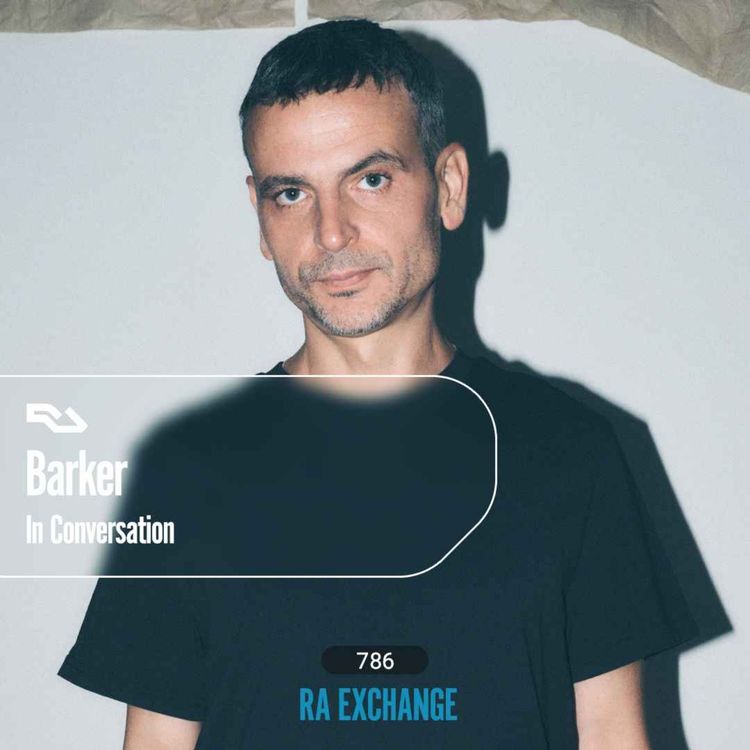
EX.786 Barker
The Leisure System co-founder talks psychology, behavioral science and his standout album of the year, Stochastic Drift.
Sam Barker's influence on contemporary electronic music culture spans many levels—not only as a producer and DJ pushing against traditional genre boundaries, but also as key figure behind the scenes as head of the label Leisure System. He came into RA HQ to talk about the central thesis in his current work: exploring organic, human timing in a genre that has become increasingly obsessed with mechanized grids.
The Berlin-based artist tells us about how he puts this theory into practice in his standout album of the year, Stochastic Drift, and his recent collaborative project with saxophonist Bendik Giske. Beyond the technical, he also reflects on the evolution of the Berlin scene, the surprising arguments for liberation in the streaming economy and the role of art in imagining a utopian future. Listen to the episode in full.
More episodes
View all episodes
9. EX.815 Saul Williams & James Massiah
42:24||Season 4, Ep. 9Kicking off a run of artist-on-artist Exchanges for RA25, the musical multi-hyphenates discuss poetry, religion and their experiences as protectors of oratorical tradition.There's a deep creative current running between music and poetry, and Saul Williams and James Massiah know those waters well. This week’s RA Exchange is the first in a series of intergenerational artist-on-artist conversations we’ll be running to mark our 25th anniversary. In it, Williams—the Grammy-nominated poet, musician, writer and actor—and Massiah—a South London poet and musician—talk about lyricism and what first drew them to the written word. Both grew up in the church: Williams as the son of a Baptist preacher, Massiah in the Seventh-day Adventist church, raised on the King James Bible. They discuss how those upbringings shaped their sense of oratory and morality, and the tension between rejecting institutional religion and still holding on to its aesthetic traditions.They also get into what happens when a poem meets music, and what a dance floor can be beyond entertainment. Williams argues it has always been a training ground: a space for resistance, ceremony and mobilisation, where ideas can spark minds and movements. Massiah, meanwhile, explains how simply wanting to keep partying ended up radicalising him. As he puts it: "Where are we going to party if the bad guys have got all the good party locations?"The conversation was recorded in Amsterdam, where Williams performed with Underground Resistance. His new album, Leap Life, is out now on Big Dada. Listen to the full episode.
8. EX.814 Syd
54:02||Season 4, Ep. 8The frontwoman of Grammy-nominated The Internet talks ambition, contentment and her third solo album, Beard.Syd, born Sydney Bennett, is nearly 20 years into a career that started when she was a teenager. She cut her teeth as the in-house engineer and DJ for hip-hop collective Odd Future before forming The Internet, the Grammy-nominated soul group that helped shape a strand of Los Angeles R&B in the 2010s. Two solo albums followed—Fin in 2017 and Broken Hearts Club in 2022—but she describes her third, Beard, as the first that feels fully her own. She made it in the same period she married her partner and, by her own account, arrived at a version of self-acceptance she'd been circling for a decade.In this Exchange, Syd sits down with RA's Content Production Lead Antonia Odunlami to talk about the album's title, a reference to the facial hair she stopped removing after years of treating it as something to hide. They also discuss letting go of who she was "supposed" to be, why she's stopped chasing the "sleep when you're dead" ambition she was raised on, and her plans to get back behind the CDJs after years away. Listen to the full episode.
7. EX.813 Marlon Hoffstadt
01:15:39||Season 4, Ep. 7The trance DJ on clickbait journalism, commercial success and making a name in the viral age.Marlon Hoffstadt started DJing at 17. By 18, he got his first taste of moderate success, and at 20, it had all disappeared. What followed was several years in the trenches: demos ignored, labels uninterested and a career that seemed to be ending before it even took off. Hoffstadt went back to study journalism and PR, became a dad and continued to make music no one wanted to release. Then, somewhere at the intersection of the post-pandemic landscape and the rise of the TikTok influencer, he re-emerged as DJ Daddy Trance, a hands-in-the-air commercial DJ headlining festivals around the world.This uncanny shift has made him the subject of sharp criticism from some figures in the underground scene where it all started for Hoffstadt. In this RA Exchange, the Berlin native directly addresses his detractors. He also talks about how he's channeled Berlin's underground sensibility into the world of expensive tickets and stadium-scale production; what changed between his throwing no-phone parties in 2019 and dominating a scene that profits from video reels; and his reaction to some of Resident Advisor's recent posts and articles—and what he, as a former PR professional, would have done differently. His new album, Das ist Daddy, is out now on Capitol Records. Listen to the episode in full.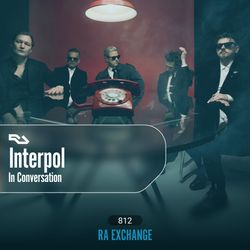
6. EX.812 Interpol
55:19||Season 4, Ep. 6Frontman Paul Banks on the legacy band's creative evolution, why he prefers hip-hop to rock and their new album, This Mirror Weighs a Ton.Interpol might not be electronic in the traditional sense, but they've long been the techno fan's indie band of choice. Cofounded by lead singer Paul Banks and guitarist Daniel Kessler in 1997—Banks is the lyricist, Kessler the composer—they emerged in Manhattan's burgeoning guitar music scene. Their 2002 debut, Turn On the Bright Lights, is widely considered one of the defining albums of the decade, and landed them in the middle of the early-'00s New York rock revival alongside The Strokes, Yeah Yeah Yeahs and LCD Soundsystem. They went on to shape the moody, post-punk revival canon that defined the following decade.Interpol are now back with an album that's been called their best in years: This Mirror Weighs a Ton. In this Exchange, Banks unpacks the LP's conception and composition with producer Andrew Wyatt—best known for his work with artists like Bruno Mars, Charli xcx and Dua Lipa—and its darker lyrical meditations on drone footage, mediated violence and the surveillance state.Banks also reveals the version of himself that isn't typically in the press cycle. Outside of Interpol, the singer is an avid beatmaker who hasn't listened to rock music in over twenty years. He DJs hip-hop under the name Fancypants, released a sample-based mixtape featuring US rapper Talib Kweli and has collaborated with everyone from Wu-Tang's RZA to Kool Keith, Ghostface Killah and Method Man. In this conversation, he explains why he thinks hip-hop is the only genre still meaningfully inventing language—and what that means for the band he's been fronting for nearly 30 years. This Mirror Weighs a Ton is out now on Partisan Records. Listen to the episode in full.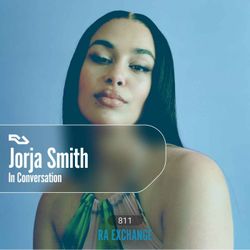
5. EX.811 Jorja Smith
43:16||Season 4, Ep. 5Jorja Smith's career took off in 2016, when "Blue Lights" introduced her voice to a global audience. In the 10 years since that single went stratospheric, the Walsall-born artist has released three albums, collaborated with Drake, Burna Boy, Wizkid and Ezra Collective, and built an international career without ever signing to a major label.Her third album, What Are The Odds, marks a new chapter, as she turns towards the dance floor. Made entirely with producer P2J, the record draws from a broad palette of sounds, including UK garage, funky and Afro house. Smith has described it as music to make people move, and she'll take the tracks to London's O2 Arena next summer for the first headline show at the venue of her career.In this Exchange, Smith talks to RA's Antonia Odunlami about growing up in the public eye, moving back to Walsall after London became too much and protecting the parts of herself she wants to keep private. She also discusses remaining independent, learning to set goals and how she curated her recent All Points East set.Listen to the episode in full.
4. EX.810 SHERELLE
01:06:24||Season 4, Ep. 4The British jungle star reflects on grief, artistic integrity, bass communities and why slowing down has become central to the next phase of her career.In 2019, SHERELLE's life changed when a viral Boiler Room set introduced her high-speed blend of jungle, footwork and hardcore to a global audience. This much we know. So what comes after the storm?In the 2020s, the Londoner has become one of the most recognisable figures in UK dance music: major festival stages, a BBC Radio 6 Music show and even a MOBO award. Yet after putting herself through over 100 shows a year, and turning 30, she began to question the pace of life as a touring DJ. The deaths of two close family members over the past 12 months brought those questions into focus, reshaping how she thinks about DJing, friendship, club culture and what she wants to leave behind.In this Exchange, SHERELLE speaks with RA Editor Gabe Szatan about learning to take pride in her achievements, resisting the pressure to turn music into social media content and giving UK bass artists their flowers while they're still here.She also discusses Hooversound—the label she runs with NAINA—racial and class hierarchies that shape dance music, and Rest & Restoration, her new party built around longer sets, affordable tickets and a simple philosophy to slow down, and make time for the people you love.Listen to the episode in full.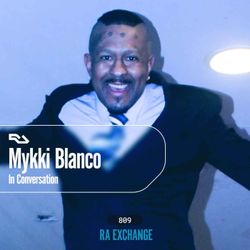
3. EX.809 Mykki Blanco
41:57||Season 4, Ep. 3The US musician, poet and performance artist reflects on "queer rap,” the industry that boxed him into it and the reinvention he's built on the other side.A consummate multi-hyphenate, Mykki Blanco (formerly she/her, now he/him) came up in a specific New York moment: the early '10s crossover between queer nightlife, noise and a rap underground that was just beginning to loosen its grip on who was allowed inside. Alongside artists like Le1f, Zebra Katz and Cakes da Killa, Blanco was lumped into a "queer rap" wave that acquired a cult following around the world, propped up MySpace and Tumblr.The co-signs came fast and from unlikely places. Blanco opened shows for Björk, Diplo and Major Lazer, collaborated with Madonna and spent seven months working closely with Kanye West. But he stayed outside the mainstream—partly by design, and partly because the industry of that era wasn't willing to let a Black queer rapper be anything other than a Black queer rapper.In this Exchange, Blanco reflects on the music industry's prejudices and limitations, and on how he's risen above them. After a few years off the touring circuit, he's back with a new album and a new sound. Café Paradiso, out in early September, is shaped less by the aggression that fuelled his early work, and more by solitude and mid-career reflection. He talks about his reinvention and more: the freedom that's come from leaving rap, the blueprint he laid for a whole generation of queer artists coming up behind him and what working with West actually looked like from the inside. Listen to the episode in full.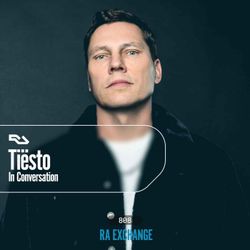
2. EX.808 Tiësto
59:23||Season 4, Ep. 2Decades after walking away from trance, the superstar DJ unpicks the machinery behind his own brand, and what a career spent at the top actually costs.Tiësto has been one of the biggest DJs in the world for the better part of 30 years. Since the '90s, the Dutch artist has been part of an elite inner circle who dominate major festival bills, residencies in Ibiza and Las Vegas, and command some of the most astronomical fees in the industry. Even if he isn't part of your regular listening diet, you've almost certainly heard his music on the radio or pouring out of bars and clubs around the world.It's easy to forget, though, that he made his name in trance—a genre he publicly walked away from more than a decade ago, saying he'd done what he wanted with it and wouldn't be going back. As of this summer, he's finally changed his mind, announcing his return with a set at Silverworks Island in London.In this Exchange, he talks about being inspired by the new wave of trance DJs and the artists putting a modern twist on the genre. He also reflects on the years before Tiësto was Tiësto: cleaning club bathrooms, selling records to Jeff Mills as a young store clerk, producing gabber under a secret alias and being inspired to take up DJing after seeing Sven Väth play live. Listen to the episode in full.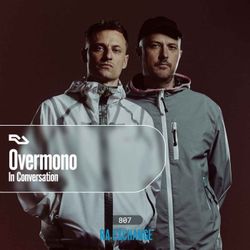
1. EX.807 Overmono
01:00:13||Season 4, Ep. 1The British sibling duo talk creative process, stepping away from successful solo projects and their new album, Pure Devotion, on XL Recordings.Tom and Ed Russell are brothers who spent the first decade of their careers working separately, building solo careers with real underground momentum. As Truss, Tom made techno on labels like Perc Trax and R&S. As Tessela, Ed put out jungle and breaks on Poly Kicks and his own label, All Caps. Both walked away from them after a week in a Welsh cottage in 2015, when they wrote the material that would form the foundations of Overmono—today, one of the most popular projects in dance music today.What binds them now is a set of self-imposed rules, designed to produce interesting accidents out of the studio. On their new record, Pure Devotion, that meant engineering genuinely out-of-the-box experiments: baking a crash cymbal in the oven overnight to see how would change with heat; running tape past magnets to erase half of what they were recording as they recorded it; and writing 84 versions of one album track, "Nights in Shining Prada," before settling on one that would make the cut. The brothers write obsessively in studios, hotels, airplanes and tour buses, a shared instinct honed to the point that they rarely disagree during the production process.In this Exchange, RA Editor Gabe Szatan sat down with Tom and Ed to reflect on some of their more surprising musical inspirations, letting go of other people's opinions and summoning the courage to walk away from two solo careers that were arguably at their peak. Pure Devotion is out August 7th on XL Recordings. Listen to the episode in full.