Share
Radio Schuman
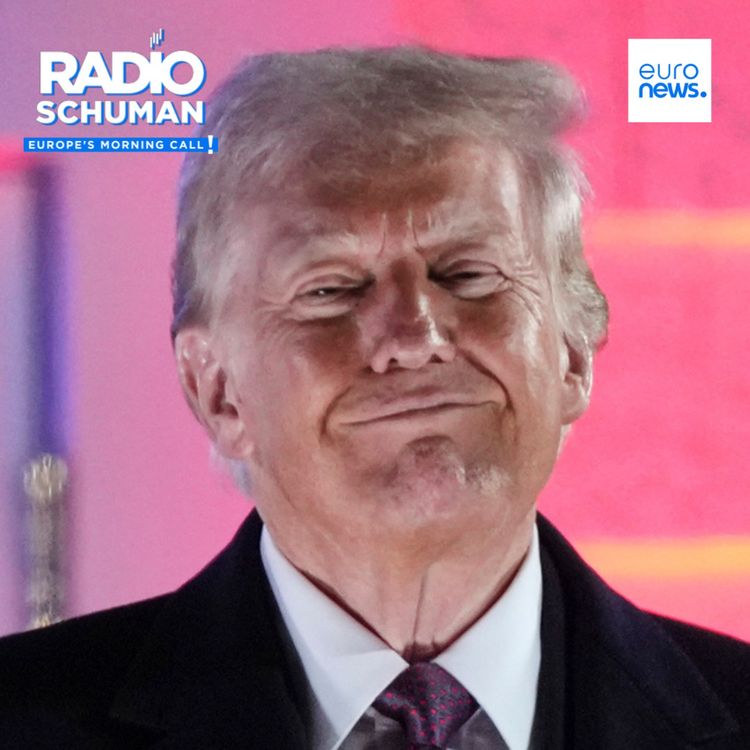
The enduring friendship of ECR and Trump’s Republicans
Which EU politicians will attend the inauguration of Donald Trump as president of the United States today and why are the European Conservatives and Reformists so tight with the Republicans? Questions Radio Schuman answers today.
Although foreign heads of state and government are generally not invited to US presidential inauguration ceremonies, numerous European politicians will attend Donald Trump’s swearing-in event.
Among them are prominent right-wing leaders such as Italian Prime Minister Giorgia Meloni, Spain’s Santiago Abascal, and France’s Marion Marechal.
Many of these individuals are affiliated with the third and fourth largest factions in the European Parliament: the Patriots for Europe and the European Conservatives and Reformists (ECR).
Sources indicate that a majority of ECR leadership will attend, including newly elected president Mateusz Morawiecki, as well as vice presidents Carlo Fidanza, Marion Marechal, and George Simion.
Additionally, several lesser-known Members of the European Parliament (MEPs) such as Rihard Kols from Latvia, Dominik Tarczynski from Law and Justice, and Croatia’s Stephen Bartulica are expected to participate. While the Patriots for Europe is a relatively new group, the ECR, founded in 2009, has developed long-standing ties with the Republican Party.
Today Radio Schuman explores the connections with Euronews reporter Vincenzo Genovese.
We also take a quick look at the agenda of the day, including the European Parliament plenary session in Strasbourg and the meeting of EU finance ministers of the Euro area.
Additionally, Radio Schuman explores those parts of Europe where flights experience more turbulence.
Radio Schuman is hosted and produced by Maïa de la Baume, with journalist and production assistant Eleonora Vasques, audio editing by David Brodheim. Music by Alexandre Jas.
Europe Today is Euronews’ daily podcast hosted by Maria Tadeo and Méabh Mc Mahon, broadcasting directly from Brussels, at the heart of Europe.
Every morning, we deliver the top and exclusive stories shaping the European Union (EU) and beyond.
Stay ahead with the key news and insights that matter in Europe today.
More episodes
View all episodes

81. Trump backs down on Iran again as Hormuz set to reopen after ceasefire deal
19:15||Season 3, Ep. 81About this episodeAfter threatening to destroy Iran's civilisation, Trump backed down again as Iran and the US reached a temporary ceasefire deal that will see the Strait of Hormuz reopen—at least provisionally. Our correspondents Jane Witherspoon, Omid Lahabi and Stefan Grobe analyse the deal and break down the first reactions from Europe and the Middle East. And as the Hungarian elections approach this Sunday, our Sándor Zsíros reports on US Vice-President JD Vance’s visit to Budapest, where he is endorsing current Prime Minister Viktor Orbán. Also on this episode of Europe Today: Member of the European Parliament Marc Botenga (The Left group) joins to react to both the US–Iran ceasefire deal and the vote in Hungary, and our Jakub Janas explains whether Trump can pull the US out of NATO, as he has threatened.80. JD Vance visits Budapest ahead of Hungarian parliamentary elections
20:14||Season 3, Ep. 80As Hungary heads into a crucial parliamentary election this Sunday, US Vice President JD Vance arrives in Budapest to back Prime Minister Viktor Orbán — even as his party trails in the polls and security concerns emerge over explosives found near a key gas pipeline. Meanwhile, global instability deepens with EU Council President António Costa warning against targeting civilian infrastructure after Donald Trump escalates rhetoric toward Iran, raising fears of wider regional conflict. We bring you the latest developments from Doha. Plus, as attention remains fixed on Ukraine and the Middle East, we turn to Sudan — where a devastating civil war continues largely out of the spotlight. We have an exclusive interview with Sex in the City star and UNHCR ambassador Kristen Davis about her recent visit to Sudan.
Hungary gets ready to vote: Inside a toxic campaign
07:57|Sunday, 12 April 2026, will be a crucial day for the European Union, as Hungarians head to the polls for parliamentary elections. Hungary’s current prime minister, Viktor Orbán, leader of the eurosceptic Fidesz party, will be challenged by Péter Magyar, leader of the Tisza party and a former member of Orbán’s own party. To better understand what’s at stake for Budapest and Brussels, we sit down with Euronews’ EU correspondent Sandor Zsiros.This is an extract from the weekly Euronews podcast Brussels, My Love?. To continue listening, visit the Brussels, My Love? feed on your favourite podcast app. You can also find us on YouTube and on our website.78. EU calls for urgent de-escalation of war in the Middle East
19:21||Season 3, Ep. 78Ongoing tensions in the Middle East dominate today’s episode, as European leaders call for urgent de-escalation following overnight strikes in Tehran and Beirut. We have an update from Dubai where residents are facing unprecedented disruptions. Meanwhile, EU foreign ministers gather in Kyiv to push for accountability over alleged Russian war crimes, while Israel faces growing international criticism over the reinstatement of capital punishment for Palestinians. Plus, a major political scandal shakes Hungary just days before a pivotal election. And from Rome, as Easter approaches, we look at Pope Leo XIV’s potential role in calling for peace — and what’s next for EU efforts on religious freedom.77. EU foreign ministers show up in Ukraine with lots of words but limited action
19:25||Season 3, Ep. 77With the Middle East conflict deepening, we hear how deadly strikes in Lebanon have killed more UN peacekeepers and displaced over a million people. We bring you an exclusive interview with Lebanon’s Justice Minister on the humanitarian toll and regional fallout. Meanwhile, G7 leaders signal readiness to stabilise volatile energy markets — but offer few concrete steps. So what does that mean for your energy bills? Our reporter Jakub Janas unpacks the growing economic pressure across the EU. And in Ukraine, European foreign ministers gather in Kyiv to mark the anniversary of the Bucha massacre, as questions grow over continued support, shifting alliances and the future of the war.76. EU agriculture ministers meet in crisis mode over rising food and oil prices
19:47||Season 3, Ep. 76On Europe Today, this Monday, we report on the escalating tensions in the Middle East as Israel signals an expansion of its military campaign. We break down the latest developments, including the humanitarian toll in Lebanon and emergency G7 talks to contain a growing energy shock. Plus, a diplomatic row erupts over Palm Sunday events in Jerusalem and Cyprus navigates its EU Council presidency amid conflict. Our guests include the EU commissioner for the oceans Costas Kadis and the Irish minister for State Timmy Dooley.75. One month of war in Iran
19:11||Season 3, Ep. 75Four weeks after the death of Iran’s Supreme Leader Ali Khamenei, the Middle East conflict is escalating — disrupting global energy supplies and shaking financial markets. G7 foreign minsiters meet in France today, as Donald Trump signals a pause in strikes on Iran, pushing for a diplomatic breakthrough. But can the US convince its allies it has a real plan? Meanwhile, the war in Ukraine continues to spill beyond its borders, with new security concerns across Europe. We have an update from Helsinki.74. Daily life on hold in Southern Lebanon
19:11||Season 3, Ep. 74With global tensions rising, G7 foreign ministers gather in France for urgent talks on the wars in Ukraine and the Middle East. We’ll break down what’s at stake — and where divisions remain. We also have an update on Hungary who face serious allegations of breaching EU trust, raising fresh questions about unity inside the bloc. We speak to former European Commission President José Manuel Barroso. And on the ground in southern Lebanon, we have a live update from our correspondent Ekbal Zein. Based in the city of Tyre in Southern Lebanon, we hear how daily life has shut down in the usually bustling coastal city73. Frederiksen set to remain as Danish PM as tensions mount over Hungary leaks
19:14||Season 3, Ep. 73On this episode of Europe Today, we analyse the Danish parliamentary elections and why current Prime Minister Mette Frederiksen is set to remain in her role, despite her party — the Social Democrats — securing their worst result since 1903. Benny Engelbrecht, Member of the Danish Parliament, gives us his take on the outcome. We also debrief on rising tensions over Hungary leaking sensitive EU information to Russia, with the country’s foreign minister at the centre of the backlash just weeks ahead of a crucial election. Jakub Janas looks at where the story began, while Maria Tadeo reports on the latest developments. On the Iran war front, the conflict has now entered its 26th day, and our correspondent in Dubai, Jane Witherspoon, brings us the latest. Barham Salih, United Nations High Commissioner for Refugees, joins us for an interview to discuss the humanitarian situation in the region resulting from the US–Israeli war on Iran.