Share

Punkast
Caroline Collett (Writer)
Punkast is a weekly podcast exploring punk in the historical present through critical conversations, inquiry, and collaboration.
>>> Follow the show to stay tapped in. New episodes every Friday.
In this episode:
Jessica Schwartz speaks with writer Caroline Collett about the ways lived experience, memory, and writing shape how punk becomes cultural history. Drawing from Caroline's teenage diaries, they revisit the people, places, politics, and everyday details of first-generation punk while considering what firsthand accounts can reveal that later histories sometimes leave behind.
Moving between intimate memories of punk gigs in late-1970s Britain and Caroline's contemporary reflections on the early UK and US scenes, they explore punk's different cultural and political roots, the exchange of ideas across the Atlantic, and the tension between individual experience and collective memory. The conversation ultimately asks not only how we remember punk, but what its DIY, subversive, and liberatory impulses can still offer the present and future.
Caroline Collett grew up in the North of England and studied languages at Oxford University before beginning a career in television, where she wrote music news for MTV Europe and worked as a presenter and producer. She later worked as a publicist and copywriter for artists, designers, and architects and is now focused on her own writing. Her manuscript, What Do I Get?, brings together original teenage diary entries with contemporary reflections on first-generation punk, its politics, style, culture, and continuing significance.
Recorded June 2026.
Links + References:
X - https://x.com/CollettWriter
Bluesky - https://bsky.app/profile/collettwriter.bsky.social
Instagram - https://www.instagram.com/caroline_r_collett/
Website -
https://www.carolinecollettwriter.com/
Caroline Collett on Punk Scholars Podcast:
Credits:
Punkast is hosted and produced by Jessica Schwartz.
Editorial support: Melanie Hui – audio editing, episode notes, and audio-synced transcript.
Transcript:
Theme Music:
Lady Bits, "Bitch-a-thon," Lady Bits.
Related:
Jessica Schwartz co-hosts the Punk Scholars Podcast.
Connect with Punkast:
Instagram: punkastucla
Stay tapped in.
More episodes
View all episodes
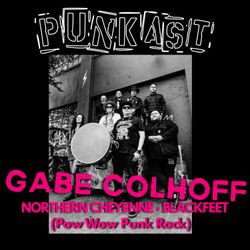
Gabe Colhoff (Northern Cheyenne · Blackfeet) (Pow Wow Punk Rock) with Kristy Martinez
54:49|“If someone in the sweat goes down, you pick them up. Well, then I'd go to these punk shows ... you're shoulder to shoulder with your people.”“So us walking into clubs with like hats and braids and stuff and everyone's just like, where's your mohawk, bro? And like, I don't, I don't, I have braids dog.”Continuing Punkast's guest-hosted conversations highlighting Indigenous creativity and music, guest host and producer Kristy Martinez, UCLA PhD candidate, musician, and archivist, speaks with Gabe Colhoff of 1876, an Indigenous punk band based in Portland, Oregon. Gabe traces his musical upbringing through powwow music, hip-hop, punk, ska, and two-tone, recalling the connections he found between Northern Cheyenne ceremonial life and punk shows through singing, community, and mutual care. They discuss forming 1876 during the pandemic, DIY recording, and the Pow Wow Punk Rock EP series, which brings powwow drumming, traditional languages, and experimental sounds into punk.Kristy and Gabe also discuss the women who shaped his life and music, from relatives featured on the band's album covers to “Nississa,” a song on which Kristy collaborated. Their conversation explores songwriting, Indigenous representation, resistance, censorship, and the contradictions of punk scenes that don't always live up to their stated commitments. Moving through touring, festival politics, and community organizing, they consider the relationships and responsibilities that sustain 1876's music across Turtle Island.About the guest1876 is an Indigenous punk band founded by Gabe Colhoff in Portland, Oregon, in 2020. The band proudly represents the Northern Cheyenne, Blackfeet, Comanche, Kanaka Maoli, Pikanii, Siksika, and Tsitsitsas nations. Playing across Turtle Island, from sweat lodges to punk clubs, 1876 infuses rebellious, aggressive punk rock with powwow drumming, traditional languages, and experimental sounds, drawing on ska, hip-hop, and hardcore. Through music, visual art, and community work, the band brings attention to Indigenous experiences and narratives often neglected by the music industry while giving back to its communities. They have performed and collaborated with Lo Ca$h Ninjas, Subhumans, Total Chaos, the Casualties, Patrick Stump, and others.Guest host and producerKristy Martinez is a UCLA PhD candidate in Musicology, vocalist, and archivist researching punk, emo, and subcultures in Southern California through music, ephemera, placemaking, and visual culture. Raised in the San Gabriel Valley, with family roots in Sonora, Mexico, she founded the DIY Indigenous Punx Archive, documenting Indigenous punk through flyers, photographs, videos, and band histories. The archive has been featured at the Punk Rock Museum in Las Vegas and the Denver Art Museum.Recorded September 2026.Content note: This episode includes discussion of violence against women, the Highway of Tears, police brutality, and political conflict.Links + References1876 — Official Website1876 — InstagramBandcamp: 1876Indigenous Punks Archive CreditsPunkast is hosted and produced by Jessica Schwartz.Guest hosting, production, and audio editing: Kristy Martinez.Transcript:Audio-synced transcriptTheme Music:Lady Bits, "Bitch-a-thon," Lady Bits.Related:Jessica Schwartz co-hosts the Punk Scholars Podcast.About Punkast:Punkast is a weekly podcast exploring punk in the historical present through critical conversations, inquiry, and collaboration.Connect with Punkast:SpotifyInstagram: punkastuclaEmail: punkastucla@gmail.comStay tapped in. New episodes every Friday.
Viki Eagle (Sicangu Lakota) (Rez Metal) with Kristy Martinez (Guest Host)
01:13:22|“And she wore this Iron Maiden T-shirt and she wore these Navajo moccasins. And I was like, wow, that's like the coolest picture to this day that I think I've ever taken.”In recognition of Indigenous Peoples' Day and the upcoming Native American Heritage Month, Punkast welcomes Kristy Martinez, UCLA PhD candidate and researcher, as guest host and producer for conversations with Indigenous scholars, musicians, and community organizers across punk and adjacent scenes.Kristy speaks with Viki Eagle (Sicangu Lakota), a photographer, anthropologist, and educator whose work explores Indigenous creativity, alternative music, and community. Growing up in Denver's urban Native community, Viki found belonging in the punk, emo, and metal scenes along Colfax Avenue. These experiences inform her research documenting rez metal in the American Southwest through photography, ethnography, and community engagement.Kristy and Viki discuss how journalists, filmmakers, and academics represent Indigenous metal communities. While acknowledging hardship, loss, and resistance, Viki challenges narratives that overshadow musicians' artistry, joy, and community. They explore Indigenous visibility, media stereotypes, and Viki's photography project Real Life Indian, which challenges conventional images of Native identity. From an Iron Maiden T-shirt paired with Navajo moccasins to everyday portraits, Viki emphasizes self-representation, consent, and community relationships.The conversation also moves through Indigenous punk, metal, and emo; academic research; and the importance of creating spaces for musicians, students, and communities to connect. Kristy and Viki discuss rez metal concerts, the UCLA symposium, all-ages shows, DIY organizing, and bringing Indigenous music and knowledge into university spaces. They consider everyday acts of resistance and close with recommendations for Indigenous punk and metal bands worth discovering.Content note: This episode includes brief discussions of Indian boarding schools, forced relocation, school shootings (including Columbine), mental health, suicide, and stereotypes linking emo and metal to self-harm.About the guestViki Eagle is a Sicangu Lakota and Japanese photographer, anthropologist, and educator from Denver, Colorado. Her project Real Life Indian documents contemporary Indigenous lives and challenges stereotypes of Native identity. Her research explores rez metal through photography and ethnography, and she organizes concerts and community programs connecting Indigenous musicians, scholars, and audiences.Guest host and producerKristy Martinez is a UCLA PhD candidate researching Indigenous punk, alternative music cultures, and BIPOC emo communities in Southern California. As guest host and producer, she brings her research, musical knowledge, and relationships with Indigenous scholars and artists to Punkast.Links + References:Real Life Indian - Viki EagleNative Bruins: Viki Eagle - UCLA American Indian Studies CenterAncestor's Rez Metal: (Re)Mapping an Indigenous Sonic ResistanceCredits:Punkast is hosted and produced by Jessica Schwartz.This episode is guest-hosted, produced, and edited by Kristy Martinez.Transcript:Audio-synced transcriptTheme Music:Lady Bits, "Bitch-a-thon," Lady Bits.Related:Jessica Schwartz co-hosts the Punk Scholars Podcast.About Punkast:Punkast is a weekly podcast exploring punk in the historical present through critical conversations, inquiry, and collaboration.Connect with Punkast:SpotifyInstagram: punkastuclaEmail: punkastucla@gmail.comStay tapped in. New episodes every Friday.
"Women in Punk" Part 2 (Punk@50)
44:11|“Because it was a do-it-yourself thing where we just rejected the norm and did our own thing.” In Part 2 of the Women in Punk panel, recorded live at the Goethe-Institut Los Angeles as part of Alle gegen Alles. Punk@50, Jessica Schwartz continues the conversation with Pleasant Gehman, Jula Bell Liebi, and Tequila Mockingbird, with additional contributions from Cloudia Wintermute of Die Schlaflosen (Sleepless) and Stella Stray Pop of KXLU. Moving through stories of music, friendship, touring, and artistic influences, the participants reflect on the relationships and creative encounters that shaped their experiences of punk.The conversation turns toward women’s experiences in bands, the artists who inspired them, and the ongoing work of making things. From Bowie, Exene Cervenka, Chrissie Hynde, Nina Hagen, and Lydia Lunch to stories of touring, performing, writing, dancing, and recording, the panelists consider what punk made possible and how those experiences continue to inform their creative lives. Tequila discusses Punk School and her work preserving punk histories, while the conversation opens onto the possibilities of contemporary tools for independent music-making.As the discussion moves toward archives, ephemera, and intergenerational exchange, the panelists reflect on what they saved, what they learned, and what younger artists are making possible today. Stella Stray Pop joins the conversation near its conclusion, sharing memories of KXLU, independent radio, and the freedom to play music outside commercial formats. Collectively, these stories return to punk as an ongoing practice of creativity, community, and doing things for oneself—together.“Women in Punk” is part of Alle gegen Alles. Punk@50, a project of the Goethe-Institutes in the United States and Mexico marking the 50th anniversary of punk through a series of exhibitions, concerts, film screenings, and discussions that focus on punk as a subculture, protest movement, and catalyst for self-determination.Featuring:Tequila MockingbirdJula Bell LiebiPleasant GehmanAdditional participants:Cloudia Wintermute — Die Schlaflosen / Sleepless Stella Stray Pop — KXLU 88.9 FM Los AngelesModerated by Jessica Schwartz.Introduced by Luisa Rath-John, Director, Goethe-Institut Los Angeles (Part 1).Recorded live at the Goethe-Institut Los Angeles, September 2026.Links + References:Alle gegen Alles. Punk@50Women in Punk — Goethe-Institut Los AngelesStray Pop — KXLU / SpinitronDie Schlaflosen / Sleepless — Official WebsiteCredits:Punkast is hosted and produced by Jessica Schwartz.Editorial support: Arrow Menendez– audio editing and audio-synced transcript.Panel photograph by Gary Leonard @tmpgaryleonard.Transcript:Audio-synced transcriptTheme Music:Lady Bits, "Bitch-a-thon," Lady Bits.Related:Jessica Schwartz co-hosts the Punk Scholars Podcast. About Punkast:Punkast is a weekly podcast exploring punk in the historical present through critical conversations, inquiry, and collaboration.Connect with Punkast:SpotifyInstagram: punkastuclaEmail: punkastucla@gmail.comStay tapped in. New episodes every Friday.
"Women in Punk" Part 1 (Punk@50)
45:09|“It changed everything. All sorts of different art came out of it—the people that made the flyers, the people that wrote the fanzines, not just the bands.”Recorded live at the Goethe-Institut Los Angeles as part of Alle gegen Alles. Punk@50, Jessica Schwartz moderates a Women in Punk conversation with Jula Bell Liebi, Pleasant Gehman, and Tequila Mockingbird. Following an introduction by Goethe-Institut Los Angeles director Luisa Rath-John and an archival clip from Tequila's collection, the panel begins with memory: what remains when the people, places, images, and absurdities of an earlier punk scene are encountered decades later.Moving through freedom, surveillance, silliness, anger, friendship, nightlife, touring, fashion, film, clubs, shared houses, and the informal networks through which people found one another, the panelists remember punk less as a fixed genre than as a social world. Their stories foreground the creative practices surrounding bands—from flyers and fanzines to performance, writing, casting, clothing, and art—and the forms of mutual recognition and support through which scenes traveled well beyond Los Angeles.The conversation repeatedly returns to women’s experiences within those worlds: what early punk made possible, what remained difficult, and how women built friendships and creative lives alongside one another. Rather than offering a tidy history of “women in punk,” Part 1 unfolds through stories—ridiculous, intimate, sometimes unruly accounts of finding one another, making things, getting by, and learning how to become comfortable in one’s own skin.“Women in Punk” is part of Alle gegen Alles. Punk@50, a project of the Goethe-Institutes in the United States and Mexico marking the 50th anniversary of punk through a series of exhibitions, concerts, film screenings, and discussions that focus on punk as a subculture, protest movement, and catalyst for self-determination. Featuring:Tequila MockingbirdJula Bell LiebiPleasant GehmanModerated by Jessica Schwartz.Introduced by Luisa Rath-John, Director, Goethe-Institut Los Angeles.Recorded September 2026.Archival media:Excerpts from Tequila TV, courtesy of the Tequila Mockingbird L.A. Punk Museum Collection, UCLA Library Special Collections Punk Archive.Links + References:Discussion : Women in Punk @ Tequila Mockingbird's Punk Museum - Goethe-Institut USAGoethe-Institut USA | Credits:Punkast is hosted and produced by Jessica Schwartz.Editorial support: Arrow Menendez– audio editing and audio-synced transcript.Panel photograph by Gary Leonard @tmpgaryleonard.Transcript:Audio-synced transcriptTheme Music:Lady Bits, "Bitch-a-thon," Lady Bits.Related:Jessica Schwartz co-hosts the Punk Scholars Podcast.About Punkast:Punkast is a weekly podcast exploring punk in the historical present through critical conversations, inquiry, and collaboration.Connect with Punkast:SpotifyInstagram: punkastuclaEmail: punkastucla@gmail.comStay tapped in. New episodes every Friday.
Luisa Rath-John + Ilka Erren Pardiñas (Goethe-Institut)
45:08|“Sometimes it’s actually quite okay to let go of this control … and to trust in the process and to trust in the people that you’re working with.”Jessica Schwartz speaks with Goethe-Institut Los Angeles director Luisa Rath-John and Ilka Erren Pardiñas about the making of Alle gegen Alles. Punk@50, a transatlantic collaborative project exploring punk’s continuing relationships to subculture, protest, and self-determination through locally rooted programs across the United States and Mexico.The conversation moves across the project’s transatlantic structure: Berlin band CAVA’s tour through the United States and Mexico, different regional approaches to punk history and contemporary practice, DIY as a connective principle, multilingual exchange, and the challenge of recognizing punk’s history without falling into what Jessica calls a “nostalgia trap.” Luisa and Ilka describe the deliberate effort to bring younger artists, women, queer communities, and contemporary creative practices into a project concerned not simply with where punk has been, but with what punk can mean now.Turning to Los Angeles and Tequila Mockingbird’s Punk Museum, Luisa and Ilka reflect on what the institution itself learned through the collaboration. As objects and contributors continued to arrive during installation, a planned exhibition became more fluid and community-built: walls filled through collective participation, and institutional expectations around advance planning and curatorial control gave way to trust in Tequila’s process and the people who brought the museum into being. The conversation closes by considering the relationships, collaborations, and possibilities that might continue beyond Punk@50 itself. Luisa Rath-John is Director of the Goethe-Institut Los Angeles. She joined the Goethe-Institut in 2017 and previously served as Regional Director for Cultural Programming at the Goethe-Institut Prague before taking up her Los Angeles directorship in 2024. Growing up in East Germany, she encountered punk as part of the youth culture around her and describes her connection to punk as personal.Ilka Erren Pardiñas is a Los Angeles–based publicist, music-industry professional, and founder of the independent publicity firm Fly PR. Her work spans music and entertainment, books and publishing, tour promotion, community organizations and events, and industry mentoring and consulting. For Alle gegen Alles. Punk@50, she brings more than three decades of music-industry experience and her longstanding involvement in punk to the Goethe-Institut Los Angeles project. Recorded September 2026.Links + References:Main Alle gegenAlles. Punk@50 project pageGoethe on Demand — Gegenüber - Alle gegen Alles: Punk@50Punk@50 Everyone against everything - Gegenüber - Goethe-InstitutNeighborhood Interpretive Center – entire project plus short info on Survive, Thrive or Die: LA Punk and The Poor Kids on LSD Goethe-Institut USA | Los AngelesTequila Mockingbird's Punk MuseumGerman Currents Film FestivalIG: Goethe Institut LACredits:Punkast is hosted and produced by Jessica Schwartz.Editorial support: Arrow Menendez– audio-synced transcript.Transcript:Audio-synced transcriptTheme Music:Lady Bits, "Bitch-a-thon," Lady Bits.Related:Jessica Schwartz co-hosts the Punk Scholars Podcast. About Punkast:Punkast is a weekly podcast exploring punk in the historical present through critical conversations, inquiry, and collaboration.Connect with Punkast:SpotifyInstagram: punkastuclaEmail: punkastucla@gmail.comStay tapped in. New episodes every Friday.
Tequila Mockingbird (Punk@50)
22:30|“For me, it’s always going to be about making sure that our legacies are honored and protected.”Tequila Mockingbird joins Jessica Schwartz for a conversation about bringing her Punk Museum into the Goethe-Institut Los Angeles as part of Alle gegen Alles. Punk@50. Tequila traces the relationships that brought the collaboration into being and reflects on what institutional recognition means for a project she continues to describe not as her museum but as “our punk museum”—a community-built space shaped through the objects, artworks, memories, and stories people entrust to one another.Moving through art, ephemera, music, friendship, Punk School, and her own approach to historical preservation, Tequila considers what happens when punk’s DIY practices enter institutional spaces. Rather than treating punk as a fixed collection of relics, she describes the museum as a living “show and tell”: artists and friends bring their own materials, tell the histories attached to them, and collectively build a record of a scene that was never made by one person alone. The conversation also turns toward punk as a way of thinking—one grounded, for Tequila, in learning to say no, thinking for oneself, and preserving histories for future generations. Looking beyond the current exhibition, she reflects on Punk School, books and film projects, archives, and her commitment to building a “time capsule” whose materials can remain accessible and cared for long after the present moment.Tequila Mockingbird is an artist, journalist, producer, curator, and cultural archivist whose work has documented and preserved Los Angeles underground music and art for decades. A seminal figure in the Los Angeles punk scene, she is the founder of the Punk Museum, an immersive, community-centered project dedicated to punk history, and Punk School, an educational platform focused on punk’s histories, practices, and values. Her work across television, music, journalism, visual art, archives, and public pedagogy connects the lived histories of early Los Angeles punk with contemporary approaches to preservation and scholarship.Recorded September 2026.Links + References:Tequila Mockingbird's Punk Museum (at the Goethe Institut)Punk SchoolTequila Mockingbird L.A. Punk Museum Collection — UCLA Library Special CollectionsMain Alle gegenAlles. Punk@50 project pageThe Year Was: 1982 — Tequila Mockingbird + Annett Scheffel / dublabIG: Tequila MockingbirdIG: Goethe Institut LACredits:Punkast is hosted and produced by Jessica Schwartz.Editorial support: Arrow Menedez - audio-synced transcript.Transcript:Audio-synced transcriptTheme Music:Lady Bits, "Bitch-a-thon," Lady Bits.Related:Jessica Schwartz co-hosts the Punk Scholars Podcast. About Punkast:Punkast is a weekly podcast exploring punk in the historical present through critical conversations, inquiry, and collaboration.Connect with Punkast:SpotifyInstagram: punkastuclaEmail: punkastucla@gmail.comStay tapped in. New episodes every Friday.
Stella Stray Pop (KXLU)
01:10:24|In this episode:“Radio…really is a labor of love.”Jessica Schwartz and Tequila Mockingbird sit down with Stella of KXLU’s Stray Pop for a conversation spanning nearly five decades of independent radio, punk, and underground music in Los Angeles. Stella traces her beginnings at Loyola Marymount University in 1977 and the launch of Stray Pop in 1980, when playing punk and new wave on KXLU could still get her in trouble. From D. Boon singing an impromptu fundraiser song in the studio to the changing cultural status of music once treated as threatening or disposable, Stella reflects on what it means to remain behind the same microphone while both punk and Los Angeles change around her.The conversation moves through radio as vocation and “punk rock salvation,” the mainstreaming and commercialization of punk, Janet Cunningham’s punk casting archive, and the musicians, artists, DJs, record stores, clubs, and neighborhoods that formed Stella’s Los Angeles. Along the way, Stella considers what the city has forgotten, how underground culture moves into institutions and everyday life, and why punk remains less a fixed musical genre than an attitude—something she recognizes through a visceral response to music rather than a formula for what it should sound like.At the center of the episode is Stella’s practice of radio itself: hauling physical music into the station, annotating CDs and playlists, improvising connections live on air, and navigating the increasingly elaborate relationship between analog collections and digital systems. From reel-to-reel tapes and paper playlists to smartphones, streaming, automation, and algorithms, Stella reflects on the labor, accidents, memory, and intuition behind Stray Pop’s “eclectic disarray”—and on what live radio can still offer that an algorithmically generated playlist cannot.Stella has been part of KXLU 88.9 FM since 1977 and has hosted Stray Pop since February 5, 1980. Her decades in Los Angeles underground music also include work as an L.A. correspondent for ZigZag magazine and as a senior editor at RIP magazine. Drawing on a vast personal collection and archive, Stella continues to broadcast Stray Pop live from KXLU, where her self-described “eclectic disarray” moves across punk and far beyond it. Recorded September 2026.Links + References:Stray PopFridays 11 PM–3 AM (Pacific Time) – LIVEMondays 2–6 AM (Pacific Time) – encores from the Stray Pop archivesKXLU 88.9 FM Los AngelesLive stream: https://www.KXLU.comSpinitron playlists: https://spinitron.com/KXLU/show/190234/Stray-PopListen to recent Stray Pop broadcasts:Recent episodes remain available to stream for two weeks after broadcast. Select a playlist with the speaker icon. Because the show crosses midnight, the first hour appears under Friday’s date and the remaining three hours under Saturday’s date.Social MediaFacebook: http://www.facebook.com/stella.kxluInstagram: https://www.instagram.com/stella_kxlu/ Threads: https://www.threads.net/@stella_kxluX (Twitter): https://twitter.com/StellaKXLU TikTok: https://www.tiktok.com/@stella_kxluBluesky: https://bsky.app/profile/stellakxlu.bsky.socialCredits:Punkast is hosted and produced by Jessica Schwartz.Co-hosted and guest produced by Tequila Mockingbird.Photo Credit: Cathy MetcalfTranscript:Audio-synced transcriptTheme Music:Lady Bits, "Bitch-a-thon," Lady Bits.Related:Jessica Schwartz co-hosts the Punk Scholars Podcast. About Punkast:Punkast is a weekly podcast exploring punk in the historical present through critical conversations, inquiry, and collaboration.Connect with Punkast:SpotifyInstagram: punkastuclaEmail: punkastucla@gmail.comStay tapped in. New episodes every Friday.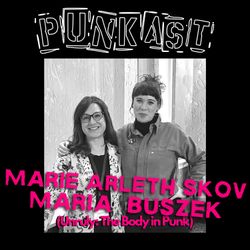
Marie Arleth Skov and Maria Buszek (Unruly: The Body in Punk)
01:09:55|In this episode:We need to respect the scene and shine a spotlight on folks who were, in fact, laying the foundation.Jessica Schwartz speaks with art historians Marie Arleth Skov and Maria Buszek about Unruly: The Body in Punk, curated by Marie and currently on view at ARoS in Aarhus, Denmark. Taking the exhibition and its catalogue as a starting point, they ask what becomes visible when the body moves to the center of punk history—exploring unruliness, feminism, sexuality, beauty and ugliness, movement, vulnerability, and the many ways bodies refuse expectations about how they should look, behave, and belong.The conversation considers women’s often-marginalized contributions to punk histories and moves beyond familiar musicians and canonical figures toward what Maria describes through Brian Eno’s concept of “scenius”: the collective creativity of scenes, including fans, artists, photographers, designers, organizers, and others whose everyday practices helped make punk possible. Marie and Maria also reflect on the productive tensions involved in bringing punk into museums and art history without freezing, sanitizing, or separating it from the communities and forms of resistance from which it emerged.Moving through sexuality, feminist histories, disability, institutionalization, collective spaces, and embodied forms of resistance and care, the conversation ultimately turns toward vulnerability and joy. Marie and Maria consider how punk bodies can be aggressive, sexual, ugly, intimate, soft, frightened, joyful, or deliberately difficult—and how showing vulnerability itself can become an unruly act, sustained through communities in which people protect and create alongside one another. Marie Arleth Skov is a Danish art historian, curator, and author based in Berlin. She is the author of Punk Art History: Artworks from the European No Future Generation (Intellect Books, 2023) and has curated several exhibitions, most recently Unruly: The Body in Punk at ARoS Art Museum in Aarhus, Denmark. The accompanying catalogue was published by Marrow Press in 2026.Maria Buszek is Professor of Art History at the University of Colorado Denver and an independent curator whose research and teaching focus on modern and contemporary art and design. She is the author of Pin-Up Grrrls: Feminism, Sexuality, Popular Culture and has written extensively on feminism, craft, art, and punk, including contributions to Punkademics and Punk & Post-Punk Journal, where she is an Associate Editor. Her current book project, Punk Feminisms: No Style But Strength, explores the relationships among feminist art, activism, and punk scenes in the 1970s and early 1980s.Recorded September 2026.Links + References:MarieUnruly - The Body in Punk Marrow Press – UNRULY. The Body in Punk – Marie Arleth Skov Instagram Mariamariabuszek.com InstagramFurther links/collabs: Punk Scholars Network International: Instagram Marrow Press: Instagram Credits:Punkast is hosted and produced by Jessica Schwartz.Editorial support: Arrow Menendez - audio editing and audio-synced transcript.Transcript:Audio-synced transcriptTheme Music:Lady Bits, "Bitch-a-thon," Lady Bits.Related:Jessica Schwartz co-hosts the Punk Scholars Podcast. About Punkast:Punkast is a weekly podcast exploring punk in the historical present through critical conversations, inquiry, and collaboration.Connect with Punkast:SpotifyInstagram: punkastuclaStay tapped in. New episodes every Friday.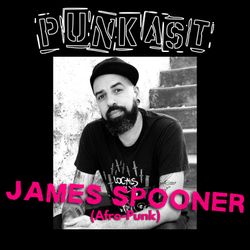
James Spooner (Afro-Punk)
55:55|In this episode:“A big part of finding your voice is being willing to be vulnerable and honest.”Jessica Schwartz speaks with filmmaker, artist, and writer James Spooner about Black punk, belonging, vulnerability, and the complicated work of finding—and trusting—one’s own voice. Beginning with Spooner’s experiences as one of few Black punks in the Southern California desert and later within New York punk and hardcore scenes, the conversation considers what punk can make possible while remaining attentive to racism, exclusion, and inequality within the scenes themselves.James reflects on the teenage manifesto and organizing project Earthwell, the unexpected afterlives of DIY ideas, and the making and continuing relevance of his documentary Afro-Punk. Moving through The High Desert and Black Punk Now, Jessica and James discuss racial ambiguity, passing, vulnerability, family, historical erasure, and the ways personal storytelling can create recognition across experiences without collapsing their differences.The conversation also turns toward Black contributions to rock and punk history, intergenerational experiences of belonging, and the complicated relationship between underground and mainstream culture. Tequila Mockingbird joins the conversation to reflect on punk preservation and her work developing the Punk Museum, opening a broader discussion about archives, institutions, access, and what happens when DIY histories move into institutional spaces. James ultimately returns to DIY not as a credential or aesthetic category, but as the confidence to learn a form, find an audience, and make the work anyway. This episode was recorded live with students from Jessica Schwartz’s UCLA Music Industry course, “DIY: Punk Organizing as Social Justice,” whose questions and contributions extend the conversation around access, cultural institutions, creative practice, and the relationships between mainstream and underground cultural spaces.Editor’s note: This conversation was recorded in 2023, around the publication of Black Punk Now. James Spooner’s new memoir, It Starts with Anger, was published in August 2026 and extends many of the questions explored here around Black punk, belonging, DIY culture, Afro-Punk, and the relationship between underground movements and institutional power.James Spooner is an award-winning graphic novelist, filmmaker, tattoo artist, and co-founder of the Afropunk Festival. He directed the landmark 2003 documentary Afro-Punk, is the author and illustrator of The High Desert, and co-edited Black Punk Now with Chris L. Terry. His newest book, It Starts with Anger, was published in August 2026.Recorded November 2023.Links + References:James Spooner / Spooner’s No FunIt Starts with AngerAfro-PunkThe High DesertBlack Punk NowCurrent events + screeningsCredits:Punkast is hosted and produced by Jessica Schwartz.Conversation participant: Tequila Mockingbird.This episode includes questions and contributions from students in the UCLA Music Industry course “DIY: Punk Organizing as Social Justice,” facilitated by Jessica Schwartz.Editorial support: Melanie Hui – audio editing and audio-synced transcript.Transcript:Audio-synced transcriptTheme Music:Lady Bits, "Bitch-a-thon," Lady Bits.Related:Jessica Schwartz co-hosts the Punk Scholars Podcast. Connect with Punkast:SpotifyInstagram: punkastuclaStay tapped in. New episodes every Friday.