Share
The Geopolitical Blueprint
How to Think for Yourself in an Age of Propaganda
•
Can Critical Thinking Survive the Information War?
America's New Power Struggle: Who Controls the Story?
How do you separate truth from propaganda in a world flooded with conflicting information?
From America's changing relationship with Latin America to the challenge of identifying reliable news, this episode explores political power, historical patterns, and the importance of independent thinking.
The conversation turns to education, the influence of technology on children, and the pressure to prioritize academic success over curiosity and imagination.
Are we teaching the next generation how to think—or simply what to believe?
More episodes
View all episodes

The Sexual Revolution: Did Free Love Really Work?
23:34|The sexual revolution promised freedom, pleasure, and liberation. But did it actually make people free?In this episode, we explore the darker psychological and philosophical questions raised by Gay Talese's controversial book Thy Neighbor's Wife.Through the stories of Harold Rubin, John and Barbara Williamson, and the infamous Sandstone Retreat, we examine how unconventional experiments in sexual freedom challenged traditional relationships, marriage, jealousy, guilt, and personal identity.What happens when people attempt to eliminate shame by breaking every social taboo?And why did some of these experiments lead to emotional conflict rather than the liberation their participants hoped to achieve?The episode concludes with a deeper interpretation of Talese's personal journey, exploring courage, self-acceptance, creativity, and the human search for meaning.Is true freedom found in breaking every rule—or in discovering who we really are?A thought-provoking investigation into the sexual revolution, psychology, religion, and human nature.Contains mature discussions of sexuality and relationships.Inside Sandstone: The Sex Retreat That Promised FreedomGay Talese on Sex, Shame and the Search for God
Kabbalah, Sex & the Book That Shocked America
21:56|What if one of America's most controversial books about sex was actually a search for God?Legendary journalist Gay Talese shocked readers with Thy Neighbor's Wife, a groundbreaking exploration of sexuality, desire, shame, and the hidden lives of ordinary Americans.But could there be a much deeper meaning behind his controversial investigation?This episode examines Talese's literary journalism through the lens of Kabbalah, Jewish mysticism, and the Tree of Life—exploring the spiritual interpretations of human desire, divine connection, and the search for meaning.From the shattering of the vessels to the idea of recovering lost sparks of divine light, we explore three radical approaches to spiritual liberation: meditation, sexual freedom, and the creative power of human imagination.Could the deepest human desires reveal something about our search for love, identity, and the divine?An unconventional exploration of literature, religion, sexuality, and the mysteries of human consciousness.Contains mature themes and philosophical interpretations of religious traditions.Gay Talese's Most Controversial Book: Sex & GodWhat Sex and Kabbalah Reveal About the Human Soul
AI Bailout: Who Pays When the Bubble Bursts?
20:01|Could the next major financial crisis begin with artificial intelligence?As technology companies invest enormous sums in AI infrastructure, growing questions surround profitability, government intervention, and who might ultimately bear the financial risks.This episode examines controversial predictions about AI bailouts, the expanding role of government in technology, and fears of a future surveillance economy.The discussion also explores unverified claims about Iran's nuclear capabilities, the risk of further military escalation, digital currencies, and the possibility of a broader economic downturn.Could artificial intelligence become essential public infrastructure—and what would that mean for ordinary citizens?An examination of financial risk, geopolitical uncertainty, and the future of technological power.The AI Bubble's Endgame: A Taxpayer Rescue?AI, Iran and the Next Financial Crisis: What's Next?
The Information War: Can You Trust Your News Feed?
21:21|How much of what you see online can you actually trust?In a world flooded with breaking news, political narratives, AI-generated content, and competing geopolitical claims, separating reality from misinformation has become increasingly difficult.This episode takes a closer look at how news stories are selected, questioned, and interpreted.From tensions involving China and Japan to allegations surrounding intelligence agencies, influential media figures, and America's changing military strategy, the discussion explores the dangers of drawing conclusions from incomplete information.Are we becoming better informed—or simply easier to influence?An exploration of critical thinking, information warfare, and the search for truth.How to Spot Fake News Before It Shapes Your MindWho Controls the Narrative? Media, Power and AI
Candace Owens in Russia: What Is She Trying to Do? Copy title
20:21|Why did Candace Owens visit Russia—and what could her growing influence mean?This episode explores the relationship between religion, independent media, political influence, and the changing role of powerful public personalities.The discussion examines competing interpretations of Owens' visit, relations between Catholic and Orthodox Christianity, and broader questions about how influential figures shape public opinion.It also turns to Peter Thiel, Argentina, AI investment, government bailouts, and the power of international financial networks.Are influential media personalities simply reflecting cultural change—or helping shape what comes next?Candace Owens, Russia and the Battle for BeliefWho Shapes Global Influence? Russia, AI and Money
Pentagon vs. Israel? The Section 224 Controversy
20:01|Why are tensions emerging over military cooperation between the United States and Israel?This episode investigates the controversy surrounding Section 224, reported Pentagon concerns about Israeli intelligence activities, and the debate over expanding US–Israel defense technology cooperation.The discussion also examines protests against a Trump family-linked luxury resort in Albania, the possibility of greater government involvement in artificial intelligence, and Candace Owens' visit to Russia.Could these seemingly unrelated developments reveal deeper changes in the relationships between political power, technology, and international influence?A provocative geopolitical analysis separating reported events from competing interpretations and predictions.The Pentagon's Israel Spy Concerns: Why Now?Israel, AI and the Hidden Struggle for US Power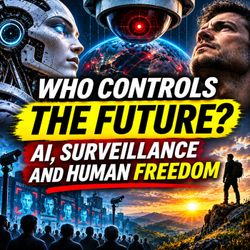
Who Controls the Future? AI, Freedom and the Human Mind
20:00|Who will shape humanity's future in a world increasingly influenced by artificial intelligence and digital surveillance?The final discussion explores controversial theories about ancient civilizations, human consciousness, and whether modern education is limiting our natural curiosity.The conversation then examines the risks of AI-powered surveillance, private network states, technological control, and the changing relationship between individuals and institutions.But it also raises a more personal question: How can ordinary people reclaim their independence, discover their purpose, and help build a better future?An exploration of freedom, technology, education, and the possibilities of human consciousness.Can We Escape the AI Surveillance State?The Future of Humanity: Control or Freedom?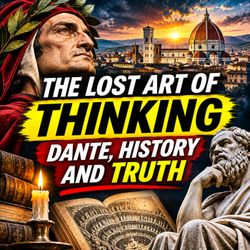
The Lost Art of Thinking: Dante, History and Truth
20:10|Have we forgotten how to think deeply in an age of endless information?From Dante's Divine Comedy to classical history, this episode explores why language, translation, literature, and philosophical study can transform the way we understand ourselves and the world.The conversation examines independent learning, intellectual curiosity, the limitations of conventional education, and competing visions of civilization's future.Could rediscovering the great books help us question modern assumptions and develop a more independent understanding of history, power, and human nature?What Ancient Books Reveal About the Modern WorldWhy Reading the Great Books Changes Everything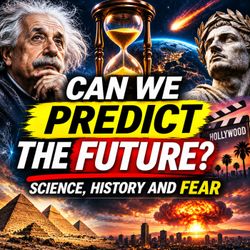
Can We Predict the Future? Science, History and Fear
23:25|Can history help us recognize the warning signs of major world events before they happen?A wide-ranging discussion brings together scientific thinking, medical research, historical patterns, and the challenge of making accurate predictions about an uncertain future.The conversation also examines controversial theories about Hollywood, fictional disasters, and whether popular culture shapes the fears and expectations of entire societies.Where should we draw the line between meaningful patterns, coincidence, and speculation?An exploration of critical thinking, prediction, and the human desire to understand what comes next.The Signs of Collapse: Can History Warn Us in Time?Hollywood, History and the Fear of What's Next