Share
PR in the Real World
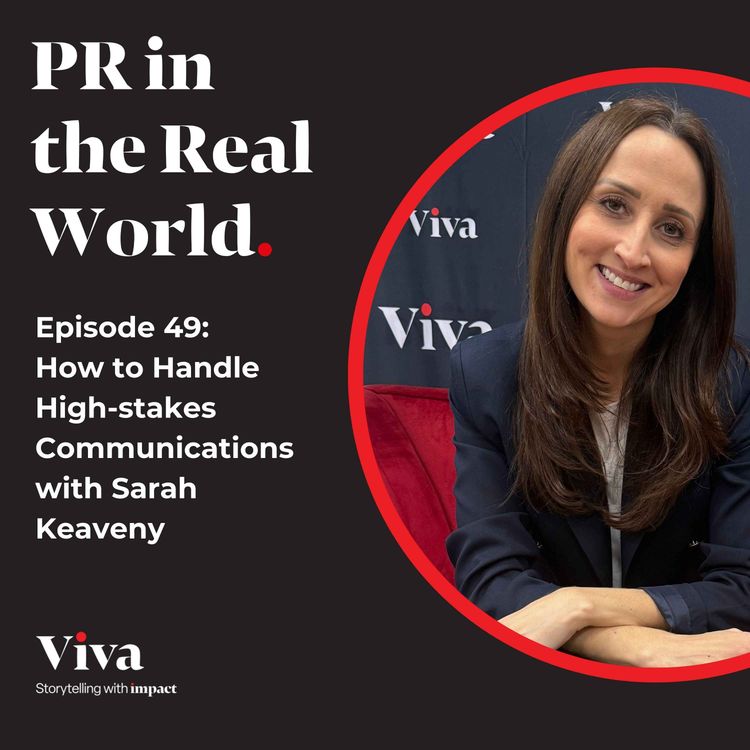
How to Handle High-stakes Communications with Sarah Keaveny
How do you lead a communications strategy when the consequences are a matter of life, death and national inquiry? In this episode of PR in the Real World, Sarah Keaveny, Head of External Communications at Manchester Metropolitan University, shares the raw realities of frontline public sector PR.
Sarah Keaveny’s career is defined by pressure and purpose. Starting as a crime reporter at the Bury Times, Sarah learned early that "human stories" are the heartbeat of impactful journalism. She takes us through 14 intense years at Greater Manchester Fire and Rescue Service, where she managed the comms for tragic live incidents, including the line-of-duty death of a firefighter. We delve into the long-running reputational pressure of the Manchester Arena Inquiry and the essential role of humility and evidence when an organisation must prove it has genuinely changed.
The conversation also explores Sarah’s work on the multi-award-winning ‘Is This Okay?’ campaign, a viral initiative tackling violence against women and girls. Sarah breaks down how to spark behaviour change on a shoestring budget and why she has now pivoted to proactive, strategic comms in the Higher Education sector. This episode is an essential guide for anyone navigating high-stakes reputation management while maintaining their own resilience.
From a PR and communications perspective, this episode covers:
- The Transition from Newsroom to Frontline: Using reporter instincts (determination and tenacity) to manage emergency service comms.
- Managing Live Crisis Incidents: Building a 24/7 "newsroom-style" comms team within the Fire and Rescue Service.
- Reputation & The Arena Inquiry: Proving "genuine improvement" through evidence, data and the courage to ask awkward internal questions.
- Behaviour Change at Speed: The strategy behind the ‘Is This Okay?’ campaign; launching a viral movement in just four weeks.
- Bystander Theory in PR: Engaging men and boys specifically to challenge societal attitudes and low-level harassment.
- Strategic Pillars in Higher Education: Moving from 80% reactive work to 80% proactive strategy using the OASIS framework.
Sarah shares a staggering statistic: Manchester Met contributes more to the local economy than both Manchester United and Manchester City combined. She also offers personal reflections on leadership, "poker faces," the value of national networks like FirePro and why reconnecting with her alma mater has brought her career full circle.
This episode is relevant for professionals working in:
- Crisis Communications: Especially those in "blue light" services or local government.
- Public Sector PR: Navigating political stakeholders and multi-agency responses.
- Behaviour Change Specialists: Interested in low-budget, high-impact social campaigns.
- HE Professionals: Looking for insights on external engagement and purpose-led storytelling.
Links and references
Is This Okay? Campaign: https://isthisokgm.com/
Mayor of Greater Manchester – Is This Okay? campaign launch: https://www.greatermanchester-ca.gov.uk/news/mayor-launches-latest-stage-of-campaign-to-tackle-gender-based-violence-with-hard-hitting-film/
Greater Manchester Gender-Based Violence Strategy: https://www.greatermanchester-ca.gov.uk/what-we-do/safer-and-stronger-communities/gender-based-violence/isthisok
Manchester Metropolitan University: https://www.mmu.ac.uk/
Manchester Metropolitan University – About: https://www.mmu.ac.uk/about-us/
Greater Manchester Fire and Rescue Service: https://manchesterfire.gov.uk/
More PR in the Real World: https://www.vivapr.co.uk/viva-podcast/
More episodes
View all episodes

70. Are Timesheets Really Worth It? With Andy West and Darryl Sparey
42:59||Season 1, Ep. 70Can you run a profitable PR agency without timesheets? In our first ever PR in the Real World debate for AMEC Measurement Month, Darryl Sparey of Hard Numbers takes on agency adviser Andy West from West of Center. Darryl calls timesheets a “confection”, whilst Andy argues they are essential management data for spotting over-servicing, planning capacity and knowing when to hire. Expect Plato, Baudrillard, surprising agreement and a question every agency owner should ask: are you growing, or just getting busier?
69. Why Local Papers Are Reaching Readers a Press Release Can't with Carl Hudspith
44:29||Season 1, Ep. 69Carl Hudspith moved from a 19,000-circulation Lancashire paper to press officer at the National Farmers Union, and now runs media relations for the University of Lancashire (formerly UCLan). He talks to Tony Garner about why farmers became better storytellers than the institutions representing them, how local papers and social media now reach readers a press release can’t, and why Clarkson’s Farm succeeded where years of NFU campaigning on bovine TB could not. A conversation on journalism, local news and reputation.
68. Why PR Has Never Managed Its Own PR Well with Victoria Tomlinson
33:02||Season 1, Ep. 68Victoria Tomlinson, founder of Next-Up and former founder of Northern Lights PR, joins Tony Garner on PR in the Real World to explain why PR has never managed its own PR, after thirty years running her own agency. They cover why "we want awareness" is the wrong brief, what owning a target really means for a boardroom seat, how AI is making credibility harder to prove, and the case for rethinking retirement in her new book, Expiry Date Never. Essential listening for PR and comms professionals.Expiry Date Never: Age is the New Superpower - https://expirydatenever.co.uk/ Next-Up - https://www.next-up.com/
67. Why AI Should Be Treated as a Stakeholder with Stuart Bruce
50:02||Season 1, Ep. 67Stuart Bruce, self-styled PR futurist and joint CEO of Purposeful Relations, joins Tony Garner on PR in the Real World to explain why AI has become the world's biggest reputation management engine. They unpack generative engine optimisation, the three factors shaping AI answers – recency, relevance and reputation – why crisis plans must treat AI as a stakeholder, and the story of helping now-PM Andy Burnham find his social media voice. Essential listening for PR and comms professionals.
66. The Case for PR at the Top Table with CIPR President Farzana Baduel
27:35||Season 1, Ep. 66Why are organisations with talented PR teams still ending up in reputational crisis? Farzana Baduel has the answer, and she sees it play out every week on BBC Radio 4.Farzana - founder of Curzon PR, CIPR president, Oxford Saïd Business School resident PR expert, and co-host of BBC Radio 4's When It Hits the Fan - joins PR in the Real World to explore why this is the most consequential moment in PR's history.She unpacks AI's real impact on the profession, why PR professionals are 'diagonal thinkers' who belong in the boardroom, and why the crises organisations find themselves in are so often avoidable.
65. Why Judgement Beats Data in PR Measurement with Nik Pearson
39:42||Season 1, Ep. 65In this episode of PR in the Real World, Tony Garner talks to Nik Pearson, who leads corporate communications and external affairs across Europe for Honda, about earning a seat at the table in PR. They discuss sharing downside risk, using the AMEC framework and judgement over data in measurement, and building trust across multinational comms teams. Nik also reflects on his move from Toyota dealerships into leadership, and what makes an inclusive, high‑trust culture.
64. Methodology and Mindsets with Shayoni Lynn
45:16||Season 1, Ep. 64Behavioural science is one of the most talked-about, and least understood, areas in PR. Shayoni Lynn, founder of behavioural science consultancy Lynn, joins Tony Garner on PR in the Real World to separate evidence from hype. She explains why diagnosis must come before intervention, how her team's research and randomised control trials shaped Welsh Government's 20mph campaign, and why protecting behaviours matters as much as creating them. Practical advice for teams of any size on building behavioural capability.
63. What Makes a Story Worth Printing with Richard Slater
41:18||Season 1, Ep. 63Richard Slater, founder of Lancashire Business View and the Red Rose Awards, joins Tony Garner on PR in the Real World to reveal what makes journalists bin a PR pitch, why AI-written press releases are instantly spotted, and how to craft a story worth printing. From newsroom instincts to judging a 1,000-strong awards night, Richard shares practical tips on pitching, storytelling, media relations and award entries that PR and marketing professionals can use today.
62. Communicating Complex Ideas Clearly with Alison Ramsay
48:39||Season 1, Ep. 62How do you communicate complexity without losing clarity? In this episode of PR in the Real World, Alison Ramsay, Corporate Communications & Employee Experience Director at AWE, shares lessons from her career in defence communications. Discover why simplifying isn't "dumbing down", how data and employee experience are reshaping internal communications, and why great communicators treat employees like adults, not audiences.