Latest episode
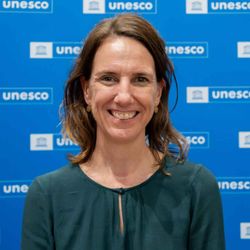
8. The Ocean Decade, 2021-2030: Its aims, importance and progress so far
22:26||Season 1, Ep. 8The Ocean Decade – officially the UN Decade of Ocean Science for Sustainable Development (2021-2030) – is generating new marine research, advancing ocean solutions and celebrating our connection to the ocean. The global initiative seeks to revolutionise ocean science and support a productive, resilient, safe and sustainable ocean. It was established in response to the lack of scientific data referring to the ocean, particularly in relation to certain regions and countries. As we are more than halfway through the 2020s, it now seems appropriate to take stock of the Ocean Decade’s goals and progress. In this episode, Alison Clausen, Deputy Coordinator of the Ocean Decade (pictured above), shares her updates and thoughts about the importance of the ocean in a world where it is too often neglected in policy and media circles. Speaking from UNESCO’s headquarters in Paris during the height of a European heatwave in late June 2026, Alison explains how the ocean is being affected by climate change, but how it can also help address climate change. She describes how the health of the ocean is increasingly gaining public attention, in part due to the release of David Attenborough’s blockbuster nature documentary Ocean. The value of studying past energy transitions, particularly in the global south, is highlighted during a discussion about the Sail to Steam, Carbon to Green project, funded by Lloyd’s Register Foundation, at the University of Portsmouth. Alison reflects upon how lessons need to be learned from the past to chart more sustainable pathways forward, and upon the urgency of saving the ocean, especially as coastal communities have shown how it is changing and being damaged. The Port Cities and Maritime Cultures podcast series is presented by Dr Guy Collender, of the Centre for Port Cities and Maritime Cultures at the University of Portsmouth.
More episodes
View all episodes
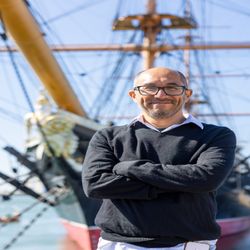
7. Sail to steam, carbon to green: Learning from past energy transitions
19:50||Season 1, Ep. 7The invention and rise of steamships in the nineteenth century can provide valuable lessons for today’s shift from fossil fuels to green alternatives in the maritime sector. In this episode, History PhD scholar Carlos Ausejo discusses how the Peruvian port of Callao changed because of the switch from sail to steam, and how these insights can help steer policy today. He shows how technological change and the demand for coal had a major impact on the workforce, and the infrastructure of the port city. Carlos, from the Peruvian capital Lima, also describes his family’s own connections with nearby Callao. His great-grandmother was a pioneering woman as she worked in the masculine world of the port as a broker, buying and selling goods.In this episode, Carlos shares his enthusiasm for studying at the University of Portsmouth, his affection for his new seaside home, and his interest in Portsmouth Historic Dockyard – his favourite place in Portsmouth. Carlos’ scholarship is funded by Lloyd’s Register Foundation as part of its support for the Sail to Steam, Carbon to Green research project at the Centre for Port Cities and Maritime Cultures (PCMC) at the University of Portsmouth.The discussion in this episode also refers to an earlier interview in this podcast series with Dr Charlie McKinlay, Fuels and Technology Lead at Lloyd’s Register Maritime Decarbonisation Hub, in which he shared his thoughts about the multi-fuel future of the maritime sector (including ammonia, hydrogen and wind assistance).The Port Cities and Maritime Cultures podcast series is presented by Dr Guy Collender, of PCMC.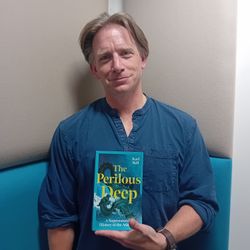
6. The Perilous Deep: A Supernatural History of the Atlantic
21:06||Season 1, Ep. 6The dangers and mysteries of the Atlantic have inspired compelling and supernatural tales of sea monsters, mermaids and ill-fated ships. In this episode, Dr Karl Bell, Associate Professor of Cultural and Social History at the University of Portsmouth, shares research from his new book about the creation and purpose of such maritime folklore, and how it evolved during the technological transition from sail to steam. His book is called The Perilous Deep: A Supernatural History of the Atlantic. The hardback publication can be bought online from Reaktion Books for £18.Dr Bell, Co-director of the Centre for Port Cities and Maritime Cultures at the University of Portsmouth, also speaks about his involvement in the Sail to Steam, Carbon to Green project funded by Lloyd's Register Foundation. In addition, he outlines the opportunities to study History at the University of Portsmouth this autumn, including the MA Victorian Gothic: History, Literature and Culture MA, which he leads.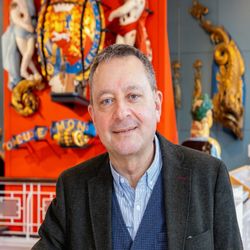
5. The Devil's Highway: The myths and realities of life in London's sailortown
11:31||Season 1, Ep. 5Ratcliffe Highway - the heart of London's sailortown - had a notorious reputation for knife crime and immorality in the nineteenth century. In this episode, Brad Beaven, Professor of Social and Cultural History at the University of Portsmouth, shares research from his new book about this cosmopolitan and waterfront district. He explains the myths and realities of life in an 'international contact zone', the impact of the sensationalist press, and the role of women in managing sailortown institutions, including boarding houses and pubs. His book, published by Manchester University Press, is called The Devil's Highway: Urban Anxieties and Subaltern Cultures in London's Sailortown, c. 1850-1900. Professor Beaven also speaks about work underway at the Centre for Port Cities and Maritime Cultures, which he co-directs, at the University of Portsmouth. He refers to the distinctiveness and importance of urban-maritime research, and the value of co-producing knowledge, especially with partners in the global south as part of the Sail to Steam, Carbon to Green project funded by Lloyd's Register Foundation.The podcast is presented and produced by Dr Guy Collender, of the Centre for Port Cities and Maritime Cultures at the University of Portsmouth.
4. Shipping and energy transitions: From sail to steam and to the green technologies of the future
14:33||Season 1, Ep. 4The shipping industry is a heavy polluter and accounts for three per cent of global carbon emissions, but it is on the verge of transformative change. In this episode, Dr Charlie McKinlay, Fuels and Technology Lead at Lloyd’s Register Maritime Decarbonisation Hub (pictured, left), discusses the potential of green solutions – from hydrogen and ammonia to the return of wind power. He says the UN’s target for the sector to reach net-zero around 2050 is achievable, though he cautions that action is needed urgently.Dr McKinlay describes how energy transitions are nothing new when it comes to shipping, port cities and their workforces. In the nineteenth century, coal and steam power replaced sail as part of the first propulsion revolution at sea. He also shares research about the potential of ports in the Asia-Pacific region to adapt to green technologies, and outlines his hopes for the new Sail to Steam, Carbon to Green project funded by Lloyd’s Register Foundation at the University of Portsmouth.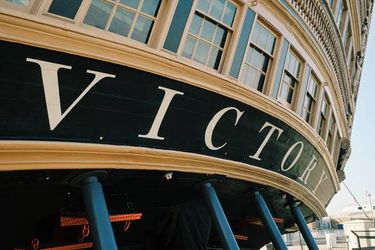
3. The unique port city of Portsmouth: From importing bananas to conserving HMS Victory
29:40||Season 1, Ep. 3From importing 50 per cent of the UK's bananas to being the home of the Royal Navy since the twelfth century, the port city of Portsmouth is unique. These interviews focus on the activities of cargo ships, ferries, cruise ships, and warships, and new research about what local residents think of living by the coast in three places in the UK, including Portsmouth.In this third episode of Port Cities and Maritime Cultures, Dr Guy Collender, Research Fellow, University of Portsmouth, speaks to: Mike Sellers, Port Director, Portsmouth International Port, about cargo ships, ferries, cruise ships, and the pioneering Sea Change project to bring shore power to vessels as part of efforts to cut carbon emissions (0:59-9:40).Find out about Portsmouth International PortFind out about the Sea Change project and the University of Portsmouth's involvementMatthew Sheldon, Chief Executive Officer, National Museum of the Royal Navy, about the Royal Navy's historic home in Portsmouth, the ongoing and major conservation of HMS Victory, and plans for a Royal Marines' Museum (09:49-19:49).Visit the National Museum of the Royal NavyDr Victoria Leslie, Research Fellow, University of Portsmouth, about using the community voice method to film local residents and find out what they think about living near the sea (19:57-28:54).Watch film: Tides of Change, PortsmouthWatch film: Reddin Values, ShetlandWatch film: Watershed, Chepstow and River WyeThe podcast is produced by the Centre for Port Cities and Maritime Cultures at the University of Portsmouth.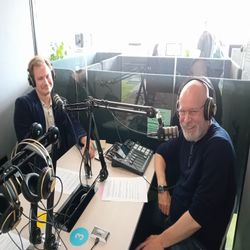
2. Remembering D-Day, funding for maritime research, and the Swedish port of Halmstad
38:52||Season 1, Ep. 2The plans for D-Day, funding for research about the transition from sail to steam, and the Swedish port of Halmstad all feature in these latest interviews.In this second episode of Port Cities and Maritime Cultures, Dr Guy Collender, Research Fellow, University of Portsmouth, speaks to: Dr Ann Coats, Associate Professor in Maritime History, University of Portsmouth, about the preparations for D-Day, including research shared at the recent Yards to Hards conference (1 minute 51 seconds to 12 minutes 5 seconds)Visit the D-Day Story, PortsmouthDr Robert James, Senior Lecturer in Cultural and Social History, University of Portsmouth, about memories of D-Day, and the findings made by students in The D-Day Story’s archives (12:06-18:17)Visit the D-Day Story, PortsmouthRead the research and listen to a podcast produced by students following their work at the archives of The D-Day Story, Portsmouth Study History at the University of PortsmouthLouise Sanger, Head of Research, Interpretation and Engagement, Lloyd’s Register Foundation’s Heritage and Education Centre, about the new Sail to Steam, Carbon to Green research project and the SHE_SEES exhibition coming to Portsmouth (18:18-27:47)Read about the £635,000 from Lloyd’s Register Foundation to research maritime energy transition research to understand the impact on coastal communitiesRead about women in the maritime sector and the SHE_SEES exhibition at the Portsmouth Historic Dockyard Dr Tomas Nilson (above, right), Senior Lecturer, School of Education, Humanities and Social Sciences, Halmstad University, Sweden, about the history and culture of the port city of Halmstad, its university and their links with Portsmouth (27:48-32:59)Oscar Karlsson (above, left), History PhD student, University of Portsmouth and Halmstad University, about his research on abysses of misery - prison hulks in Portsmouth and coastal fortress prisons in Sweden, c. 1780-1850 (33:00-37:02)Read about Oscar Karlsson’s research and his experiences as an international studentThe podcast is produced by the Centre for Port Cities and Maritime Cultures at the University of Portsmouth.