Share
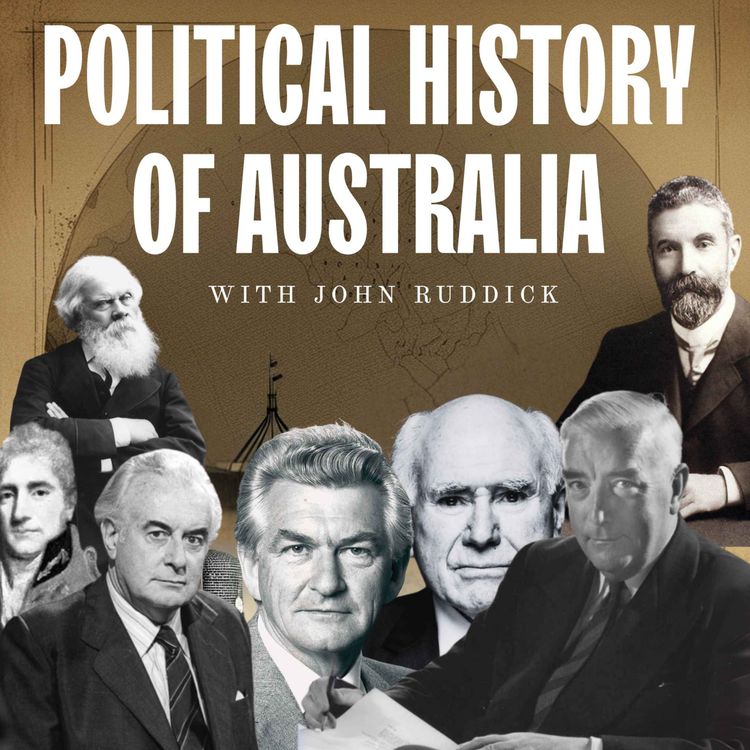
Political History of Australia
E28: The Day of the Rum Rebellion
The label Rum Rebellion was a smear dreamed up decades after the seismic events of 26 January 1808. Those dramatic events were not about rum. It was fight over what the future of NSW should be.
For some including Governor Bligh, NSW was to remain a large-scale open prison with a simply economy of small scale ex-convict farmers and an iron grip control by the state. But 20 years into the colony and too many residents could see that this land had too much potential to be limited by the other vision. The day of the Rum Rebellion was fast-moving and dramatic. At the end of it either Governor Bligh or John Macarthur was going to be under arrest.
--------------------------------------------------------------------------------------------------------------------
Please leave a comment, share and rate the show ⭐⭐⭐⭐⭐
Also listen and subscribe at Youtube and Rumble here 👉@politicalhistoryofaustralia
The Hon. John Ruddick MLC is a member of the NSW Legislative Council.
johnruddick.com.au
https://www.tiktok.com/@johnruddickmlc
https://x.com/JohnRuddick2
https://www.linkedin.com/in/johnruddickmlc/
https://www.facebook.com/johnruddickmlc
https://www.instagram.com/john.ruddick/
Produced by Sean Masters
(All voices in this series are AI generated bar the narrator.)
More episodes
View all episodes
41. E41: Macquarie's Farewell: 'I Anticipate the Applause of Posterity.'
48:24||Season 1, Ep. 41In this episode we say farewell to Governor Lachlan Macquarie after twelve years in Sydney. He championed the name Australia, made 26 January an official public anniversary, and was the first leading figure to address the colony as a people — “Fellow Citizens of Australia.” From first arrival to last days he backed emancipist rights, and that stance cost him the exclusives, the church, the courts and London. His last years were hard. In his farewell in Hyde Park he still said, “I anticipate the applause of posterity.” Classic Macquarie — arrogant, but accurate.------------------------------------------------------------------------------------------------------Please leave a comment, share and rate the show ⭐⭐⭐⭐⭐Also listen and subscribe at Youtube and Rumble here 👉@politicalhistoryofaustraliaThe Hon. John Ruddick MLC is a member of the NSW Legislative Council. johnruddick.com.auhttps://www.tiktok.com/@johnruddickmlchttps://x.com/JohnRuddick2https://www.linkedin.com/in/johnruddickmlc/https://www.facebook.com/johnruddickmlc https://www.instagram.com/john.ruddick/Produced by Sean Masters(All voices in this series are AI generated bar the narrator.)40. E40: The British Empire Strikes Back
54:11||Season 1, Ep. 40Governor Lachlan Macquarie was on a sincere mission to lift up the former convicts known as emancipists. For years that project had gone his way — until the colonial establishment struck back and set out to put these “uppity” emancipists in their place. In this episode the church, the courts and then London itself flip from supporting the Governor to becoming his trenchant critics. Macquarie never wavers from his pro-emancipist stance, but under pressure he begins to act foolishly act in anger. London’s answer is decisive: Commissioner John Bigge is sent with wide-ranging powers to audit the entire Australian experiment. Macquarie knows his time is up.-----------------------------------------------------------------------------------------------------Please leave a comment, share and rate the show ⭐⭐⭐⭐⭐Also listen and subscribe at Youtube and Rumble here 👉@politicalhistoryofaustraliaThe Hon. John Ruddick MLC is a member of the NSW Legislative Council. johnruddick.com.auhttps://www.tiktok.com/@johnruddickmlchttps://x.com/JohnRuddick2https://www.linkedin.com/in/johnruddickmlc/https://www.facebook.com/johnruddickmlc https://www.instagram.com/john.ruddick/Produced by Sean Masters(All voices in this series are AI generated bar the narrator.)39. E39: What Politicised the Emancipists?
54:37||Season 1, Ep. 39In early New South Wales, more than four-fifths of the non-Aboriginal population were convicts, former convicts, or their children. Once free, these people — the emancipists — discovered that money and talent could not wash away the ex-convict stain. Wealthy exclusives still treated them as second-class subjects. This episode asks ‘what mobilised a scattered group of successful ex-prisoners into a political force?’ Governor Macquarie brought the best of them into the open. Architect Francis Greenway, merchant Mary Reibey, the “Botany Bay Rothschild” Samuel Terry, and Dr William Redfern all flourished under his protection. Then, in 1815, the new Supreme Court exploded over a simple question: could three emancipist solicitors appear before it? Judge Jeffrey Bent said no. Macquarie’s magistrates said yes. The court froze for two years, letters flew to London, and the colony split into two camps. Status, not class, was the issue.---------------------------------------------------------------------------------Please leave a comment, share and rate the show ⭐⭐⭐⭐⭐Also listen and subscribe at Youtube and Rumble here 👉@politicalhistoryofaustraliaThe Hon. John Ruddick MLC is a member of the NSW Legislative Council. johnruddick.com.auhttps://www.tiktok.com/@johnruddickmlchttps://x.com/JohnRuddick2https://www.linkedin.com/in/johnruddickmlc/https://www.facebook.com/johnruddickmlc https://www.instagram.com/john.ruddick/Produced by Sean Masters(All voices in this series are AI generated bar the narrator.)38. E38: John Macarthur, Down and (Almost) Out in London
50:56||Season 1, Ep. 38Episode 38 follows John Macarthur after he slipped out of New South Wales just before Lachlan Macquarie arrived to restore order. Having masterminded the Rum Rebellion, Macarthur exploited a legal loophole in Lord Castlereagh’s arrest orders and spent more than eight years in England. After the Rum Rebellion trial, Macarthur was stuck in England because if he returned to NSW he faced immediate arrest. So Macarthur waged a stubborn, years-long campaign against the Colonial Office to return home without having to admit to any “impropriety.” When he finally sails back in 1817, the colony he left has changed: wealthy emancipists like Samuel Terry now rival the exclusives and a bitter struggle is underway over land, labour, and what kind of society New South Wales will become. Macarthur has won every political fight so far. This time the numbers and the spirit of the age are against him.------------------------------------------------------------------------------------------------Please leave a comment, share and rate the show ⭐⭐⭐⭐⭐Also listen and subscribe at Youtube and Rumble here 👉@politicalhistoryofaustraliaThe Hon. John Ruddick MLC is a member of the NSW Legislative Council. johnruddick.com.auhttps://www.tiktok.com/@johnruddickmlchttps://x.com/JohnRuddick2https://www.linkedin.com/in/johnruddickmlc/https://www.facebook.com/johnruddickmlc https://www.instagram.com/john.ruddick/Produced by Sean Masters(All voices in this series are AI generated bar the narrator.)37. E37: The Tale of Two Tasmanias
54:26||Season 1, Ep. 37In September 1803 Lieutenant John Bowen raised the Union Jack at Risdon Cove on the Derwent, founding the first European settlement in Van Diemen’s Land. The next year, Governor King in Sydney, under orders from London, sent Lieutenant-Colonel William Paterson to command the proposed second settlement on the island at Port Dalrymple along the north coast. By late 1804 the island was formally divided at the 42nd parallel: the southern County of Buckinghamshire under Collins and the northern County of Cornwall under Paterson. Two settlements, two very different commanders, and two rival experiments in colonial survival. This episode traces the contrasting fortunes of those early settlements. We follow Paterson’s relatively liberal land grants that encouraged private farming. We contrast that with Collins’s more regimented approach, chronic supply shortages, reliance on hunting and fishing, and the slow, painful growth of Hobart Town until the influx of experienced colonial farmers from Norfolk Island transformed it. The story closes with Governor Macquarie’s first visit in 1811, his inspection of both settlements and his descriptions of a young colony that was rapidly getting on its feet.----------------------------------------------------------------------------------------------------------------------Please leave a comment, share and rate the show ⭐⭐⭐⭐⭐Also listen and subscribe at Youtube and Rumble here 👉@politicalhistoryofaustraliaThe Hon. John Ruddick MLC is a member of the NSW Legislative Council. johnruddick.com.auhttps://www.tiktok.com/@johnruddickmlchttps://x.com/JohnRuddick2https://www.linkedin.com/in/johnruddickmlc/https://www.facebook.com/johnruddickmlc https://www.instagram.com/john.ruddick/Produced by Sean Masters(All voices in this series are AI generated bar the narrator.)36. E36: The Van Diemen's Land Version of the First Fleet
56:09||Season 1, Ep. 36In 1803, Governor Philip Gidley King in Sydney sent two ships to near modern day Hobart. There had been multiple earlier European visits to Van Diemen’s Land but these ships were going to stay and build a permanent British settlement. Governor King’s response was both reactive and decisive. By planting a permanent British presence on the Derwent — first through the small, improvised party under John Bowen and then through the far more substantial expedition led by David Collins — Britain converted a theoretical claim into effective occupation. The rapid establishment of settlements in both the south and the north of the island marked the moment Van Diemen’s Land ceased to be an unclaimed frontier and became the second major British colony in Australia. ----------------------------------------------------------------------------------------------------------------------Please leave a comment, share and rate the show ⭐⭐⭐⭐⭐Also listen and subscribe at Youtube and Rumble here 👉@politicalhistoryofaustraliaThe Hon. John Ruddick MLC is a member of the NSW Legislative Council. johnruddick.com.auhttps://www.tiktok.com/@johnruddickmlchttps://x.com/JohnRuddick2https://www.linkedin.com/in/johnruddickmlc/https://www.facebook.com/johnruddickmlc https://www.instagram.com/john.ruddick/Produced by Sean Masters(All voices in this series are AI generated bar the narrator.)35. E35: BONUS EPISODE - Address to 'The Women's Pioneer Society of Australasia'
48:12||Season 1, Ep. 35Last week 'The Women's Pioneer Society of Australasia' invited me to speak about the Political History of Australia podcast.---------------------------------------------------------------------Please leave a comment, share and rate the show ⭐⭐⭐⭐⭐Also listen and subscribe at Youtube and Rumble here 👉@politicalhistoryofaustraliaThe Hon. John Ruddick MLC is a member of the NSW Legislative Council. johnruddick.com.auhttps://www.tiktok.com/@johnruddickmlchttps://x.com/JohnRuddick2https://www.linkedin.com/in/johnruddickmlc/https://www.facebook.com/johnruddickmlc https://www.instagram.com/john.ruddick/Produced by Sean Masters(All voices in this series are AI generated bar the narrator.)E34: The Geopolitics of Pre-Colonial Van Diemen's Land
56:16|The people of what we now call Tasmania had lived in complete isolation since rising seas carved out Bass Strait around 10,000 BC, transforming their homeland from a southern peninsula of the Australian continent into the world’s most isolated island. European contact began in 1642 when Dutch explorer Abel Tasman claimed the land for the Netherlands. It was not until the 1770s, however, that a rapid succession of French and British visitors began to recognise its strategic value. When Bass and Flinders confirmed Van Diemen’s Land was a separate island in the late 1790s, the news soon reached Europe and sharpened French interest. The Baudin Expedition’s extended presence in Australian waters only heightened British suspicions in Sydney. In a decisive pre-emptive move, the British bumped the French out, raised the Union Jack, and established the first permanent settlement at Risdon Cove in 1803. The scene was set for the colonial era.------------------------------------------------------------------------------------------------------Please leave a comment, share and rate the show ⭐⭐⭐⭐⭐Also listen and subscribe at Youtube and Rumble here 👉@politicalhistoryofaustraliaThe Hon. John Ruddick MLC is a member of the NSW Legislative Council. johnruddick.com.auhttps://www.tiktok.com/@johnruddickmlchttps://x.com/JohnRuddick2https://www.linkedin.com/in/johnruddickmlc/https://www.facebook.com/johnruddickmlc https://www.instagram.com/john.ruddick/Produced by Sean Masters(All voices in this series are AI generated bar the narrator.)33. E33: Australia's Neighbourhood in the Early 1820s
01:05:13||Season 1, Ep. 33This episode we pause the story of Governor Lachlan Macquarie to take a panoramic tour of Australia’s near-abroad and Australia’s infant settlements in the early 1820s. With the Napoleonic Wars finally over and Britannia ruling the waves, London was able to focus more attention to its continental claim in the south. We survey the remarkably benign geopolitical setting in this corner of the globe and see how that freed up the colonists to focus on building a civilisation. We’ll travel clockwise around the map. First, the promising inland township of Bathurst, already hinting at the wool boom to come. Then the initially grim secondary-punishment outposts at Newcastle, Port Macquarie and Moreton Bay — soon to grow into Brisbane. We’ll also check in on Norfolk Island, abandoned only a few years earlier but already earmarked to reopen as one of the empire’s harshest penal stations. Finally, we cross the Tasman to New Zealand — still officially part of New South Wales — on the eve of sustained European contact. We’ll relive the shock of the Boyd Massacre and the remarkable partnership between the Reverend Samuel Marsden and the Māori chief Ruatara — a friendship that led to the first permanent British presence in New Zealand on Christmas Day 1814. What did this wider colonial world actually look like, and how did it shape the challenges Macquarie faced? That’s what we’re exploring in this episode.---------------------------------------------------------------------------------------------------------------Please leave a comment, share and rate the show ⭐⭐⭐⭐⭐Also listen and subscribe at Youtube and Rumble here 👉@politicalhistoryofaustraliaThe Hon. John Ruddick MLC is a member of the NSW Legislative Council. johnruddick.com.auhttps://www.tiktok.com/@johnruddickmlchttps://x.com/JohnRuddick2https://www.linkedin.com/in/johnruddickmlc/https://www.facebook.com/johnruddickmlc https://www.instagram.com/john.ruddick/Produced by Sean Masters(All voices in this series are AI generated bar the narrator.)