Share
PodBiz
The podcast about the business of podcasting. Where’s the money? Let’s get down to PodBiz.
Apple Podcasts
Spotify
Amazon Music
Castbox
Castro
iHeartRadio
Newsletter Subscribe
Overcast
Pocket Casts
RSS
YouTube
Latest episode
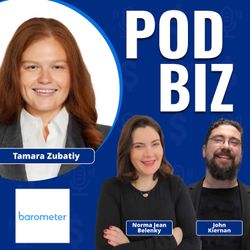
64. Why Brands Are Moving Beyond Keyword Blocking and Podcast Movement Takeaways with Tamara Zubatiy
45:43||Season 1, Ep. 64Where is the real money in podcasting, and how can AI bring radical transparency to brand suitability?In this episode of PodBiz, Norma Jean Belenky and John Kiernan speak with Dr. Tamara Zubatiy, CEO and Co-Founder of Barometer, about brand safety, brand suitability, and the rapid rise of programmatic advertising in podcasting. Tamara shares how she transitioned from researching Human-Centered AI at Georgia Tech to building an engine that processes 50 years of media content weekly—giving major brands the confidence to invest in podcasting while protecting content creators from indiscriminate keyword blocking.As she puts it: “Brand safety is a binary property of content... but brand suitability is about context. A word isn't the same word in every context.”Here are some insightful moments within the episode:• Why programmatic advertising is the fastest-growing revenue channel in podcasting• The critical difference between brand safety and brand suitability• How blunt keyword blocklists accidentally defund news and premium journalism• Opening programmatic monetization opportunities for smaller and mid-tail creators• Navigating the industry measurement debate: downloads vs. impressions• How podcasting has evolved into the foundational anchor for creator content strategiesDr. Tamara Zubatiy is the CEO and Co-Founder of Barometer, an AI-powered brand suitability and contextual targeting platform for podcasting and emerging media. With a PhD background in Human-Centered AI from Georgia Tech, Tamara and her team analyze tens of thousands of hours of audio content weekly to build trust between enterprise advertisers and podcast publishers.Connect with Tamara on LinkedIn: https://www.linkedin.com/in/tzubatiyLearn more at Barometer: https://app.thebarometer.co/Episode Chapters(00:00) The nuance of brand suitability vs. keyword blocking(01:20) Where is the money in podcasting? Programmatic growth(03:29) Chasing niche audiences in real time(05:01) From Georgia Tech PhD to founding Barometer(06:26) Why podcasting maintains unique listener trust(09:39) How programmatic opens monetization for smaller creators(11:33) Moving beyond blunt keyword blocklists(14:29) Brand safety vs. brand suitability explained(18:06) Key takeaways from Podcast Movement NYC(19:03) The measurement debate: Downloads vs. impressions(22:49) The rapid evolution of video podcasting(29:18) Deciphering YouTube’s new view and engaged view metrics(31:08) What enterprise brands require to scale audio ad spend(36:26) Processing 50 years of media weekly with AI & human review(38:52) Real-world case study: 30% CPA reduction & 87% incremental reach(44:03) The future of podcasting as the anchor of content strategySome Additional PodBiz Buzz…“Brand safety is a binary property of content...Brand suitability requires nuance to understand that a word isn't the same word in every context.”“Podcasting is one of the only mediums where you're not being algorithmically fed; listeners open app directories because they know what show they want to hear.”“Early on, being able to be transparent with the community and get feedback in an egoless, honest way is what allowed us to succeed and build trust.”🎧 Follow us on LinkedIn! https://www.linkedin.com/company/podbizpodcast🎧 Subscribe to our newsletter! https://www.podbiz.net/mailing-listA thank you to our sponsors:Lean and Loaf: Your one stop shop for podcast video and audio post production. www.leanandloaf.comPodSEO: A specialized competitive intelligence and growth platform designed to optimize podcasts for search engines, listening apps, and AI assistants. www.podSEO.comA thank you to our media partners:Podnews: Daily news for the podcast and on-demand audio industry www.podnews.netHeadliner / Disco: Disco converts your readers into podcast listeners. Quickly create, clip, and caption podcast videos with ease. www.headliner.app
More episodes
View all episodes
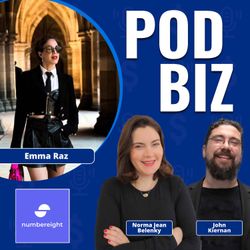
63. How Privacy-First Data Is Changing Podcast Ads with Emma Raz of NumberEight
51:34||Season 1, Ep. 63How can podcasting move past guesswork to build true, privacy-first audience demographics?In this episode of PodBiz, Norma Jean Belenky speaks with Emma Raz, Director of Commercial at NumberEight, about the evolution of audience targeting and demographic data in podcasting. Emma shares how number eight was built post-GDPR to move beyond unreliable surveys and household IP tracking, using observed content consumption to deliver precise audience insights for advertisers and creators.As she puts it: “Limitations often lead to innovation. That’s what paved the way for us to think about data in a different way.”Here are some insightful moments within the episode:How programmatic advertising and host-read extensions are reshaping podcast monetizationWhy traditional audience surveys and IP-based matching fall shortBuilding a privacy-first data framework under European GDPR lawsCurrent listener demographic trends, millennial dominance, and true crime subgenresAchieving data parity across audio, streaming, and the new frontier of video podcastingKey career lessons on trust, reputation, and leading lean teamsEmma Raz is the Director of Commercial at NumberEight, an audience intelligence platform specializing in privacy-first contextual and behavioral targeting. With a career background managing high-stakes hardware supply chains in Taiwan and leading business development at AppNext, she joined number eight as its first commercial hire to help scale its technology across digital media and podcasting.Connect with Emma on LinkedIn: https://www.linkedin.com/in/emmaraz/Learn more at number eight: https://numbereight.ai/Episode Chapters(01:55) Where is the money in podcasting?(04:29) Niche audience targeting and podcast lookalikes(07:25) Building audience data in a privacy-first world(10:07) Why IP matching and traditional surveys fall short(12:53) How NumberEight builds observed audience data(17:15) Who is listening to podcasts today?(19:43) Using audience data to shape content(23:17) How advertisers use demographic data(25:04) Bringing data parity to video podcasting(27:52) Navigating omnichannel budgets and agencies(32:23) Emma’s path from cybersecurity to ad tech(38:28) Scaling NumberEight as its first commercial hire(40:03) Why personal reputation builds company trust(42:21) Leading a lean team with a human-first approach(44:26) Growing through partnerships and collaboration(48:15) Adapting when industry shifts don’t go to planSome Additional PodBiz Buzz…“Limitations often lead to innovation.”“Your reputation builds the company's reputation when you're starting this early.”“When you're looking to introduce change, you kind of have to walk people towards innovation.”
62. Why the Future of Podcast Ads Belongs to Audience Data with Matt Shapo & Jason Adamski of IAB
38:34||Season 1, Ep. 62Where is the money in podcasting really going—and how is ad measurement evolving to keep up?In this episode of PodBiz, Norma Jean Belenky and John Kiernan sit down with Matt Shapo, Senior Director of the Measurement Center at IAB, and Jason Adamski, Director of Audio at IAB, for their very first in-person recording at the IAB Lab in New York City. Matt and Jason break down spending trends across top shows versus programmatic audience buying, the friction between downloads, plays, and engaged views, and how new IAB standards are helping creators and advertisers measure real ad performance.As Matt puts it:“To me, the most exciting thing moving forward is the fact that we can now actually bring the evidence. We can measure the response that those consumers have to ads that are in podcasts at a level that we never could.”Here are some insightful moments within the episode:• Where podcast ad dollars are moving beyond top-tier household names• The difference between traditional downloads, client-side plays, and YouTube views• How programmatic buying opens up monetization for the long tail of podcasts• Why IAB Tech Lab is bringing the AMP Accords under its technical working group• Bringing podcast ad exposure into broader omnichannel marketing mix models• How measurement is evolving from brand sentiment to hard performance outcomesMatt Shapo is the Senior Director of the Measurement Center at IAB, bringing nearly two decades of audio industry, news, and data experience from All Access Music Group. Jason Adamski is the Director of Audio at IAB, with 30 years of buy-side and client-side experience, including roles as North American Media Director for Ferrero and Media Director at Sam Adams. Together, they work to build consensus and measurement standards that elevate the entire digital audio and podcasting advertising ecosystem.Connect with Matt on LinkedIn: https://www.linkedin.com/in/mattshapo/Connect with Jason on LinkedIn: https://www.linkedin.com/in/jason-adamski-034822/Learn more at IAB: www.iab.comEpisode Chapters00:00 Intro Where is the money in podcasting?01:48 Programmatic buying & long-tail audience growth05:00 The role of IAB & IAB Tech Lab in setting standards06:09 The history and evolution of the podcast download metric08:00 Downloads vs. plays vs. YouTube’s engaged views09:15 New IAB guidance: When listeners become viewers10:13 Mid-roll sponsor break: Lean & Loaf11:05 The shift to video consumption & play-based telemetry16:08 Why video augments, rather than replaces, the podcast industry20:41 Mid-roll sponsor break: podSEO21:22 Navigating omnichannel measurement & media interoperability24:25 Integrating the AMP Accords into IAB Tech Lab29:20 Matt and Jason’s backgrounds in audio & buy-side media32:11 Open doors & educational initiatives at IAB35:33 The future of podcast ad measurement & proving ROISome Additional PodBiz Buzz…“If you want to move fast, move alone. If you want to go far, go together.”“When you add podcasting to your media mix, you not only can have faith in a general way, but actually the ability to intelligently evaluate the outcomes.”“To have a world in which people have the ability to access content in a more varied and comprehensive fashion is a good thing.”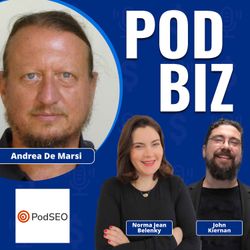
61. How to Make Your Podcast More Discoverable with Andrea De Marsi of PodSEO
57:05||Season 1, Ep. 61How do you make a great podcast easier to find?Andrea De Marsi, founder and CEO of PodSEO and co-founder of Spreaker, joins PodBiz to break down one of podcasting’s longest-running challenges: discoverability.Andrea explains why simply creating great content is not enough. Podcasters also need to think like marketers, from optimizing how their shows appear in Apple Podcasts and Spotify to building a presence across search, social media and increasingly, AI platforms like ChatGPT and Gemini.“Podcasting is basically a product like any other product, and it needs a little bit of time and effort to make it popular, to make it discoverable, so that people can discover it, like it, enjoy it and become loyal to it.” — Andrea De MarsiThe conversation also looks back at Andrea’s journey building Spreaker, its merger with BlogTalkRadio and eventual acquisition by iHeart Media. He shares what he learned about programmatic advertising, adapting a startup to changing markets and maintaining company culture through rapid growth and acquisition.In This Episode• Why audience growth remains the foundation of podcast monetization• Why podcasters need to develop a marketing mindset• How podcast search differs from traditional web search• Why Apple Podcasts and Spotify can make discovery difficult• How AI is creating another opportunity for podcast discovery• Why consistent short-form content can support audience growth• How Spreaker evolved from web radio into a podcast hosting platform• What helped programmatic advertising work for independent creators• How Spreaker maintained its startup culture through acquisition• Why founders need to know when to pivot — and when to let something goEpisode Chapters(01:58) Where is the money in podcasting?(04:16) Why podcasters struggle with marketing(09:25) Building a marketing mindset with PodSEO(12:54) Why podcast discovery is still difficult(19:41) Using social clips to feed discovery(22:51) How Spreaker got started(27:18) Merging Spreaker and BlogTalkRadio(31:20) Betting on programmatic podcast advertising(36:20) Building a strong company culture(38:41) Navigating the iHeartMedia acquisition(43:09) Podcasting’s wave of consolidation(46:45) Learning to adapt outside your comfort zone(49:02) Measuring entrepreneurial success(50:50) Why employee retention matters(52:34) What Andrea would do differently(55:07) What makes podcasting uniqueAbout Andrea De MarsiAndrea De Marsi is the founder and CEO of PodSEO, a platform designed to help podcasters improve discoverability across podcast apps, search, AI and social media. He previously co-founded Spreaker, helping grow the company from an early web-radio platform into a major podcast hosting and monetization business before its acquisition by iHeartMedia. His background spans engineering, podcast technology, programmatic advertising and entrepreneurship.Some Additional PodBiz Buzz“What we are actually creating is more like a tool that helps you get into the mentality of a marketer, so that you do all the necessary steps in order to market your product.”“You have to cover the search engines of the listening applications, but you also have to cover the recommendations of the AI engines. You have to cover your web presence. You have to cover the websites that are talking about podcasts and making recommendations.”“Companies are not the technology that they produce. Companies are not the data center where the software runs. Companies are made by people. If you are able to attract the right people, and if you nurture the culture of the company in a certain way, then you can succeed.”“Podcasting is unique. There’s a higher quality of the content. There’s a higher quality of the topics. They are less cliché, and they do not necessarily follow fashions and trends. You can find real gems within the podcast industry that are more difficult to find in other media.”
60. Why You’ll Want to Be at Podcast Movement 2026 with Molly DeMellier
45:17||Season 1, Ep. 60What happens when a podcast conference stops trying to be everything to everyone and starts creating the right experience for the people actually in the room?Podcast Movement is heading to New York September 17th and 18th and with a completely reimagined format, and Molly DeMellier, Head of Communications at Sounds Profitable, joins PodBiz to break down what attendees can expect.This year separates the business side of podcasting from the broader creator conference, with the Sounds Profitable Business Summit bringing buyers and sellers together early in the week before Podcast Movement takes over Terminal 5 on Thursday and Friday. The goal? More focused conversations, stronger connections and programming designed around what attendees actually want to learn.As Molly explains:“We have seen conferences across industries that have just gotten bigger and bigger. And in trying to reach everybody, they consequently speak to nobody.”We also get into why New York and September matter, the decision to eliminate paid sessions from the Podcast Movement stages, bringing new speakers and perspectives into the industry, and why a $199 ticket is central to making the event more accessible to creators.“We really felt strongly that what occurs on stage should be what the industry wants to hear from.”In this episode we discuss,Why Podcast Movement redesigned its conference formatWhat separates the Sounds Profitable Business Summit from Podcast MovementBringing nearly 200 media buyers into the roomWhy Podcast Movement moved to New York and SeptemberMaking the conference more accessible for independent creatorsHow community voting helped shape this year’s programmingWhy Podcast Movement eliminated paid stage sessionsBringing new speakers, audiences and industries into podcastingHow Sounds Profitable is helping podcasting reach beyond its own echo chamberEpisode Chapters(02:12) Welcome back Molly DeMellier(02:51) Where the money is in podcasting now(04:49) Molly’s journey to Sounds Profitable(08:00) Taking podcast research beyond the echo chamber(11:45) Video, creators and the changing podcast landscape(19:56) Why Podcast Movement changed its format(20:36) Inside the Sounds Profitable Business Summit(21:38) Bringing media buyers into the room(24:30) The week’s new Podcast Movement schedule(25:57) How the community helped choose the sessions(30:02) Why Podcast Movement moved to New York(32:03) Why September matters(33:31) Making Podcast Movement more accessible(35:04) Putting the right people in the right rooms(38:31) Why there are no paid sessions on stage(41:10) What Molly is looking forward to at Podcast Movement(44:24) Bringing new people into podcastingGuest BioMolly DeMellier is Head of Communications at Sounds Profitable, where she leads communications for the organization, Podcast Movement events and a growing roster of industry partners. Her podcasting career has included roles with Acast and Sundaze PR, and today her work spans media relations, content, marketing and communications strategy across the podcast industry.Some Additional PodBiz Buzz“In trying to reach everybody, they consequently speak to nobody.”“I think people will feel this year that for the first time, it’s the right people are in the right rooms.”“We really felt strongly that what occurs on stage should be what the industry wants to hear from.”“There was no cherry picking. There was no money spent to be able to get on stage.”“The lineup is not familiar to me, which is something that I think is really exciting.”Join Us at Podcast Movement NYCPodcast Movement NYC takes place September 17–18 at Terminal 5 in New York City, with two days of programming, five stages, more than 80 sessions, networking and live podcast recordings.General Admission tickets are $199.Get your ticket here:https://2026.podcastmovement.com/pm/registration
59. How Podcasting Gets a Bigger Share of Ad Dollars with David Krulewich
52:02||Season 1, Ep. 59If advertisers already understand the value of podcasting, what needs to happen for the industry to capture a bigger share of their budgets?David Krulewich, founder and CEO of Mission Media AI, joins PodBiz to look at where the money is moving across podcasting and the wider advertising ecosystem.David makes the case that the opportunity is no longer limited to selling podcast ads show by show. Advertisers are increasingly buying audiences, demographics and interests across large groups of content. For independent creators, that creates opportunities for highly specific shows with loyal audiences, even before they reach massive download numbers.But the bigger question is how podcasting competes for advertising dollars currently flowing into video, social and CTV. David argues that podcasting needs to become a truly omnichannel format, with audio remaining valuable while video, YouTube and new forms of distribution open the industry to much larger advertising budgets.“It's no longer a question by brands if they need to be spending in podcasting, the answer is yes.”“We're going to get more money in podcasting when we are creating podcasts that have video and we can get video dollars.”In this episode, we cover:Why audience-driven and contextual targeting are becoming more important to podcast advertisingHow smaller, niche podcasts can create valuable direct sponsorship opportunitiesWhy creators should think beyond the audio feed when building their businessesHow video could give podcasting access to significantly larger advertising budgetsThe growth of sports wagering, prediction markets and the advertising ecosystem surrounding themWhy distribution may matter just as much as content as podcasting evolvesWhat David has learned about entrepreneurship, partnerships and building Mission Media AIAbout David Krulewich:David Krulewich is the founder and CEO of Mission Media, a media and technology company connecting brands, creators and audiences across podcasts, streaming audio, CTV and digital media. Since launching in 2025, Mission Media has delivered more than one billion ad impressions and generated millions in revenue for creators and media partners.Previously, David held leadership roles at Audiohook and Katz Digital, where he oversaw more than $100 million in annual media spend across streaming audio and podcasting. He also co-founded Audiology, later acquired by Katz Digital, and has been part of three successful exits across his career in digital media and advertising.Episode Moments:(02:02) Where is the money in podcasting?(04:44) Why creators need a YouTube presence(09:47) When a smaller podcast becomes commercially valuable(16:44) How brands now view podcast advertising(17:42) Why podcasting needs video dollars(28:45) Sports betting, prediction markets and media(43:58) What entrepreneurship taught David about partnerships(47:25) Why distribution is king nowSome Additional PodBiz Buzz:“You have to take calculated risks and you have to be dedicated to service.”“You can really start to create a small business, an enterprise business off of a very small audience.”“Advertisers follow audiences.”“Let's be service. And then the money will flow after that.”
58. How to Build a Better Podcast Ad Campaign with Andy Maxwell of Earmax Media
48:54||Season 1, Ep. 58What separates a podcast ad campaign that drives real business results from one that simply delivers a large number of impressions?Andy Maxwell, co-founder of Earmax Media, joins PodBiz to explain why successful podcast advertising starts with understanding exactly what a brand is buying. Audience fit, ad position, campaign measurement and the quality of the creative all affect whether a listener takes action.As Andy puts it:“If you can double down on that audience and that niche, the reach figure doesn't matter as much. It's the community that you build and you can charge a premium for that community.”Andy breaks down why niche podcasts can outperform larger shows, how pre-roll and mid-roll position affect performance and why a low CPM does not necessarily represent good value. He also explains how brands can track website visits, leads, purchases and return on ad spend rather than treating impressions as the final result.“You cannot overlook the importance of a great audio creative ad when it's in these, you know, let's say it's the perfect media plan. If you've got a shit ad, it's still going to do badly.”Here are some insightful moments within the episode:Why brands should focus on conversions instead of cheap reachHow niche audiences create more valuable advertising opportunitiesWhy first position within an ad break can improve performanceWhat brands misunderstand about impressions, downloads and listenersHow pixels, landing pages and discount codes measure resultsWhy podcast ads need creative built for the listening environmentWhen sponsoring an established podcast is smarter than launching a short branded seriesHow video dynamic ad insertion could unlock evergreen inventoryAbout Andy MaxwellAndy Maxwell is the co-founder of Earmax Media, a podcast media buying agency working with brands across the UK and Australia. He began his career at a brand agency before moving into broadcast PR, branded podcast strategy and podcast advertising. Andy also produced Whiskey Legends, an eight-part documentary podcast with his grandfather about the evolution of the whisky industry.https://earmaxmedia.com/our-workEpisode Chapters(01:28) Where is the money in podcasting?(05:39) Why conversions matter more than cheap reach(08:08) How niche podcasts drive stronger results(10:41) Measuring podcast advertising performance(13:00) Active attention versus passive listening(17:20) What brands misunderstand about podcast inventory(19:58) Why premium ad placement matters(24:44) Building Earmax Media(30:23) Podcast advertising in the UK and Australia(33:23) Podcasting as the hub of a creator campaign(35:04) Why great creative still matters(36:35) Producing Whiskey Legends with Andy’s grandfather(38:43) Why branded podcasts need promotion(43:48) What Andy would do differently(45:39) The future of video podcast advertisingSome Additional PodBiz Buzz...“An impression in the podcast environment is so much more valuable than in a broadcast radio environment.”“Ultimately every single podcast host is a creator.”“If you're a brand and you've got $50,000 or pounds or whatever and you're thinking, oh, we want to have a branded podcast, I would strongly advise, unless you're willing to commit to that podcast long term, as in weekly or biweekly for years, you're much better off sponsoring podcasts with a built in audience already of exactly who you want to reach and hosts that you trust, and just kind of piggyback off of their success.”