Share
PlaceKnowing with Dr. Ted Jojola
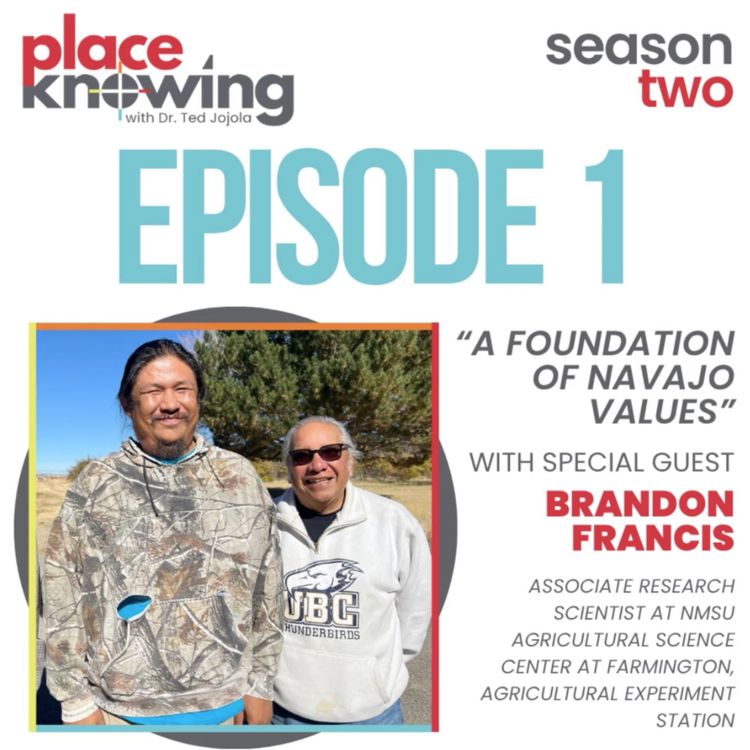
Scientist/Researcher Brandon Francis on a Foundation of Navajo Values
DR. TED JOJOLA: Heno Mathenwe. Greetings Everybody. I’m Dr. Ted Jojola and welcome to Season 2 of our PlaceKnowing podcast series. We’re building on the stories we shared in Season 1 about how and why we engage Indigenous Design and Planning methods to heal damaged lands and waters called brownfields.This season, we turn our attention to the 2015 Gold King Mine spill disaster - where a crew from the Environmental Protection Agency ruptured a plug of rock and soil near Silverton, Colorado.
That incident released three million gallons of acidic mine waste into the Animas River, on the northeastern edge of Navajo Nation and still impacts farmland and sacred waters in the San Juan River basin.
In the coming episodes, you’ll hear how Indigenous and non-Indigenous scientists, farmers, and community members are coming together through cultural resiliency to restore and protect their places.We begin with Diné research scientist and farmer Brandon Francis whose family has stewarded corn in the Black Mesa, New Mexico area for generations. Brandon works with New Mexico State University’s Agricultural Science Center in Farmington, New Mexico - and takes the time to set both the cultural and scientific tone for the rest of this series.
BRANDON FRANCIS: Every decision that you make as a researcher and as a scientist you have to analyze it in terms of how is this going to benefit people. And not just you. That’s not going to advance your career. As an Indigenous person you are trying to move along the five fingered people. The people who live on the Earth as the human people.
DR. TED JOJOLA: Brandon and his organization were key in providing much needed information about the status of the spill as it was unfolding – and critical testing for farmers on the health of land and water in the aftermath of the spill.
A big thank you to The Transformation Network for sponsoring this season, and to our production partners at The Aunties Dandelion. And don’t forget to find us and follow us on your favourite podcasting platform! Matuwen
More episodes
View all episodes
4. Zach Ben on Biidi Baby Foods
48:50||Season 2, Ep. 4Over the past three episodes, we’ve visited people and communities who are dealing with the long shadow cast by the 2015 Gold King Mine spill: a disaster that sent 3 million gallons of toxic waste straight into the Animas and San Juan Rivers, contaminating land, water, and trust within the Southwest Four Corners region and specifically Navajo Nation.Today, in our final episode of the series, we visit with Zach Ben who is founder of Bidii Baby Foods. Zach is a sixth-generation Diné farmer, an artist, a father, and someone who’s not afraid to challenge broken systems while creating something better.What started as a way to feed his son during the pandemic has grown into a whole movement rebuilding local food systems from Shiprock, New Mexico, in full view of the poisoned river. Zach talks with us about what it means to farm through trauma and redefine wealth in the form of healthy land, water, and community-led business.Bidii, by the way, is a Navajo word for “belly” and it’s also a way to recognize someone who knows how to hunt, how to grow, and how to feed a family. And that’s exactly what Zach and his partner Mary are doing as they feed their children and neighbors.As always, PlaceKnowing is brought to you by the Intermountain West Transformation Network. And big thanks to our production partners at The Aunties Dandelion for walking with us on this series.Okay. Let’s head to the farm.
3. Dr. Lanni Tsinnajinnie, UNM (Navajo) and Gloria Lane Navajo Ethno Agriculture (Navajo)
56:14||Season 2, Ep. 3Host Dr. Ted Jojola of Indigenous Design and Planning Institute explores stories of resilience and collaboration among the partners of Intermountain West Transformation Network (IWTN @transformimw - also our sponsor) in the aftermath of the 2015 Gold King Mine spill. In that disaster, a maintenance rupture released 3 million gallons of acidic mine waste into the Animas River and San Juan River Basin near Silverton, Colorado. Our first guest in our July episode is Dr. Lani Tsinnajinnie, Assistant Professor of Community & Regional Planning at University of New Mexico and a citizen of the Navajo Nation. Lani brings her expertise in mountain and watershed hydrology to work with Indigenous communities on water resourcing. Lani is also Co-Principal Investigator with the IWTN.Later we travel to the Four Corners region of the Navajo Nation to visit Gloria Lane of Navajo Ethno-Agriculture (@navajofarming) 🌽 In 2019, Gloria’s group received the prestigious MIT Solve fellowship for their work using water testing and data to support Navajo farming after the spill, all while mentoring new generations of Navajo farmers in culturally-infused agriculture 🌱👩🏽🌾Nyá:wen to our production partners at @theauntiesdandelion for your technical and editorial prowess. 🎙️🌼
2. Dr. Kevin Lombard and Dr. Karletta Chief on Indigenous Teachings and Community Science
52:04||Season 2, Ep. 2On this PlaceKnowing episode, we continue to explore how Indigenous and non-Indigenous scientists and communities are responding to the aftermath of the 2015 Gold King Mine spill. Host Dr. Ted Jojola (Isleta Pueblo) talks with Dr. Kevin Lombard of New Mexico State University about how Indigenous values reshape science into a collective responsibility.Later, our co-producer Kahstoserakwathe Paulette Moore (Kanyen'ké:ha) speaks with Diné hydrologist Dr. Karletta Chief of University of Arizona's Indigenous Resilience Center. She blends Diné knowledge and Western science to help communities heal and adapt.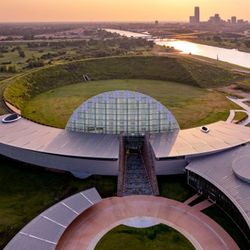
7. EP 6: The Making of First Americans Museum Oklahoma
59:56||Ep. 7Ted Jojola's Metropolis magazine article on First Americans Museum
6. EP 5: Golovin Alaska Part 2
27:00||Ep. 65. EP 4: Golovin Alaska Part 1
26:22||Ep. 54. EP 3: Round Rock Navajo Nation Case Study Part 2
55:37||Ep. 4
3. EP 2: Round Rock Navajo Nation Case Study Part 1
35:58||Ep. 3