Share
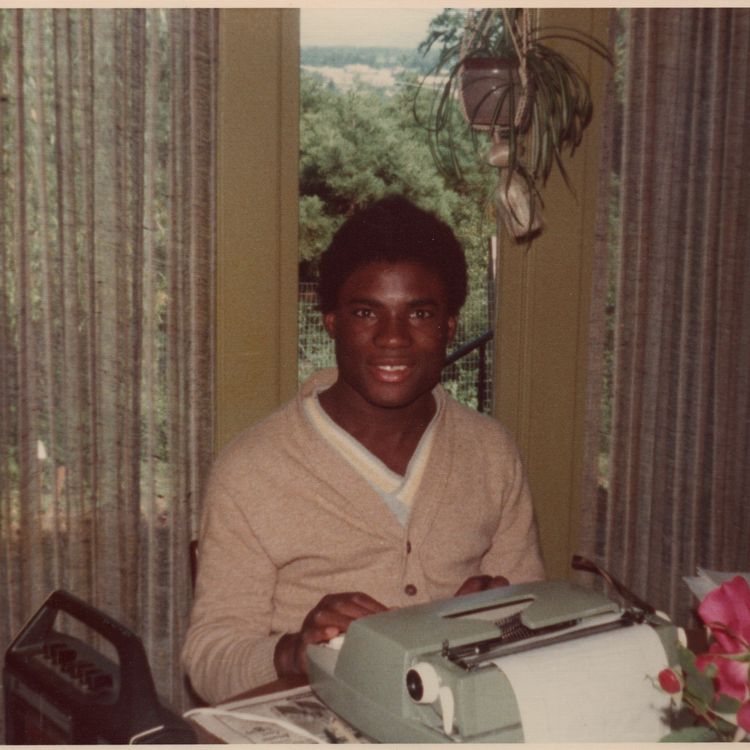
Philip Emeagwali
Philip Emeagwali Remembers The Biafran Holocaust - The Nigerian Civil War
•
A Day in the Life of a Child Soldier. I was a child soldier on the Biafran side of the Nigeria Biafra War, a war that raged during the last 30 months of the 1960s, a war that was described as Africa’s bloodiest war, and a war in which one in fifteen Biafrans died. My journey to my invention was a twenty-year long journey that began at a war front in July 1969 and ended, twenty years later, at the frontier of knowledge on the Fourth of July 1989.
The turning point in my journey
to the frontier
of the most massively parallel supercomputer
occurred twenty years before
my experimental discovery
of the massively parallel supercomputer that, in turn,
occurred on the Fourth of July 1989
and occurred
in Los Alamos, New Mexico,
United States.
In July 1969, I was conscripted
as a 14-year-old soldier
and sent to the Oguta War Front,
Igbo Land, Biafra, West Africa.
I was conscripted at gun point
into a war that was on par
with the American Civil War
or the Spanish Civil War.
I was the youngest soldier
at the Oguta War Front, Biafra.
That war
turned my ancestral hometown
of Onitsha (Biafra)
into Africa’s bloodiest battlefield.
I arrived at the Oguta War Front
and arrived a few days after
500 Biafran soldiers
fell on the ground.
Five hundred soldiers fell
as if they were dry leaves.
I was conscripted to replace
one of the 500 men that died.
At the Oguta War Front of Biafra,
they were more guns than pens.
That 30-month-long war ended on
July 15, 1970
and ended with the defeat of Biafra.
In mid-1968, my postal address
was the refugee camp at
Saint Joseph’s Secondary School,
Awka-Etiti, Biafra.
My family of nine
lived in a tiny classroom
of Saint Joseph’s Secondary School.
In Biafra, West Africa, all schools
were closed from June 1967
through early 1970.
Schools in Biafra were closed because they were either located at the war front
or closed so that
refugees like those of us
that fled from Asaba and Onitsha
could live in its classrooms.
In Biafra, all school classrooms
were reconfigured as living spaces
for refugees and soldiers.
The refugees at Saint Joseph’s
had no chairs, no tables, no beds.
Refugees slept on a mat
that was spread across a concrete floor
and many slept on bare floors.
My father, Nnaemeka James Emeagwali,
who was appointed
our refugee camp nurse, said that
most refugee children,
including my youngest brother,
had kwashiorkor.
Kwashiorkor is a nutritional disorder
that is caused by the lack of protein.
Kwashiorkor was prevalent
in famine stricken Biafra.
At Saint Joseph’s Refugee Camp,
there were days I only ate
palm kernels and fried cassava flakes called garri.
By mid-1970, and six months
after the war has ended,
I was still living in refugee quarters
along Port Harcourt Road, Fegge, Onitsha, East Central State (Nigeria).
Each morning, I took an empty bucket
to fetch water
from the eastern bank
of the River Niger.
Port Harcourt Road was a short walk
from the banks of the River Niger.
Fast forward four years
from that refugee quarters
in Fegge (Onitsha),
I was in Monmouth, Oregon,
in the Pacific Northwest region
of the United States.
2.7.5 Philip Emeagwali Religion
I was asked:
“What were the religious influences
on your contributions to science?”
More episodes
View all episodes
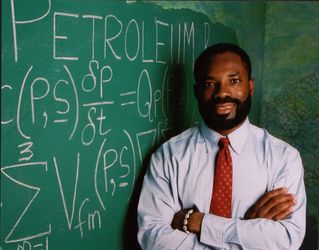
Philip Emeagwali Internet Famous Inventors And Their Inventions Black History Month 2020
20:52|Philip Emeagwali Internet Famous Inventors And Their Inventions Black History Month 2020 by Philip EmeagwaliPhilip Emeagwali Supercomputer Biography, Inventions, Quotes, Computer Famous Inventors
20:52|Philip Emeagwali Supercomputer Biography, Inventions, Quotes, Computer Famous Inventors by Philip EmeagwaliPhilip Emeagwali Internet Famous Inventors And Their Inventions Black History Month 2020
20:52|Philip Emeagwali Internet Famous Inventors And Their Inventions Black History Month 2020 by Philip EmeagwaliPhilip Emeagwali Supercomputer Biography, Inventions, Quotes, Computer Famous Inventors
20:52|Philip Emeagwali Supercomputer Biography, Inventions, Quotes, Computer Famous Inventors by Philip EmeagwaliPhilip Emeagwali Supercomputer Changing The Way We Look At The Computer Famous Inventions
20:52|Philip Emeagwali Supercomputer Changing The Way We Look At The Computer Famous Inventions by Philip EmeagwaliPhilip Emeagwali Supercomputer Changing The Way We Look At The Computer Famous Inventions
20:52|Philip Emeagwali Supercomputer Changing The Way We Look At The Computer Famous Inventions by Philip Emeagwali
180125 2 7 The Moment I Invented A New Supercomputer1 (1)
05:40|180125 2 7 The Moment I Invented A New Supercomputer1 (1) by Philip Emeagwali
180125 2 7 The Moment I Invented A New Supercomputer1
05:40|180125 2 7 The Moment I Invented A New Supercomputer1 by Philip Emeagwali
8 African Icons World Aids Day Ad December 1 2006 (1)
02:00|8 African Icons World Aids Day Ad December 1 2006 (1) by Philip Emeagwali