Share
PRIO's Peace in a Pod
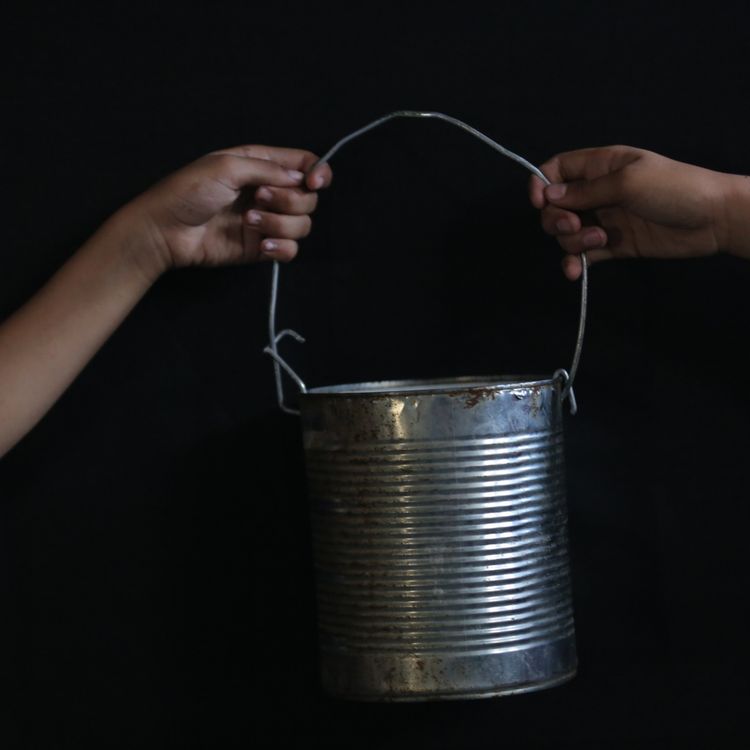
From Gaza to Sudan: What the Rise in Global Conflict Means for Children
2024 marked one of the most violent years since the end of the Cold War, with 61 armed conflicts recorded across 36 countries. This sobering tally comes from PRIO’s latest Conflict Trends: A Global Overview report, drawing on data from the Uppsala Conflict Data Program.
But behind the numbers lies a deeper human toll. From Gaza to Sudan, children are among the most vulnerable in today’s wars - facing displacement, trauma, and the collapse of education and health systems.
In this episode, we speak to Inger Ashing, CEO of Save the Children, about what it means to protect childhood in the midst of war. And to Siri Aas Rustad, Research Director at PRIO and lead author of the report, who walks us through the data and its implications.
PRIO's Peace in a Pod is hosted by Arnaud Siad.
Photo: Getty Images.
More episodes
View all episodes
2. Children Born of War: The Long Road to Recognition
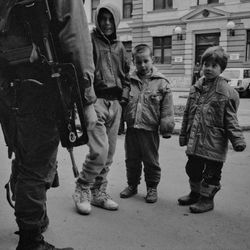
40:32||Season 3, Ep. 2For some children, the scars of war are present from the very beginning of life.Children born of war are found in virtually every conflict worldwide. Most are born to local women and fathered by members of enemy forces. Some of these relationships are consensual – occasionally even rooted in love. Many, however, are the result of rape.Across contexts, these children carry the burden of a complex and often violent history, as well as stigma that frequently follows them into adulthood. For decades, societies have struggled to acknowledge their existence, let alone protect their rights.Today, that is slowly beginning to change.In June 2025, Ukraine took a decisive step by criminalising war crimes against children – crimes that became particularly prevalent following Russia’s invasion. Yet globally, the path to recognition and justice remains long.In this special episode of PRIO’s Peace in a Pod, Arnaud Siad speaks with Ajna Jusić, a Bosnian human rights activist and founder of the Forgotten Children of War Association. Ajna’s advocacy helped secure a landmark moment in 2023, when Bosnia and Herzegovina adopted the Law on the Protection of Civilian Victims of War, formally recognising children born of war as a distinct social category with equal rights.She is joined by Lejla Damon, spokesperson for the organisation, who speaks to the situation of children born of war in Bosnia and internationally.The conversation also includes Inger Skjelsbæk, Professor at the University of Oslo and Research Professor at PRIO, and leader of the EuroWARCHILD project, which examines the experiences, rights, and needs of children born of war across Europe.Ajna and Lejla were in Oslo to receive the University of Oslo Human Rights Award on behalf of the Forgotten Children of War Association – and to share their personal experiences, research, and ongoing fight for recognition, justice, and dignity.PRIO’s Peace in a Pod is hosted by Arnaud Siad.Photo: Getty Images/Derek Hudson.
1. Is the International Order Unravelling?
44:45||Season 3, Ep. 1January 2026 has barely begun, yet the pace of global upheaval is already staggering.In just a few weeks, the United States has seized Venezuela’s president Nicolás Maduro, issued threats against allies, and signalled a willingness to reshape the world order.At the same time, international law and human rights are under unprecedented strain – from Ukraine to Sudan, from Gaza to Iran. Ceasefires fail to end the violence. Humanitarian organisations are expelled. Journalists and academics are silenced.As 2026 begins, a fundamental question looms: are we witnessing a temporary crisis of the international system – or its steady unravelling?In this episode, Agnès Callamard, Secretary General of Amnesty International and former UN Special Rapporteur, and Jørgen Jensehaugen, Research Professor at the Peace Research Institute Oslo and a leading expert on the Israeli–Palestinian conflict, examine the erosion of global norms, accountability, and multilateral institutions – and ask what, if anything, can still hold the system together.PRIO’s Peace in a Pod is hosted by Arnaud Siad.Photo: Getty Images/Europa Press
10. Passing the Torch: Leadership, Peace, and a Changing World Order
27:47||Season 2, Ep. 10After nearly a decade as PRIO Director, Henrik Urdal has wrapped up his tenure. Taking over is Nina Græger, who returns to PRIO after leading the Department of Political Science at the University of Copenhagen.In this special episode of PRIO’s Peace in a Pod, host Arnaud Siad sits down with both leaders for a wide-ranging conversation about what it means to steer a peace research institute in a time of global turbulence.Henrik reflects on his years at the helm - the challenges, guiding values, and what makes PRIO unique. Nina shares her vision for the institute and the role of peace research in an era marked by resurging conflict, rising defense budgets, and shifting geopolitical alliances.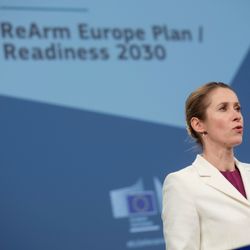
8. After America: Can Europe Defend Itself?
33:35||Season 2, Ep. 8The European Commission has unveiled a bold 800 billion euro plan to ramp up defense spending - marking what many are calling a historic shift in Europe’s security architecture. With the United States signaling a more distant role under the Trump administration, Europe is under growing pressure to stand on its own.Is this a turning point for NATO? Can Europe match the military and strategic weight of other global powers? And what might this shift mean for the values that have long underpinned the Western alliance?In this episode, host Arnaud Siad is joined by Kori Schake, Director of Foreign and Defense Policy at the American Enterprise Institute and former foreign policy adviser to President George W. Bush, and Bruno Oliveira Martins, Senior Researcher at PRIO, to unpack the changing transatlantic relationship and what lies ahead for Europe’s security future.Photo: Thierry Monasse/Getty Images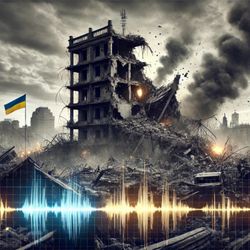
7. Could a Breakthrough Technology Transform the War in Ukraine?
37:14||Season 2, Ep. 7Negotiations around a ceasefire in Ukraine have dominated headlines ever since Donald Trump returned to the White House. From bilateral talks in Saudi Arabia to direct talks between Trump and Vladimir Putin, discussions are intensifying over what a potential ceasefire could look like.But on the ground, the fighting continues. Ukraine’s energy infrastructure remains under attack, and civilians are still caught in the crossfire.Now, a breakthrough technology developed by the Peace Research Institute Oslo (PRIO) and NORSAR—using seismic and acoustic detection to automatically identify events—could transform how war crimes are documented and how ceasefires are monitored.Joining this episode are Sebastian Schutte, a Research Professor who leads the project at PRIO, and Oleksandra Matviichuk, head of the Center for Civil Liberties in Kyiv, who works tirelessly to document war crimes committed by Russian forces.PRIO’s Peace in a Pod is hosted by Arnaud Siad.Image: ChatGPT (DALL·E) / OpenAI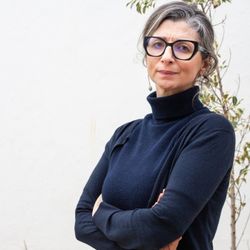
6. UN Special Rapporteur Francesca Albanese on Gaza, Trump, and Genocide
46:49||Season 2, Ep. 6President Donald Trump’s call for the U.S. to take control of Gaza and displace its population marks a stark break from decades of American policy—one that could destabilize the entire Middle East.This comes at a critical moment, as the fragile Israel-Hamas ceasefire hangs in the balance and families await the return of hostages from Gaza. For Palestinians, the threat of another forced displacement is not only terrifying but a clear violation of international law.So what happens next? And what are the broader consequences for the region?In this episode, UN Special Rapporteur Francesca Albanese and PRIO Senior Researcher Jørgen Jensehaugen break down the stakes, the legal implications, and the realities on the ground.PRIO’s Peace in a Pod is hosted by Arnaud Siad.Photo: Chedly Ben Ibrahim/NurPhoto via Getty Images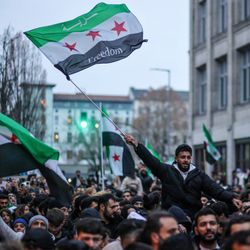
5. What’s Next for Syrian Refugees After Assad’s Fall?
47:41||Season 2, Ep. 5December 8th. Syrian President Bashar al-Assad is reported to have fled the country his family ruled for 50 years—a political earthquake that sends shockwaves across the globe.Miles away in Europe, thousands of Syrians in the diaspora gather spontaneously to mark this historic moment. Governments react swiftly—many freezing asylum claims, while some begin drafting plans for the return of refugees.In this two-part episode, we first hear from Alaa Same, a Syrian refugee now settled in Norway. He shares his extraordinary story of escaping Syria, finding his way to Oslo, and the moment he learned that the dictator who had ruled his country for decades was finally gone.Then, we turn to two leading experts on migration and refugees: Marta Bivand Erdal, Research Professor at PRIO, and Pål Nesse, Senior Adviser to the Norwegian Refugee Council.PRIO's Peace in a Pod is hosted by award-winning journalist Arnaud Siad.Photo: Getty Images/Omer Messinger
4. From Biden to Trump: Ukraine’s War at a Turning Point
24:23||Season 2, Ep. 4The stakes are rising in Ukraine as Russian attacks on critical infrastructure intensify, plunging the country into darkness with rolling blackouts.Meanwhile, the Biden administration makes its final push to arm Kyiv before leaving office, and President-elect Donald Trump signals a potential shift in U.S. policy, raising critical questions about the future of the conflict.In this episode of PRIO’s Peace in a Pod, host Arnaud Siad is joined by Kristian Berg Harpviken, research professor at PRIO and the future Head of the Norwegian Nobel Institute, and Dr. Sabine Fischer, a Russia expert at the German Institute for International and Security Affairs, to discuss Ukraine’s war at this pivotal moment and what lies ahead.Picture: Getty Images.