Share
Over The Bar
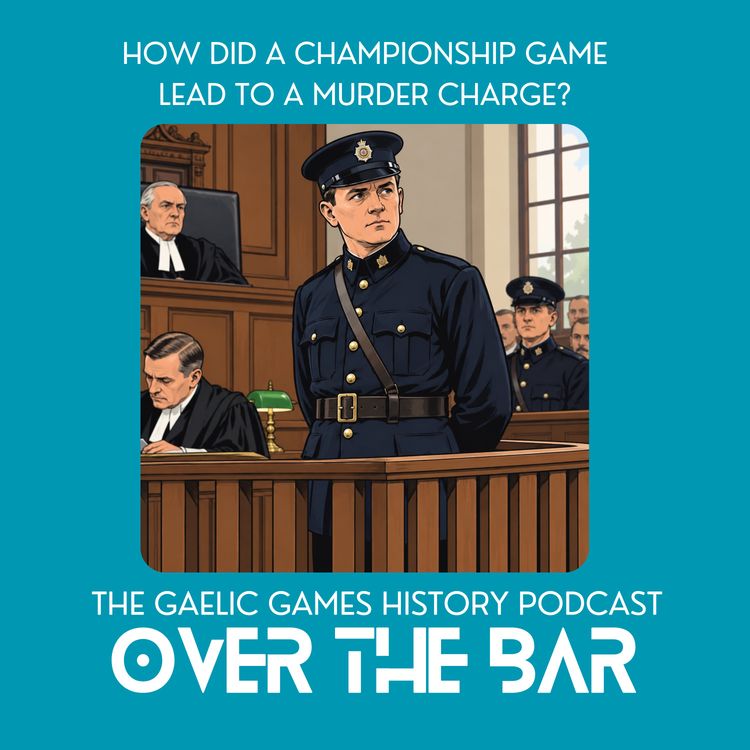
How Did A Championship Game Lead To A Murder Charge?
How did a Championship match end with a Garda Sergeant standing in the dock on a charge of murder? In 1929, what should have been another summer afternoon of Gaelic football instead set in motion an extraordinary chain of events involving players, supporters, the Gardaí and, ultimately, the courts. In this episode of Over The Bar, Michael Foley and Ciarán O’Hara go back almost a century to reconstruct a remarkable story from the Championship: the match itself, the trouble that followed, the death that transformed the affair into something far more serious, and the sensational murder charge that followed.
For those who want more Gaelic Games History, you can join our Cairde Club for less than the price of a match programme for month - where you'll get exclusive episodes, bonus content, ad free and early release versions of the main podcast. Just visit www.overthebar.club today to sign up.
More episodes
View all episodes
5. Week That Was - Sept 7th to 13th
18:18||Season 1, Ep. 5In this edition of Week That Was, we turn the clock back to three remarkable chapters from GAA history. We revisit the 1947 All-Ireland Hurling Final, when Kilkenny and Cork renewed one of hurling’s great rivalries. Then it’s back to 1926 and the Munster Hurling Final — a championship encounter with a story that didn’t end when the final whistle sounded. And finally, we head to 1955, when the All-Ireland Football Championship reached the semi-final stage and neither game could separate the teams. Two semi-finals, two draws, two replays — and a remarkable route to the biggest day of the year.
4. Week That Was - Aug 31st To Sept 6th
13:59||Season 1, Ep. 4This week on The Week That Was, we head back through the GAA history books to revisit three memorable moments from the opening days of September. We look at the first All-Ireland final ever played on the first Sunday of September – a date that would eventually become synonymous with the biggest day in the Hurling calendar.We also revisit the unusual year when the footballers took over that slot. And we tell the story of the afternoon when one of Tipperary’s greatest characters lit up Croke Park. With his boots discarded and Croke Park at his feet, Babs Keating became the Barefoot Wonder.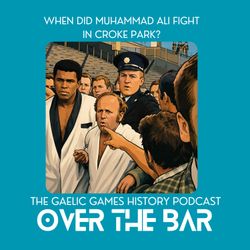
101. When Did Muhammad Ali Fight In Croke Park?
01:02:15||Season 1, Ep. 101On 19 July 1972, the most famous sportsman on the planet stepped into a boxing ring in the middle of Croke Park. Muhammad Ali’s fight against Al ‘Blue’ Lewis has become one of the most remarkable nights in the history of the stadium — a world heavyweight superstar fighting at the headquarters of the GAA in a bout that almost seems impossible in hindsight.But how did Muhammad Ali end up fighting in Croke Park? Who brought him to Dublin? What was Ireland like during Ali’s visit, and what actually happened on the night itself? We’re joined by Dave Hannigan, author of The Big Fight: When Ali Conquered Ireland, to tell the extraordinary story of the people who made the fight happen, Ali’s time in Ireland and the night Croke Park swapped Gaelic Games for big time boxing.
3. Week That Was - Aug 24th to 30th
19:28||Season 1, Ep. 3In the latest edition of Week That Was we're casting our eyes back to an All Ireland Semi Final on Leeside, an All Munster Semi Final in the the last four of the football championship and establishing why only one Provincial final was played in 1921.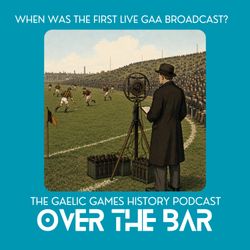
99. When Was The First Live GAA Broadcast?
36:26||Season 1, Ep. 99Radio was still in its infancy in Ireland when, in August 1926, the GAA took its first tentative step into the world of live broadcasting. In this episode we tell the story of the first live broadcast from a GAA match. Done with a primitive microphone, a makeshift commentary position and equipment powered by ship's batteries, it was a world away from the sports broadcasting operation we know today. We look at how the historic experiment came about, what listeners actually heard, the technology required to get Croke Park on the air and how quickly live GAA broadcasting developed afterwards.
2. Week That Was - Aug 17th to 23rd
26:37||Season 1, Ep. 2Episode 2 of Week That Was takes us back to some remarkable moments from this week in GAA history. We look at two major championship games that didn’t make it to regulation length, and the very different circumstances that brought them to an early conclusion. There’s also the story of how Kerry tamed an Ulster uprising, as the Kingdom faced a new challenge from the rapidly emerging northern counties. And we revisit Fermanagh’s extraordinary run to their first-ever All-Ireland Senior Football Championship semi-final — a journey that took a county with no provincial title to within touching distance of the biggest day of all.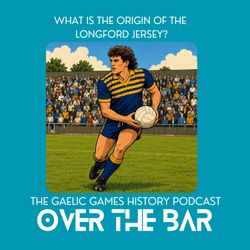
97. What Is The Origin Of The Longford Jersey?
32:00||Season 1, Ep. 97Why do Longford wear blue and gold — and what does the county jersey tell us about the turbulent early history of the GAA in Longford? In this episode of Over The Bar, we explore the origins of the Longford jersey against the backdrop of a county where Gaelic games struggled to establish themselves.Political divisions, competing loyalties and splits within the nationalist movement all played their part in disrupting the early development of the Association in Longford. Yet, out of those difficult beginnings, a county identity gradually emerged — and with it the colours that would eventually become synonymous with Longford football.
1. Week That Was - Aug 10th to 16th
15:58||Season 1, Ep. 1Introducing Week That Was, a new series from Over The Bar – The GAA History Podcast, where we turn back the clock to revisit the games, stories and controversies that made GAA history during this week in years gone by.In our first episode, we look at four remarkable Championship stories from August 10th to August 16th.We revisit the dramatic 1981 All-Ireland Hurling Semi-Final replay between Galway and Limerick, go back to 1936 and Mayo’s first ever Championship victory over Kerry, examine a contentious Connacht Final in 1946, and remember 1991, when the Leinster Final was played later in the year than it had been for half a century. Four games. Four very different stories. All played during the same week in GAA history.