Share
Outsider Visions: How the Marginalized Imagined Tomorrow
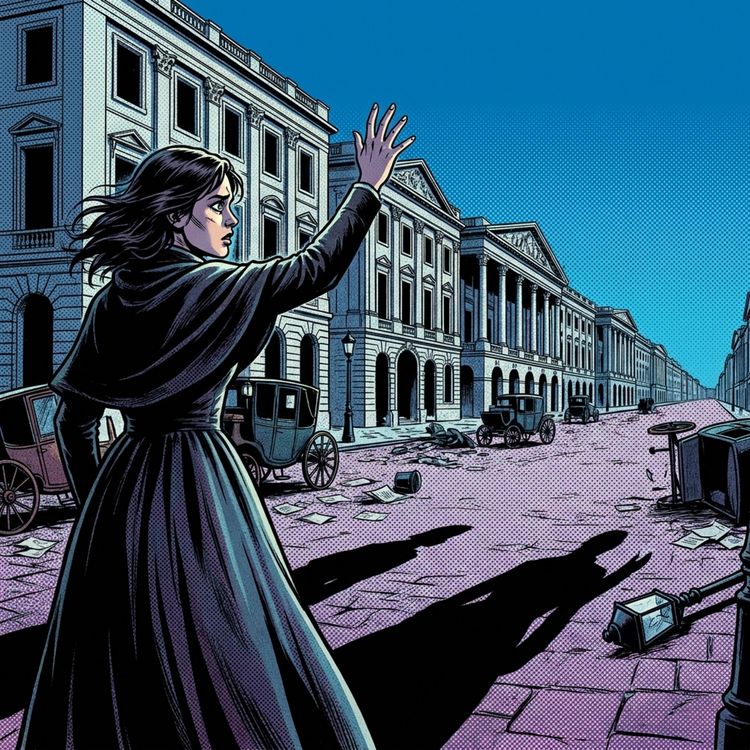
The Last Man Standing: Shelley's Plague Apocalypse
Season 1, Ep. 14
•
Eight years after Frankenstein, Mary Shelley published The Last Man — the first major apocalyptic novel in English literature, set in a late 21st-century world (2073–2100) destroyed by plague. Written after the deaths of Percy Shelley, Lord Byron, and three of her four children, the novel is saturated with grief and post-Napoleonic disillusionment. The empty cities, the collapse of social structures, the plague as social leveler — all anticipate the climate collapse and pandemic fiction of two centuries later. Shelley pioneered not one but two of science fiction's most enduring subgenres (the mad scientist story and the apocalypse narrative), yet The Last Man was largely forgotten — out of print from 1833 to 1954 — until it was rediscovered in the 1960s, with feminist scholars providing deeper critical attention from the 1970s onward (notably Anne K. Mellor's foundational 1988 study). This episode explores how grief and political despair fueled the invention of end-times literature.
SPOILERS! Please note that due to the nature of this podcast, each episode describes a novel in detail, including plot spoilers.
More episodes
View all episodes
18. Binti: Okorafor's African Girl at the Stars
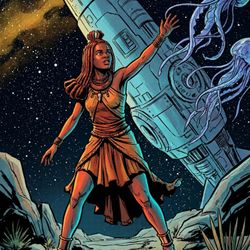
17:45||Season 1, Ep. 18Nnedi Okorafor's Binti (2015) won both the Hugo and Nebula Awards for Best Novella. Its protagonist, Binti, is the first member of the Himba people of Namibia to be accepted to Oomza University, the greatest institution of learning in the galaxy. She leaves against her family's wishes, carrying her otjize (a red clay paste central to Himba identity), and becomes the sole survivor of a massacre by the Meduse — an alien species with whom she must make peace. Okorafor coined the term 'Africanfuturism' to distinguish her work from Afrofuturism: where Afrofuturism centers the African diaspora's relationship with America, Africanfuturism centers the African continent itself, drawing on specific African cultures and cosmologies rather than treating 'Africa' as a monolith. This episode examines Binti as a story about education access, cultural identity under pressure, and the possibility of peace-making across radical difference.
17. Radium Girls and Rocket Dreams: Clare Winger Harris
20:20||Season 1, Ep. 17Clare Winger Harris became the first woman to publish science fiction in the pulp magazines when her story 'The Fate of the Poseidonia' appeared in Amazing Stories in 1927 — the same year that the Radium Girls' lawsuit against US Radium Corporation was making headlines, and women's relationship to technology and industry was being violently negotiated. Harris wrote about futures in which technology transformed domestic and social life, at a time when Hugo Gernsback's editorial gatekeeping was actively marginalizing women from the genre he was defining. This episode examines Harris as a case study in how women's voices were present from the very beginning of pulp SF, and how the genre's origin myth of male engineering heroes erased them. It connects the Radium Girls' story — women workers poisoned by the technology they were told to trust — to Harris's speculative visions of women in technological futures.
16. The Dispossessed's Anarchist Wall: Le Guin's Utopia Test
21:48||Season 1, Ep. 16Ursula K. Le Guin's The Dispossessed (1974) is subtitled 'An Ambiguous Utopia' — a deliberate challenge to utopian SF's tendency to present perfect societies without examining their costs. Anarres is a moon colony organized on anarchist-communist principles, and it is genuinely admirable: no ownership, no hierarchy, mutual aid, gender equality. It is also conformist, resource-scarce, and capable of its own subtle tyrannies. Le Guin was deeply influenced by the anarchist philosopher Peter Kropotkin and was writing during the post-1968 disillusionment with both Soviet communism and American capitalism. The novel's physicist protagonist, Shevek, crosses between the two worlds and finds both wanting. This episode examines The Dispossessed as the most rigorous utopian thought experiment in SF history, Le Guin's anarchist politics, and what the novel says about the relationship between freedom and community.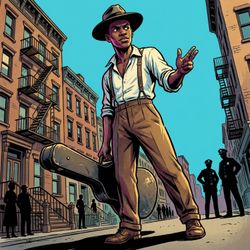
15. The Ballad of Black Tom: LaValle's Lovecraft Reclamation
22:13||Season 1, Ep. 15Victor LaValle's The Ballad of Black Tom (2016) is a retelling of H.P. Lovecraft's 'The Horror at Red Hook' from the perspective of Charles Thomas 'Tommy' Tester, a Black hustler in 1920s Harlem. Tommy uses a guitar case as a prop — it grants him 'invisibility' among wealthy white folks and their cops — but he is primarily a street hustler and con man, not a musician (his father is the talented musician). Lovecraft's original story is saturated with racial terror — Lovecraft was explicitly, virulently racist, and his cosmic horror is inseparable from his fear of non-white people. LaValle's response is not to ignore the racism but to inhabit it: his protagonist experiences the actual cosmic horror of being Black in America, and the Lovecraftian monsters are less frightening than the police. The novella asks what it means to reclaim a racist text, whether that reclamation is possible or even desirable, and how the horror genre's relationship with race must be reckoned with. This episode examines LaValle's project, Lovecraft's racism, and the broader movement of writers of color reclaiming and transforming the horror and SF genres.
13. Walk to the End of the World: Charnas's Patriarchy Endgame
21:55||Season 1, Ep. 13Published in 1974, Suzy McKee Charnas's 'Walk to the End of the World' is a deliberately uncomfortable novel: it depicts a post-apocalyptic society called the Holdfast where women ('fems') have been enslaved, blamed for the catastrophe that destroyed civilization, and stripped of all human status. The novel's first three sections are told from the perspectives of male characters (Captain Kelmz, Servan D Layo, and Eykar Bek) who hold these beliefs sincerely — forcing the reader to inhabit a worldview that is recognizably an extrapolation of existing patriarchal logic for the majority of the novel. The fourth section follows Alldera, a fem who escapes the Holdfast and begins the journey that will eventually lead to revolution, with a fifth composite section ending on Alldera's perspective. The novel was part of a wave of radical feminist SF in the early-to-mid 1970s that refused to soften its critique — alongside Joanna Russ's 'The Female Man' (1975) and Marge Piercy's 'Woman on the Edge of Time' (1976). Charnas was a teacher and curriculum developer who brought an analytical eye to the psychology of oppression: the novel is as much a study in how oppressive systems reproduce themselves as it is a narrative. The Holdfast sequence continued through three more novels, culminating in 'The Conqueror's Child' (1999), making it one of feminist SF's most sustained explorations of liberation and its costs. This episode would examine the tradition of 'dystopia as diagnosis' — using the worst imaginable future to illuminate the present. HCI: 4 — primary texts available, reliable secondary sources in feminist SF criticism.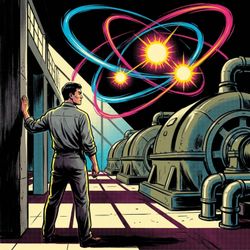
12. The Three-Body Problem: Liu Cixin and the Dark Forest of Chinese History
23:01||Season 1, Ep. 12Liu Cixin's *The Three-Body Problem* (*三体*) was first serialized in *Science Fiction World* magazine in China in 2006, then published as a standalone novel in 2008, and won China's Galaxy Award. Translated into English by Ken Liu and published by Tor Books in 2014, it became the first work by an Asian writer to win the Hugo Award for Best Novel in 2015. The novel opens during the Cultural Revolution (1966–76), when the protagonist Ye Wenjie's father — the physicist Ye Zhetai — is beaten to death by Red Guards during a struggle session. This trauma becomes the engine of the entire trilogy — a meditation on what happens when a civilisation loses faith in humanity. Liu Cixin worked as a computer engineer at the Niangziguan Power Plant in Shanxi province for years (graduating in 1985, working there until 2014), writing science fiction on the side — often during work shifts. His work was once considered marginal in China; science fiction was a niche genre before the trilogy's international success. The novel's central concept in the first book is the alien contact with the Trisolarans; the 'Dark Forest' theory of cosmic sociology — in which all civilisations must hide or be destroyed — is developed in the second book, *The Dark Forest*, but can be read as a product of China's century of humiliation and the Maoist period's paranoid violence. This episode would explore Liu Cixin's biography, the Cultural Revolution context, the translation history, and the complex critical debate about whether the trilogy's political philosophy is liberatory or authoritarian. Thematic contribution: *The Three-Body Problem* reveals how a nation's historical trauma becomes the grammar of its imagined cosmos, showing that the universe we construct in fiction mirrors the world that shaped us, while raising urgent questions about whether science fiction from the margins always imagines liberation. HCI: 5 — extensively documented in *The New Yorker*, *Cambridge History of Science Fiction*, and Liu Cixin's own public statements.
11. The Road: McCarthy's Ash World
19:52||Season 1, Ep. 11Cormac McCarthy's The Road (2006) won the Pulitzer Prize and is the most austere climate apocalypse novel ever written. An unnamed father and son walk south through a dead America — ash-covered, treeless, populated by cannibals — carrying 'the fire' of human goodness in a world that has lost everything else. McCarthy never explains the catastrophe (nuclear winter? extreme climate event?), and the novel's power comes from this refusal of explanation: the cause doesn't matter, only the aftermath. This episode examines The Road as a work of literary climate fiction that refuses the genre's usual consolations, McCarthy's own relationship to apocalyptic thinking, and what it means to write about survival when survival is almost certainly futile — connecting to questions of climate grief, parental responsibility, and whether hope is rational.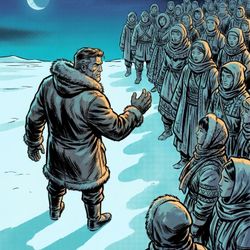
10. The Left Hand of Darkness: Le Guin's Ambisexual Planet
18:56||Season 1, Ep. 10Ursula K. Le Guin's The Left Hand of Darkness (1969) imagines Gethen, a planet whose inhabitants are ambisexual — they have no fixed gender, entering a brief fertile period (kemmer) during which they may become either male or female. An envoy from a gendered society must navigate this world, and the novel traces his failure to truly understand what he is seeing. Le Guin was the daughter of anthropologist Alfred Kroeber and writer Theodora Kroeber, and her SF is always anthropological thought experiment — what would a world without gender actually look like? How deep does gender go? The novel was published at the height of second-wave feminism and the Stonewall era, and became a touchstone for feminist and queer readers. This episode examines the novel's extraordinary imaginative achievement, Le Guin's own complicated later reflections on her use of male pronouns, and how the book opened a door in SF that has never closed.