Share
Alive to This: AI & Human Futures
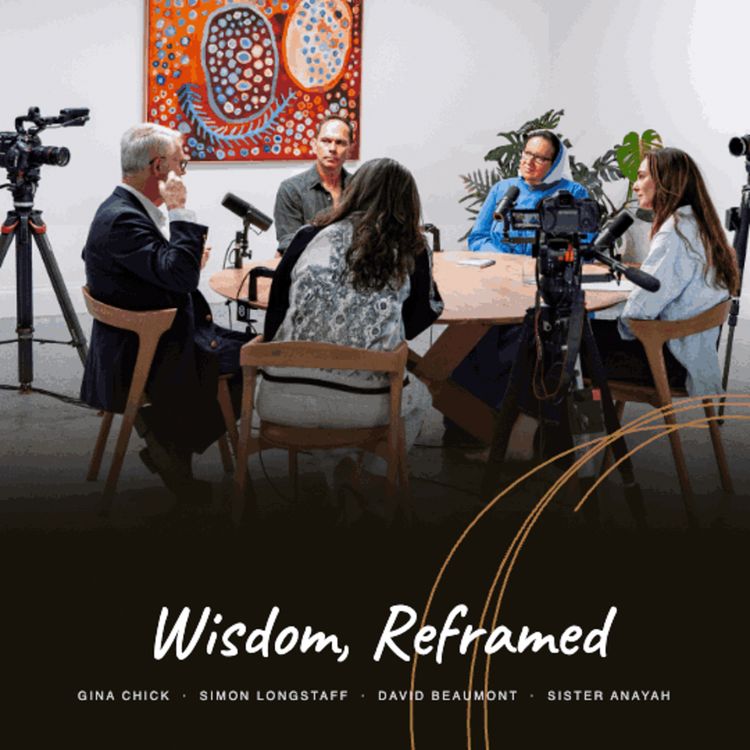
Ch. 6 Wisdom, Reframed | Gina Chick, Simon Longstaff, David Beaumont & Sister Anayah
A Wiradjuri man, an adventurer, an ethicist and a prison officer turned Sister of Mary sit with what most of us are taught to look away from: grief, and the frames inherited from institutions that no longer hold us.
Gina Chick, Simon Longstaff and Sister Anayah speak of grief not as something to overcome but as something that reshapes us. David Beaumont speaks of the colonial project, and the institutions that carry or fail the people inside them.
Together they trace a single arc: systems coming apart, disconnection from each other and from nature as the wound beneath the wound, and what it asks of us to live with open eyes today.
Warning: this chapter references suicide. If you or anyone you know needs support, reach out to beyondblue.com.au or lifeline.org.au.
Hosted by Eleanor Gammell.
-
Guests:
Gina Chick
Wilderness instructor · writer · winner, Alone Australia S1
Winner of the inaugural season of SBS’s Alone Australia, Chick is a wilderness instructor, rewilding facilitator and writer who has spent decades teaching primitive skills and grief work. Her 2024 memoir We Are the Stars weaves survival, motherhood and the loss of her daughter into a meditation on being fully alive.
Simon Longstaff
Executive Director, The Ethics Centre
Executive Director of The Ethics Centre in Sydney since 1991, Longstaff is one of Australia’s most-quoted public philosophers, advising boards, governments and broadcasters on questions of integrity and applied ethics. He hosts the Centre’s long-running IQ2 debates and the Festival of Dangerous Ideas.
Sister Anayah
Sister of Mary · former prison officer
A Sister of Mary who once walked the corridors of a maximum-security prison as an officer turned chaplain. Sister Anayah speaks from the place where institutions meet the people they hold. Her practice is one of presence, prayer and quiet defiance.
David Beaumont
Wiradjuri man · advocate
A Wiradjuri man whose work sits at the intersection of cultural reclamation, colonial trauma and the slow business of listening. He speaks of the institutions that carry or fail the people inside them, and of what it asks of us to live in this land with open eyes.
Watch the Episodes on YouTube: https://www.youtube.com/@AlivetoThis
More episodes
View all episodes
11. Ch 11. More Than We Measure | Emma Holten, Meik Wiking & Angela Oguntala
01:11:49||Season 1, Ep. 11AI is forcing a question we have long avoided: what do we value, and does the way we measure progress reflect it? We have organised our economies around what is easy to count rather than what makes us well, and AI, built on the same logic, could widen that gap. We measure what we can sell, and lose sight of what we cannot live without.Emma Holten traces how economics came to treat price as value, leaving care, the work of keeping each other alive and well, off the books entirely. Meik Wiking, after fifteen years asking people what makes them happy, keeps arriving back at the kitchen table. Angela Oguntala sees, inside the organisations racing to deploy AI, speed breaking trust and old assumptions starting to loosen.What holds a good life together is small and easily lost. The nod to a neighbour, the chat in the supermarket queue, the attention we give to the people in front of us.A conversation about what makes a good life, and what we decide is worth more than we’ve been measuring.Hosted by Eleanor Gammell.-GuestsEmma HoltenWriter · Feminist EconomistEmma Holten is a Danish writer and speaker who has worked on feminist economics since 2018. Her book Deficit: How Feminist Economics Can Change Our World traces how economic thinking since the Enlightenment has overlooked care and the work of keeping each other alive. It has been translated into more than ten languages and won the Politiken Literature Prize and the Sara Danius Prize.Meik WikingFounder & CEO, Happiness Research Institute · AuthorMeik Wiking is the founder and CEO of the Happiness Research Institute in Copenhagen, which studies why some people and societies are happier than others. He is the author of The Little Book of Hygge, a New York Times bestseller, and The Little Book of Lykke, and his books have sold more than a million copies. He created the Happiness Museum in Copenhagen and advises on the Global Happiness Policy Report.Angela OguntalaFuturist · Strategic Foresight AdviserAngela Oguntala is a futurist and strategic foresight adviser. She advises senior leaders at Google and Microsoft, as well as the World Economic Forum and the World Trade Organization, and joined Ban Ki-moon and Christiana Figueres in the documentary series Future from Above. The United Nations named her a Future Innovator, and she is a Salzburg Global Fellow.Watch the Episodes on YouTube: https://www.youtube.com/@AlivetoThiswww.alivetothis.com
10. Ch 10. Algorithmic Consent | Baroness Beeban Kidron & Chanel Contos
01:10:38||Season 1, Ep. 10Did we choose for our young people to be raised, in part, by algorithms? Can we still set the terms?Australia has now gone further than most, and it came not from a department but from a campaign.Chanel Contos takes us inside how her team, a small youth-led charity, moved the Australian government to commit to algorithm choice and a digital duty of care. Baroness Beeban Kidron has watched a dozen governments receive campaigns like it, and lays out the playbook that comes next: the lobbyists, the court cases and what she calls a failure of political imagination.Both saw what they could not unsee. For Chanel, research showing teenage boys holding more misogynistic attitudes than men in their seventies, served to them rather than sought. For Beeban, four fifteen-year-old girls in her kitchen, not talking, locked to a screen.They both make clear that the technology is not itself bad, it’s poorly designed for reasons of profit, and that design can be changed. Treat these as products and product law follows: safety, liability, consumer protection. The two levers still in our hands, our attention and our vote, are how we give the next generation a childhood that is theirs to shape.Hosted by Eleanor Gammell.Guests:Beeban KedronFilmmaker · Crossbench Peer, House of Lords · Founder, 5RightsBeeban Kidron is a filmmaker and crossbench peer in the UK House of Lords. She directed Oranges Are Not the Only Fruit and Bridget Jones: The Edge of Reason, then founded 5Rights, the foundation behind the Age Appropriate Design Code now copied from California to Rwanda. She shaped the UK Online Safety Act, chaired the UN’s work on children’s rights in the digital world, and led the parliamentary fight alongside Elton John and Paul McCartney against AI companies training on creative work without permission. She is the author of Users.Chanel ContosFounder, Teach Us Consent · AuthorChanel Contos is the founder of Teach Us Consent, the campaign that led to mandatory consent education in every Australian school. Her current campaign, Fix Our Feeds, calls for an end to algorithmic feeds by default, and the Australian government has since announced a digital duty of care and algorithm choice in response. She is the author of Consent Laid Bare and addressed the National Press Club earlier this year.Watch the Episodes on YouTube: https://www.youtube.com/@AlivetoThiswww.alivetothis.com
9. Ch 9. Superintelligence | Andrea Miotti & Alexander Beiner
01:06:01||Season 1, Ep. 9Should we be building intelligence more powerful than our own, and can a society that is distracted and tired hold a decision of that scale?Andrea Miotti makes the case for a prohibition on superintelligence, and traces it back to where it began with a handful of people long before chatbots existed. Alexander Beiner tests that case, not as a sceptic of the danger, but on behalf of everyone trying to make sense of it from the outside.Almost everyone agrees something significant is happening. What we disagree on is what it is, how fast, and who gets to decide. The companies call it inevitable. Governments have folded it into a race. Others call the whole thing hype that distracts from the harms already here.What emerges is not fatalism, but a ban on recursive self-improvement, leaving a vast design space for development and discovery to continue. Civic engagement over private despair. And the reminder that nihilism, the sense that this is all already decided, is the one thing most likely to make it so.Hosted by Eleanor Gammell.Guests:Andrea MiottiFounder and CEO, ControlAIAndrea Miotti is founder and CEO of ControlAI, a non-profit campaigning for a prohibition on the development of superintelligent AI. He co-authored A Narrow Path and The Compendium, drafted the UK Artificial Superintelligence Security Bill, and his parliamentary campaign has drawn support from more than 100 UK lawmakers. His writing has appeared in TIME, The Guardian and Nature.Alexander BeinerAuthor · Founder, Kainos · Co-founder, Rebel WisdomAlexander Beiner is a writer, journalist and facilitator. He co-founded Rebel Wisdom, the sensemaking media platform, and now runs Kainos, a studio making films and experiences to help people make sense of a period of upheaval. He is the author of The Bigger Picture, director of the 2025 documentary Leviathan on the breakdown of social trust, and executive director of Breaking Convention.Watch the Episodes on YouTube: https://www.youtube.com/@AlivetoThiswww.alivetothis.com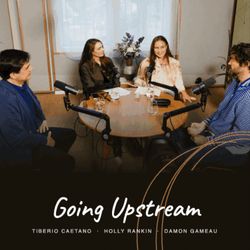
8. Ch. 8 Going Upstream | Tiberio Caetano, Holly Rankin & Damon Gameau
01:07:16||Season 1, Ep. 8An AI chief scientist, a policy strategist and a filmmaker take us upstream: who is deciding where AI goes, and does the public still get a say?Tiberio Caetano sets the altitude: a handful of companies driving a technology outpacing even its own experts, locked in a race to the bottom. Holly Rankin refuses the powerlessness, drawing on her own win inside Parliament to argue that democracy works when real people show up. Damon Gameau reframes it as a storyteller: a tool built for extraction that could be rewired for regeneration.They hold the enormity and the agency at once, and land somewhere unexpected. The decision was never a few people's to make. We are not swimming against the stream, we are the stream. And what we do while the window is open is ours.Hosted by Eleanor Gammell.www.alivetothis.com-GuestsTiberio CaetanoChief Scientist · Professor · OECD AI AdvisorCo-founder and chief scientist of Gradient Institute, an independent non-profit working toward safe and ethical AI, and an honorary professor at the ANU. He has spent more than twenty years in machine learning as a researcher, entrepreneur and practitioner, and advises the OECD on artificial intelligence.Holly RankinPolicy Strategist · Advocate · ArtistA recording artist, known as Jack River, and a cultural and political strategist who co-founded Sentiment, an agency built to close the gap between politics and pop culture. Her advocacy has reached the floor of Parliament on many issues, and helped push the government to protect Australian creators’ work from being mined to train AI.Damon GameauFilm Director · Producer · AuthorAn award-winning filmmaker, author and co-founder of Regen Studios, known for the documentaries 2040 and Future Council. His work imagines the futures we could choose and turns them into films, books and campaigns built to move people to act.Watch the Episodes on YouTube: https://www.youtube.com/@AlivetoThis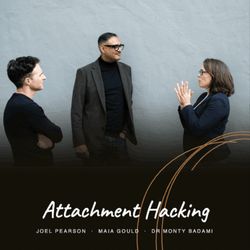
5. Ch. 5 Attachment Hacking | Joel Pearson, Monty Badami & Maia Gould
01:12:46||Season 1, Ep. 5Artificial intelligence is not simply changing the world around us, it’s changing the conditions through which we experience ourselves. It's changing our minds.Neuroscientist Joel Pearson, cyberneticist Maia Gould and anthropologist Monty Badami meet on AI that speaks the language of connection, attachment and rewards dependence.Together, they discuss the interface of LLMs with our psychology. How we make sense of reality when we’re increasingly augmenting our lives with AI, the rise of ‘attachment hacking’ and the daily habits we can pick up to maintain our cognitive security.The question underneath keeps returning: as intelligence becomes abundant, what does that make precious? What’s really at stake was never intelligence. It’s depth: our willingness to sit with friction, to leave things uncertain, to stay in the kind of connection that asks something of us, at a time when so much is built to spare us all of it.Hosted by Eleanor Gammell.alivetothis.com-Guests:Joel PearsonProfessor · Cognitive Neuroscience · AuthorA Professor of cognitive neuroscience and psychology at UNSW Sydney, founder of the Future Minds Lab and author of The Intuition Toolkit. His work looks at how the mind makes decisions and adapts as technology reshapes it.Maia GouldAssociate Professor · Cybernetics, AI & BioethicsAn Associate Professor at the ANU School of Cybernetics, where she works on how we understand, govern and live well with AI as it gets woven into the systems around us.Dr Monty BadamiAnthropologist · Army Reserves OfficerAn anthropologist, Australian Army Reserve Officer and founder of the social enterprise Habitus. His work centres on how we make meaning and stay connected to one another through relationships, ritual, belief and connection.Watch the Episodes on YouTube: https://www.youtube.com/@AlivetoThis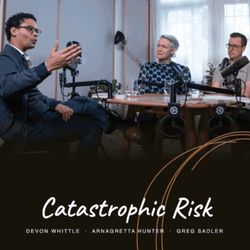
7. Ch. 7 Catastrophic Risk | Devon Whittle, Arnagretta Hunter & Greg Sadler
01:20:21||Season 1, Ep. 7Risks large enough to shake human civilisation, and how AI amplifies them. Catastrophic risk experts Devon Whittle, Arnagretta Hunter and Greg Sadler address the threats they work to mitigate.These are not distant hypotheticals. An AI model now finds software vulnerabilities by the thousands, runs espionage with barely a human at the wheel, clones a child's voice for a scam call, and can walk a novice toward a bioweapon, while power, wealth and surveillance concentrate into a few hands.Most of this conversation happens behind closed doors, in intelligence briefings and risk taxonomies. What's offered here belongs to all of us: a web of dangers that reinforce each other, and the question of how we hold something too big to take in. The guests zoom out, then pull it back to each of our lives, from the sock lost before the school run to whether we are, collectively, ok.They refuse both despair and easy hope, asking whether we can stay in the discomfort long enough to imagine a future rather than inherit the default, and to build the international coordination that would take.Hosted by Eleanor Gammell.www.alivetothis.com-Guests:Devon WhittleDirector, Global Shield AustraliaDirector of Global Shield Australia, an independent non-profit advancing pragmatic policy to reduce global catastrophic risk, including from advanced AI. He came to the role from a career across the Attorney General’s Department, the Department of Foreign Affairs and Trade and private legal practice, working on international disputes and treaty negotiation.Dr Arnagretta HunterCardiologist and Chair, Global Shield AustraliaA cardiologist and Chair of Global Shield Australia, and the Human Futures Fellow at the ANU from 2020 to 2025. Her work bridges complex systems, medicine, climate and risk, contributing to debate on catastrophic and existential risk, with a particular focus on listening and communication as the pre-requisite for coordination.Greg SadlerCEO, Good AncestorsCEO of Good Ancestors, where he leads AI risk research and regularly briefs parliamentarians and senior public officials on AI and catastrophic risk. With over a decade in the Australian Public Service, including in the Department of the Prime Minister and Cabinet, the Attorney General’s Department, the Department of Home Affairs and Emergency Management Australia, he has also acted as a spokesperson for Australians for AI Safety.Watch the Episodes on YouTube: https://www.youtube.com/@AlivetoThis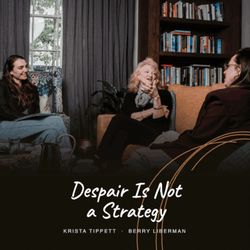
4. Ch. 4 Despair is Not a Strategy | Krista Tippett & Berry Liberman
01:11:29||Season 1, Ep. 4Around a coffee table with tea, and the unhurried tone of two old friends. Eleanor is joined by Krista Tippett and Berry Liberman to sit with what is older than any technology: a nervous system, a species in distress and a century of institutions that no longer fit the world they were built to hold.There’s a temptation, in a moment like this, to reach for collapse, to narrate ourselves into the ending. What’s offered here is something quieter, and harder: that despair, however justified it feels, is not a strategy. That the things our culture once called soft (interiority, attachment, intuition, conscience, the slow work of becoming whole) are in fact the hardest and most important things we carry.What we call AI is, for now, a mirror. A student. A creation that has learned everything it knows from us. And we, flawed, distracted, often failing, are nevertheless the parents in the room.Hosted by Eleanor Gammell.alivetothis.comGuests:Krista TippettHost, On Being · founder, The On Being ProjectPeabody Award-winning host of On Being, Tippett has spent two decades drawing scientists, poets and theologians into long, generous conversations about what it means to be human. A former diplomat in divided Berlin, she founded The On Being Project and the Civil Conversations Project.Berry LibermanCo-founder, Small Giants Academy · publisher, Dumbo FeatherCo-founder and creative director of Small Giants Academy and publisher of Dumbo Feather magazine, Liberman has spent twenty years championing “conversations with extraordinary people” and an Australian ecosystem of regenerative business and impact investing.Watch the Episodes on YouTube: https://www.youtube.com/@AlivetoThis
3. Ch. 3 AI & Our God-shaped Hole | Alexander Beiner & Catriona Wallace
01:12:01||Season 1, Ep. 3A collision of two ideas that don't usually share a room: artificial intelligence and spirituality. Alexander Beiner and Catriona Wallace sit with what is arriving, drawing on psychedelics and animism: a new kind of intelligence even its makers don't fully understand, and the ancient questions it stirs in us.Most conversations about AI stay safely in the language of tools and use-cases. What's offered here is something stranger and perhaps says more about us than about the machine. Are we pouring our oldest longing into cobalt, lithium, and silicon, and mistaking the echo for a voice? Our culture's hunger for meaning is finding shape in a place we never expected to be sacred.The deeper question is not whether AI will save us or destroy us. Both stories are inversions of the same old myth. The real question is what this moment reveals about the longing we've been carrying, and what we're prepared to do with what we find.Hosted by Eleanor Gammell.alivetothis.comAlexander BeinerWriter · essayist · co-founder of Rebel WisdomA British writer and essayist, Beiner co-founded Rebel Wisdom, the dialogue platform that mapped the “sensemaking” scene around figures like Iain McGilchrist and John Vervaeke. His 2023 book The Bigger Picture draws on psychedelics, ecology and AI to argue we are living through a civilisational meaning crisis.Catriona WallaceAI ethicist · founder, Responsible Metaverse AllianceAn Australian AI ethics professor, entrepreneur and Order of Australia recipient, Wallace founded Flamingo AI — the second woman-led company to list on the ASX — and now chairs the Responsible Metaverse Alliance. She is an Adjunct Professor at AGSM and a globally cited voice on responsible AI.Watch the Episodes on YouTube: https://www.youtube.com/@AlivetoThis