Share
Other Voices
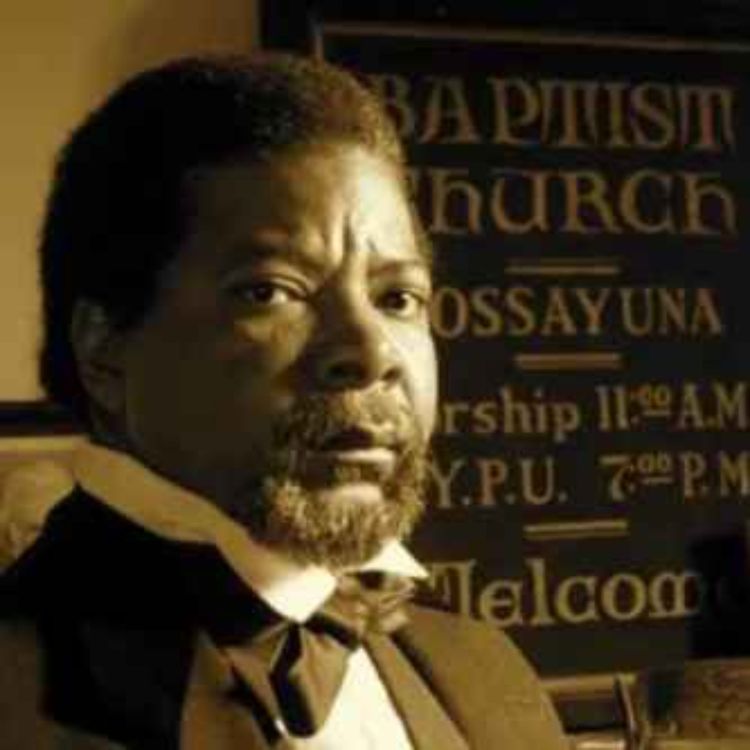
Donald Hyman — prospector, panning for the gold of forgotten history
Donald Hyman brings history to life by portraying people from the past.
Albany hotelier Adam Black Jr.; James Matthews, the state’s first African-American judge; and James Dickson, a New Scotland native and general manager for the Slingerland family, will be reborn on Oct. 5 for those attending the New Scotland Historical Association meeting.
“They come back to me like I’m listening to lyrics in a song,” says Hyman in this week’s podcast.
Hyman researches the often-forgotten men he portrays both online and through original documents like letters and church records. “I try to find in their own words things they would say,” he says.
He likens it to being a coffee or wine taster — finding the subtle differences, the idiosyncrasies that distinguish one from another.
Hyman concludes of these 19th-Century African Americans, “If the door were open, they would definitely go through it.”
Hyman, who grew up in Brooklyn, has a particular fondness for Harlem and its rich history. He studied fashion design at Parsons, focusing on styles during the Jazz Age of the Roaring Twenties, and on the rock-and-roll era of the 1950s.
A world traveler, Hyman embraces all of history. Travel, he says, “keeps you from being brainwashed.”
He has written plays for the State Museum and portrayed enslaved people at the Schuyler Mansion.
Hyman says of the Capital Region, “I just stumbled upon it, like a gold mine.”
When he first arrived in Albany, Mary Liz and Paul Stewart, who have restored the home of abolitionists Harriet and Stephen Myers for their Underground Railroad Education Center, walked him around the neighborhood and he felt its richness.
Hyman likens what he does now to prospectors who pan for gold, sifting through the debris to find the nuggets.
Rather than celebrating baseball players or rappers, he likes to portray individuals who prevailed and overcame. In Jamaica, Hyman said, they would say of these individuals, “They overstood.”
“It’s not about me,” he concludes of his work. “It’s about their legacy.”
More episodes
View all episodes

Gerard Wallace’s lifetime and work on kinship care
01:22:57|Gerard Wallace, who grew up in Brooklyn, suffered as a child and so devoted his career to ending childhood suffering.Retired now, he lives in the rural Helderbergs and believes some of the worst suffering happens in rural areas.Wallace, a lawyer who advocated for kinship family rights, had a hand in creating a dozen laws in New York state that gives grandmothers and other kin rights in caring for children whose parents are unfit.“Why I got into kinship care and meeting grandparents raising kids is that my home was really a broken home,” Wallace says in this week’s Enterprise podcast. “My father was an alcoholic, worked on the waterfront. He was a good person but, when he drank, it was a nightmare …. We grew up in a state of toxic stress.”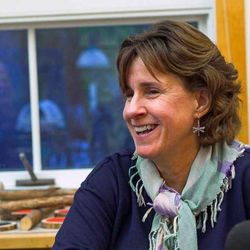
Laure-Jeanne Davignon and John Anderson, Friends of Thacher State Park
25:22|The Emma Treadwell Thacher Nature Center is being reimagined so that kids will be able to crawl into a giant honeycomb or tree to learn about meadows and forests or “dig” for fossils to learn about the Devonian sea. The Friends of Thacher State Park are helping to fund the transformation.
The tale of two generous men and a bygone era
26:48|Bob Flynn has written a book — titled “Tork’s Hill & Mead’s Pond” — about two Voorheesville men who used their private property to create what he terms “winter wonderlands” where he and his friends could gather. Flynn’s book captures an earlier time when kids played outside — even in cold winters — and when there was a sense of community, a sense of place, and a sense of trust. Read more at altamontenterprise.com.
GleeBoxx creator Shreya Sharath wants forgotten people to feel seen
25:36|Each box includes a note she wrote. Sharath read one to The Enterprise: “Even in difficult times, hope can be a light in darkness. Know that you are deserving of support, compassion, and a better tomorrow. Stay safe, take care of yourself, and never forget that you matter.” Read more at altamontenterprise.com.
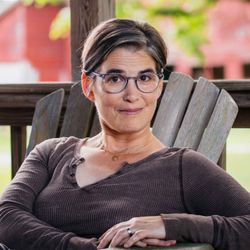
Kate Cohen says, to save the country, atheists should make themselves known
43:25|altamontenterprise.com
Daughter and mother coach dragon-boat paddlers
31:33|Anna Judge and Louisa Matthew realize they live in an ageist and sexist society — but, with generous spirits, they are paddling against the current. The mother-daughter duo together coach a crew of dragon boat paddlers. Matthew, the mother, is an art professor at Union College. Judge, her daughter, is a certified personal trainer who led her mother into the sport. “A dragon boat is a 40-foot long, very narrow racing boat,” explains Matthew in this week’s Enterprise podcast. “That became standardized in the 20th Century but it’s based on a thousands-year-old Chinese tradition of racing the big rivers in China.” A dragon boat has 20 paddlers, two to a seat, with a person in the stern who steers and a person in the bow signaling directions, traditionally by drumming. “It’s the national sport of China,” said Judge “so it’s quite big in Asia and has subsequently spread to Australia, New Zealand, and Europe.” It came to the United States through Canada, she said, citing the work of a doctor in British Columbia who changed prevailing medical opinion on exercise for breast-cancer survivors.
Lyon Greenberg: A doctor takes a long view of his farm and his life’s journey
27:57|altamontenterprise.com