Share
Other Voices
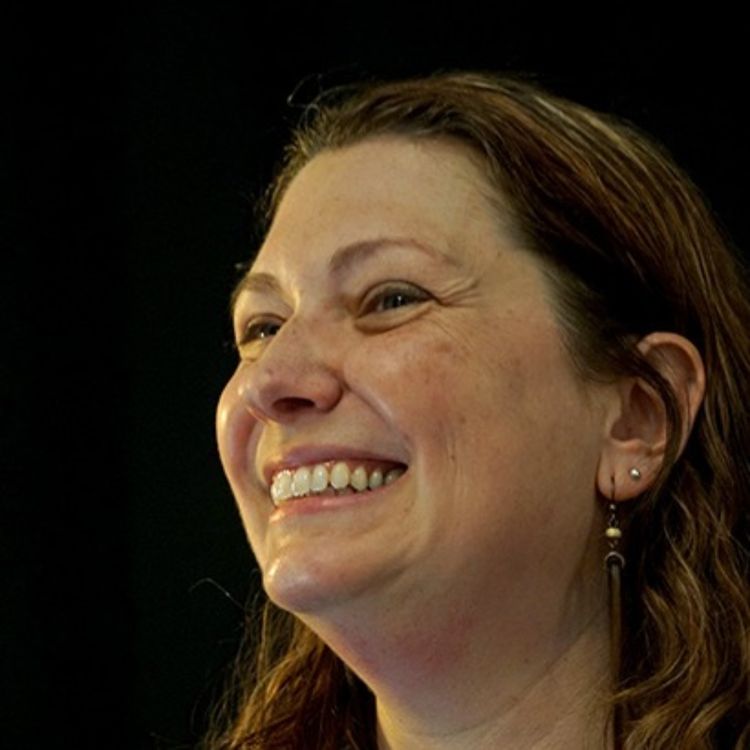
Bethany Mazura, marathon runner, "Find a thing you love"
Bethany Mazura has some advice: “Find a thing you love to do and don’t be afraid to put it out into the world because you never know who’s going to come calling and end up in your life.” Mazura found something she loves to do — running. She started when she was depressed after a miscarriage. Her first experience running the Freihofer’s 5K was not a good one. She tried again when she was going through a divorce and this time — preparing for the race and running with a group of women — it was transformative. She has gone on to run not only a marathon — 26.219 miles — but two ultramarathons as well. She’s captained a team for a Ragnar where 12 runners race in an overnight relay; together, they covered the ground from Saratoga Springs to Lake Placid in the Adirondacks. Mazura manages to keep at it while working full time as a lawyer for the state and while raising two young sons. Sometimes her ex-husband, herself, and their sons race together. She is engaged to be married and is planning a wedding with her fiancé, also a runner, that will involve running. Mazura lives in Guilderland and describes in this week’s podcast why she loves running the trails at Thacher Park as well as those close to home in the Pine Bush. She sees running not as a solitary sport where the goal is to win but rather as a social activity that is good for both the body and the spirit.
More episodes
View all episodes
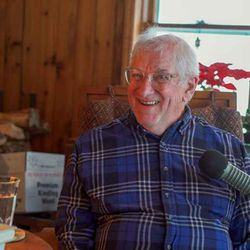
Gerard Wallace’s lifetime and work on kinship care
01:22:57|Gerard Wallace, who grew up in Brooklyn, suffered as a child and so devoted his career to ending childhood suffering.Retired now, he lives in the rural Helderbergs and believes some of the worst suffering happens in rural areas.Wallace, a lawyer who advocated for kinship family rights, had a hand in creating a dozen laws in New York state that gives grandmothers and other kin rights in caring for children whose parents are unfit.“Why I got into kinship care and meeting grandparents raising kids is that my home was really a broken home,” Wallace says in this week’s Enterprise podcast. “My father was an alcoholic, worked on the waterfront. He was a good person but, when he drank, it was a nightmare …. We grew up in a state of toxic stress.”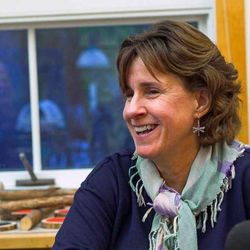
Laure-Jeanne Davignon and John Anderson, Friends of Thacher State Park
25:22|The Emma Treadwell Thacher Nature Center is being reimagined so that kids will be able to crawl into a giant honeycomb or tree to learn about meadows and forests or “dig” for fossils to learn about the Devonian sea. The Friends of Thacher State Park are helping to fund the transformation.
The tale of two generous men and a bygone era
26:48|Bob Flynn has written a book — titled “Tork’s Hill & Mead’s Pond” — about two Voorheesville men who used their private property to create what he terms “winter wonderlands” where he and his friends could gather. Flynn’s book captures an earlier time when kids played outside — even in cold winters — and when there was a sense of community, a sense of place, and a sense of trust. Read more at altamontenterprise.com.
GleeBoxx creator Shreya Sharath wants forgotten people to feel seen
25:36|Each box includes a note she wrote. Sharath read one to The Enterprise: “Even in difficult times, hope can be a light in darkness. Know that you are deserving of support, compassion, and a better tomorrow. Stay safe, take care of yourself, and never forget that you matter.” Read more at altamontenterprise.com.
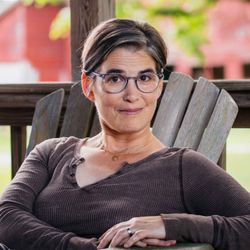
Kate Cohen says, to save the country, atheists should make themselves known
43:25|altamontenterprise.com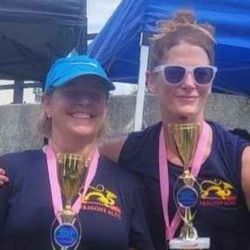
Daughter and mother coach dragon-boat paddlers
31:33|Anna Judge and Louisa Matthew realize they live in an ageist and sexist society — but, with generous spirits, they are paddling against the current. The mother-daughter duo together coach a crew of dragon boat paddlers. Matthew, the mother, is an art professor at Union College. Judge, her daughter, is a certified personal trainer who led her mother into the sport. “A dragon boat is a 40-foot long, very narrow racing boat,” explains Matthew in this week’s Enterprise podcast. “That became standardized in the 20th Century but it’s based on a thousands-year-old Chinese tradition of racing the big rivers in China.” A dragon boat has 20 paddlers, two to a seat, with a person in the stern who steers and a person in the bow signaling directions, traditionally by drumming. “It’s the national sport of China,” said Judge “so it’s quite big in Asia and has subsequently spread to Australia, New Zealand, and Europe.” It came to the United States through Canada, she said, citing the work of a doctor in British Columbia who changed prevailing medical opinion on exercise for breast-cancer survivors.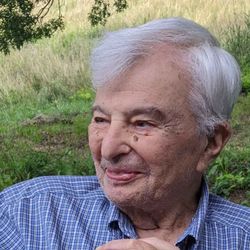
Lyon Greenberg: A doctor takes a long view of his farm and his life’s journey
27:57|altamontenterprise.com