Share
Ocean Protect Podcast
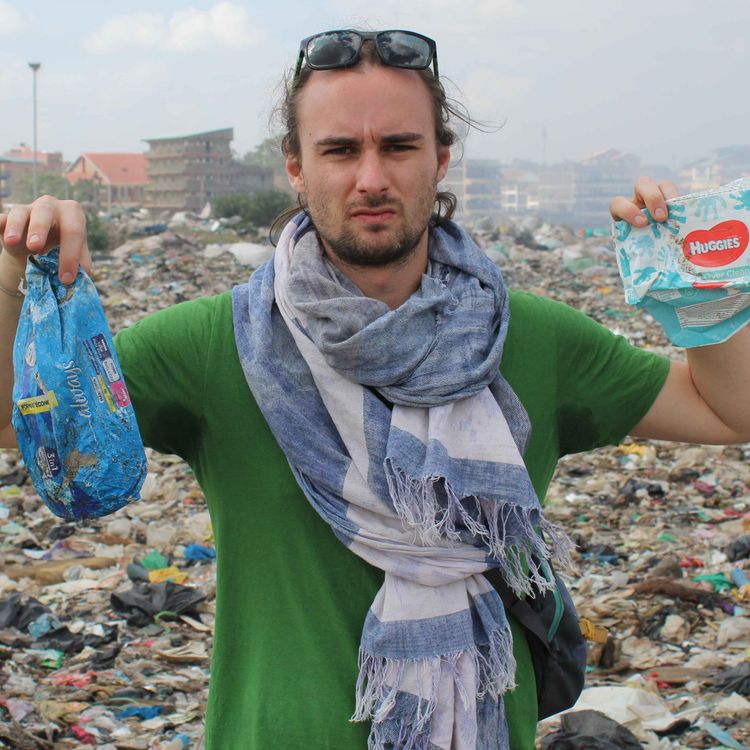
A global plastics treaty with Tom Gammage
Season 4, Ep. 10
•
Tom Gammage is a plastic pollution campaigner at the Environmental Investigation Agency in London, where he is working to secure an ambitious new plastics treaty for the planet. We talk about the growing plastics 'emergency', the need for a global plastics treaty, the recent meeting of the United Nations Environment Assembly (UNEA) in Nairobi to discuss such a treaty, and key recommended actions for government.
Useful links:
- Tom on LinkedIn (here):
- Environmental Investigation Agency (here)
- Recent Conversation article on the plastic treaty (here)
- Recent BBC News article on the need for a plastic treaty (here)
- EIA report Connecting the Dots: Plastic pollution and the planetary emergency (here).
For further information about Ocean Protect, check us out at www.oceanprotect.com.au
More episodes
View all episodes
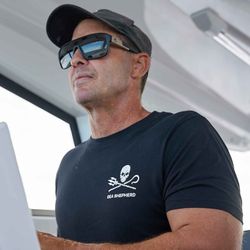
7. Australian Sea Lions: A race against the clock with Dirk Holman
44:02||Season 8, Ep. 7Dirk Holman is a Threatened Species Researcher with Sea Shepherd Australia, working on research, monitoring and conservation efforts for Australia's endemic Australian sea lion. Dirk returns to the Ocean Protect Podcast for his second appearance — this time for a wide-ranging conversation about the growing pressures facing one of Australia's most vulnerable marine mammals. In this chat, we discuss the alarming decline in Australian sea lion populations, the devastating impact of the recent harmful algal bloom, the arrival of H5N1 bird flu in Australia and the potential risks it poses to sea lion colonies.Dirk also shares an update on the innovative pup shelter project, which is providing much-needed shade and protection for pups on islands where natural vegetation has been lost. Plus, we hear about some of the sea lion rescues Dirk and the Sea Shepherd team have undertaken after animals became entangled in fishing and other marine debris, and explore the less visible pressures facing these animals — from pollution and disease to changes in food availability and their broader marine habitat. It's a fascinating look at the science, challenges and hands-on conservation work involved in protecting Australia's sea lions — and why collaboration is becoming increasingly important.Useful links:Sea Shepherd Australia's Sea Lion Defence Campaign (here)Protecting Australian Sea Lions with Dirk Holman — Ocean Protect Podcast, Season 7, Episode 15 (here)Dirk on LinkedIn (here)For further information about Ocean Protect, check us out at www.oceanprotect.com.au
6. Dr Jennifer Lavers on what long-term data shows about population impacts of ocean plastic pollution
47:50||Season 8, Ep. 6Dr Jennifer Lavers is a marine eco-toxicologist, seabird and island conservation expert, and researcher at Adrift Lab - and returns for her second appearance on the Ocean Protect Podcast. In this chat, we delve into recent ground-breaking research on plastic pollution impacts on seabirds at Lord Howe Island - and discuss the findings from over 15 years of data, and what key actions we can take to beat plastic pollution.Useful links:Dr Jennifer Lavers on Linkedin (here)AdriftlabDr Jennifer Lavers on the plastic in seabirds (Ocean Protect Podcast, Season 2, Episode 15, June 2020) (here)AdriftLab article (August 2026) The Birds That Never Came Home: Long-Term Data Reveal Population-Level Impacts of Ocean Plastic Pollution (here)J.L. Lavers, H. Worthington, & A.L. Bond, Ingested plastics reduce recruitment and survival of an Australian seabird, Proc. Natl. Acad. Sci. U.S.A. 123 (34) e2613782123, https://doi.org/10.1073/pnas.2613782123 (2026). https://www.pnas.org/doi/10.1073/pnas.2613782123 Lavers, J. L., de Jersey, A. M., Rivers-Auty, J., & Bond, A. L. (2026). Abrupt recent increases in plastic ingestion by Sable Shearwaters (Ardenna carneipes). Earth's Future, 14, e2026EF008572. https://doi.org/10.1029/2026EF008572 Ingrid L. Pollet, William M. Connelly, Michelle L. Feenstra, Alix M. de Jersey, Alexander L. Bond, Jennifer L. Lavers, Jack Rivers-Auty, Plastic ingestion alters stomach anatomy and biomechanics in sable shearwaters (Ardenna carneipes), Journal of Hazardous Materials: Plastics, Volume 5, 2026, 100080, ISSN 3051-0600, https://doi.org/10.1016/j.hazmp.2026.100080 For further information about Ocean Protect, check us out at www.oceanprotect.com.au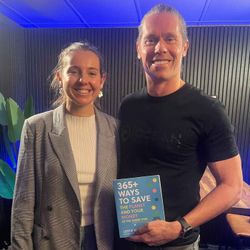
5. Lottie Dalziel with 365+ Ways to Save the Planet & Your Money at the Same Time
39:33||Season 8, Ep. 5Lottie Dalziel is on a mission to make sustainability simple, accessible, and impactful - returning for her second appearance on the podcast. In this chat, we hear all about BRAD (the Banish Recycling And Disposal Program) and get some insights into her debut book "365+ Ways to Save the Planet and Your Money at the Same Time". Useful links:Lottie on LinkedIn (here)"365+ Ways to Save the Planet and Your Money at the Same Time" (here)BRAD (Banish Recycling And Disposal Program): https://banish.com.au/pages/recycling-programhttps://banish.com.au/For further information about Ocean Protect, check us out at www.oceanprotect.com.au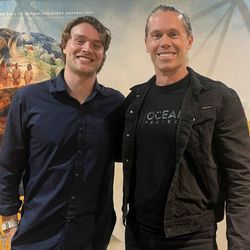
4. Kal Glanznig on turning the tide on The Plastic Country
39:27||Season 8, Ep. 4Kal Glanznig is a filmmaker, ocean advocate and Sutherland Shire Councillor. In this chat, we discuss Kal's latest film, "The Plastic Country" - a confronting, timely and deeply personal Australian documentary that challenges how we think about plastic, our health, our ocean and the systems that shape the world around us. From remote beaches and stormwater drains to supermarket shelves, scientific laboratories and the halls of Parliament, this powerful documentary asks a difficult question: how did Australia become one of the world’s biggest plastic waste producers per person, and what will it take to turn the tide?Useful links:"The Plastic Country" (here)Kal Glanznig on Linkedin (here)Kal's website (here)Blue Minds (here)"Kal Glanznig on youth, plastics, politics, & Rising Up for a better world" (Ocean Protect Podcast, Season 7, Episode 18) For further information about Ocean Protect, check us out at www.oceanprotect.com.au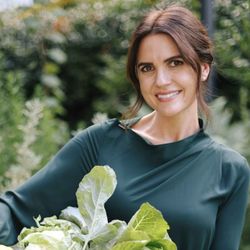
3. Dr Amelia Harry on the Plastic Exposure Reduction Transforms Health (PERTH) Trial
42:16||Season 8, Ep. 3Dr Amelia Harry is an experienced Advanced Accredited Practising Dietitian, Accredited Nutritionist, and plastics, diet & human health researcher. In this chat, we discuss the latest publication (in Nature Medicine) that Dr Amelia co-authored on the results of the Plastic Exposure Reduction Transforms Health (PERTH) Trial - which assessed phthalates and bisphenols in humans and what impact a change in diet had. We discuss the methodology, results (it's good news !!) and how you can minimise plastic ingestion in your own life (and why you should).Useful links:Dr Amelia on LinkedIn (here)eatsustainably.com.auJournal paper, Low-plastic diet and urinary levels of plastic-associated phthalates and bisphenols: the randomized controlled PERTH Trial (here)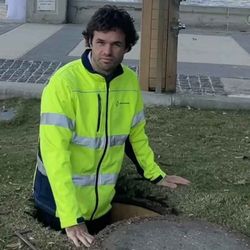
2. Harry Maher on how much does bioretention cost ?
43:26||Season 8, Ep. 2Harry Maher is a Water Engineer at Optimal Stormwater, with several years experience in the stormwater industry in Australia as both a consultant and with Council. In this chat, we discuss Harry's recent study compiling and assessing "real world" life cycle cost data for bioretention systems in Australia, and how stormwater professionals and asset managers can reduce the costs of bioretention and improve their stormwater treatment function.Useful links:Harry on LinkedIn (here)Report, How much does bioretention cost? A review of life cycle costs for conventional bioretention systems in Australia (here)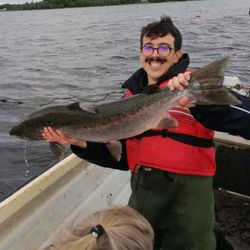
1. Cocaine salmon with Marcus Michelangeli
44:16||Season 8, Ep. 1Marcus Michelangeli is a lecturer at Griffith University, leading the Wildlife Behaviour & Ecotoxicology research group, focusing on how wildlife adapt to rapid environmental change, particularly in response to emerging threats from synthetic and psychoactive chemical contaminants. In this chat, we discuss recent research by Marcus and collaborators on the impact of cocaine on salmon behaviour.Useful links:Marcus on Linkedin (here)The Conversation article, Coked to the gills? Cocaine‑laced wastewater can make salmon roam twice as far in (here)Journal paper, Cocaine pollution alters the movement and space use of Atlantic salmon (Salmo salar) in a large natural lake (here)
19. Justine Barrett on cleaning out the undergound garbage bins
39:02||Season 7, Ep. 19Justine Barrett Research Technician & iPhD Student with CSIRO's Marine Debris Team - currently researching how best to reduce the flow of litter into our oceans and waterways. In this chat, we discuss Justine's recent research compiling over 1300 audits of gross pollutant traps (GPTs) across Australia, the key barriers to cleaning out GPTs, and how to resolve these barriers - and ultimately better protect our oceans and waterways from stormwater pollution. Useful links:Justine on Linkedin (here)"Identifying and addressing challenges in gross pollutant trap maintenance: perspectives from the Australian stormwater industry", published in Marine Pollution Bulletin (here) For further information about Ocean Protect, check us out at www.oceanprotect.com.au
18. Kal Glanznig on youth, plastics, politics, & Rising Up for a better world
44:41||Season 7, Ep. 18Kal Glanznig is one of Australia’s leading youth ocean and climate champions, dedicated to helping build a generation of hopeful, action-driven environmental leaders. In this chat, we talk about his journey as a film-maker, ocean-advocate and getting elected to his local Council in the name of healthier oceans and waterways. Expect inspiration, a call to action, and a reminder that real change often begins with one local “first step”.Useful links:Kal Glanznig on Linkedin (here)Kal's website (here)Blue Minds (here)"Rising up" film on Water Bear (here) For further information about Ocean Protect, check us out at www.oceanprotect.com.auPhoto credit: Ramone Minchero