
Latest episode
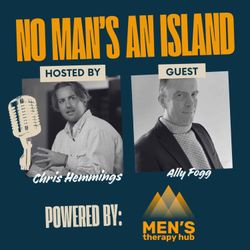
5. International Men’s Day – Origins, Purpose and Hope for the Future with Ally Fogg
01:16:17||Season 2, Ep. 5For years, International Men's Day was treated as a punchline. Increasingly, it is being considered as a vital part of showing compassion for men's issues.Chris Hemmings speaks with Ally about his decades of writing and campaigning for men and boys, the history of International Men’s Day in the UK and how the conversation has moved from widespread mockery towards greater political recognition.They explore why male disadvantage is so often met with blame rather than compassion, from suicide and imprisonment to domestic abuse and childhood trauma. They also discuss the everyday brutalisation of boys, the importance of male-only spaces and why helping men must be worthwhile in itself – not simply because it benefits women and families.Men are often treated as though they are entirely responsible for whatever happens to them – whether they succeed, become homeless, enter prison or struggle with addiction. Ally Fogg calls this the myth of hyperagency.This is an honest and sometimes angry conversation about taking men’s suffering seriously. It is also a hopeful call for organisations across the men’s sector to support one another and keep pushing for lasting social and political change.Find out more about or join the Association for Male Health and Wellbeing:https://www.amhw.org.ukInternational Men’s Day UK:https://ukmensday.org.ukYou can find Chris here:https://chrishemmings.co.ukExplore Men’s Therapy Hub:https://menstherapyhub.com
More episodes
View all episodes
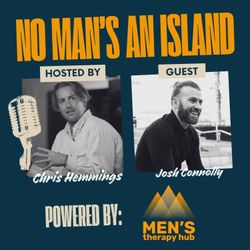
4. Breaking Up With a Parent – Family Dysfunction, Estrangement and Breaking the Cycle with Josh Connolly
01:02:00||Season 2, Ep. 4In this episode, Chris Hemmings speaks with Josh Connolly, author, speaker and breathwork facilitator whose work explores childhood adversity, family dysfunction and the lasting impact of growing up with emotionally immature or harmful parents.Josh grew up with an alcoholic father and later struggled with addiction himself, getting sober in 2012. He talks about beginning to understand the connection between his childhood and his adult struggles, and how dysfunctional families can learn to hide, minimise and protect the very behaviour that is causing harm.Chris and Josh explore what those experiences can look like in adulthood, from people pleasing and abandoning your own needs to struggling to know who you are outside of what other people need you to be. They discuss parentification, emotional neglect, becoming a parent yourself and the difficult work of trying to break patterns that may have been passed through generations.Finally, Josh shares his experience with breathwork and why he believes it can offer men a particularly accessible route out of their heads and back into their bodies. He explains how discovering breathwork gave him something that years of understanding his experiences intellectually had not, and why reaching men sometimes means talking about wellbeing in language they actually relate to.You can find Josh here:https://joshconnolly.co.ukInstagram: @josh_ffwYou can find Chris here: https://chrishemmings.co.uk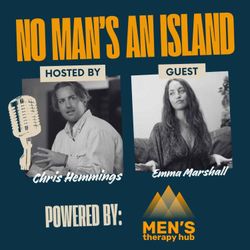
4. Movement is Medicine – How Music, Rhythm and Dancing Help Us Heal with Emma Marshall
01:00:10||Season 2, Ep. 4In this episode, Chris Hemmings speaks with Emma Marshall, a PhD researcher studying how movement to electronic music can help reduce stress.After working in the music industry for more than a decade, Emma experienced several years of serious health problems that left her unable to work and searching for answers. During her recovery, she began exploring how music, rhythm and physical movement could help regulate her nervous system and reconnect her with her body.Chris and Emma discuss the science behind music and movement, the ancient role of rhythm in human communities and why dancing can be far more than entertainment. They explore how electronic music may help regulate stress, release emotion and create a sense of connection and belonging.They also discuss rave culture, the stigma surrounding electronic music and why the dance floor can provide men with a rare opportunity to move freely, express themselves and release emotions without needing to explain what they are feeling.Emma shares details of her research at Drumsheds, where participants’ physiological and self-reported responses to electronic music are being studied. She also explains how people who feel uncomfortable dancing can begin privately at home, simply by putting on music and learning to move in time with the beat.This episode is a conversation about music, movement and why finding our rhythm could play an important role in improving mental and physical health.As promised, here the two DJ sets to get you started:Eski @ Fusion Festival - Downtempo (slow paced & atmospheric)Zerya @ Mystic Creatures Festival - Disco House (upbeat & fun)Also, just as we should support male therapists, please support female DJs!You can find Emma and MIM HQ here:https://mimhq.co.ukhttps://www.instagram.com/emma.marshall.mim/You can find Chris here:https://chrishemmings.co.uk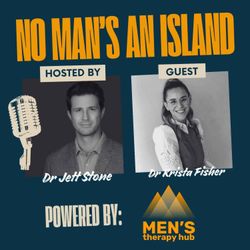
3. Understanding Male Anxiety – Physical Symptoms, Fear and the Manosphere with Dr Krista Fisher
01:04:58||Season 2, Ep. 3Welcome to No Man’s an Island – a podcast powered by Men’s Therapy Hub, a directory of male therapists for male clients.In this conversation, Dr Jett Stone speaks with Dr Krista Fisher about why male anxiety can be difficult to recognise. Men may experience physical symptoms, tension, rumination or a general sense that something needs fixing without identifying what they feel as anxiety.Krista explains how expectations of fearlessness and self-reliance can prevent men from recognising their symptoms or seeking support. She also introduces her “resisting, reckoning and responding” model, describing how young men gradually identify and learn to live with anxiety.They then explore how young men turn to social media for answers and how the manosphere can capitalise on anxiety and insecurity by offering confidence, status and simple solutions to complicated emotional problems.This episode is a conversation about recognising male anxiety, challenging the expectation that men should be fearless and helping young men respond to uncertainty in healthier ways.You can find Krista and her work here:https://drkfisher.substack.com/https://uk.movember.com/movember-institute/masculinities-reportYou can find Jett here: https://www.jettstonephd.comEpisode page on Men’s Therapy Hub: https://menstherapyhub.com/male-anxiety-physical-symptoms-masculinity-and-the-manosphere-with-dr-krista-fisher/
2. Too Young to Grieve – Losing a Parent, Male Grief and Learning to Live with Loss with Luke Alfano
57:26||Season 2, Ep. 2In this episode, Chris Hemmings speaks with Luke Alfano, founder of Too Young to Grieve, a community supporting young people who are dealing with bereavement and loss.Luke lost his father to cancer when he was just 21. After spending several years keeping busy and avoiding his grief, the death of his grandmother brought those feelings back to the surface and ultimately inspired him to create Too Young to Grieve.Chris and Luke compare their experiences of losing their fathers at a young age and explore how grief can affect identity, relationships, mental health and the transition into adulthood. They discuss the pressure men often feel to remain strong, the ways grief can be hidden from those around us and why friends may struggle to support someone through an experience they have never encountered themselves.They also discuss grief at significant life milestones, the physical effects of bereavement, father-son relationships, friendship, therapy and the difference between moving on from loss and learning how to carry it. Luke explains how Too Young to Grieve is creating communities in which young people can meet others who understand what they are experiencing.This episode is an honest conversation about male grief, losing a parent too young and why nobody should have to navigate bereavement alone.You can find Luke and Too Young to Grieve here:https://www.instagram.com/lukealfano11/https://www.instagram.com/tooyoungtogrieve/You can find Chris here: https://chrishemmings.co.ukEpisode page on Men’s Therapy Hub: https://menstherapyhub.com/too-young-to-grieve-losing-a-parent-male-grief-and-learning-to-live-with-loss-with-luke-alfano/
1. Provider Anxiety – Why Men Tie Their Worth to Work and Money
59:21||Season 2, Ep. 1In the first episode of season two, Chris Hemmings and Dr Jett Stone explore the pressure many men feel to provide financially, even as relationships, workplaces and traditional gender roles continue to change.They discuss how boys learn to associate love and respect with achievement, competence and usefulness. Over time, this can create what Jett calls the “existential load”: the constant fear of not earning, achieving or providing enough.Chris and Jett consider why financial success rarely removes this anxiety, how it affects fathers and stay-at-home dads and what men may discover when they stop working, fixing and proving themselves.They also explore how providing could be understood more broadly, including emotional presence, caregiving, friendship and creating safety for the people around us. At the heart of the conversation is a simple idea: men remain worthy of love even when they are not useful.The episode concludes with the launch of the new Men’s Therapy Hub website and its expansion into the United States, including improved therapist matching, topic pages and dedicated UK and US directories.You can explore Men’s Therapy Hub here: https://menstherapyhub.comYou can find Chris here: https://chrishemmings.co.ukYou can find Jett here: https://www.jettstonephd.comMusic by Raindear: https://open.spotify.com/artist/02XiEhWcgjotsEyvC1o8Pa
Season Two Trailer
00:46||Season 2, Ep. 0The trailer for season two, which starts October 13th 2026.