Share
Nature Podcast
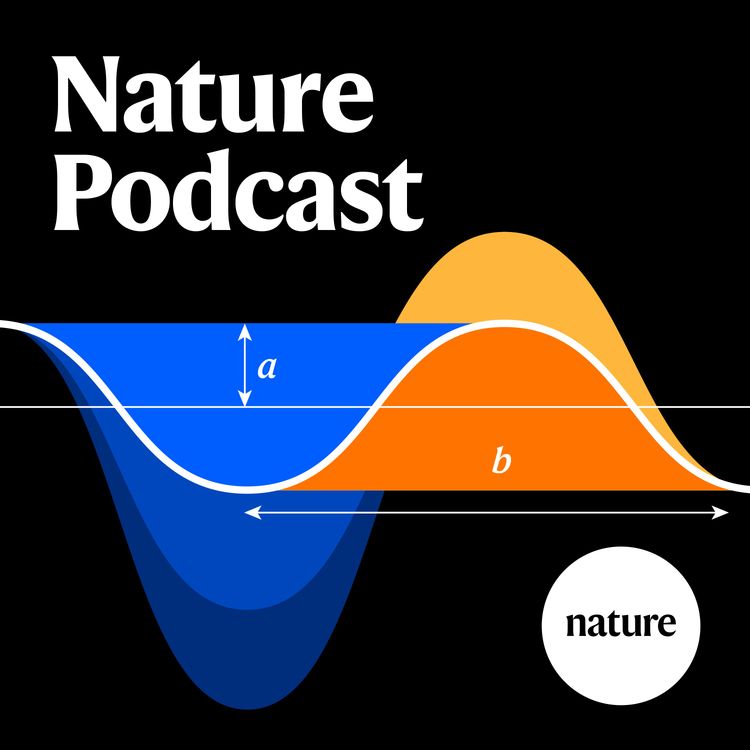
Toxic red mud could be turned into 'green' steel
In this episode:
Red mud is a toxic by-product of aluminium manufacture, and millions of tonnes of it is produced each year. The majority ends up in landfills, pumped into vast lakes or stored in dried mounds, posing a serious environmental risk. This week, researchers demonstrate how red mud can be reused to make iron, a vital component in the production of steel. As their method uses hydrogen plasma rather than fossil fuels, they suggest it could be a way to reduce the carbon emissions associated with the steelmaking industry.
Research article: Jovičević-Klug et al.
News and Views: Iron extracted from hazardous waste of aluminium production
The economics of next-generation geothermal power plants, and the folded-fabric robot that crawls like a snake.
Research Highlight: Flexible geothermal power makes it easier to harness Earth’s inner heat
Research Highlight: Origami fabric robot slithers like a snake
A computational model that predicts a person's likelihood of developing long COVID, NASA finally crack open the lid of OSIRIS-REx’s sample container, and how the ‘Moon Sniper’ craft pulled off the most precise lunar landing ever.
Nature News: Long-COVID signatures identified in huge analysis of blood protein
Johnson Space Centre: NASA’S OSIRIS-REx Curation Team Reveals Remaining Asteroid Sample
Nature News: Japan’s successful Moon landing was the most precise ever
More episodes
View all episodes
Artemis II is go: humans head to the Moon after half-century absence
15:20|In this podcast we'll talk about NASA's Artemis II launch, which has ushered in a new era of lunar exploration.Nature: Lift off! Artemis II mission sends humans to the Moon — opening a new era of explorationNature: Artemis II mission is about to fly humans to the Moon — here’s the science they’ll doNature: Humanity is heading back to the Moon — why aren’t more scientists thrilled?Subscribe to Nature Briefing, an unmissable daily round-up of science news, opinion and analysis free in your inbox every weekday.These scientists chased a jet to learn more about ‘lean-burn’ contrails
24:48|In this episode:00:46 Collecting contrails at 30,000 feetResearch Article: Voigt et al.11:23 Research HighlightsNature: Sunken Soviet nuclear submarine’s radioactive releaseNature: History of ‘forever’ chemicals is written in Antarctic snow13:34 Fakery in scienceApril Fakes DaySubscribe to Nature Briefing, an unmissable daily round-up of science news, opinion and analysis free in your inbox every weekday.
Briefing Chat: ‘Zombie cells’ resurrected with new genes
11:01|Nature staff discuss some of the week's top science news.00:18 ‘Zombie cells’ revived with genome transplantNature: ‘Zombie cells’ return from the dead — after a genome transplant05:27 A limit to cloning, in miceNature: Can a mouse be cloned indefinitely? Decades-long experiment has answersSubscribe to Nature Briefing, an unmissable daily round-up of science news, opinion and analysis free in your inbox every weekday.Why insects aren't huge: a new challenge to a decades-old idea
22:42|00:44 Why insects aren’t massiveResearch Article : Snelling et al.11:39 Research HighlightsNature: Faster ticking of ‘biological clock’ predicts shorter lifespanNature: Mighty mini-magnet is low in cost and light on energy use14:05 CRISPR creates CAR-T cancer therapy inside miceResearch Article: Nyberg et al.News & Views: A gene-editing method generates immunotherapeutic CAR T cells in the bodyNature: CRISPR makes enhanced cancer-fighting immune cells inside miceSubscribe to Nature Briefing, an unmissable daily round-up of science news, opinion and analysis free in your inbox every weekday.
Briefing Chat: Are scientists funny? The evidence is in — and it's no joke
09:52|In this episode:00:22 Exploring how gut microorganisms contribute to ageingNature: Memory loss is fuelled by gut microbes in ageing mice04:30 How good jokes are in short supply during academic conferencesNature: Knock knock, no one’s there. Study finds scientists’ jokes mostly fall flatSubscribe to Nature Briefing, an unmissable daily round-up of science news, opinion and analysis free in your inbox every weekday.Botanical mystery solved: how plants make a crucial malaria drug
15:55|In this episode:00:46 Piecing together a biochemical puzzleResearch Article : Lombe et al.12:26 Research HighlightsNature: Electric-vehicle batteries toughen up to beat the heatNature: Live parrots were carried across the Andes before the Incas’ rise
Briefing chat: ‘Can it run Doom?’ — why scientists got brain cells and a satellite to play the classic game
10:34|00:26 Why researchers keep using Doom in their researchNature: How the classic computer game Doom became a tool for scienceSubscribe to Nature Briefing, an unmissable daily round-up of science news, opinion and analysis free in your inbox every weekday.This fish shouldn’t exist — the weird genetics of clonal vertebrates
23:22|A study reveals how the asexual Amazon molly defies evolutionary expectations — plus, evidence of what may be powering superluminous supernovae.In this episode:00:46 Unravelling the genetics of an asexual fish that should be extinctResearch Article: Ricemeyer et al.News and Views: How an all-female fish species defies evolutionary expectations10:19 Research HighlightsNature: Jam-packed star system is most compact of its kind ever foundNature: Peanut-processing microbes ward off dangerous allergic shock11:31 How a superluminous supernova got so brightResearch Article : Farah et al.News and Views: Ultra-bright supernova wobbles like a spinning topSubscribe to Nature Briefing, an unmissable daily round-up of science news, opinion and analysis free in your inbox every weekday: https://www.nature.com/briefing/signup
Briefing chat: What Galileo’s scribbled margin notes reveal about his scientific journey
09:35|In this episode:00:25 How paediatricians’ antibodies could treat serious viral infectionsNew Scientist: Paediatricians’ blood used to make new treatments for RSV and colds04:22 Galileo’s annotations in an ancient textScience: Galileo’s handwritten notes found in ancient astronomy textSubscribe to Nature Briefing, an unmissable daily round-up of science news, opinion and analysis free in your inbox every weekday.