Share
Nash Holos Ukrainian Roots Radio
Leading up to the Maidan: Mirko Petriw on the Early Signals of a Revolution
•
In this Nash Holos exclusive from December 4, 2013, Pawlina speaks with Mirko Petriw—Vancouver-based author of two spy thrillers set in Ukraine and then-president of the Ukrainian Canadian Congress, Vancouver branch.
This interview was recorded at a point when events had not yet escalated, though the shift in the air was clear. It captures the mood, concerns, and emerging currents that would soon shape Ukraine’s future.
Originally aired live on the Nanaimo edition of Nash Holos on CHLY 101.7 FM.
More episodes
View all episodes

The Silence of Trees: War, Memory, and Silence as Survival
15:33|In this 2011 interview, Valya Dudycz Lupescu discusses her debut novel, The Silence of Trees, a story that moves between post–World War II Ukraine and contemporary America. Drawing on years of interviews with elders who had never spoken about their wartime experiences, she explores the fear‑driven silences, cultural traditions, and fragmented memories carried by the Ukrainian diaspora.We talk about the real histories that informed her fictional heroine, the trauma and secrecy surrounding displaced‑persons camps, and the complex reasons so many immigrants chose not to speak about their past. Valya also reflects on the novel’s early reception, including its success in the Amazon Breakthrough Novel Award competition and the strong support from Ukrainian communities worldwide.This conversation from 2011 lands differently in 2026. The forces shaping her story haven’t disappeared; they’ve re‑emerged, making this discussion newly relevant.A Canadian Sniper in Ukraine: Why Wali Answered the Call
15:16|Canadian veteran and sniper Wali was among the first foreign volunteers to answer President Zelensky’s call in early 2022. He served near Kyiv, Irpin, Bucha, and in parts of the Donbass during the most uncertain weeks of the full‑scale invasion. After speaking to the Ukrainian community in Vancouver, he joined Pawlina to discuss what compelled him to go, what he witnessed on the ground, and how those experiences continue to shape his support for Ukraine today.In this interview, Wali reflects on• why he felt an immediate obligation to volunteer• the urgency and chaos of the invasion’s early days• the psychological impact of facing overwhelming force• the realities of sniper work versus popular portrayals• the challenges of language, logistics, and training• why he describes his experience as a “frustrating victory”• his ongoing efforts to provide equipment and resources, especially dronesThis episode offers a clear, personal look at the motivations and experiences of a foreign volunteer who chose to stand with Ukraine at a critical moment.Check our website for the full transcript. This episode also marks a small addition to the Nash Holos ecosystem: we’ve recently opened a Substack as another place to share selected transcripts and occasional background notes. It’s still very new, but you’re welcome to take a look if you’d like to follow along as it develops.Listeners can also hear the full original broadcast, including music and additional segments, on Mixcloud.Links: WebsiteSubstack Mixcloud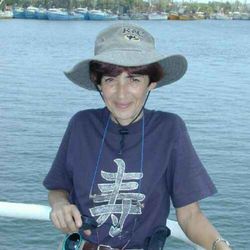
From Cuba to Canada: A Conversation with Soviet defector Paulina Zalitsky
39:12|A previously aired conversation with Paulina Zelitsky, author of the two‑volume memoir The Sea Is Only Knee Deep. She discusses her work as a marine engineer at a soviet submarine station in Cuba at the height of the Cold War, her experiences inside the soviet system, and her 1971 defection to Canada with her two young children. The interview also includes a discussion about possible recently (2020) renewed russian activity at the Cuban site where she once worked.This conversation originally aired in 2020 in two parts as part of the Ukrainian Jewish Heritage series. • Nash Holos website here. • Full episode archives on Mixcloud — follow Nash Holos • Subscribe to this podcast and to the blog for transcripts• Subscribe to my Substack — all articles are free• Follow me on BlueSky, LinkedIn, and Instagram
Inside HURI: How Harvard’s Ukrainian Research Institute Shapes Global Understanding of Ukraine
24:05|Harvard’s Ukrainian Research Institute (HURI) has long been a global leader in advancing the study of Ukrainian history, language, literature, and contemporary issues. In this episode, Pawlina speaks with Dr. Oleg Kotsuba, Director of Publications at HURI, about the institute’s remarkable grassroots origins and its role in establishing Ukrainian studies as a respected academic field at a time when Ukraine had no agency under Soviet rule.Dr. Kotsuba shares insights into HURI’s publishing program, which began even before the institute was formally founded. Today, it includes scholarly monographs, translations of contemporary Ukrainian literature, and works that document the lived experiences of Ukrainians amid war, displacement, and cultural revival. He discusses how authors such as Volodymyr Rafeyenko, Olena Stiazhkina, and Serhiy Zhadan are reshaping global understanding of Ukrainian identity—many of them transitioning from Russian to Ukrainian as an act of cultural reclamation.The conversation also explores how HURI selects its authors, the crucial role of translators, and the institute’s commitment to amplifying under‑told Ukrainian stories. Dr. Kotsuba reflects on the challenges of running a micro‑press with a small team, the impact of geopolitical shifts on funding, and the importance of making Ukrainian voices accessible to readers worldwide.For full transcript, visit our website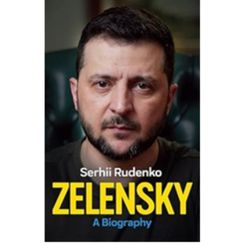
Zelensky by Serhii Rudenko: A Knyzhka Corner Book Review on Nash Holos
07:50|In this Knyzhka Corner book review, Myra Junyk takes a fresh look at Serhii Rudenko’s Zelensky, a gripping biography of Volodymyr Zelensky—comedian, political outsider, and ultimately the wartime president who galvanized Ukraine after Russia’s full‑scale invasion. Myra highlights Rudenko’s vivid storytelling as he follows Zelensky from his early life in Kryvyi Rih and his unexpected rise to the presidency to the defining moments that shaped his leadership under fire. With its candid portrayal of both strengths and controversies, this biography offers listeners a compelling window into Ukraine’s modern history and the making of a global symbol of resilience.Ukraine’s First Fight for Independence: 1917–1919
03:00|This Kultural Capsule feature looks at Ukraine’s first modern bid for independence in the years surrounding the First World War.It outlines how the early declarations of statehood set the foundation for a national revival that continues to resonate today. It also reflects on the unification of Ukraine’s early republics and the symbolic moments that kept the idea of independence alive through decades of repression and diaspora memory.The feature closes with a look at one of the defining early clashes of the period — a young group of defenders facing overwhelming force — a reminder of how deeply rooted Ukraine’s fight for freedom has always been, and why that history still matters.This Kultural Capsule was recorded in 2011 and is still relevant today. It was rebroadcast on the January 24th 2026 Vancouver edition and January 28th Nanaimo edition along with some more recent related events, including some great Ukrainian tunes. Check it out on MixCloud!A Harvest Truce: Grief, Resilience, and the Absurdity of War in Serhiy Zhadan’s New Play
07:41|A review of Serhiy Zhadan’s A Harvest Truce, a tragicomic portrait of grief, resilience, and daily survival on Ukraine’s front lines, translated by Nina Murray and reviewed by Myra Junyk.***This week’s Knyzka Corner looks at A Harvest Truce, Serhiy Zhadan’s tragicomic portrayal of everyday life in Eastern Ukraine during the ongoing conflict. Through the story of two brothers trying to bury their mother amid shelling, collapsed infrastructure, and strained community bonds, the play reveals both the harshness of daily survival and the quiet resilience that sustains ordinary Ukrainians living under Russian aggression since 2014.Reviewer Myra Junyk highlights the mix of bleakness and dark humour that runs through the work, as well as its echoes of Beckett in the way characters navigate an uncertain, often absurd reality. She also notes the strong sense of community that persists despite fear, suspicion, and the constant threat of violence.Published by the Harvard Ukrainian Research Institute (HURI), a leading centre for scholarship and publishing in Ukrainian studies.A Harvest Truce is available from Chapters/Indigo, Amazon, and directly from HURI.Transcript here.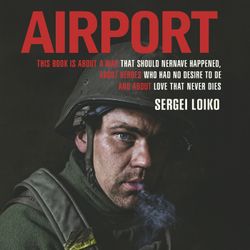
Sergei Loiko on the Donetsk Airport Siege and His Novel Aeroport (2016 Interview)
23:26|International correspondent Sergei Loiko reflects on his time inside the Donetsk airport during the height of the fighting — a rare vantage point that later shaped his novel Aeroport. This 2016 interview captures how the battle was understood before the English translation appeared and before the full‑scale invasion reshaped global awareness. A clear, unfiltered snapshot of the early phase of Russia’s war against Ukraine.***In January 2016, international correspondent Sergei Loiko joined Nash Holos for a conversation shaped by his rare firsthand experience inside the Donetsk airport during the height of the fighting. Loiko was the only foreign journalist to spend several days embedded with the Ukrainian defenders known as the Cyborgs — access that later informed his novel Aeroport, published in Ukrainian and Russian in 2016.This interview was recorded the day after his Ottawa presentation marking the release of those original editions. At the time, no English version existed; the translation would not appear until 2018, under the title Airport.Re‑released now to provide historical context on the early phase of Russia’s war against Ukraine, the discussion offers a clear, unfiltered snapshot of how the battle was understood at the time — before the full‑scale invasion and before Loiko’s novel reached an international readership. His reflections on the soldiers, the siege, and the human cost of the conflict remain strikingly relevant.Coming soon on Knyzhka Corner:A review of the 2018 English translation of Airport.Full transcript at the Nash Holos website here.