Share
Nash Holos Ukrainian Roots Radio
A Ukrainian Blogger in Mozambique: Telling Ukraine’s Story in Portuguese
•
Dmytro Yatsiuk speaks about the experiences that shaped his three decades in Mozambique and the development of his long‑running Portuguese‑language work on Ukraine.
This episode features a conversation about the path that brought him from Latvia and Ukraine to Mozambique, the early days of creating Ukrainian content in Portuguese, and how his work evolved through the 2004 Orange Revolution, the 2014 Revolution of Dignity, and the 2022 full‑scale invasion.
He also discusses the information environment in Portuguese‑speaking Africa, the persistence of Russian disinformation, and why maintaining accurate Ukrainian narratives for international audiences remains essential.
His blog, where he continues this work, can be found here.
More episodes
View all episodes
Castle Mountain Internment Memorial Vandalized in Banff National Park
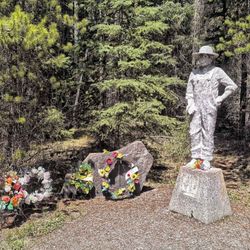
26:28|At the end of May this year (2026), during his annual routine maintenance visit to the Castle Mountain Camp memorial in Banff National Park, Borys Sydoruk of the National Internment Committee was shocked to discover that two bronze plaques were missing and the statue itself had been damaged. In this conversation, he discussed the likely motive behind the theft, the RCMP investigation, and Parks Canada’s uncertain response over who should repair a monument funded by the Ukrainian community and gifted to Parks Canada. As well, he shared the wider story of Canada’s First World War internment operations, and reminded listeners of the role of internees—used as slave labour—in developing Canada’s national parks. He also discussed the struggle to mark these sites across the country, and what this kind of vandalism reveals about how little most Canadians still know—or are taught—about this dark chapter of Canada's history.
The Pale of Settlement: How an Empire Confined a People
10:32|In this episode of Ukrainian Jewish Heritage, we explore the origins, purpose, and lived reality of the Pale of Settlement. Created by Catherine II in 1791 after the partitions of Poland, this vast territory confined the largest Jewish population in the world to 25 western provinces of the Russian Empire. Many of these provinces lay on captive Ukrainian lands the empire had already colonized — ruled by force, stripped for resources, and kept under tight military control. Several of those same areas lie within modern Ukraine’s borders today, including regions now under Russian occupation.The episode traces the long Jewish presence in these lands, the shifting political forces that shaped their fate, and the alternating cycles of restriction, limited autonomy, and violent repression under successive Russian rulers.It also highlights the cultural, educational, religious, and economic life that flourished despite hardship, and the events that ultimately brought the Pale to an end in 1917.The geographic overlap between the former Pale and today’s occupied Ukrainian territories underscores how imperial patterns of control and repression continue to echo in the present.
Centuries of Asparagus and a Classic Ukrainian Dish
04:27|In this segment, Sylvia Pidraziuk Molnar brings forward a fabulous, simple recipe in praise of asparagus — a plant that has grown wild in Ukraine for centuries and still appears in Ukrainian kitchens across the country. She speaks to its quiet presence and long history in Ukrainian cookery, and the way its character pairs so naturally with familiar flavours, including the Carpathian bryndzia cheese as well as parmesan. Sylvia offers a straightforward preparation that lets the vegetable remain the star, a small dish with deep roots and a hint of the mountains in its finish.You’ll find this recipe, along with others from the series, in the Ukrainian Food Flair cookbook, available from Amazon and other online booksellers.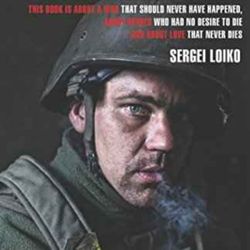
Inside Ukraine’s 242‑Day Siege at Donetsk Airport
06:42|In this edition of Knyzka Corner, Myra reviews Airport, Sergei Loiko’s novel based on the 242‑day siege of Donetsk airport.Drawing on his experience as the only foreign reporter living with the defenders, Loiko depicts the Cyborgs’ determination, the brutality of the assault by Russian troops and mercenaries, and the personal turmoil of his fictional alter-ego, war correspondent Alexei Molchanov.The review highlights the novel’s blend of fact‑based detail, frontline observation, and the intertwined themes of courage, loss, love, and betrayal.Originally released in Ukrainian (2015) and Russian (2016), and translated into English by Alexander Cigale in 2018. Available on Amazon here (affiliate link).You can hear Pawlina's interview with Sergei Loiko recorded in 2016 here.
Heal a Mother’s Heart: Svitlana Kominko on Bereavement Support in Ukraine
38:37|Svitlana Kominko, co‑founder and CEO of Maple Hope Foundation, describes the Heal a Mother’s Heart campaign and the organization’s extensive bereavement support work for mothers and widows of Ukraine’s fallen. A major component of this campaign is Ukrainian-designed silk scarves, which help to raise funds for this critical work.She also discusses the program’s community‑building, its support for women experiencing loss, and the upcoming charity webinar featuring well-known American grief educator Joanne Steen.To support the important work of Maple Hope Foundation visit their website here.---------------------Originally broadcast on Nash Holos Ukrainian Roots Radio in Vancouver on May 2, 2026, and in Nanaimo on May 6, 2026.--------------------Subscribe to the podcast and share it with others to stay connected to new episodes. You can hear the full weekly broadcast on MixCloud, and please visit our online home nashholos.com.
Nalysnyky: Classic Ukrainian Crepes from the Nash Holos Archive
04:03|From the Nash Holos Audio Archives and the Ukrainian Food Flair cookbook, this flashback features Sylvia Molnar’s clear, practical instructions for making nalysnyky — the delicious Ukrainian crepes enjoyed sweet or savoury. You’ll find this recipe, along with others from the series, in the Ukrainian Food Flair cookbook, available from Amazon and other online booksellers.
Remembering Kyiv in April 1986
04:49|In this vignette, Victor Sergeyev of Mikolayiv, Ukraine recalls a spring visit to Kyiv in April 1986, a trip meant only for routine work courses that unfolded into something far more ominous.He describes the city as it was before the truth emerged — the blossoms, the streets, the ordinary rhythms — and the first small signs that something was wrong in Chornobyl and Prypiat.His memories trace the shift from rumours to certainty: the sudden appearance of water hoses across the city, shelves stacked with red wine, round‑the‑clock public showers, frantic searches for dosimeters, and the quiet panic of people trying to leave Kyiv.Forty years later, the events he describes still stand as a record of that spring — and as a reminder that the Soviet regime collapsed under its own weight, while many wait for that history to repeat itself with the russian regime.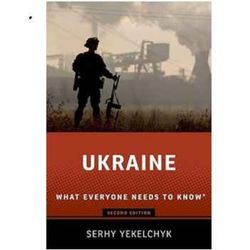
Ukraine: What Everyone Needs to Know (2nd Edition) by Serhy Yekelchyk — A Knyzhka Corner Book Review
06:56|In this episode Myra Junyk reviews Serhy Yekelchyk’s Ukraine – What Everyone Needs to Know (2nd Edition), a comprehensive analysis of Ukraine’s development as an independent state and the challenges it has faced since 1991. The book updates Yekelchyk’s earlier work The Conflict in Ukraine and focuses on national identity, corruption, Russian aggression, and Ukraine’s international relationships.Myra outlines the book’s seven chapters, which address Ukraine’s strategic importance, its land and people, the post‑communist transition, the Orange Revolution and EuroMaidan, Russia’s annexation of Crimea, the war in Donbas, the 2022 full‑scale invasion, and Ukraine’s role in global security. Yekelchyk highlights the failure of the 1994 Budapest Memorandum to protect Ukraine and examines how American policymakers came to understand Ukraine’s significance in countering Russian ambitions.The episode also notes the author’s treatment of controversial topics, including historical myths, Ukrainian nationalism, systemic corruption, and the early period of Zelensky’s presidency. Yekelchyk provides readers with tools for further study, including a chronology, map, notes on sources, and an extensive reading list.Ukraine – What Everyone Needs to Know is available at Chapters/Indigo and Amazon (affiliate link).