Share

Latest episode
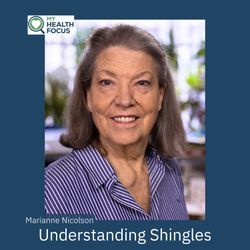
Shingles: The Pain That Can Last a Lifetime and the Vaccine That Could Prevent It
23:25|Show Notes:Marianne Nicholson, MBE, Director of the Shingles Support Society, joins Catriona to discuss shingles, the reactivation of chickenpox virus, and the lasting nerve pain it can cause.Key takeaways:1. Shingles is a reactivation of the chickenpox virus, appearing in a small region on one side of the body, most commonly the ribs or face. Early nerve sensations are often mistaken for a pulled muscle or insect bite.2. The 72-hour window to start antiviral treatment is critical. The sooner treatment begins, the less severe the outbreak and the lower the risk of lasting pain.3. The NHS shingles vaccine (Shingrix, two doses) is available to people who turned 65 after 1st September 2023 and anyone in their 70s. After 80, it is no longer available on the NHS. People over 50 can pay privately.4. Post-herpetic neuralgia is ongoing nerve pain after shingles has healed, sometimes lasting for life. Research has measured the pain as worse than childbirth in some cases.5. Because shingles pain is 'ghost pain' created by disturbed nerves rather than actual tissue damage, psychological techniques like hypnotherapy and physical strategies like firm pressure bandages can help manage it safely.Marianne Nicholson, MBE, has been Director of the Shingles Support Society for almost 30 years, helping people understand shingles, its prevention, and its aftermath.For more information, visit shinglesupport.org.uk. If this episode could help someone you know, please share it.Subscribe to My Health Focus so you don't miss what's next.Sign up to our newsletter here:https://bit.ly/3NA40IQ1. [02:15] Marianne explains that chickenpox sets up home in a corner of your body and can reactivate as shingles when your immune system is less efficient or has lowered its guard over time. 2. [04:30] Marianne describes the early nerve sensations of shingles: 'people think that they pull the muscle or they've been bitten by an insect or they've got perhaps an allergy to a plant in the garden because of that nettle sting feeling.'3. [05:10] Marianne states that doctors are told that after 72 hours it's probably not worth giving the antiviral drugs, emphasising 'the sooner the better for shingles.' 4. [10:45] Marianne explains that people who have nursed series of children through chickenpox are less likely to have shingles than those who last met chickenpox virus at age 10.5. [13:20] Marianne clarifies the NHS vaccine eligibility: people who turned 65 after 1st September 2023, anyone in their 70s, but not after 80. She also explains that people over 50 can buy it privately.6. [15:50] Marianne describes her own decision to pay privately for Shingrix after receiving Zostavax years earlier, because Zostavax is not expected to last more than about 10 years. 7. [19:45] Marianne references research showing shingles pain measured as worse than childbirth, then adds: 'imagine being in the throes of childbirth every day for the rest of your life with never a baby to show for it.'8. [21:30] Marianne describes her own shingles pain as 'somebody had got one of those wire brushes that you use to brush rust off cars and was sort of pushing it into my back,' and that 10 years later she still has 10% of that pain. 9. [24:10] Marianne explains that shingles pain is 'ghost pain' because 'there is nothing wrong with the area that hurts,' unlike a broken leg or burnt skin, so psychological ways of ignoring it are perfectly safe.10. [27:00] Marianne shares the corset T-shirt tip: a man bought a heavily elasticated T-shirt, had a seamstress add hooks and eyes down the front, and the firm pressure stopped the feeling of clothing scraping his skin like sandpaper or barbed wire.
More episodes
View all episodes
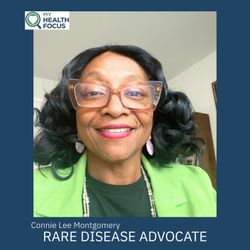
Why rare disease patients need whole person care with Connie Montgomery
24:33|Mrs. Connie Lee Montgomery is a global patient advocate, retired occupational therapist, and founder of The Rare Cares Collective. She lives with Factor Seven Deficiency, Pemphigus Vulgaris, and three chronic conditions.Key takeaways:1. Listen deeply to what patients say and don't say, including their body language and pauses around sensitive topics shaped by cultural, religious, or stigma-related factors.2. Humanise people by thinking of them as your own family member, which helps you listen more compassionately to whatever is being shared.3. Have a referral network ready before you ask about social needs, so you can move from gathering data to taking action when someone shares a nutritional, transportation, or access need.4. Build long-term ecosystems of care that consider the whole person, their zip code, access to food and transport, and the supportive relationships around them.5. Be present in communities before extracting information. Attend health fairs, faith gatherings, youth activities, and Little League games to build trust relationships over time.Connie waited 30 years for a bleeding disorder diagnosis due to implicit bias, lack of clinician knowledge, and failure to consider her whole being. She founded The Rare Cares Collective to connect rare and ultra-rare communities globally, enabling communication, connection, and collaboration.Subscribe to My Health Focus for expert interviews that centre patient voices.Sign up to our newsletter here:https://bit.ly/3NA40IQ1. [00:01:43] Ask the person how they want to be referred to and what they want to talk about, because getting their input is key to how you move forward.2. [00:02:31] Patient engagement is simply people sharing their insights about their own lived experience with whatever condition it is they have.3. [00:07:13] Listen to what people are not sharing, their nonverbal cues, their body language, and watch for pauses when friction factors or pain points come up. 4. [00:08:20] Humanise people by thinking about what if this was my mother, my father, my loved one, because that helps you listen more compassionately.5. [00:09:19] Have a referrals list in place beforehand so you can actually refer them to get the services they need. That moves beyond gathering data to action.6. [00:11:38] The fact that you validated that I've spoken and you've heard what I said goes a long way to building something I call trust.7. [00:15:17] You can no longer come to communities and extract their information, extract and utilise their bodies for research without really building relationships and learning from the leaders and people in those communities.8. [00:17:13] Whole person care is considering the entire ecosystem of care around that person, that zip code that person lives in, access to nutritious food, public transportation, supportive family. 9. [00:18:05] It took me 30 years to get a diagnosis. The entire being of who I am was not considered, whether it was overt discrimination and implicit bias or lack of knowledge on the part of healthcare practitioners.10. [00:21:27] The Rare Cares Collective is going to be one of the first organisations that will bring people together locally, nationally, and globally who may be in that same diagnosis state.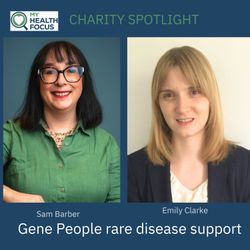
Gene People: Supporting Families Through Rare Genetic Conditions
23:20|Samantha Barber, CEO of Gene People, and Emily Clark, a registered genetic counsellor, discuss the work of their national charity supporting people living with genetic and rare conditions.5 Key Takeaways:1. Over 3.5 million people in the UK live with a rare condition, 80% of which are genetic, spanning the entire lifespan from babies to older adults.2. Gene People's helpline offers flexible support at all stages, from pre-diagnosis through to family planning, with some conversations lasting months or even years.3. The charity supports people with ultra-rare conditions where no condition-specific group exists, as well as those with slightly less rare diagnoses who need additional guidance.4. Their partnership network connects rare disease organisations, from Facebook peer support groups to registered charities, offering free membership, symposiums, and discounts on essential services.5. Many rare condition charities are family-run, born from families who don't want others to face the same struggles, and Gene People helps them navigate compliance, governance, and fundraising.Samantha Barber is CEO of Gene People, bringing nearly 30 years of voluntary sector experience. Emily Clark is a registered genetic counsellor who runs the charity's genetic conditions helpline.If you or someone you know is affected by a genetic condition, visit genepeople.org.uk or call their helpline for support.1. [[00:05:52.980]] Emily explains that some conditions are so rare there might only be a handful of people diagnosed with that condition in the world, so they may not have a condition-specific support group to turn to. 2. [[00:06:39.679]] Emily points out that although the condition may be different, many questions families have are similar across conditions, allowing her to work with families on inheritance, family planning, and genetic testing regardless of diagnosis. 3. [[00:08:04.010]] Emily describes the diagnostic odyssey, saying it can take a really long time to get a diagnosis and to get the right diagnosis, with some families experiencing symptoms that remain undiagnosed over quite a long period of time. 4. [[00:10:34.640]] Emily explains that a few people maintain ongoing contact intermittently over a much more extended period of time, like a couple of years, such as those in the 100,000 Genomes Project. 5. [[00:14:08.000]] Sam says that not being focused on one condition gives us a range of perspectives and experiences that we hear about, which helps inform the other parts of our work. 6. [[00:17:54.340]] Sam explains that whether you are a 10,000 pound charity or a 10 million pound charity, the same level of compliance and governance are needed, but it just gets harder to fund for smaller organisations.7. [[00:20:30.660]] Sam recounts families saying, 'I couldn't let anyone else go through what we went through,' explaining the altruism that drives family-run rare condition organisations.8. [[00:22:49.780]] Emily says we know it is isolating for so many families out there with rare conditions and it's hard to pick up the phone or send off that email sometimes initially because you don't know really where it's going.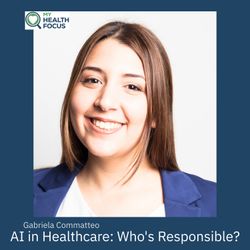
AI in Healthcare: Who's Responsible?
28:42|On the day the National Commission into the Regulation of AI in Healthcare published its landmark report, Gabriela Commatteo, AI Regulation Policy Lead for the MHRA, joined Catriona Williams from My Health Focus to explain what it all means for patients, prescribers, and the healthcare system.Key takeaways:1. AI in healthcare refers to technologies that analyse information, identify patterns, and support clinical decision-making, not replace doctors or nurses.2. AI is already in use across parts of the NHS, from ambient voice technology recording GP consultations to stroke imaging tools and one of the world's largest breast cancer screening trials involving 700,000 women.3. More than 12,000 people contributed to the National Commission's research, and the message was clear: patients want AI in their care, but support is conditional on safety, transparency, and clear accountability.4. The Commission recommends evolving the regulatory framework to reflect AI's unique characteristics, including ongoing monitoring, proportionate risk-based requirements, and clearer controls around updates after deployment.5. If something goes wrong, responsibility depends on the facts of each case, but manufacturers, healthcare providers, prescribers, and regulators all have distinct roles, and the system needs greater clarity on who is accountable for what.Gabriela Commatteo leads AI regulation policy and projects at the MHRA and was closely involved in the National Commission process. Subscribe to My Health Focus for expert interviews that answer the questions patients and professionals are actually asking.02:45"AI in healthcare refers to technologies that analyse information, identify patterns, make predictions or recommendations, and in the context of healthcare that means using technology to help support health and care delivery."04:30"Some GPs are using ambient voice technology to record consultations and produce draft notes, which frees up clinicians to focus more fully on patients rather than taking notes during the appointment, bringing back that human aspect to the clinician-patient relationship."05:20"The NHS has launched one of the world's largest trials of AI in breast cancer screening, involving around 700,000 women, to understand whether AI can help identify signs of cancer and support radiologists in reviewing scans more efficiently."08:15"More than 12,000 people gave their views, including through public polling, a call for evidence, sector roundtables, and patient and public engagement through partner organisations, and engagement especially included seldom heard groups and underserved, underrepresented groups."10:40"Unlike many traditional medical devices, because it can be updated more often and may perform differently across services, patient groups, and clinical settings, the Commission recommends putting more emphasis on ongoing monitoring and clear controls around updates rather than relying only on a single approval point before a product reaches the market."14:50"The key message is that patients actually want AI, they want to see AI technologies used in their healthcare, they recognise their benefits, but that support is not automatic, it's conditional. They want to know that it is safe, how it is going to be used, they want meaningful human oversight, and they want to understand what happens if something doesn't go as planned and where the responsibility lies." not anti-AI, but they have non-negotiable expectations about transparency and accountability.17:20"There is no simple answer to that question because questions about liability depend on the facts of a specific incident, but what I would like to stress is one clear message from the Commission, which is that the system needs greater clarity about who is responsible for what."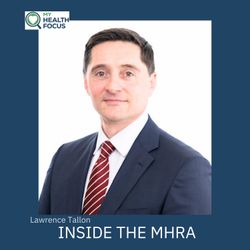
Inside the MHRA
31:37|Welcome to a new series inside My Health Focus: conversations with the MHRA, the body that decides which medicines and vaccines are safe for the UK.In this first episode, Catriona Williams talks to Lawrence Tallon, Chief Executive of the MHRA. Lawrence opens up about his mother's cancer diagnosis when he was a teenager, and how a clinical trial at Addenbrooke's gave her 12 more years than doctors expected. We also cover the new weight-loss pill and why the UK approved it first, what really happened to clinical trial approval times after Brexit, and why women and people from ethnic minority backgrounds are still underrepresented in clinical trials.This is the first of several conversations with the MHRA team. Follow the show for the rest of the series.Timings:00:00 — Intro00:58 — Welcome, and what the MHRA actually does02:33 — Balancing patient safety against innovation and access05:46 — How the MHRA's medical and scientific assessors work with pharma and biotech08:07 — The new weight-loss pill: why the UK approved it first12:00 — Brexit's impact on approval speed and the UK's standing globally12:34 — Covid, budget cuts, and how the MHRA fell behind, then caught up15:10 — Lawrence's mother's cancer diagnosis and the clinical trial that gave her 12 more years16:55 — Why patients struggle to find and stay in the right clinical trials20:47 — Bringing patients into the research process, not just researching on them21:08 — How the MHRA can use approval as a lever to demand diversity in trials22:04 — The gender gap in clinical trial participation23:25 — Ethnicity, Covid vaccine hesitancy, and representative research25:29 — Checking for diverse trial populations before granting a licence27:22 — Does industry see this as a barrier to getting drugs to market?29:03 — Closing thoughts and the road ahead29:50 — The football referee analogy: what the MHRA is really there to do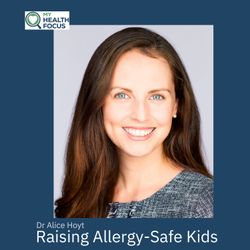
Dr Alice Hoyt: Why cure is the wrong word in food allergy care
26:04|Dr Alice Hoyt is a board-certified allergist and author of Navigating Food Allergies: A Parent's Guide to Care, Coverage and Confidence. In this episode, she explains why the word cure has no place in allergy vocabulary, what the evidence says about allergic reactions on planes, and how parents can transition food allergy responsibility to the child who has to live with it.Five key takeaways:1. Precautionary labelling on food packaging is not regulated, so families must assess risk case by case with their allergist.2. The science does not support airborne peanut reactions on planes, but the psychological response to proximity to an allergen is real and valid.3. Oral immunotherapy teaches the body to tolerate an allergen by introducing very small, controlled amounts over time, but tolerance must be maintained through regular exposure.4. Early introduction of allergens, starting as early as four months, prevents allergies from developing, it does not test whether an allergy already exists.5. Transitioning allergy management tasks to children should start early, with age-appropriate responsibilities building over time so they are independent by adulthood.Dr Alice Hoyt is a board-certified allergist and the author of Navigating Food Allergies: A Parent's Guide to Care, Coverage and Confidence. She helps families make evidence-based decisions about food allergy diagnosis, management and treatment.For more expert interviews on allergies, chronic conditions and evidence-based health information, subscribe to My Health Focus on YouTube, follow the podcast or sing up to out weekly newsletter on: https://myhealthfocus.com/1. [03:45] Precautionary labelling is not regulated. There is no standardised definition of what may contain means, so families must assess risk with their allergist case by case.2. [06:30] The science does not support that someone three rows back eating peanut will cause anaphylaxis. Peanut is heavy, it floats down to the tray table, it does not become aerosolised unless in a lab.3. [08:15] I can see the look on my husband's face when he sits next to someone eating something that could kill him with one bite. He is a physician, he is evidence-based, but that response is real.4. [12:00] One part of the book that stands out is the roadmap for transitioning responsibilities of managing a food allergy over to your child, starting young with age-appropriate tasks.5. [17:20] Oral immunotherapy takes very small amounts of allergen, like five milligrams of peanut when one peanut has 300 milligrams, and teaches the body to tolerate it over time.6. [19:45] The sooner we start oral immunotherapy, the more likely the child will freely eat the allergen. I see kids started under two eating PB&J sandwiches by kindergarten.7. [21:30] We never want to say something is a cure. A cure means you apply it, the condition goes away, you remove the cure, and it does not come back. With OIT, if you stop, the allergy may return.8. [25:00] Early introduction is not testing whether they are allergic. We know at four months it is highly unlikely they are allergic, so we feed the food to grow tolerance and prevent the allergy.9. [28:10] The allergen that really makes allergists uncomfortable is cashew. We are finding more and more kids with cashew allergies, and very small amounts can cause robust reactions.10. [30:45] The sensationalisation of food allergy, the fear-mongering, the over-promising and under-delivering, those are the things on social media that really bother me.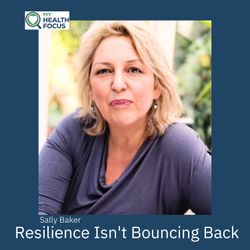
The Getting of Resilience: Sally Baker on Health Anxiety
24:52|Senior therapist Sally Baker returns to talk about resilience, not as bouncing back or staying relentlessly positive, but as something pragmatic that can be learned at any age, whatever your upbringing.Sally and Catriona talk through why toxic positivity is exhausting rather than helpful, the "game show noise" technique for interrupting anxious rumination, breathing as an early signal of overwhelm, and the havening technique for calming the nervous system. They also cover emetophobia, the fear of vomiting, and how it can shape a life long before anyone names it.1. [02:30] Resilience is not about being massively positive all the time, it is exhausting being positive when you are feeling fearful, anxious and not very well → Sally challenges the common misconception that resilience means forced positivity, which is a relief for anyone struggling with chronic health anxiety2. [04:15] All of the overthinking is like a vine in your hand, the more attention you pay the seed of these worrying thoughts, it gives it energy, as if you are growing a seed with water and sunlight so that eventually your thoughts become completely overwhelming → This is Sally's signature metaphor for how rumination spirals, and it helps people understand why their anxiety keeps growing3. [05:20] The game show noise technique: when you find yourself ruminating about your health, say the game show noise, it goes uhhhh, that's an unhelpful thought, and break it, break the thought pattern → Sally gives a concrete, memorable tool that clients and their families can use immediately to interrupt health anxiety spirals4. [10:45] Resilience is developed in the crucible of the family, if you are raised in an environment where you are loved, honoured and adored, you will develop natural resilience, but what is great about resilience is that you can learn it as an adult later in life → Sally explains the origins of resilience but emphasises hope, this is not a life sentence, adults can build resilience even if they did not develop it as children5. [13:30] Health anxiety becomes a problem when it interrupts you living your life as best as you are able to, poor health can already make our life small, but then anxiety on top of that means we are spending all our time and energy ruminating → Sally defines the tipping point clearly, this helps listeners recognise when health anxiety has become a genuine problem rather than a normal worry6. [14:50] The period of waiting for a diagnosis is almost harder than being given the most terrible news, because even when the waiting is endless, it is an abstract, no one knows what is going to happen, and as soon as you have had the news, there is a palpable release, at least now I know what I am facing → Sally validates the experience of waiting for results, which many listeners will find deeply relatable and reassuring7. [16:30] The music box metaphor: when you are winding yourself up with anxiety and ruminating, you are in effect winding up the music box, and when the music box is completely wound up, it can only play one tune and it can only do one dance → Sally uses a physical prop to demonstrate how rumination locks you into a single pattern, making the abstract concept tangible8. [19:00] Havening is a great technique, you start with your hands on the top of your shoulders and you slowly stroke down, what you are doing is you are calming your parasympathetic system → Sally introduces a self-soothing technique that listeners can practise immediately, with clear physical instructions9. [26:15] Emetophobia, the fear of vomit, is the queen or king of all phobias because the threads of it impact on so many different aspects of life, it can stop someone going to university, make people agoraphobic, lead to orthorexia and even anorexia → Sally explains a less well-known phobia that affects mostly women and girls, showing how health anxiety can infiltrate every area of life