Share
Music Unlimited
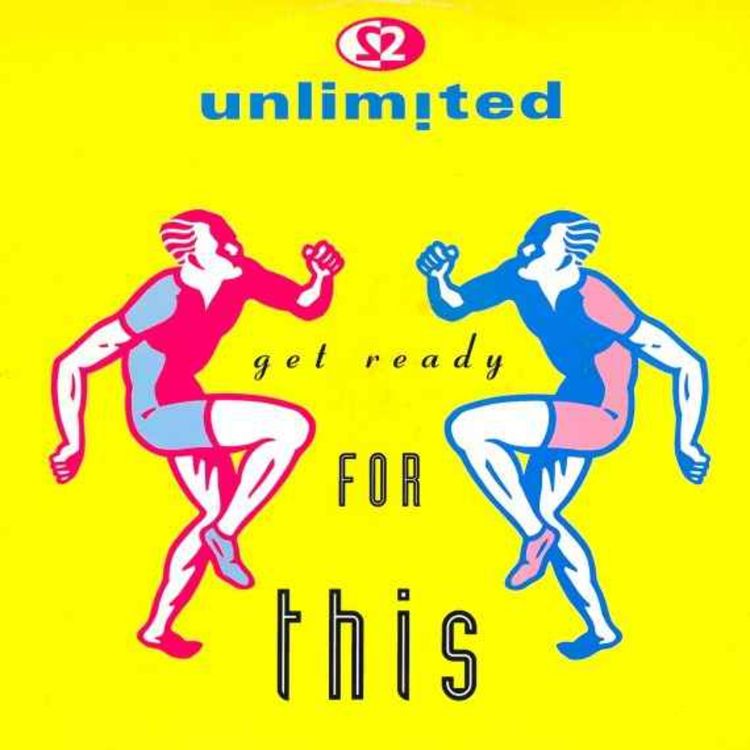
2 Unlimited - Get Ready For This (Extended Rap Version)
"Get Ready for This" is a song recorded by Belgian/Dutch music group 2 Unlimited. It was released in 1991 as the lead single from their debut album, Get Ready!. Originally, the single was produced as an instrumental, titled the "Orchestral Mix". It became a hit and conscious of their popularity, Wilde & De Coster wanted a more accessible, formatted formula for their project to grow. Ray was then asked to write lyrics and add a rap to the track. On Ray Slijngaard's suggestion, Anita Doth joined as the female vocalist.
The single was an immediate success throughout Europe with notable peaks worldwide, including Australia and the US. It is arguably the most famous of the band's singles in the United States having charted at number 14 on the US Billboard Hot Dance Club Play chart, number 17 on the Billboard Top 40 Mainstream and number 38 on the Billboard Hot 100, making it the band's only top-40 hit in the US. In the UK, the single went to number two on the UK Singles Chart.
The song is one of the most frequently played songs at sporting events around the world. It earned one of BMI's Pop Awards of 1996, honoring the songwriters, composers and music publishers of the song. In 2010, Pitchfork included it in their list of "Ten Actually Good 90s Jock Jams".
More episodes
View all episodes
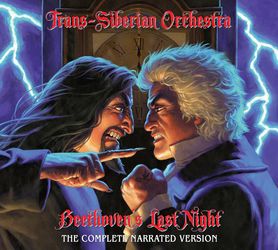
Trans-Siberian Orchestra - Beethoven's Last Night (The Complete Narrated Version)
01:56:13|ViennaMozartThe Dreams Of CandlelightRequiem (The Fifth)I'll Keep Your SecretsThe DarkFür EliseAfter The FallA Last IllusionThis Is Who You AreBeethovenMephistopheles' ReturnMiseryWho Is This ChildA Final Dream(Closing Poetry)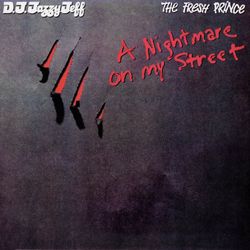
DJ Jazzy Jeff & The Fresh Prince - A Nightmare On My Street (US 12”)
17:19|“A Nightmare on My Street” is the third single from DJ Jazzy Jeff & The Fresh Prince’s second studio album, He’s the DJ, I’m the Rapper. The song became a crossover hit in the US, reaching #15 on the Hot 100. The song was released as a single in early 1988. The single was released on vinyl and audio cassette tape. The song humorously describes an encounter with the horror film villain Freddy Krueger and was considered for inclusion in the movie A Nightmare on Elm Street 4: The Dream Master, but the producers of the film decided against its inclusion.New Line Cinema, copyright holders of the A Nightmare on Elm Street film franchise, sued DJ Jazzy Jeff & The Fresh Prince’s record label for copyright infringement, forcing the label to destroy a music video produced for the song (though a copy of the video did survive and is available online. Both sides eventually settled out of court, but as a result, vinyl pressings of the album He’s the DJ, I’m the Rapper contain a disclaimer sticker that says, “[This song] is not part of the soundtrack…and is not authorized, licensed, or affiliated with the Nightmare on Elm Street films.” The song samples Charles Bernstein’s musical motif from A Nightmare on Elm Street.The original track as included on the original LP and cassette pressings of the album He’s the DJ, I’m the Rapper ran 6:09. However, the entire album could not fit onto compact discs of the time, so for the CD release, many tracks were shortened; the single version “A Nightmare on My Street” was used in place of the original. This version is not simply an edit of the original album cut, as it included different lyrics in certain sections. The version included on DJ Jazzy Jeff & the Fresh Prince’s Greatest Hits album is not the original single version. Although it is labeled “Single Edit” and runs the same length, it is simply an edited version of the original recording and does not include the different lyrics recorded for the single.SIDE A:A Nightmare On My Street (Extended Mix) 6:13A Nightmare On My Street (Single Edit) 4:53SIDE B:A Nightmare On My Street (Instrumental) 6:13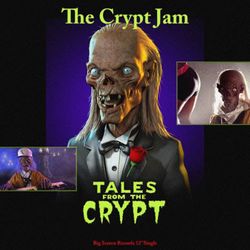
The Crypt Keeper - The Crypt Jam (US 12″ Promo)
11:39|In 1992, the wisecracking host of HBO’s Tales from the Crypt decided to take his gruesome groove to the dance floor with “The Crypt Jam.” Voiced by John Kassir in character as the delightfully demented Crypt Keeper, the single was released on Big Screen Records and both written and produced by Chuckii Booker, the multi-talented R&B artist best known for his hits “Turned Away” and “Games.”Booker’s production gives “The Crypt Jam” a slick early-’90s new jack swing feel—thick, punchy beats, funky synth bass, and layers of spooky samples. What could have been a mere novelty track is instead surprisingly danceable and well-crafted, thanks to Booker’s polished touch.The Crypt Keeper’s signature cackles, graveyard puns, and horror humor are all here in full force—making it a fun, campy club track that bridges the gap between horror fandom and early ’90s dance culture.The music video, featuring the Crypt Keeper rapping, dancing, and surrounded by creepy party guests, aired on MTV and was included on various Tales from the Crypt home video releases. It’s gloriously over-the-top: part Halloween special, part hip-hop parody, and pure early-’90s entertainment.Though “The Crypt Jam” didn’t chart, it found an afterlife as a Halloween cult favorite. Fans of Booker’s production can easily hear his rhythmic fingerprints throughout, turning the Crypt Keeper’s macabre humor into something that could have haunted any club floor in 1992.💀 Fun Fact:Chuckii Booker’s involvement makes this one of the rare novelty singles tied to a TV character that actually carries legitimate R&B and dance credentials. Booker handled everything from songwriting to production, giving the track a professional polish that sets it apart from most TV tie-ins of the era.🕸️ For this post, I created custom sleeve artwork to give this undead dance floor classic the proper cover it never had. Inspired by vintage Tales from the Crypt comic art and early-’90s horror design, it captures the ghoulish fun and funky energy of The Crypt Jam.Even after three decades, this spooky groove proves that when it comes to beats from beyond the grave, nobody does it deader than the Crypt Keeper.SIDE A:Scales From The Crypt (Club Mix) 7:08SIDE B:The Crypt Jam (Album Version) 4:31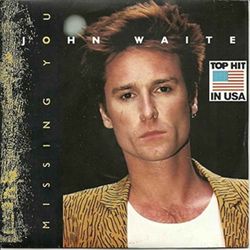
John Waite – Missing You (U.S. 12″) (1985)
07:01|In the mid-1980s, John Waite was enjoying major solo success after leaving The Babys, thanks to his 1984 U.S. #1 hit “Missing You” and the platinum album No Brakes. It was released in June 1984 on a one sided LP Single and reached number one on Billboard's Album Rock Tracks chart and on the Billboard Hot 100, as well as number nine on the UK Singles chart. "Missing You" was the only record in 1984 to spend only a single week at the top of the Hot 100. The song was nominated for the 1985 Grammy Award for Best Male Pop Vocal Performance.Waite re-recorded the song with country/bluegrass artist Alison Krauss which appeared on her album A Hundred Mile or More: A Collection, and released it to Country music radio in 2007. The re-recording peaked at number 34 on the Hot Country Songs chart. The original recording has been featured in the films, Selena (1997) and Warm Bodies (2013).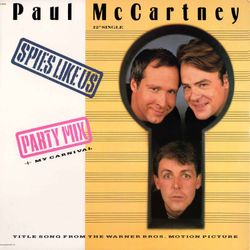
Paul McCartney - Spies Like Us (US 12")
11:01|In late 1985, Paul McCartney added another unexpected entry to his eclectic catalog with the release of “Spies Like Us,” the theme song for the John Landis-directed comedy of the same name starring Chevy Chase and Dan Aykroyd. While not remembered as one of McCartney’s most celebrated singles, the track is an interesting snapshot of mid-80s pop production, Cold War paranoia dressed in pop satire, and a Beatle experimenting with the MTV era.BackgroundThe film Spies Like Us was a goofy Cold War buddy comedy, and Warner Bros. wanted a big-name theme song to match. Enter Paul McCartney, who had already proven with “Live and Let Die” that he could craft cinematic pop with flair. This time, though, instead of lush orchestrations, McCartney leaned heavily into synths, drum machines, and Fairlight sampling, hallmarks of the mid-80s studio sound.The single was produced by McCartney himself, with Hugh Padgham (known for his work with Genesis, Phil Collins, and The Police) contributing his signature gated drum textures.The Song“Spies Like Us” is a quirky mix of playful lyrics, staccato vocal chants, and punchy electronic rhythms. McCartney doesn’t play it straight; instead, the song mirrors the slapstick tone of the movie. The hook, “Ooh ooh, what do you do, no one else can dance like you,” is pure Macca—catchy and cheeky at the same time.While not universally loved by critics (some dismissed it as lightweight compared to his more serious work), the track’s off-kilter energy feels in line with the zany espionage antics of Chase and Aykroyd. It’s Paul having fun, and that spirit comes through.Chart PerformanceDespite mixed reviews, “Spies Like Us” did surprisingly well commercially. It peaked at #7 on the Billboard Hot 100 in early 1986, marking McCartney’s last U.S. Top 10 hit to date. In the UK, however, it stalled at #13.The music video, directed by John Landis, featured McCartney performing the song intercut with clips from the film—though Chase and Aykroyd also appear goofing around as “backing musicians,” adding to the lightheartedness. MTV gave it steady rotation at the time.Legacy“Spies Like Us” is often overlooked when discussing McCartney’s career highlights, but it remains a fascinating curio. It captures a moment when one of the world’s greatest songwriters was still experimenting, still adapting, and still landing hits two decades after the Beatles.Final thought: “Spies Like Us” may not sit alongside Band on the Run or Maybe I’m Amazed in McCartney’s pantheon, but it’s undeniably catchy, delightfully odd, and very much of its time. A Top 10 hit from a Cold War comedy—only Paul could pull that off.SIDE A:Spies Like Us (Party Mix) 7:13Mixed By – John PotokerSpies Like Us (Alternative Mix-Known To His Friends As “Tom”) 3:59Mixed By – Art Of Noise*SIDE B:Spies Like Us (DJ Version) 3:48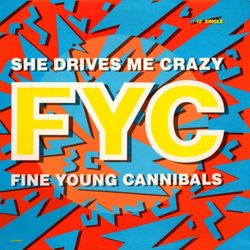
Fine Young Cannibals - She Drives Me Crazy (US 12”)
23:12|Originally released in 1988, “She Drives Me Crazy” marked the explosive return of British trio Fine Young Cannibals. Issued as the lead single from their second (and final) album The Raw & the Cooked (1989), the track became an instant classic—showcasing Roland Gift’s unmistakable falsetto and the band’s clever fusion of pop, soul, and funk.Written by frontman Roland Gift and bassist David Steele, and co-produced by the band along with David Z (a longtime Prince collaborator), “She Drives Me Crazy” has one of the most iconic snare sounds of the era. The distinctive “pop” of the drum was no accident—David Z employed an inventive technique during the recording sessions at Prince’s famed Paisley Park Studios in Minneapolis. The snare part was recorded separately, then played back through a speaker placed on top of the snare drum while a mic underneath captured the sound again—creating that sharp, tight punch that helped the track cut through on both radio and the dancefloor.Chart-wise, the single became the band’s biggest hit. In the UK, it reached No. 5—making it their highest-charting release at home. But it was in the U.S. that the song really took off, hitting No. 1 on the Billboard Hot 100 and staying there for a week in April 1989. It also topped charts in Australia, Canada, New Zealand, Austria, and Spain, cementing Fine Young Cannibals’ global success. Two different music videos were shot for the track—one by French choreographer/director Philippe Decouflé and another by Pedro Romhanyi.🎤 Monie Love Rap VersionAlso included is a special remix featuring a rap by British MC Monie Love, who was just breaking into the U.S. scene at the time. Her verse adds a dynamic, female perspective that contrasts sharply—but playfully—with the neurotic male energy of the original. It’s laid over a remix that sits closer to the album version than the club mixes but features subtle edits and production tweaks to mesh with Monie’s bars. This version was never commercially released and remains a rare slice of cross-Atlantic collaboration.SIDE A:She Drives Me Crazy (David Z Remix) 7:05She Drives Me Crazy (The Justin Strauss Remix) 7:42SIDE B:She Drives Me Crazy (Extended Version) 8:25Featuring Moni Love
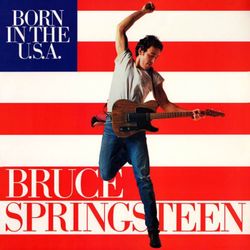
Bruce Springsteen - Born In The U.S.A. (US 12″)
13:31|Released at the height of Reagan-era patriotism, “Born In The U.S.A.” by Bruce Springsteen became one of the most misunderstood songs in American pop history. Often mistaken for a fist-pumping anthem of national pride due to its thunderous chorus and stadium-sized production, the song is actually a fierce critique of how America treats its working-class veterans.Originally released as the title track to Springsteen’s 1984 album, “Born In The U.S.A.” was issued as a 12″ single in 1985, backed with “Shut Out the Light.” The single version boasted an extended intro and booming mix that pushed Max Weinberg’s snare hits front and center, paired with Roy Bittan’s iconic synth riff that practically defined ‘80s heartland rock.Produced by Chuck Plotkin, Jon Landau, and Springsteen himself, this version of the song was a club-ready update to the album cut—without losing an ounce of its gritty, anthemic fire. It’s Springsteen at his most anthemic, yet still bleeding through with disillusionment, despair, and blue-collar rage.While “Born In The U.S.A.” is one of Springsteen’s signature tracks, its chart performance is often overshadowed by the massive success of other singles from the same album. “Born In The U.S.A.” reached number 9 on the Billboard Hot 100 chart in January 1985. It was the third of seven top 10 singles from the album “Born In The U.S.A.”, which also tied Michael Jackson’s record for the most top 10 singles from one album.Despite—or perhaps because of—its lyrical complexity and booming sound, “Born In The U.S.A.” was quickly adopted as a campaign theme by politicians (notably Ronald Reagan, mistakenly), sports teams, and patriotic rallies. But listen closely, and the pain of forgotten veterans and working-class struggle comes roaring through. It’s a song with dual identities: triumphant and tragic.This 12″ remix captures that paradox perfectly—its towering production commands attention, but under the layers of synth and reverb, Springsteen’s voice still carries the weight of a soldier’s haunted memories.SIDE A:Born In The U.S.A. (The Freedom Mix) 7:20SIDE B:Born In The U.S.A. (Radio) 6:11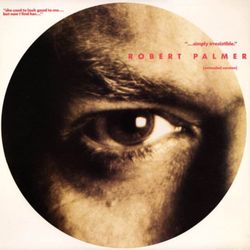
Robert Palmer - Simply Irresistible (US 12″)
11:19|In the summer of 1988, Robert Palmer stormed back onto the charts with “Simply Irresistible,” a bold, brash, and unapologetically confident anthem that became one of the defining hits of his career. Taken from his platinum-selling ninth studio album, Heavy Nova, the track showcased Palmer’s sleek fusion of hard rock swagger and dancefloor sheen — a formula he’d perfected since his Riptide days and the smash success of “Addicted to Love.”Produced by Palmer himself, “Simply Irresistible” features an explosive horn section, stomping drums, and his signature vocal coolness, delivered with razor-sharp precision. The song’s infectious chorus, underscored by a wall of sound production, became an instant earworm that dominated radio and MTV alike.The 12″ mix expands on the already high-octane energy of the single, giving DJs and fans a longer dose of that irresistible groove. Clocking in at just over six minutes, this extended version retains all the bombast of the original while giving the arrangement more breathing room — emphasizing the pulsing basslines, pounding percussion, and layers of synth and guitar that made the track a dance-rock juggernaut.Visually, “Simply Irresistible” was immortalized by a striking music video directed by British fashion photographer Terence Donovan, featuring a cadre of identically styled women in black dresses and red lipstick, moving in mechanical precision. It was a continuation of the stylized aesthetic from “Addicted to Love” and helped cement Palmer’s image as the epitome of 80s cool.Commercially, the single was a major success:#2 on the US Billboard Hot 100#1 on the Billboard Mainstream Rock chartTop 20 in Canada, Australia, and several European countriesThough some critics at the time were divided, accusing Palmer of recycling the formula that brought him success in 1986, fans embraced it wholeheartedly, and decades later, it’s still celebrated as a quintessential late-80s power pop anthem.If Addicted to Love made Robert Palmer a superstar, “Simply Irresistible” proved it was no fluke — he truly had an irresistible formula.SIDE A:Simply Irresistible (Extended Version) 6:33SIDE B:Simply Irresistible (Instrumental) 4:46