Share
Mummy Movie Podcast
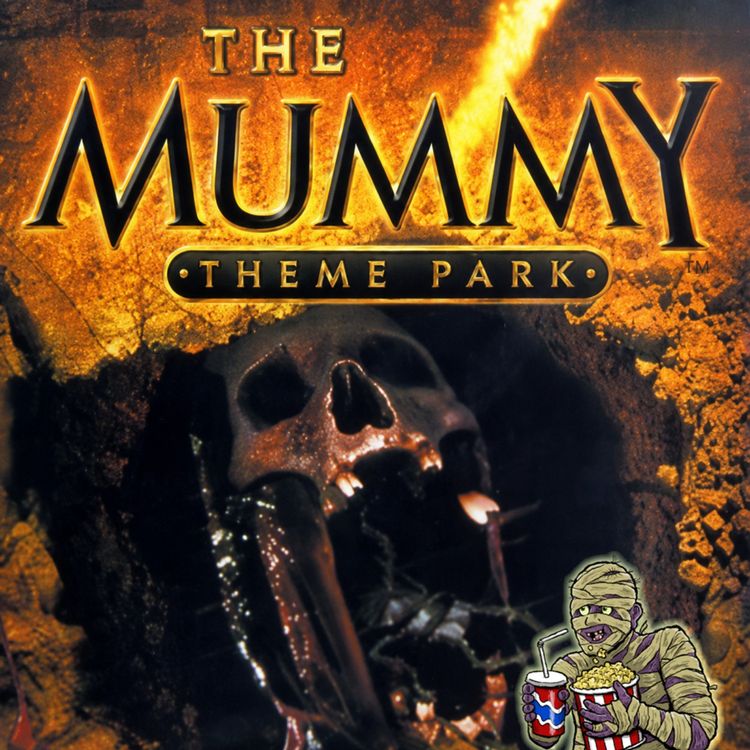
The Mummy Theme Park (2000) Review
In this season finale of the Mummy Movie Podcast, we examine the 2000 film The Mummy Theme Park, a bizarre film in which an Egyptian sheikh combines Egyptian mummies with animatronics and brain chips to bring them back to life.
As well as reviewing the film, we also use it as a jumping-off point to explore one of the greatest ancient Egyptian celebrations: the Opet Festival. What exactly was the Opet Festival, and what would it have been like to witness it firsthand?
Email: mummymoviepodcast@gmail.com
Patreon: www.patreon.com/MummyMoviePodcast
Bibliography
Darnell, J, Y. (20120). Opet Festival. UCLA Encyclopedia of Egyptology, 1-15
Mark, J. J. (2017). Festivals in ancient Egypt. Retrieved from https://www.worldhistory.org/article/1032/festivals-in-ancient-egypt/
Naguib, S. A. (1990). The Festivals of Opet and Abul Haggag: Survival of an Ancient Tradition. Temenos-Nordic Journal for the Study of Religion, 26.
Sabban, S. E., & El-Sabban, S. (2000). Temple festival calendars of ancient Egypt. Liverpool University Press.
More episodes
View all episodes
Patreon Episode: The Rebels
18:55|It is around 1050 BC. The office of High Priest of Amun has become vacant. The descendants of Piankh are losing their clasp on power. Now, a once great family, is about to make a desperate challenge. In this episode of the Mummy Movie Podcast, we continue our discussion of the Banishment Stele, asking: who were these rebels, and who was their leader?Email: mummymoviepodcast@gmail.comPatreon: www.patreon.com/MummyMoviePodcastBibliographyDodson, A. (2012). Afterglow of an empire: Egypt from the fall of the New Kingdom to the Saite Renaissance. Cairo: American University in Cairo Press.Jansen-Winkeln, K. (1997). Der Majordomus des Amun Anchefenmut. DE 38. 29-36Kitchen, K, A. (1995). The Third Intermediate Period in Egypt 1100-650 BC (2nd ed). Warminster: Aris & Phillips Ltd.Lull G, J. (2009). Beginning and end of the High Priest of Amun Menkheperre. In Broekman, G, P, F, Demarée, R, J, and Kaper, O, E (Eds). The Libyan period in Egypt: Historical and cultural studies into the 21st–24th Dynasties: Proceedings of a conference at Leiden University, 25–27 October 2007, 23 (pp. 241–249). Leiden and Leuven: Nederlands Instituut voor het Nabije Oosten and Uitgeverij Peeters.Niwinski, A. (1995). "Le passage de la XX" a la chronologie et histoire politique". Bulletin de l’institut Français d’archéologie orientale, 95, 351.
Patreon Episode: The Banishment Stele: A Tale of Rebellion and Power
15:43|Around 1050 BC, a man travelled to Thebes to face a mysterious opponent. The city was in turmoil, torn apart by a rebellion sparked by the absence of the High Priest of Amun. Join us as we examine the story, of one of the most fascinating men from the 21st Dynasty. A man who would go onto become one of the longest-serving High Priests of Amun in Egyptian history and even a king. Together, we'll unravel the remarkable tale preserved on the Banishment Stele.Email: mummymoviepodcast@gmail.comPatreon: www.patreon.com/MummyMoviePodcastBibliographyDanjocross. (2020). Paddling a Kayak.wav. Retrieved from https://freesound.org/people/Danjocross/sounds/503208/Dodson, A. (2012). Afterglow of an empire: Egypt from the fall of the New Kingdom to the Saite Renaissance. Cairo: American University in Cairo Press.Kitchen, K, A. (1995). The Third Intermediate Period in Egypt 1100-650 BC (2nd ed). Warminster: Aris & Phillips Ltd.Lull, J. (2006). Los sumos sacerdotes de Amón tebanos de la wḥm mswt y dinastía XXI (ca. 1083–945 A.C.). British Archaeological Reports (International Series) 1469. Oxford: Archaeopress.Lull G, J. (2009). Beginning and end of the High Priest of Amun Menkheperre. In Broekman, G, P, F, Demarée, R, J, and Kaper, O, E (Eds). The Libyan period in Egypt: Historical and cultural studies into the 21st–24th Dynasties: Proceedings of a conference at Leiden University, 25–27 October 2007, 23 (pp. 241–249). Leiden and Leuven: Nederlands Instituut voor het Nabije Oosten and Uitgeverij Peeters.Ritner, R, K. (2009). The Libyan anarchy: Inscriptions from Egypt’s Third Intermediate Period. Atlanta: Society of Biblical Literature.Römer, M. (1994). Gottes- und priesterherrschaft in Ägypten am ende des Neuen Reiches: Ein religionsgeschichtliches phänomen und seine sozialen grundlagen. Ägypten und Altes Testament: Studien zu geschichte, kultur und religion Ägyptens und des Alten Testaments 21. Wiesbaden: Harrassowitz Verlag.
10. Manhatten Baby (1982) Review
23:33||Season 3, Ep. 10A cursed amulet, a possessed child, and an evil ancient Egyptian god. In this episode of the Mummy Movie Podcast, we examine Manhattan Baby (1982).As well as reviewing the film, we also use it as a jumping off point to get to know a fascinating Pharaoh from the 5th Dynasty, named Userkaf. Our historical question: Who was Userkaf, and what was his association with the sun?Email: mummymoviepodcast@gmail.comPatreon: www.patreon.com/MummyMoviePodcastBibliographyBagnato, D. (2006). The Westcar Papyrus: a transliteration, translation and language analysis. Edition Atelier.Hart, G. (2005). The Routledge dictionary of Egyptian gods and goddesses. Routledge.Nuzzolo, M. (2004). Sun temples and kingship in the ancient Egyptian kingdom (pp. 1401-1410).Rice, M. (2002). Who's who in Ancient Egypt. RoutledgeVerner, M. (2001). Archaeological Remarks on the 4th and 5th Dynasty Chronology. Archiv orientální, 69(3), 363-418.UserkafWilkinson, T. A. (2000). Royal annals of ancient Egypt: the Palermo Stone and its associated fragments. Routledge.
9. Attack of the Mayan Mummy (1954) Review
21:03||Season 3, Ep. 9An Aztec Pyramid, a sensible scientist obsessed with hypnosis and past lives, and of course… a mummy. In this episode of the Mummy Movie Podcast, we look into Attack of the Mayan Mummy (1964).As well as reviewing the film, we also use it as a jumping off point to answer the following question: What was the role of noblewoman in Aztec Society, when it comes to marriage?Email: mummymoviepodcast@gmail.comPatreon: www.patreon.com/MummyMoviePodcastFilm LinksThe Aztec Mummy (1957)Curse of the Aztec Mummy (1957)The Robot vs the Aztec Mummy (1958)The Wrestling Woman vs the Aztec Mummy (1964)BibliographyBerdan, F. F., & Smith, M. E. (2020). Everyday life in the Aztec world. Cambridge University Press.Deil, L,B. (2007). Till death do us part: Unconventional marriages as Aztec political strategy. In, Ancient Mesoamerica, 18. pp. 259-272Del Castillo, B. D. (1963). The Conquest of New Spain (Vol. 123). Penguin UK.Noble, W. (2010). In the Aztec Empire. Mitchell Lane Publishers, Inc.Pennock, C. D. (2008). Bonds of Blood: Gender, Lifecycle, and Sacrifice in Aztec Culture. Springer.
8. The Ceremony is About to Begin (2024)
31:54||Season 3, Ep. 8A mysterious Egyptian cult, a documentary film maker, and a terrible fate. In this episode of the Mummy Movie Podcast, as well as reviewing The Ceremony is About to Begin (2024), we use it as a jumping off point to examine the fascinating life of the English occultist Aleister Crowley.Our question: In Aleister Crowley’s Egyptian inspired religious movement, did he promote the practices of human sacrifices, and the drinking of blood?Email: mummymoviepodcast@gmail.comPatreon: www.patreon.com/MummyMoviePodcastBibliographyBogdan, H., & Starr, M. P. (Eds.). (2012). Aleister Crowley and Western Esotericism. Oxford University Press.Crowley, A. (2019). Diary of a Drug Fiend and Other Works by Aleister Crowley. Arcturus Publishing.Churton, T. (2014). Aleister Crowley: the biography: spiritual revolutionary, romantic explorer, occult master and spy. Watkins Media Limited.Wilson, C. (2005). Aleister Crowley: The nature of the beast. Aeon Books.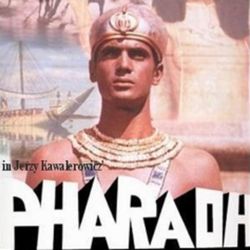
7. Pharaoh (1966)
38:50||Season 3, Ep. 7A powerful High Priest of Amun, declining kingship, and an Egypt in Chaos. In this episode of the Mummy Movie Podcast, we examine the fascinating polish film, Pharaoh (1966).By many, this is considered the most accurate film set in ancient Egypt ever made. But is this true? As well as reviewing the film, we shall assess its history to see if this accolade is deserved.Email: mummymoviepodcast@gmail.comPatreon: www.patreon.com/MummyMoviePodcastBibliographyDodson, A. (2012). Afterglow of empire: Egypt from the fall of the New Kingdom to the Saite Renaissance. Cairo: American University in Cairo PressEaton, K. (2017). Ancient Egyptian temple ritual: performance, pattern, and practice. New York: RoutledgeFletcher, J. (2002). Ancient Egyptian hair and wigs. The Ostracon: The Journal of the Egyptian Study Society (Vol 13). 2-8.Janssen. (1970). Commodity prices from the Ramesside Period. Leiden: BrillLeahy, A. (1985). The Libyan Period in Egypt: An Essay in Interpretation. Libyan Studies, 16, 51-65Peden, A. (2011). The community of workmen at Deir el-Medina in the Ramesside Period: an overview of rank and roles. In Collier, M and Snape, S (Eds), Ramesside studies in honour of K, A Kitchen (pp. 381-387). Bolton: RutherfordRicem M. (2001). Who's who in Ancient Egypt. London: RoutledgeShafer, B, E. (2005). Temples, priests, and rituals, an overview. In Shafer, B, E (Ed), Temples of Ancient Egypt (pp. 1-31). London: TaurisSpalinger, A. (2013). Reviewed work(s): The Libyan Anarchy: Inscriptions from Egypt's Third Intermediate Period by Robert K. Rittner. Journal of the American Oriental Society, 133, 595-596.Warburton, D, A. (1997). State and economy in ancient Egypt: fiscal vocabulary of the New Kingdom. Fribourg: University Press.
6. Mil Mascaras: Aztec Revenge (2015)
58:41||Season 3, Ep. 6A jetpacking luchador, an evil Aztec severed head, ninjas, and so… so much more. In this episode of the Mummy Movie Podcast, guest Connor Reason and I review Aztec Revenge (2015), starring the legendary Mil Mascaras.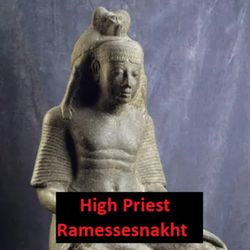
Late 20th Dynasty Recap
25:18|A time of political fragmentation, powerful priests, and chaos. In this episode we recap the events at the end of the 20th Dynasty of Egypt, as well as examining the god Amun, and his incredibly powerful High Priest.Patreon: www.patreon.com/MummyMoviePodcastBibliographyBierbrier, M. L. (1975). The late New Kingdom in Egypt (c. 1300-664 BC): a genealogical and chronological investigation (vol 22). Oxbow Classics in EgyptologyCline, E. H. (2006). Thutmose III: a new biography. University of Michigan Press.Hart, G. (2005). The Routledge dictionary of Egyptian gods and goddesses. Routledge.Kitchen, K. A. (1986). The third intermediate period in Egypt: 1100-650 BC. Aris & Phillips.Rice, M. (2002). Who's who in Ancient Egypt. Routledge.Wente, E. F. (1966). The suppression of the high priest Amenhotep. Journal of Near Eastern Studies, 25(2), 73-87.Wilson, J. A. (2013). The Culture of Ancient Egypt: Originally published as The Burden of Egypt. University of Chicago Press.