Share
Mummy Movie Podcast
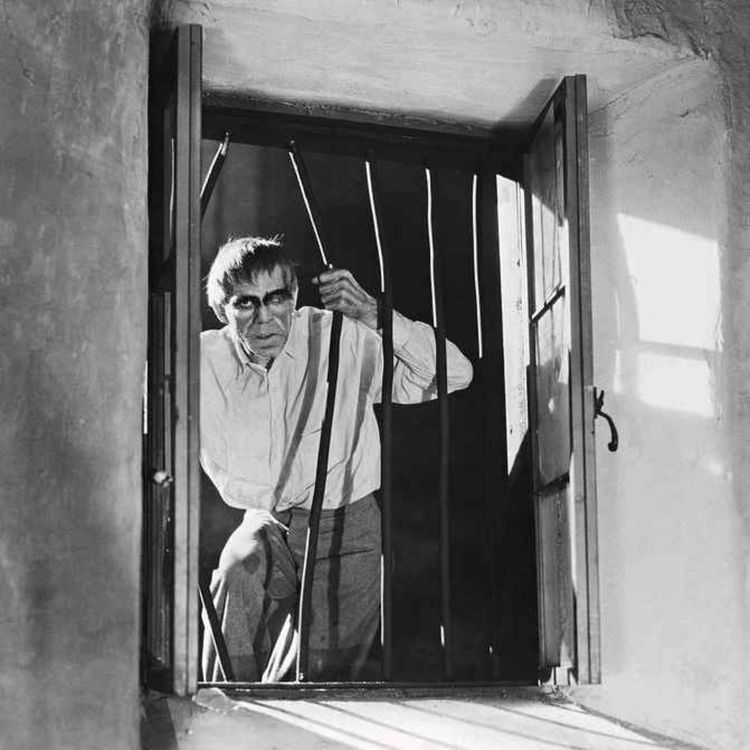
The Ghoul (1933)
An ancient jewel, a follower of Anubis, and the first ever British horror film of the sound era. In this episode, he examine the Ghoul (1933). This film stares one of the true masters of Horror, Boris Karloff.
Email: mummymoviepodcast@gmail.com
Other links
Bath Archeo-Heritage Film Festival - https://bahfilmfestival.co.uk/
The Ghoul (Full Movie) - https://archive.org/details/the.ghoul.1933.1080p
Buster Keaton Stunts - Best of Buster Keaton's greatest stunts 🤸
Words and Phrases
Anubis - Known in ancient Egyptian as jnpw, was a deity commonly depicted as a dog. He held a significant association with the afterlife and is one of the earliest known ancient Egyptian gods. In addition to serving as a protector of the necropolis, Anubis played a crucial role in the weighing of the heart ceremony. In this ceremony, the deceased's heart was weighed on a scale against the feather of Ma'at, representing truth and cosmic order.
Horus of Behdet - A celestial form of Horus depicted as a winged sun disk. This iconography was prevalent in ancient Egypt and appeared on gate lintels as well as the upper half of wall reliefs in temples.
Bibliography
Allen, J. P., & Der Manuelian, P. (Eds.). (2005). The ancient Egyptian pyramid texts (No. 23). Brill.
copyc4t. (2012). DunDunDunnn.wav. Retrieved from https://freesound.org/people/copyc4t/sounds/146434/
Gashe, V. (2009). Burial practices in Predynastic and Old Kingdom Egypt: A site specific survey (Doctoral dissertation, The University of Manchester).
Hart, G. (2005). The Routledge dictionary of Egyptian gods and goddesses. Routledge.
Ikram, S. (2003). Death and burial in Ancient Egypt. Cairo: The American University in Cairo Press.
IMDB. (2023). The Ghoul. Retrieved from https://www.imdb.com/?ref_=nv_home
Taylor, J. H. (2010). Ancient Egyptian Book of the Dead: journey through the afterlife;[published to accompany the exhibition at the British Museum from 4 November 2010 to 6 March 2011]. The British Museum Press.
More episodes
View all episodes
7. Pharaoh (1966)
38:50||Season 3, Ep. 7A powerful High Priest of Amun, declining kingship, and an Egypt in Chaos. In this episode of the Mummy Movie Podcast, we examine the fascinating polish film, Pharaoh (1966).By many, this is considered the most accurate film set in ancient Egypt ever made. But is this true? As well as reviewing the film, we shall assess its history to see if this accolade is deserved.Email: mummymoviepodcast@gmail.comPatreon: www.patreon.com/MummyMoviePodcastBibliographyDodson, A. (2012). Afterglow of empire: Egypt from the fall of the New Kingdom to the Saite Renaissance. Cairo: American University in Cairo PressEaton, K. (2017). Ancient Egyptian temple ritual: performance, pattern, and practice. New York: RoutledgeFletcher, J. (2002). Ancient Egyptian hair and wigs. The Ostracon: The Journal of the Egyptian Study Society (Vol 13). 2-8.Janssen. (1970). Commodity prices from the Ramesside Period. Leiden: BrillLeahy, A. (1985). The Libyan Period in Egypt: An Essay in Interpretation. Libyan Studies, 16, 51-65Peden, A. (2011). The community of workmen at Deir el-Medina in the Ramesside Period: an overview of rank and roles. In Collier, M and Snape, S (Eds), Ramesside studies in honour of K, A Kitchen (pp. 381-387). Bolton: RutherfordRicem M. (2001). Who's who in Ancient Egypt. London: RoutledgeShafer, B, E. (2005). Temples, priests, and rituals, an overview. In Shafer, B, E (Ed), Temples of Ancient Egypt (pp. 1-31). London: TaurisSpalinger, A. (2013). Reviewed work(s): The Libyan Anarchy: Inscriptions from Egypt's Third Intermediate Period by Robert K. Rittner. Journal of the American Oriental Society, 133, 595-596.Warburton, D, A. (1997). State and economy in ancient Egypt: fiscal vocabulary of the New Kingdom. Fribourg: University Press.
6. Mil Mascaras: Aztec Revenge (2015)
58:41||Season 3, Ep. 6A jetpacking luchador, an evil Aztec severed head, ninjas, and so… so much more. In this episode of the Mummy Movie Podcast, guest Connor Reason and I review Aztec Revenge (2015), starring the legendary Mil Mascaras.
Late 20th Dynasty Recap
25:18|A time of political fragmentation, powerful priests, and chaos. In this episode we recap the events at the end of the 20th Dynasty of Egypt, as well as examining the god Amun, and his incredibly powerful High Priest.Patreon: www.patreon.com/MummyMoviePodcastBibliographyBierbrier, M. L. (1975). The late New Kingdom in Egypt (c. 1300-664 BC): a genealogical and chronological investigation (vol 22). Oxbow Classics in EgyptologyCline, E. H. (2006). Thutmose III: a new biography. University of Michigan Press.Hart, G. (2005). The Routledge dictionary of Egyptian gods and goddesses. Routledge.Kitchen, K. A. (1986). The third intermediate period in Egypt: 1100-650 BC. Aris & Phillips.Rice, M. (2002). Who's who in Ancient Egypt. Routledge.Wente, E. F. (1966). The suppression of the high priest Amenhotep. Journal of Near Eastern Studies, 25(2), 73-87.Wilson, J. A. (2013). The Culture of Ancient Egypt: Originally published as The Burden of Egypt. University of Chicago Press.
5. Adam West Batman
32:57||Season 3, Ep. 5Da na na na da na na na Batman! Batman!A delusional Egyptologist, a straight-faced superhero in a colourful world, and some questionable representations of ancient Egypt. In this bat episode of the bat Mummy Movie Podcast, we bat examine the bat history of Adam West bat Batman.In this bat episode of the bat Mummy Movie Podcast, we bat jump into the bat history behind two bat episodes, the Curse of King Tut and the Pharaoh’s in a Rut. On top that we do a bat review.I hope you bat enjoy!… bat.Email: mummymoviepodcast@gmail.comPatreon: patreon.com/MummyMoviePodcastBibliographyDodson, A. (2009). Amarna Sunset: Nefertiti, Tutankhamun, Ay, Horemheb, and the Egyptian Counter-Reformation. Oxford University Press.Ezzy, D. (2015). Reassembling religious symbols: The pagan god Baphomet. Religion, 45(1), 24-41.Ikram, S. (2001). The iconography of the hyena in Ancient Egyptian art. Mitteilungen des deutschen archaologischen instituts abteilung Kairo, 127-140James, T. G. H. (2012) Howard Carter: the path to Tutankhamun. Bloomsbury Publishing.Peet, T. E. (1930). The great tomb-robberies of the twentieth Egyptian dynasty. Georg Olms Verlag.
4. Lee Cronin's the Mummy Review
42:38||Season 3, Ep. 4A possessed child, an ancient demon, and some truly disturbing scenes. In this episode of the Mummy Movie Podcast, we examine Lee Cronin’s: The Mummy (2026). As well as reviewing the film, we use it as a jumping off point to delve into the fascinating world of ancient Egyptian evil and demons.Email: mummymoviepodcast@gmail.comPatreon: www.patreon.com/MummyMoviePodcast BibliographyJanak, J. (2013). Akh. UCLA Encyclopedia of Egyptology 1-11.Loprieno, A. (2003). Drei Leben nach dem Tod: wieviele Seelen hatten die alten Ägypter?. Grab und Totenkult im Alten Ägypten, Munich, 200-225.Lucarelli, R. (2008, May). Ancient Egyptian demons. The evidence of the magical and funerary papyri of the New Kingdom and of the Third Intermediate Period’. In Tenth International Congress of Egyptologists: Abstracts of Papers, University of the Aegean (Rhodes, 2008) (pp. 151-152).Lucarelli, R. (2009). Popular beliefs in demons in the Libyan Period: the evidence of the Oracular Amuletic Decrees (pp. 231-240).Lucarelli, R. (2010). Demons (benevolent and malevolent). UCLA Encyclopedia of Egyptology, 1(1).Pinch, G. (2003). Ancient Egyptian Magic. University of Texas Press; Univ of Texas PR ed. Edition
3. Night at the Museum 2 (2009)
47:25||Season 3, Ep. 3Exhibits that come to life in the night, the Smithsonian Museum, and an evil pharaoh bent on unleashing the darkness from the Underworld. In this episode of the Mummy Movie Podcast, we review Night at the Museum 2: Battle of the Smithsonian and use it as a jumping off point to examine a gruesome practice from 1st Dynasty of Egypt.Email: mummymoviepodcast@gmail.comPatreon: patreon.com/MummyMoviePodcastBibliographyBard, K. (2000). The emergence of the Egyptian state (c.3200-2686 BC). In Shaw, I (Eds). The Oxford history of Ancient Egypt (pp. 57-83). Oxford University PressDijk, J, V. (2007). Retainer sacrifices in Egypt and in Nubia. In Bremmer, J. (Eds). The Strange world of human sacrifice. PeetersMilde, H. (2012). Shabtis. UCLA Encyclopedia of Egyptology 1-15Morris, E. F. (2007). Sacrifice for the state: royal funerals and the rites at Macramallah’s Rectangle. In Laneri, N (Eds). Performing Death: Social Analyses of Funerary Traditions in the Ancient Near East and Mediterranean (pp. 15-37). The Oriental Institute of the University of Chicago.Moris, E, F. (2013). (Un)Dying Loyalty: Meditations on Retainer Sacrifice in Ancient Egypt and Elsewhere. In Campbell, R (Eds). Violence and Civilization: Studies of Social Violence in History and Prehistory (pp. 61-93). Oxbow BooksWilkinson, T. A. (2002). Early Dynastic Egypt. Routledge.
2. Mummy Dearest (2026)
32:32||Season 3, Ep. 2A wheelchair bound protagonist, a rubber mask wearing mummy, and Lou Ferrigno in a shed. In this episode of the Mummy Movie Podcast, we review Mummy Dearest (2021). Along the way, we also explore the mummification process and see how an individual from ancient Egypt would transition to the afterlife.Email: mummymoviepodcast@gmail.comPatreon: patreon.com/MummyMoviePodcastBibliographyDiodorus Siculus. (1933). Library of history (C. H. Oldfather, Trans.; Vol. 1, Book 1.69–98). Harvard University Press. Retrieved from https://penelope.uchicago.edu/thayer/e/roman/texts/diodorus_siculus/1d*.htmlHerodotus. (1920). The histories (A. D. Godley, Trans.; Vol. 1, Book 2.1–98). Harvard University Press. Retrieved from https://penelope.uchicago.edu/Thayer/E/Roman/Texts/Herodotus/2a*.htmlIkram, S. (2010). Mummification. UCLA Encyclopedia of Egyptology, 1.Vos, R. L. (1993). The Apis Embalming Ritual: P. Vindob. 3873 (Vol. 50). Peeters Publishers.Winlock, H. E. (1973). Materials used at the embalming of King Tut-ʻAnkh-Amun (Vol. 10). Arno Press.
1. The Egyptian (1954)
36:10||Season 3, Ep. 1A tale of exile, deceit and love. In this episode of the Mummy Movie Podcast, we examine the 1954 epic, The Egyptian. On top of that, we also explore the ancient Egyptian tale, The Story of Sinuhe originating in the Middle Kingdom (c. 2055 to 1650 BC).Email: mummymoviepodcast@gmail.comPatreon: patreon.com/MummyMoviePodcastLink to Story of Sinuhe: https://mjn.host.cs.st-andrews.ac.uk/egyptian/texts/corpus/pdf/Sinuhe.pdfBibliographyAldred, C. (1988). Akhenaten, king of Egypt. Thames and HudsonCarosso, A. (2012). Cold War Narratives: American Culture in the 1950s (pp. 1-221). Peter Lang.Hastings, M. (2000). The Korean War. Pan Macmillan.Jay, J. E. (2008). The Narrative Structure of Ancient Egyptian Tales: From Sinuhe to Setna (Doctoral dissertation, University of Chicago, Department of Near Eastern Languages and Civilizations).Parkinson, R, B.(1998). The tale of Sinuhe and other ancient Egyptian poems, 1940-1640 BC. Oxford University Press
Dolly (2026) Review
44:27|A couple alone in the woods, a spooky forest and a genuinely creepy villain (what could go wrong!?). In this episode, we review Dolly (2026).That Phat Samurai Guyhttps://www.youtube.com/watch?v=XQ72tZ1zz2k