Share
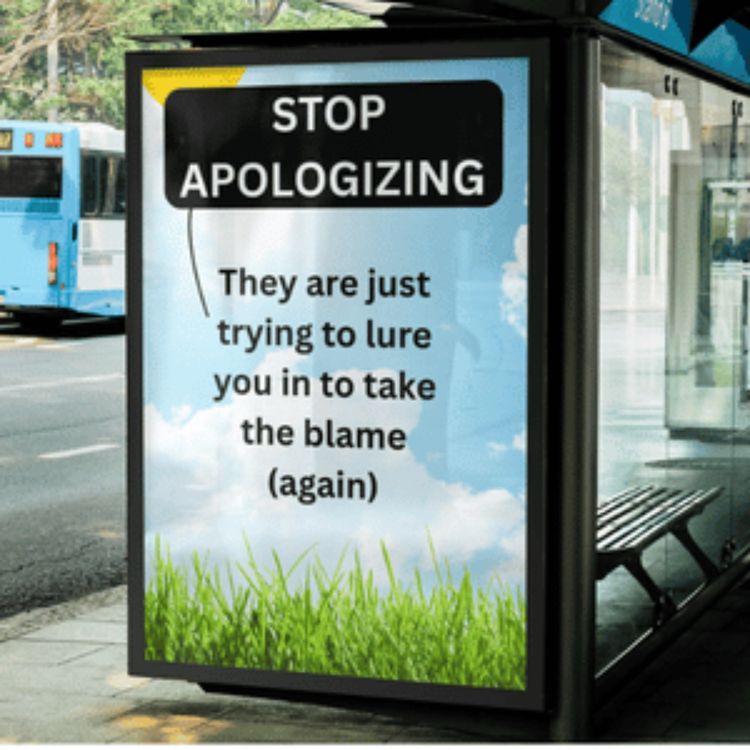
Narcissistic Abuse Recovery Podcast | Covert Manipulation | Systemic Gaslighting | Cultural Conditioning | Untangling Toxic Patterns
5 Devastating Ways Narcissists Weaponize Your Apologies Against You
You have probably found yourself apologizing for things you absolutely did not do, blaming yourself for family chaos, a partner's outburst, or someone else's mistakes. But your compulsion to say sorry is not a sign of actual fault. It is evidence of how you were conditioned to absorb guilt that was never yours to carry.
This pattern did not develop randomly. In narcissistic family systems and relationships, scapegoats learn early that taking the blame keeps the peace, prevents punishment, and protects the person in power from ever having to face accountability. It becomes survival behavior. And survival behavior is extraordinarily hard to unlearn because for a long time, it actually worked.
What they never wanted you to realize:
- The guilt you carry for other people's behavior is manufactured, not earned, and you can learn to recognize the difference
- Your apologies are not about your mistakes, they are protecting someone else from the consequences of theirs
- This pattern did not start with you and it does not have to define your future relationships
- One simple question can reveal exactly whose responsibility you have been carrying all along
The conditioning runs deeper than most survivors initially understand. This automatic response becomes so embedded that you might apologize for having normal needs, for setting boundaries, or for someone else's inability to handle honest feedback. The guilt feels real because it was designed to feel real. That is the whole point.
Signs the scapegoat pattern is running your life:
- You feel guilty even when you know logically you did nothing wrong
- You apologize to end conflict even when you were not the one who started it
- Other people's emotions feel like your responsibility to manage
- You second-guess your own memory when someone pushes back on your version of events
- Saying sorry feels safer than standing your ground
- You have spent more time examining your flaws than questioning their behavior
In this episode, we explore the psychological mechanics behind scapegoat guilt, how narcissistic systems weaponize apologies, and the specific moment when you can break free from automatic blame-taking. You will discover what your compulsion to apologize is actually revealing about the balance of accountability in your most important relationships and what it means about your worth.
This is not about learning to apologize better. It is about learning when you do not owe an apology at all. Press play.
📚 **Books by Lynn** 👉 Go Here
🎓 **Online Course: Narcissistic Abuse Recovery** 👉 Start the Course
🤍**Coaching with Lynn** 1:1 Connect with Lynn - Coaching
🧘♀️ **Somatic Healing Audio Sessions** 👉 Listen Now
More episodes
View all episodes

174. Why Equality Claims Hide Patriarchal Exhaustion
08:00||Ep. 174You keep hearing you're equal while working twice as hard to prove it. That exhaustion is real—and it has nothing to do with you not being enough.Women navigate a particular kind of cultural gaslighting: the kind that tells you equal rights exist while simultaneously penalizing you for acting like they do. You're told you can have a seat at the table, as long as you act like you don't need accommodations. You're expected to be assertive without being aggressive, ambitious without being threatening, confident without being arrogant. The goalpost moves constantly because the system was never designed for you to win.This episode explores what actually happens when patriarchal structures adapt instead of disappear:• Why being "told you're equal" while experiencing constant double standards feels so destabilizing• The invisible labor women perform daily that goes unrecognized as labor at all• How cultural conditioning from childhood shapes what feels "normal" in adulthood• Why you question yourself before questioning the system—and what that costs you• The gap between equality on paper and equality in practice• How patriarchal systems rebranded themselves to sound progressive while maintaining the same power dynamics• Why pointing out inequality gets you labeled "difficult" or "too sensitive"• How this plays out in intimate relationships, workplaces, and healthcare systems• The bone-deep exhaustion that comes from translating yourself constantlyWhat becomes clear is that the barriers aren't invisible because they're small—they're invisible because you've been taught to blame yourself for experiencing them. That feeling that something's off, that the rules keep changing, that no matter how hard you work it's never quite enough? That's not weakness. That's clarity trying to break through conditioning.This episode doesn't offer quick fixes or self-optimization strategies. Instead, it names the patterns you've been feeling, validates what you've been experiencing, and shifts the lens from "what's wrong with me" to "what's the system doing here." You'll walk away recognizing where you've been working to compensate for structural inequality, where you've internalized messaging about your own inadequacy, and what actual equality might actually require—not from you, but from the systems themselves.If you've ever felt like you're imagining the double standards, if you've wondered whether you're overreacting, if you've caught yourself apologizing for having needs in a culture that treats women's needs as inconvenient—this episode is for you. Because understanding these patterns isn't about being angry. It's about seeing clearly. And clarity changes everything.Listen now to recognize the gaps between what you were promised and what actually exists. Then ask yourself: where in your life are you doing twice the work while being told you have it easy?
173. Emotional Labor: The Invisible Work Women Carry
09:09||Ep. 173That bone-deep exhaustion you carry after managing everyone else's emotions? That's not weakness. That's a pattern designed into how we're raised.You know the feeling. You're tracking everyone's emotional state like air traffic control. You're explaining your feelings in seventeen different ways, hoping someone finally hears you. You're the one who remembers birthdays, manages the social calendar, absorbs the household stress. And somehow, nobody sees it as work. It's just what you do.But here's what nobody tells you: this isn't natural. This isn't because you're too sensitive or care too much. This is learned behavior, taught from childhood through cultural conditioning that has nothing to do with your personality and everything to do with how patriarchal systems are designed.This episode digs into the invisible workload women carry in relationships, families, and social spaces:• The early-stage dating pattern where you're explaining your feelings repeatedly, adjusting your tone, managing how your needs land• The household dynamic where you're tracking everyone's stress levels while yours gets absorbed silently• The family obligation that falls to you—managing relationships, coordinating schedules, ensuring nobody's feelings get hurt• The moment you realize you're doing emotional infrastructure that benefits everyone but exhausts only youWhat makes this different from just "caring too much" is understanding the system underneath it. Boys are taught feelings are weakness. Girls are taught feelings are their responsibility—theirs and everyone else's. By adulthood, that shows up as women explaining, managing, smoothing, and absorbing while men benefit from emotional labor they never learned to do themselves. Then we're told it's natural. It's not natural. It's conditioning.You'll walk away from this episode with a completely different understanding of where your exhaustion actually comes from. Not a personal failing. Not something to fix about yourself. But a clear-eyed view of what's been extracted from you and why. You'll recognize the patterns in your own relationships in ways that shift how you see them. You'll understand why explaining your feelings takes so much energy—and it's not because you're bad at communicating. You'll know whose responsibility emotional work actually is. And you'll begin to question the entire system that taught you to carry this load alone.If you've ever wondered why you're tired in ways that sleep doesn't fix, if you've caught yourself explaining the same feeling over and over, if you're managing emotional weight nobody else can see—this episode is for you. This isn't about individual men being terrible. This is about all of us growing up in a culture that extracts emotional labor from women while making it invisible. Understanding that difference changes everything.
172. The Social Conditioning on Why Women Tolerate Disrespect (And What Patriarchy Gains)
08:28||Ep. 172You've let comments slide. Brushed off boundary crossings. Convinced yourself small moments of disrespect weren't worth bringing up. But have you noticed how these small moments compound—and how often you're the one managing everyone else's feelings about your boundaries?In this episode of the Narcissistic Abuse Recovery Podcast, Lynn explores the invisible system that conditions women to prioritize others' comfort over their own dignity. This isn't about individual rudeness; it's about how patriarchal structures depend on women's capacity to absorb, minimize, and rationalize disrespect as normal.What you'll encounter in this conversation:• The childhood messages that taught you being "likable" meant being tolerant of less• How microaggressions in dating get reframed as "loving someone's flaws"• Why workplace slights stay silent—and what that costs you• The family boundary violations we excuse in the name of harmony• The friendship dynamics where you adapt endlessly to keep the peace• Why naming disrespect gets labeled as "causing drama" instead of stating factsBut here's what makes this episode different: It's not about blaming you for tolerating what you were conditioned to tolerate. It's about understanding the system, recognizing how it works through you, and discovering what becomes possible when you stop doing the work it requires.You'll walk away understanding why your quiet tolerance of disrespect isn't a personal flaw—it's an adaptation to a system designed to need that tolerance. More importantly, you'll begin to see what happens when women collectively refuse. Not aggressively. Not by burning bridges. But by simply reclaiming their own dignity as non-negotiable.This episode connects directly to the bigger picture of how patriarchal systems maintain themselves. They don't require overt control anymore; they require your consent to your own diminishment. But consent can be withdrawn. And when enough women withdraw it, everything changes.If you've ever wondered why your boundaries feel like an overreaction, why standing up for yourself creates guilt, or what your relationships might look like if you stopped pre-forgiving people for hurting you—this conversation is for you. Listen now at movingforwardafterabuse.com.
171. Entitlement Without Accountability
07:15||Ep. 171You gave everything. You achieved more than you thought possible. You bent over backward to meet their needs, their expectations, their demands—and it was never enough. Not even close.If you've ever felt like you were pouring from an empty cup trying to satisfy someone who would never be satisfied, you've experienced what this episode explores: weaponized entitlement. This isn't just someone being selfish or demanding. This is something far more systemic and damaging—a core belief system that positions you as both the problem and the endless solution.Entitlement in toxic relationships and family systems looks like this:• The person who rejects accountability but demands unquestioned compliance from you• The moving goalposts phenomenon—you meet their expectations, then suddenly those expectations shift• Your achievements becoming their parenting wins, your struggles becoming proof of your defects• The crushing reality that no amount of effort will ever earn you the acknowledgment you deserve• Boundaries treated as betrayals, limits seen as attacks on their rightful place in your life• The erosion of your sense of self because you've spent years trying to earn something that was never going to be givenWhat makes entitlement so insidious is that it comes wrapped in complete certainty. The person operating from entitlement doesn't wonder if they're being unreasonable. They don't question whether they're asking too much. They genuinely believe they're entitled to everything from you while owing you nothing in return.This episode dives into how entitlement operates as the fuel for scapegoat dynamics. It's the confidence without conscience that allows someone to sleep peacefully at night while leaving you exhausted and confused. It's the refusal to be accountable that keeps you stuck in the role of the problem that needs to be fixed.You'll discover why your frustration and exhaustion weren't signs of your inadequacy—they were signs that you were trying to have a genuine relationship with someone operating from a place of profound entitlement. You'll start to see the patterns you might have missed before: how the entitlement showed up in specific moments, how it shaped your sense of what you deserved, how it kept you trapped in a dynamic where you could never be enough.Most importantly, you'll begin to understand what was never your fault. The goalposts moved not because you weren't trying hard enough, but because someone entitled to your compliance had no reason to ever acknowledge what you accomplished. Your achievements threatened their narrative of superiority, so entitlement demanded they either take credit or diminish your efforts entirely.This is the episode for anyone who has wondered why they felt so guilty for having needs, so ashamed for setting boundaries, so convinced they were the broken one in a fundamentally broken dynamic.If you've ever felt the weight of someone else's entitlement crushing you into smaller and smaller versions of yourself, this conversation is for you. Listen now and discover what happens when you finally stop trying to earn something that was never the other person's to withhold.
170. Being the Family Scapegoat: Why It Happens & How to Heal
07:26||Ep. 170You've spent years being blamed for things that weren't your fault. Every family conflict, every sibling's mistake, every parent's bad mood somehow became your responsibility. You walked into rooms already tense and left feeling like you caused it all. If this resonates, you've experienced one of the most damaging dynamics in families and relationships—being the designated scapegoat.But here's what most people don't understand: being the scapegoat isn't about you or anything you actually did. It's a deliberate strategy in controlling systems where someone needs to maintain a spotless image at your expense.In this episode, we explore what it really means to be the family scapegoat and why this role emerges in dysfunctional families and toxic relationships. We're not just talking about unfair blame—we're talking about a system that depends on your designated role to function.You might recognize yourself in these experiences:• Being held responsible for family tension that existed long before you were old enough to understand it• Taking the fall when siblings made mistakes because the real culprit faced no consequences• Getting blamed when a parent or partner lost their temper, regardless of what you actually did• Hearing "you're too sensitive" or "you're the problem" so often you started believing it• Becoming hypervigilant about everyone's mood while losing touch with your own needs• Watching siblings or family members echo the blame to avoid becoming targets themselves• Realizing that every holiday or family gathering becomes a minefield where you carry past conflicts aloneThe psychological weight of this role is crushing. You learn to scan every room for tension. You apologize for things you didn't do. You gaslight yourself because everyone around you has been telling you the same distorted story for so long. You might have spent years trying to be perfect, thinking that if you could just be good enough, the blame would stop.But here's what's even more damaging: the system becomes dependent on having you as the problem. Without a scapegoat, the whole dynamic crumbles. Which is exactly why the backlash is so intense when you try to break free from this role.As you listen to this episode, you'll begin to understand the difference between responsibility and blame. You'll start to recognize the patterns that kept you stuck in a role that was never rightfully yours. You'll feel the shift that comes from truly understanding that being singled out as the problem had nothing to do with your worth and everything to do with someone else's need to avoid accountability.This isn't just about naming what happened to you. It's about recognizing that the burden you've been carrying was never yours to carry in the first place. And that realization? That's where healing begins.If you've ever wondered why you were the one who got blamed, why your feelings were dismissed, or why you became the convenient target for everyone else's dysfunction—this episode is for you. Listen now and start untangling the story you've been told about yourself from the truth of who you actually are.
169. Patriarchy Traps Men: Scapegoating & Emotional Freedom
07:52||Ep. 169You grew up hearing that real men don't cry, that vulnerability is weakness, that showing emotion means you're failing at being male. Maybe you questioned it anyway. Maybe you asked why your father could rage but you couldn't express pain. Maybe you wanted emotional connection in a relationship and got punished for it. Now you're wondering if there's something broken inside you, or if something else is actually going on.This episode explores the invisible cage that patriarchal systems build around men—especially the ones who refuse to stay locked inside. It's not about blaming individual men who are also trapped in the system. It's about understanding how rigid gender roles serve those in power by keeping everyone small, silent, and controllable.What happens when you start to break free from these expectations? When you begin questioning why you have to be dominant but not authentic, strong but emotionally shut down, successful but never vulnerable? The people who benefit from your compliance don't let that slide easily:• The scapegoat son who questions his father's harshness and suddenly gets labeled ungrateful• The husband who seeks emotional intimacy in a marriage built on control dynamics• The man who admits he's struggling and watches family members mobilize to put him back in his place• The partner who wants a "sensitive man" until your authenticity threatens their power• The family member who uses shame as a weapon when you stop performing the role they assigned youThis isn't random. It's a pattern with a purpose. The system that demands your conformity doesn't actually want you to evolve—it needs you to stay exactly where you are. Your growth is a threat. Your emotional authenticity exposes the immaturity of those around you. Your questions reveal that the rules they've built don't actually make sense.You've probably spent years internalizing their message that something is wrong with you. You tried to squeeze yourself back into that box, believing that if you could just be the right kind of man, the criticism would stop. It won't, because the problem was never you. The problem is a system designed to keep you trapped.What if the scapegoating wasn't because you were too much or not enough? What if it happened because you were brave enough to recognize something fundamental was broken about the whole setup? What if your refusal to conform wasn't a failure—it was the moment you started becoming truly human?This episode walks you through how patriarchal family systems and relationships use rigid male roles to maintain control, how scapegoating targets the ones who question the rules, and what it actually means when you're punished for stepping out of line. You'll start seeing the patterns that made you believe you were the problem. You'll understand why your growth felt threatening to people who claimed to love you. And you'll begin separating what you've been told about yourself from who you actually are.The man who wants emotional connection, who questions harmful patterns, who refuses to stay small—that's not weakness. That's evidence that you recognized the cage around you and started looking for the door. This episode is for everyone who's ever felt trapped in a role they never asked to play, blamed for seeing through a system designed to keep them blind. If you've spent years wondering what's wrong with you, it might be time to question what's wrong with the system instead. Listen to understand what's actually been happening—and why escaping it feels so threatening to everyone invested in keeping you confined.
7 Shocking Truths That Prove Narcissists Engineered Your Blame (Re-release)
07:33|If you have spent years trying to figure out what you did wrong, this episode has your answer. Nothing. You did nothing wrong. And yet you have probably replayed a thousand moments in your head, searching for the flaw in yourself that explained why things were always so hard, why you were always somehow at fault, why no matter how much you gave it never seemed to be enough.That feeling did not come from nowhere. It was built. Carefully, deliberately, and over time by someone who needed you to believe you were the problem so they would never have to face that they were.In this episode you will learn:How narcissists select their targets with precision and why compassionate women are most at riskThe slow, methodical way scapegoating gets constructed inside a relationshipWhy you started doubting your own memories and second-guessing your realityHow the abuse compounds even when it never looks dramatic from the outsideWhat the scapegoating role does to your identity over months and yearsWhy rebuilding trust in your own mind is the cornerstone of real recoveryThis episode revisits one of the most critical conversations in narcissistic abuse recovery: the scapegoating dynamic. This is a re-release because the message is that important. Women are waking up in record numbers right now, reaching for language to describe experiences they have carried in silence for years. Understanding how scapegoating works is not just helpful for recovery. It is foundational.Scapegoating is not random. Narcissists gravitate toward people who are compassionate, introspective, and inclined to take responsibility. These are not weaknesses. They are beautiful qualities that were exploited. Once a narcissist identifies their scapegoat, they begin the slow process of reinforcing that role through constant redirection of blame, minimization of your experiences, and quiet but consistent rewriting of reality.Signs you may have been scapegoated:You apologize constantly, even when you are not sure what you did wrongYou feel responsible for managing everyone else's emotionsYour version of events is always the one that gets questionedYou walk on eggshells to avoid becoming the problem againYou have spent more time analyzing your flaws than their behaviorThis is not about villainizing anyone. It is about clarity. It is about giving you the framework to understand what happened to you so you can stop blaming yourself for it. Recovery is not just about understanding that you were abused. It is about rebuilding trust in your own mind, believing your memories again, and reclaiming your narrative from someone who worked very hard to control it.If this episode resonated the first time around, coming back to it now with fresh ears and more distance might hit differently. Healing is not linear, and sometimes the messages we need most are the ones we have to hear more than once.You are not broken. You were targeted. And understanding that difference is where everything begins to change. Press play.
168. Misogyny as Social Currency: Male Hierarchy
06:55||Ep. 168You walked into a room and the conversation suddenly shifted. Later, you overheard something that made your stomach drop. The man you trusted—your father, partner, brother—was saying things about women that contradicted everything he claimed to believe. But he only said them when other men were around. And you've been trying to figure out what that means about you ever since.This is a specific form of scapegoating that most people never name, let alone understand. It's calculated. It's strategic. And if you've lived through it, you know exactly how disorienting it feels to see someone operate as two different people depending on their audience.In this episode, we're unpacking the toxic dynamics of male social hierarchy and how misogyny functions as currency within it. This isn't casual sexism or thoughtless comments. This is a deliberate performance designed to secure status, and understanding that distinction changes everything about how you interpret your own experience.Here's what this episode explores:• The specific audience-dependent nature of misogynistic behavior—why it appears and disappears based on who's listening• How degrading women functions as a transaction within male social structures• The calculated nature of selective respect: treating women one way to their face while participating in conversations that reduce them to stereotypes• Why you might have internalized shame about comments that had nothing to do with you• The confusion of being valued individually while knowing you're scapegoated as part of a group• How recognizing the real motivation behind these behaviors shifts your understanding of responsibility and blameYou probably spent time wondering if you did something to invite this treatment. Maybe you tried to be different, better, more acceptable—as if your behavior could change someone's need to perform dominance for male approval. This episode validates what you witnessed and what you overheard. It acknowledges the specific pain of being treated respectfully to your face while knowing you were talked about differently behind your back. More importantly, it helps you understand that their misogynistic comments were never actually about you. They were about their desperation to maintain control and status among other men.Listening to this episode will shift how you understand your own experience. You'll recognize patterns you might have dismissed before. You'll understand why someone can be respectful to women one moment and participate in degrading conversations the next. And you'll start to see through the performance—recognizing the difference between how someone treats you and what their treatment of you actually means about their character.