Share
Mid-Atlantic - conversations about US, UK and world politics
From Council Estates to the Green Surge, Local Power and National Shifts with Cllr Julian Pritchard
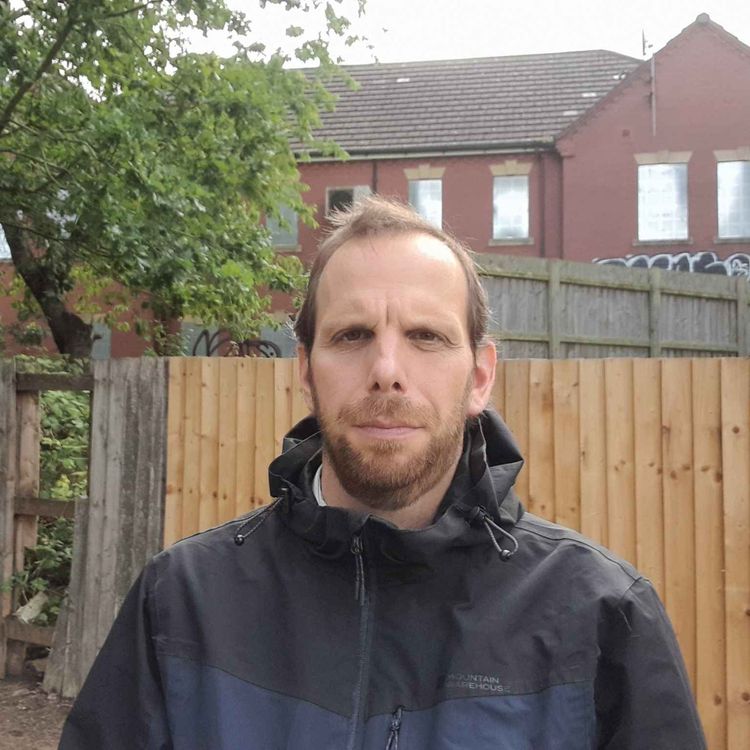
In this episode, RoyField Brown revisits his Birmingham radio roots with an interview that blends the local and the political. Green Party councillor Julian Pritchard joins from his ward of Druids Heath and Monyhull, a place that even the most civic-minded Brummies might struggle to locate on a map. But that’s the point. Pritchard has been trying to change that for over seven years, turning up, knocking doors, chasing bin collections, and campaigning for a more equitable form of regeneration that isn’t developer-led and value-extractive. His success there is more than a hyper-local curiosity. It’s part of a wider green moment.
The conversation moves between the nitty-gritty of grassroots activism and the broader surge in national Green Party support, spurred in part by leader Zack Polanski’s recent media breakthrough. Pritchard, a methodical campaigner, credits Polanski with articulating long-held Green values, on social justice and climate policy alike, with clarity and conviction. Unlike Labour’s technocratic drift, the Greens now appear to be talking about transformation and redistribution, and crucially, they’re being heard.
As for Druids Heath, it's a case study in how regeneration can alienate when it doesn’t centre residents. Pritchard pushes back against full demolition plans for the estate, highlighting the murky logic of “affordable housing” that may not be affordable at all. He’s advocating for proper social housing, not policy euphemisms. Amid a national housing debate, the fate of Druids Heath could be a local test case with national implications.
5 Selected Quotes
- "We need somebody like your leader who can grab the attention and articulate a vision, not just for now, but where we are going." — RoyField Brown
- "It's about changing systems and policies, not saying that everybody makes real choices." — Julian Pritchard
- "People felt taken for granted, and nobody did anything." — Julian Pritchard
- "This is trust us from the council that's delivered us equal pay liability, bankruptcy, Oracle disaster, yearlong bin strike..." — Julian Pritchard
- "To save the planet fairly, we’ve got to focus on both people and planet." — Julian Pritchard
Further Reading & Links Mentioned
- Green Party UK – Official party site
- Zack Polanski's profile – London Assembly bio
- Birmingham Regeneration Plans – Birmingham City Council’s regeneration proposal for Druids Heath
- Shared Ownership vs. Social Rent Explained – Shelter UK
More episodes
View all episodes

Starmer, Reform and the Hollowed-Out Centre
52:12|Episode summaryWestminster was meant to be projecting calm. Instead, this episode of Mid-Atlantic finds Labour staring into a leadership crisis, with Keir Starmer under pressure after bruising local election results and a party increasingly unsure what, or whom, it represents. The panel weighs whether Starmer can survive, how a Labour leadership contest would work, and why Andy Burnham, Angela Rayner, Wes Streeting and others are being talked up as possible successors.The conversation then moves from palace intrigue to the larger political fracture: Reform gaining ground in working-class areas, the Greens attracting disillusioned progressives, and Labour struggling to explain what it has actually achieved in government. Palestine, energy prices, public ownership, immigration and the cost of living all surface as signs of a party caught between managerial caution and a country demanding something with a pulse.And because despair has its limits, the panel ends where all serious political analysis eventually must: the World Cup. America is apparently excited, England is apparently good, and Arsenal fans are, as ever, treating optimism as a constitutional right.Pull quotes“Political parties appear detached from the people they are created to represent.”“Nobody knows what this Labour Party actually stands for.”“The middle ground is losing.”“Reform are more than the opposition. They’re the favourites now.”“We’re in this constant psychodrama.”State of the Union, State of the Monarchy
44:35|Episode SummaryOn this week’s Mid-Atlantic, Roifield Brown convenes his transatlantic panel to examine two democracies straining under the weight of power, personality and public distrust. In Washington, President Trump’s State of the Union address is dissected less as governing document and more as performance art, heavy on self congratulation, generous with medals and applause lines, and sharply combative toward Democrats. The panel questions whether such rhetoric represents democratic resilience, institutions holding firm, or simply the normalization of political antagonism as spectacle.Across the Atlantic, the arrest of Prince Andrew under investigation, alongside renewed scrutiny stemming from the Epstein files, pushes Britain into uncomfortable constitutional territory. Is this elite accountability finally catching up with power, or is it a carefully managed distancing exercise by an institution that has survived by cutting loose liabilities? The monarchy’s durability, its relationship to political neutrality, and the erosion of deference are all put under the microscope. Comparisons with the United States are unavoidable, particularly the appetite, or lack thereof, for holding powerful figures to account.The conversation then turns to the Gorton and Denton by election, a contest that feels bigger than its geography. With Labour, Reform and the Greens in a tight race, the panel debates whether Britain is entering a period of structural political realignment. Is Reform’s ascent a populist vindication or a short term protest vehicle? Can the Greens convert authenticity and digital savvy into sustained influence? And are the Conservatives facing something more existential than a bad polling cycle? On both sides of the Atlantic, the episode leaves listeners with a bracing question, are these systems bending or quietly being remade?Five Key Quotes“It’s presidential politics as world wrestling, this is what Trump does.”“You can’t tell people that things are great when they’re not.”“There’s a reason they’ve survived for 1,100 years, they’re experts at survival.”“The splintering is extraordinary, it’s all to play for.”“Authenticity is the difference, people can tell.”Mandelson, Starmer, and a Scandal That Was Wired to Explode
31:42|The Mandelson affair didn’t arrive as a shock so much as a delayed detonation. On Mid-Atlantic, Roifield Brown and his panel argue that the controversy surrounding Peter Mandelson’s appointment as UK ambassador to the US was neither unforeseeable nor accidental. It was the result of a conscious political decision one that traded judgment and party trust for perceived expediency, and one now threatening to corrode Labour’s credibility as a governing force.Steve O’Neill frames the issue bluntly as a failure of judgment at the very top. Keir Starmer’s admission that he knew about Mandelson’s ongoing relationship with Jeffrey Epstein at the time of the appointment turns the scandal from an oversight into a choice. Leah Brown widens the lens, describing a cultural problem inside Labour’s leadership: a growing comfort with elite networks, transactional politics, and risk-taking that sits uneasily with the party’s professed values. Mandelson, long distrusted by Labour’s rank and file, becomes less an anomaly than a symptom.The panel also grapples with why this scandal has landed so forcefully in Britain while similar Epstein-adjacent figures in the United States remain largely untouched. Mike Donahue argues that American politics has lost its capacity for collective shame, trapped in hyper-partisanship and institutional paralysis. In contrast, Britain—still angry, poorer, and distrustful of elites after Brexit—retains a shared sense that some lines simply should not be crossed. Whether Starmer survives the fallout may depend less on process than on whether Labour can convince voters that this was an aberration, not a reflection of who now governs in its name.Five Key Quotes“This wasn’t bad luck. It was a conscious choice.”“You can have all the vetting processes you like, but someone still decides to override them.”“Mandelson was playing from a different playbook one far closer to billionaires than to Labour members.”“In the US, we’ve lost our sense of shame. Not even this is enough to force accountability.”“The problem isn’t just Mandelson being found out it’s how many others are playing the same game.”Further Reading / References MentionedChannel 4 Dispatches (2019) investigation into Peter Mandelson and Jeffrey EpsteinHistorical comparison: The Profumo Affair (1960s UK political scandal)Ongoing criminal and parliamentary investigations relating to Epstein-linked figuresThe Mark Carney Moment, Canada’s New Global Role
28:21|In this episode of Mid-Atlantic, Roifield Brown sits down with Canadian political commentator and host of The O Show, Laura Babcock, to dissect Canada’s unexpected political upheaval and its new identity on the world stage. With Mark Carney now prime minister, what was once unimaginable has become policy: a technocratic, globally respected leader is now seen by many Canadians as their country’s best defense against the growing unpredictability of the United States under Donald Trump.Babcock explains how Trump’s revived “51st state” rhetoric and a separatist push from Alberta have shaken Canadian politics out of its usual calm. Mark Carney, a former governor of both the Bank of England and the Bank of Canada, was drafted into leadership in a moment of national anxiety. The result? What many are calling the “Carney Doctrine” a centrist, pragmatic, globally cooperative approach that reasserts Canada's place as a serious voice in a chaotic international landscape.But this isn’t a cheerleading session. Carney’s past as a global banker still raises eyebrows among populists, and there are strategic risks in rebalancing trade and security away from the U.S. toward other powers like China. Still, Babcock argues that Carney's blend of calm pragmatism and sharp global insight has given Canada a renewed sense of unity, purpose and relevance.
Execution in Minneapolis, Burnham is Blocked
58:41|In this week’s episode of Mid-Atlantic, the panel dissects two unsettling scenes of political drama — one on the streets of Minneapolis, the other in the corridors of Westminster. The fatal ICE shooting of a civilian in Minneapolis, initially misrepresented by the Trump administration, has unleashed a bipartisan backlash. Tensions flare as footage shows an unarmed veteran stepping in to aid a protester only to be shot dead. Host Roy Field Brown is joined by panelists Logan Phillips and Mike Donahue for a conversation that shifts from outrage to hard political analysis, exposing a nation’s frayed moral seams.Across the pond, the Labour Party blocks Andy Burnham — the “King of the North” — from contesting a Westminster seat, triggering speculation of Keir Starmer’s insecurity. Is this about party discipline or political self-preservation? Corey Bernard decodes the local maths in Manchester’s Gorton and Denton constituency, while Leah Brown challenges Starmer’s leadership style, likening it to brittle control masquerading as strategy.This episode weaves grief, fury, and policy fatigue with snappy transatlantic banter — and asks the fundamental question: when institutions crack, what do ordinary people do?Greenland, Trump, and the Transatlantic Stress Test
33:04|If you thought the idea of the US buying Greenland was a historical curiosity, think again. In this episode of Mid-Atlantic, Roifield Brown returns to YouTube with geopolitical analyst Pyotr Kurzin of The Global Gambit to peer into the mess that is Trump-era foreign policy is creating in the North Atlantic. Spoiler: It’s not just about a frozen island with more musk oxen than people. It’s a full-blown stress test for NATO, Europe, and what’s left of the post-WWII international order.Kurzin lays out the Trump worldview: alliances are optional, leverage is everything, and territorial sovereignty is up for negotiation. European leaders are adjusting, some more bravely than others. Macron is saying the quiet part out loud, Germany is quietly recalibrating, and the UK is hedging its bets, Brexit hangover and all.This isn’t just about Greenland. It’s about whether Europe can finally stop outsourcing its security to a partner that may now be actively undermining it. The conversation ends with an uncomfortable but necessary truth. If this is the new normal, then Europe, Britain included, needs to grow up, gear up, and rethink everything from trade to deterrence.Selected Quotes from the Episode“Trump sees Greenland as an extension of the Americas, which therefore by default is de facto America’s to control.”“Europe needs to behave in the reality that it is, not in the way that it wants it to be.”“We live in an age of international disorder.”“Britain needs to pick a side. Be more consistent in its messaging and positioning.”“Hope is not a strategy.”Further Reading & References from the EpisodeThe Global Gambit YouTube Channelhttps://www.youtube.com/@TheGlobalGambitThe Global Gambit Substackhttps://theglobalgambit.substack.comFinancial Times illustration of global powers carving up the worldhttps://www.ft.comReform and Fallout
53:50|A defection, a photocopied resignation, and an airborne crisis: welcome to politics in 2026.In this week’s episode of Mid-Atlantic, Royfield Brown leads a transatlantic panel through the latest signs of fracture on the British right and a chaotic shift in U.S. foreign policy. Robert Jenrick’s defection from the Conservatives to Reform UK is dissected not as a grand ideological realignment, but as a cynical career move amid a floundering party machine. Corey Bernard and Tanya Altrade offer little sympathy, framing the departure as more “photocopier farce” than political earthquake, while Logan Phillips warns of what happens when short-termism becomes the only strategy left standing.Attention then pivots to Washington, where Trump’s erratic foreign policy has turned the Monroe Doctrine into something far more impulsive—and combustible. From the disastrous optics of promising support to Iranian protesters (then ghosting them), to the bizarre muscle-flexing over Greenland, Logan paints a picture of a White House driven by ego, not doctrine. As European troops cautiously land in Greenland and NATO solidarity is tested in real-time, the panel reflects on the geopolitical aftershocks of U.S. unpredictability.The episode closes on a lighter note—sort of—with Gregorian chants, Game of Thrones hypotheticals, and Roy Field’s lament that YouTube might be eating TV’s lunch… and possibly dinner.Selected Quotes:“Robert Jenrick left the Conservative Party because he saw no future in it, only a future for himself elsewhere.” — Corey Bernard“Farage is not anti-establishment. He’s just mad the establishment won’t let him in.” — Tanya Altrade“Americans want to be the big dog, but not the bully. Trump makes that distinction hard.” — Logan Phillips“We’re living in a world shaped by how Donald Trump’s father treated him.” — Corey BernardFurther Reading & Links Mentioned:Race to the White House – Logan Phillips' election forecasting siteBreaking Points on YouTubeThree-Eyed Theorist on YouTube (Game of Thrones What-Ifs)Chess.com YouTube ChannelScreen Crush – Film and Marvel CommentaryGregorian Chant YouTube SearchNext Episode Preview:Join us next time as Mid-Atlantic shifts to YouTube—bringing panelist beards, political insights, and probably more broadband-related complaints into full 4K view.The US attacks Venezuela, When the Rules Become Optional
47:54|Host: Roifield BrownProducer: Connor BegleyGuests: Mike Donahue, Mike Holden, Tony AlltradeEpisode summaryThis week, Mid-Atlantic looks at what happens when the “rules-based international order” stops behaving like a system and starts behaving like a slogan. The conversation centres on the US seizure/extraction of Venezuela’s president and the eerie normalisation of an act that by the usual standards would be labelled rogue behaviour. From there, the panel widens the lens: spheres of influence, NATO’s credibility, Britain’s silence, and the uncomfortable possibility that “rogue state” is becoming a category defined by power, not principle.What we coverThe “rules-based order” feels retired: how language about sovereignty and international law collapses when allies break it.Why Britain went quiet: the panel digs into the significance of Keir Starmer’s (and the UK government’s) muted response—and what that says about the “special relationship.”Foreign policy vs domestic distraction: is this about strategy (oil, BRICS, China/Russia influence), or a political smokescreen (Epstein files, domestic turmoil, midterms)?“Trump pushes until stopped”: the idea that boundary-testing is the method, not a side-effect.Greenland as the next anxiety: not just as a hypothetical, but as a test of whether NATO is a system with teeth or a club with vibes.Spheres of influence, back to the 19th century: are we sliding into a three-bloc world and if so, what replaces the pretence of universal rules?NATO: paper, system, or faith?: argument over whether annexation would shatter the alliance or merely bruise it.The “moral high ground” problem: what the West can and can’t say about Russia/Ukraine or China/Taiwan after a precedent like this.Can US institutions stop a rogue executive?: sharp disagreement on whether the military, courts, Congress, or wider civil society can meaningfully constrain Trump.Consequences if the order collapses: sanctions, trade wars, defence spending spikes, market shock, and realignment away from US leadership.A little football palate cleanser: Arsenal title optimism, Burnley survival nerves, Portsmouth loyalty, and a classic Mid-Atlantic sign-off.Key moments & quotes (highlights)Ro: “If that doesn’t count as rogue behaviour, then the term has become meaningless.”Mike Donahue: “He’ll push and push and push boundaries until someone actually stops him.”Mike Holden: “Yes, any maniac looks strong. But that doesn’t mean they’re trustworthy.”Tony: “We’re almost having to reset… we have no semblance of what is right again.”On NATO/Europe’s response: “Very strongly worded diplomatic messages… very strongly worded.”Big questions the episode asksWhat does a world look like when rules become optional?Who gets to break the rules and who gets punished for trying?If the old system is dead, what replaces it: blocs, spheres, or chaos?How does the West criticise Russia or China after this precedent?Is the real battle now internal to the US rather than international?People & accounts mentionedMike Donahue — (social: discussed on-air)Mike Holden — @MikeHolden42Tony (“Alltrade”) — @alltrade_ (Twitter) / Tony on the… / alt aLT (as mentioned)Closing beatThe episode ends where it began: with disbelief, unease, and a running (and increasingly personal) disagreement between Ro and Donahue about whether anyone can stop Trump or whether the rest of the world is simply getting a late invitation to the chaos Americans have already been living through.Has Trump Permanently Coarsened American Political Language?
36:21|In this week’s episode of MidAtlantic, host Roifield Brown asks whether Donald Trump’s corrosive rhetoric is a momentary blip or a seismic shift in the way American presidents speak and more importantly, lead. Is the bar for political discourse permanently lowered, or are we just watching a uniquely toxic figure dominate a uniquely toxic moment?The transatlantic panel includes Steve Krone in LA, Denise Hamilton in Houston, Mike Donahue in the U.S., and Mike Holden in Preston, UK. Together, they grapple with whether Trump’s verbal scorched-earth tactics are just personal style or indicative of something more lasting. Krone argues the bigger threat isn’t Trump’s words but his authoritarian ambitions. Hamilton disagrees, insisting rhetoric and policy now move hand in hand, eroding trust in institutions and in each other. Donahue adds that Trump’s cult-like grip on the Republican base makes critique feel futile. “There is no bottom,” he says.From the UK, Holden observes the creeping Trumpian tone in Reform UK’s politics. One Reform candidate telling David Lammy MP to “go back where he came from” may be Britain’s own grotesque baby step in that direction. But Boris Johnson, for all his rule-breaking, used elevated language. Trumpism in tweed, you might say.So what’s the right response? Fight fire with fire or take the high road? The panel is split. Gavin Newsom’s choice to hit back with the same kind of crassness raises the question: is this tactical jiu-jitsu or just more degradation of political standards?The conversation closes with a tribute to Rob Reiner, whose films offered a more decent and coherent version of the American story. The contrast is stark and perhaps intentional.Five Key QuotesSteve Krone: “Trump is vile, yes, but has he changed the baseline of political discourse? I don't think so.”Denise Hamilton: “Rhetoric plus policy equals destruction. That’s the true Trump legacy.”Mike Donahue: “There is no bottom. We’ve just given up caring. If you haven’t figured out who Trump is by now, there’s no hope.”Mike Holden: “Some UK politicians are trying out Trumpism but in lowercase.”Denise Hamilton: “How do you fight a sociopath? Michelle Obama said go high. My mother said gouge their eyes out.”Further Reading & MentionsRob Reiner's Work and TributesRob Reiner's IMDb FilmographyThis Is Spinal Tap (1984)Politics and RhetoricPeople for the American Way (Founded by Norman Lear)Harry Enten’s CNN Polling on TrumpTrump’s Approval Ratings – FiveThirtyEightGavin Newsom OnlineGavin Newsom on X (Twitter)