Share

Michigan Minds
Exploring the Impact of Mindless Media Exposure
Season 7, Ep. 23
•
Jan Van den Bulck, PhD, is a professor in the Department of Communication and Media at the University of Michigan College of Literature, Science and the Arts. His research focuses on involuntary and incidental media effects, and explores how entertainment media affect our perception of the real world. In this episode of Michigan Minds, Van den Bulck discusses how watching TV impacts our knowledge of various fields including law enforcement and emergency medicine, and talks about the relationship between media use and sleep.
More episodes
View all episodes

9. Debunking the top myths of EV ownership
24:06||Season 10, Ep. 9Parth Vaishnav is an assistant professor of sustainable systems, climate and energy at the University of Michigan School for Environment and Sustainability. His research aims to understand how technology can help solve social problems, primarily focusing on the environmental and human health consequences of energy production and use. Vaishnav explores how economic, political and operational realities constrain technology deployment. His current work focuses on finding equitable strategies to decarbonize the economy and examines the consequences of automation for the environment, equity and work.Vaishnav joins the Michigan Minds podcast to discuss the evolving landscape of electric vehicles, debunking myths about battery degradation and affordability. He also details how EV owners can turn their cars into home power plants and why the industry must look beyond a "one-to-one replacement" of gas cars to truly solve environmental challenges.For people weighing their options, how can electric vehicles still make sense as a cost saving and environmentally friendly choice?Two-thirds of car sales in the U.S. are used cars. Most people buy used, and today, used EVs are the cheapest vehicles to own in any category—sedans, SUVs or trucks. Because of this, people should really consider buying a used EV. While people often worry about battery degradation, batteries made after 2020 have improved so much that degradation isn't a major concern anymore.For new cars, consumer options are growing steadily. If you factor in lifetime refueling and maintenance—like skipping oil changes—electric vehicles are cheaper over their lifespan than gas cars in many places, though they can still be more expensive in others. Home charging overnight also makes a huge difference. Currently, the higher total cost of an EV is often driven by higher insurance rates. However, that should improve as EVs prove their reliability and repair costs come down, leading the insurance industry to adjust its pricing.
8. AI English and the environmental cost
20:59||Season 10, Ep. 8Laura Aull, professor of English and linguistics and recent director of the English Department Writing Program at the University of Michigan, joins the Michigan Minds podcast to discuss "AI English," how generative tools disrupt the natural diversity of human speech and why automated hiring and housing systems inherit these linguistic biases. She also explores a largely unexamined downside to our rapid adoption of large language models: the massive, real-world carbon footprint generated by our daily digital conversations.Do you think people will care whether a human or a robot wrote the news or books we read?So far, humans care very much. And today I think we should care. And here are three reasons why I think we should. One is the environmental cost of the computer processing used with AI. Estimates suggest that if you pose a simple query to AI to ChatGPT, let's say versus to a search engine like Google, you're using 50 times the electricity for the simple query. I'm a serious scuba diver, and I know that the ocean should not get any warmer, and so I don't think we should normalize that kind of environmental impact.A second reason is bias. It's clear that AI English tools are biased against language too close to itself or too far away, so it penalizes some English users, including nonnative writers of English, who are more often flagged for plagiarism or more often flagged by AI detection tools even when they haven't used it. And those who use non-standardized dialect AI English don't know varieties from Jamaican English to Indian English.That leads to the third and final reason, which is that human and AI English are different. Human English has more variation and readability than AI English, meaning that human English has more varied kinds of dialect and genres and it is less grammatically dense and it's more humble. AI English is more formal, more impersonal, and more sure of itself.
7. Screen time, the fight for kids’ attention
29:41||Season 10, Ep. 7Jenny Radesky, is associate professor of Pediatrics and Director of the Division of Developmental Behavioral Pediatrics at the University of Michigan Medical School. Her clinical work focuses on children with autism, ADHD, and learning disabilities, while her research lab examines how young children and parents use mobile and interactive technology, parent-child relationships, and child self-regulation.Radesky joins the Michigan Minds podcast to discuss the hidden design forces that make modern technology difficult for families to manage, the limits of classroom phone bans, and what parents can actually do to reclaim summer. She also explores why she sees the struggle over screen time not as a parenting failure, but as a systemic problem—and what it would take for tech companies to change.How hard is it to restrict what your child sees on his or her device?It depends on if you have been honest about the child's age on their device. And here are a couple of ways that can be difficult. Sometimes devices are shared between different family members and they just have the account under the parent. That device might not default to child safety settings.Another thing about accuracy and honesty of age is I have asked so many of my patients, how old did you say you were when you started that TikTok account? They will be like, I have no idea. I started it five years ago. I probably said I was 25. One kid told me, he always says he is 65 or something.
6. Ekow Yankah: If you're worried about your vote, don't
23:26||Season 10, Ep. 6Ekow Yankah, is associate dean for faculty and research, Thomas M. Cooley Professor of Law and a professor of philosophy at the University of Michigan. His work focuses on questions of political and criminal theory and, particularly, questions of political obligation and justifications of punishment.Yankah joins the Michigan Minds podcast to discuss the legal structures governing American elections, the constitutional roadblocks to federalizing the vote and the reality of modern election security. He also explores the historical context of political power and the importance of active citizenship in maintaining democratic institutions.When we hear claims of widespread voter fraud in the news, what kind of high level evidence do courts actually require before they would even consider overturning an election result?We should be really clear about this. There is no evidence of voter fraud. It gets exhausting. I understand that some of us who have worked in elections, election protection, sometimes get frustrated because it feels like you're fighting against imaginary dragons or something, even having to make these arguments.Maybe in our history there have been some remarkable moments... but in modern history, there is no voter fraud. Even when those who are most skeptical take former high level politicians like Kobach in Kansas and are given extraordinary powers to investigate and find this voter fraud that they have convinced people exists, they can't find it.Michigan Minds is produced by Greta Guest and hosted by Juan Ochoa. Jeremy Marble is the audio engineer and Hans Anderson provides social media animations. Listen to all episodes of the podcast.
5. Ashley Gearhardt: Fake flavors, real cravings create an addiction to processed foods
20:59||Season 10, Ep. 5Many people love to eat ultra-processed foods. Think about those crispy French fries, or the delicious strawberry milkshake. Ultra-processed foods are heavily changed from their original form and made mostly in factories rather than kitchens. Instead of simple ingredients you might recognize—like flour, eggs, or milk—these foods often contain long lists of additives, preservatives, artificial flavors, and chemicals designed to improve taste, texture, and shelf life.Ashley Gearhardt, a University of Michigan psychology professor, studies how addictive processes may drive overeating. She joins the Michigan Minds podcast to share her insights on the impact of these foods on a global level and what drives over-consumption. "Many of those products are delivering these unnaturally intense and concentrated combos of rapidly absorbable carbohydrates and added fats," she explained. "That combination just does not exist in nature, and our brain never evolved to handle that amount of intense reward stimulation in a food."But it doesn’t stop there. Gearhardt explains that the food industry uses special ingredients and descriptions to “wake up” your brain and make food taste more exciting. Scientists can create strong flavors—like something that tastes like a strawberry—even if there’s no real strawberry in it. For example, the Froot Loops cereal tastes fruity, even though they don’t actually contain fruit.Many of these foods send signals to your brain that remind you of natural foods your body is wired to enjoy, but they’re actually made in factories using chemicals, she said.When these intense flavors are combined with things like refined carbs and fats, they stimulate your brain even more. This can make you start craving those specific tastes. You might find yourself wanting the flavor of Coca-Cola, the spicy “burn” of Flamin' Hot Cheetos, or the sweetness of a strawberry milkshake."Because of this, people often keep going back to those foods and craving them again and again," she said.Michigan Minds is produced by Greta Guest and hosted by Michigan News staff. Jeremy Marble is the audio engineer, and Hans Anderson provides social media animations. Listen to all episodes of the podcast.
4. When nurses cannot afford to advance
22:49||Season 10, Ep. 4Christopher Friese, a University of Michigan professor of nursing and of health management and policy, is a national authority on health care quality, nursing work environments and workforce policy.Friese joins the Michigan Minds podcast to explain how proposed federal caps on graduate student loans could shape nurses’ education and career decisions, what high student debt is revealing about the nursing workforce, and why these policies may have ripple effects for patient care and the future supply of nurse practitioners, midwives, anesthetists and nursing faculty.What makes loan caps on borrowing for graduate nursing degrees different?We are worried about caps on loans for graduate nurses for a couple of reasons. Our study, the Michigan Nurses Study, identified that about a third of registered nurses have substantial levels of debt to begin with. If you already are carrying a lot of debt, imagine trying to advance your career in nursing—that usually means you have to go back for a graduate degree—and then you’re facing an even higher bill. What we are worried about is that these proposed caps will deter people from even thinking about graduate school. They will just decide, 'I'm not going to pursue graduate school.' And that is bad for the country, because advanced practice nurses and the future faculty that train nursing students do a tremendous amount for our health care system. If we cut off this supply route for graduate nurses, we are worried about health care outcomes and the future of nursing education.Michigan Minds is produced by Greta Guest and hosted by Michigan News staff. Jeremy Marble is the audio engineer and Hans Anderson provides social media animations.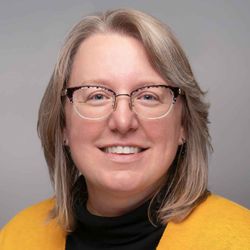
3. The elder care gap -- family duty vs. reality
24:16||Season 10, Ep. 3It begins with a single, panicked phone call about a fallen parent or a flickering memory, but it is quickly becoming the defining white noise of a nation. As the American population ages and family structures splinter, a quiet domestic struggle has escalated into a pressing national inquiry: Who is actually responsible for our elders?New insights from the University of Michigan suggest that while the American heart remains committed to the ideal of family-led care, the American household is running out of resources to provide it. Sarah Patterson, a sociologist and demographer at the Institute for Social Research, joined the Michigan Minds podcast to talk about a high-stakes collision between universal moral values and a "math problem" that no longer adds up.Q: Is the traditional family safety net fraying under the weight of several modern demographic shifts. So I would say that our expectations for family is pretty universal. This is a widely held belief among many people, many nations, that families should help older adults with their care. But as you said, it's becoming sort of a math problem because older adults' families are changing. So we have higher rates of what's known as gray divorce or getting divorced later in life. Family estrangement has become a big topic. For instance, Oprah has been talking about it, so it's a big topic in the public. And there's these sort of family changes that are happening for older adults that call into question what our expectations might be in this changing sort of demographic environment.My research is concerned with how we think about these expectations for families when families are changing… There is a question about whether these sorts of values will persist into the future as there's more pressure on smaller families to take care of older adults in the U.S.Michigan Minds is produced by Greta Guest and hosted by Michigan News staff. Jeremy Marble is the audio engineer and Hans Anderson provides social media animations. Listen to all episodes of the podcast.
2. Why cooling inflation isn't saving your bank account
16:38||Season 10, Ep. 2Joanne Hsu, director of the University of Michigan Surveys of Consumers and research associate professor at the Institute for Social Research, specializes in the fields of household finance, consumer sentiment and the impact of economic expectations on the national economy. Hsu joins the Michigan Minds podcast to discuss her findings on current consumer sentiment, offering insight into persistent high prices and how the labor market is shaping the way Americans manage their budgets today.How do you see consumers responding to these additional budget constraints?The number one factor on consumers' minds is the persistence of high prices and tariffs are a major factor in that. Inflation, however, has come down, so Inflation being the rate of change of prices as opposed to just the price level itself, so inflation has slowed down quite a bit since 2022.But that doesn't mean prices have come down; prices have remained high and that's something that consumers continue to be very frustrated about. The thing is, we all want prices to come down, but historically speaking, it's really hard for prices to come down without something catastrophic happening in the economy, like a major recession. And a major recession will surely affect everyone in a very negative way.I think sometimes it can be hard for people who watch the macroeconomy, including policymakers, to square the fact that inflation has come down, but people are still so unhappy about how prices are eroding away at their living standards.Michigan Minds is produced by Greta Guest and hosted by Juan Ochoa. Jeremy Marble is the audio engineer and Hans Anderson provides social media animations. Listen to all episodes of the podcast.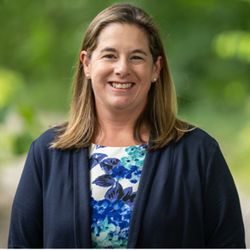
1. Toxic foods, food as medicine, epigenetics makes sense of nutritional triggers on health
19:21||Season 10, Ep. 1ANN ARBOR —News, advice and research about what we eat - and drink - and how it influences our health is inescapable.What we hear less about is exactly what's taking place inside the body when nutrition is considered bad or toxic, say ultraprocessed foods like our favorite packaged cookies, chips or frozen pizza, or good and healthy, those whole, methyl-donor-rich leafy veggies, beefs and eggs.If you want a deeper understanding, ask Dana Dolinoy. The answers are in epigenetics, her specialty.As a nutritional and environmental scientist and professor at the School of Public Health, she studies the changes that take place in response to nutrients. Her work digs deep down to the genes and DNA, at the epigenome, where the controls that turn genes on and off are located.Dolinoy is also director of the NIH-supported Michigan Life Stage Environmental Exposures and Disease Center and Michigan Medicine's Epigenomics Core, teams that advance research and understanding of the environmental causes of chronic diseases and conditions. She is also on the team that launched MI-CARES, the Michigan Cancer and Research on the Environment Study, which is recruiting 100,000 Michigan residents to find causes of and solutions to disease. More on the study.As Dolinoy discusses in this episode of Michigan Minds, epigenetics, "is actually a relatively new science. The term was first coined in the 1950s as a way to talk about the intersections of our genes in the environment."Michigan Minds is produced by Greta Guest and hosted by Michigan News staff. Jeremy Marble is the audio engineer and Hans Anderson provides social media animations. Listen to all episodes of the podcast.