Share
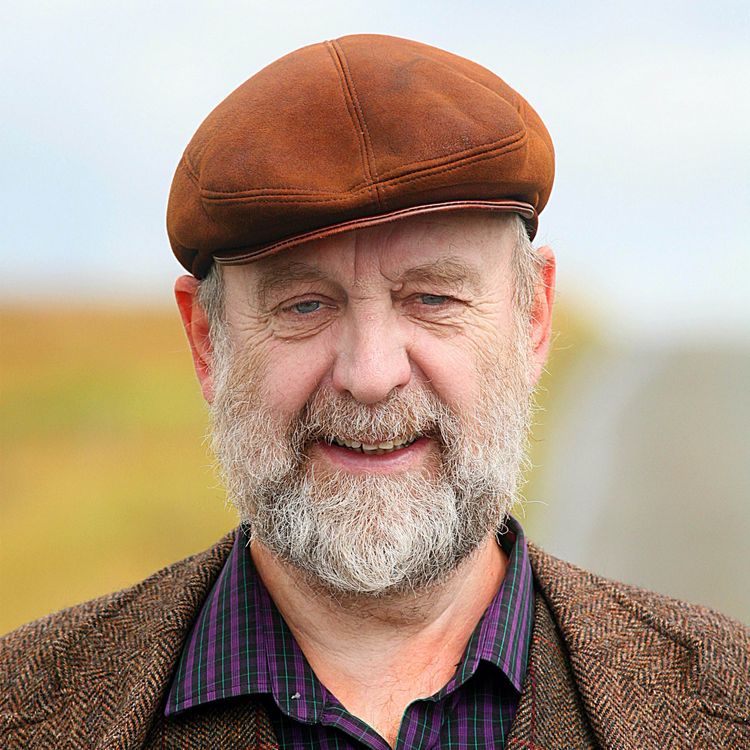
Michael Harding
Saga Dawa
May 2 @ 11:00 am - 4:00 pm
Jampa Ling Centre Owendoon House, Bawnboy, County Cavan, Ireland
Saga Dawa (Vesak) is the celebration of the Buddha’s birthday, enlightenment and Parinirvana. We invite you to share this special day at Jampa Ling. We celebrate with a smoke puja in the [...]
Saga Dawa is one of the most important periods in Tibetan Buddhism, marking the Buddha’s birth, enlightenment, and passing (Parinirvana). It usually falls in late spring or early summer, aligned with the full moon of the fourth lunar month. Rather than a single day, it is often observed as an entire sacred month, with the full moon day seen as the most spiritually powerful.
During Saga Dawa, practitioners focus on accumulating merit through positive actions. This includes acts of generosity, prayer, meditation, and compassion toward all living beings. Many people avoid harming animals, adopt vegetarian practices, release animals as a symbolic act of compassion, and engage in pilgrimages or ritual offerings. It is believed that the effects of both positive and negative actions are multiplied during this time.
At a deeper level, Saga Dawa is about reflection on impermanence, compassion, and the path to awakening. It invites people to align their everyday actions with Buddhist values, not just through ritual but through intention and awareness. Whether in monasteries or community spaces like Jampa Ling, the emphasis is on shared practice, connection, and cultivating a more mindful and compassionate way of living.
More episodes
View all episodes

It's 7am, the kettle is boiling, I'm in the kitchen and I'm feeing good
50:36|There are mornings when I wake before the light has reached the fields. The kettle begins its low murmur in the kitchen, and the silence in the house feels less like an absence than a presence waiting to be acknowledged. At my age I have stopped expecting revelation. I no longer imagine that God is waiting around the next corner with a trumpet or a commandment. Instead, I have come to believe that faith begins much more quietly. It begins with a small opening.Not a certainty.Not an argument.An opening.I think that is what prayer has always been for me. Not speaking to God so much as becoming available to God. There is a difference. One is an activity. The other is a disposition. One is something I do; the other is something I allow.When I was young, I imagined faith meant believing the right things. If only I could hold the correct doctrines firmly enough, God would surely reward my diligence. But life has a way of wearing away certainty. Love does it. Grief does it. Illness does it. Watching people you admire fail does it. Growing older certainly does it.Eventually you discover that faith is not built from certainty at all. It is built from consent. It is the quiet consent to remain open, even when you do not understand.A different type of forgiveness
49:50|We all know what forgiveness means in Christian terms. But there is another way to approach this. In the writings of Santideva a great buddhist master there is a way of looking at suffering that can be powerful and liberating. Personally nothing has changed my life more than contemplating this teaching. So for that reason I'm doing this as a clear attempt at explaining the teaching. it's contained in the text called The Bodhicarayavatara. There is nothing more important that this text. And I'm making an enthusiastic attempt to open a door for you into this space, but you could also find lots of stuff on the internet, on you tube, and in books about it. Just one practise. One way of looking at anger management and your life will change if you practice it. so said Santideva. enjoy.Are we strangers in the World
58:30|I got absorbed this week in reflections about the need for religion. up until now I've been saying for many years that faith and ritual help me personally through each day. they bring joy into my life like nothing else can. they bring meaning into my life and a sense of satisfaction and a sense of worth. And I've been saying this is all just my view. But to be honest it becomes more clear as the years go on that young people need this wisdom more than anyone. `It's not about evangelising for a particular religion but it's about discovering the right way for you to express your own beautiful faith and to find a way to be joyful in the realisation that we belong in the world, we are not strangers to each other, and there is a transcendent mystery that wraps us up like a child in it's mothers arms. So that's what was going on in my head last week, and maybe because the sun was shining so much I mixed up the podcasts and dropped a pervious episode. So apologies for the delay and here it is, the episode for July 11th of 2026. Blessings. MichaelLiving beneath the Surface
01:02:32|Living Beneath the SurfaceOne of the things that continually amazes me is how easily we mistake the surface of life for life itself. We spend our days moving from one appointment to the next, watching the weather, checking our diaries, answering messages, thinking about what needs to be done. Our attention is almost always drawn outward, absorbed by whatever happens to be demanding it in the moment.Yet the moment we become still, we discover another world beneath the surface.Many people imagine that meditation is simply about becoming present to the present moment. In my experience, something quite different happens. The first thing we encounter is not peace but movement. Beneath the ordinary business of the day lies a constant river of memories, anxieties, resentments, desires and fears. We discover just how much is already happening within us.Perhaps this is one reason our culture finds silence so difficult. Constant activity protects us from meeting ourselves. We remain on the surface because we are afraid of what lies underneath.There are good reasons to descend into that inner world. Therapy, at its best, helps us understand its landscape. It gives us language for our wounds and teaches us how our hidden emotions shape the lives we lead. At moments of crisis it can be an extraordinary gift.Prayer, however, asks something different.Rather than analysing every emotion that arises, it invites us to remain quietly present. We acknowledge the thoughts and feelings as they pass, but we do not chase them. We simply stay.I find it helpful to rest my attention on something simple: a candle, an icon, perhaps even an ordinary object resting on the table. The object itself is not important. It is simply an anchor, something gentle that keeps the mind from being carried away by every passing thought.As the turmoil gradually settles, awareness begins to return to the body. We notice the quiet rhythm of breathing, not as something we are forcing, but as something already being given. Breath comes and goes of its own accord. We receive it far more than we create it.Slowly another awareness emerges. We begin to sense that we belong within something larger than ourselves. The boundaries between "me" and the world soften. Whether sitting in a garden, on a train, or in a crowded city, there comes a quiet recognition that existence itself is carrying us.It is difficult to describe this without reaching for poetry.I sometimes think of a single note in a piece of music. Every note is born out of silence and returns to silence. Without the silence there would be no music at all.Perhaps we are something like that.Our lives arise from a deeper stillness, sound their brief note, and disappear again into the silence from which they came. We are not separate from that silence; we belong to it.At some point, almost imperceptibly, meditation crosses another threshold. What began as an exercise in attention becomes something else entirely. The silence no longer feels empty. It feels inhabited.The loneliness that so often accompanies ordinary consciousness begins to dissolve. In its place comes a quiet certainty of belonging—not merely belonging to the world, but belonging within a presence that has been waiting patiently all along.I have come to think of this as the place where meditation gives way to prayer.Prayer is no longer something we are doing. It is the discovery that we are already being held.The astonishing thing is that this place is never far away. It waits beneath every ordinary day, beneath every anxious thought, beneath every distraction. We do not create it. We simply become still enough to notice that it has been waiting for us all along.The silence is not something we enter.It is something that has always been waiting to receive us.Beauty and the Silence that is waiting for you
01:02:32|Beauty and the Silence that is waiting for youOn Tuesdays I'm a Buddhist - with Michael HardingJul 3 at 6:00 PMNewEdit The heart of it is silence. The silence that exists between one note and another. Every single note in the concerto, every piano note must arise out of silence And each single note must fall away into silence. And thereby is the mystery of silence in the beauty of the music that comes out of it And then I began to see my own breath as a music, my own voice, my own body as a kind of a dance This thing that I thought I was, I thought this is me, but it's not me. It's simply a leaf that grew. It's, it's simply a note that comes out of the silence. I come out of silence I belong deeply in silence. And when I just focus on an icon or a candle and I become still and I move down deep inside myself, I move deep through the ocean of disturbing emotion, the jealousies, the anger, the hatred, the longing, the lust. ......... I just go deeper and deeper by being still. Eventually I come to my body. Eventually I come to my breath And then the threshold appears before me. The sense that something is drawing me even deeper into silence, into a sense that I belong here. I am not alone here I am embraced as if in my mother's arms And that's the core of beauty.The Cross an the Buddha
01:06:16|So I feel this one is a personal achievement. Because there are for me two pillars on my faith as a Christian. One is the death of Jesus, violent and dark, and like something out of a war movie, and the other is the list of Beatitudes or blessings that are delivered with the soft yet strong grace of a buddha. These are the two pillars. They are the one thing. And they are both hugely mirrored in Buddhist philosophy. So what I'm doing here is in two parts. The first returns again to Camus as a modern touchstone for a meditation on the Cross and I have put the text in here as follows because it distills so much of my thought. The second half of the podcast probes those blessings, Beatitudes, from a personal point of view. I hope you enjoy and thank you so much for supporting the podcast. If you have not yet gone to Patreon.com to subscribe to the Michael Harding podcast please do so now, because it helps keep the podcast on the air. The following full text is only available on Patreon to subscribers. Thank youBliss, Butter and Beatitudes Between the Ditches
01:04:59|I wanted to do something on the Beatitudes. And yes I know, people hardly remember what those things were. It's a collection of sayings from Jesus, which are like a door into blissful contemplation, and an activism founded on the relationship with God. So in my podcast I'm just sharing my story, my love and enthusiasm for a form of silence that I would call prayer, and for a way of life as a writer that I would say is prayer. Because there is nothing but God. And I thought this will make a good podcast - the beatitudes. What did I discover, only that it's so good that I didn't get beyond the first line of those sayings. I'm going to come back to them, do one at a time now and again over the coming months. But wow gosh, they are worth reading, and thinking about. And then there was another thing I wanted to share, which I mentioned at the beginning of the podcast but never got around to explaining. it's the phrase Between the Ditches. The phrase sums up for me so succinctly what I am doing in the podcast that I thought I'd just it a little bit over the next few months as a gentle branding. But I just couldn't get time in this weeks episode to talk about it so expect next weeks podcast to be called ....Between the Ditches. And I will attach lots of text on that to explain where I'm coming from. The end of this weeks episode brought me to a moment of bliss. sometimes I see why I do the podcast. it's why my lama teaches the wisdom of the Buddha. the idea is that by imparting the wisdom to someone else you are actually imparting it to yourself, reminding yourself, and transforming yourself. In christian terms it's linked to the word, Kerygma, the proclamation of the good news. The more we share the good news, the more we hear it. in fact it goes for everything in life. Share what is beautiful, you end up thinking about what is beautiful, and you become what you contemplate.Finding my Body
01:01:10|I love doing this, I love having you here, and I love when I meet you on the road sometimes when I'm doing shows,I always love the idea of life as simply the embodiment of something from moment to moment. It's like we have choices. What do we embody. What beautiful story do we enact in our life. We're like players waiting to go on stage and we choose what play it will be.This way of being in the world allows every moment to become precious. Simply because I am in my body. And that is the door, the gate, the portal to being. Being is in me now, in this moment. What an amazing way of looking at the world. And then there is that long ago remembrance of the Body of Christ. This too is possible to live, to become, to embody the body of the Christ. You see we are not just what people tell us we are. We are our own mystery. We become that which we choose to follow, we reach a destination of bliss or joy by virtue of our choice to follow a certain path of bliss. Always, as they say, follow your bliss.Enter into your body. Enjoy it. And embody what you choose; not hell but heaven. Yes. Embody heaven. Play it, even as a game, and you will find it works. It's like learning to swim. Or fly. Or love. All possible in the realm of the heart. I hope you enjoy the podcast.Your room is the architecture of God's presence3
01:00:36|Across Christianity, Islam, Judaism, there runs a persistent intuition that place matters, not merely as geography, but as a spiritual condition. To remain somewhere, to dwell, to inhabit a particular location with fidelity becomes a way of encountering God.