Share
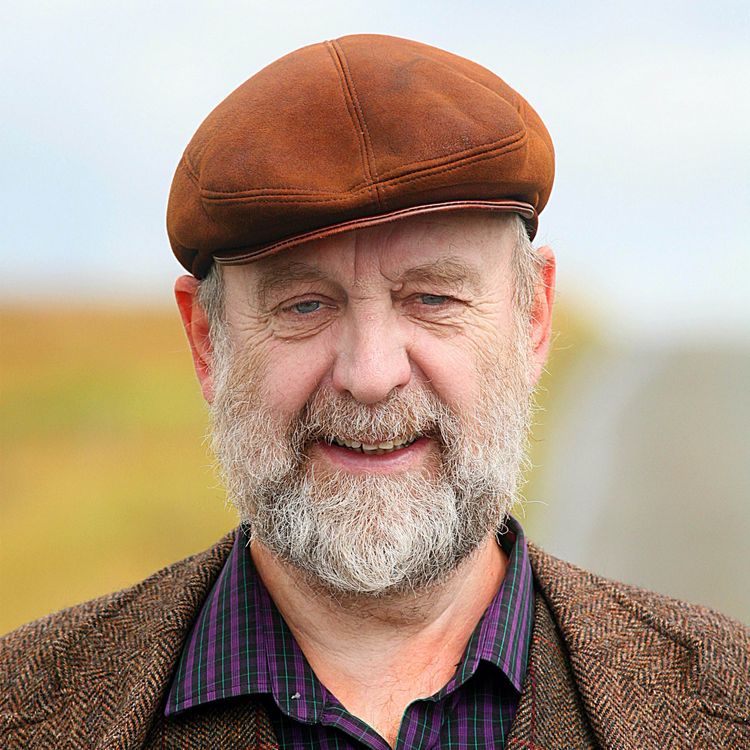
Michael Harding
Mary the Metaphor
“Welcome, everyone, to today’s episode! Grab a warm drink, lean back, and just let yourself listen. Today, we are diving into a story that is florid, wonderful, and absolutely breathtaking: the Dormition and Assumption of Mary into Heaven.
In our modern world, it feels like metaphor is dying. We live in a highly rational age where we often dismiss God because we have coined a rigid, clinical concept of the divine—and then simply debunked our own definition. But Christianity tells us that God is not a forensic formula. God is relationship. God is Trinity. And the key to that relationship is pure, unadulterated love.
In the old days, people didn’t check these florid stories against scientific spreadsheets. Nobody even understood that forensic realm! Instead, they understood stories and metaphors as keys for penetrating the deepest layers of our psyche. They knew that a mythic, beautiful narrative could carry a truth far heavier than any literal fact.
That is why the stories of Mary endure. When we look at her falling asleep and being assumed into heaven, we aren’t here to dissect it, to analyze it, or to rationalize it away. We are here to let this florid, magnificent story shine a brilliant light straight into our hearts. It illuminates the dark corners of our modern minds. It expands our lungs and allows us to breathe with a profound, radiant sense of love, hope, and absolute joy.
I had so much fun putting this episode together, and I hope you feel that warmth vibrating through every word. Forget the rules of the logical world for the next thirty minutes. Just lean back, open your heart, and be joyful. Let’s dive in!”
More episodes
View all episodes

Sunday Afternoon in Warsaw
47:48|I love being here in Warsaw today, reflecting on my many journeys here in the past 14 years, and entering into this present moment of being here. In Buddhism, aging is not viewed as a medical failure, but as a sacred revealing. It is the peeling away of Anatta—the illusion of a permanent, separate self.1. The BuddhaOur reflection comes from the historical Buddha himself, recorded in the ancient Pali scriptures:"All conditioned things are impermanent—when one sees this with wisdom, one turns away from suffering."Presence, Ritual and the Garden
01:05:21|Presence, Ritual and the GardenEach Friday, Michael Harding sits at his writing desk, switches on the microphone, and tries to feel that you are in the room. In this autumn reflection, he explores how repetition, far from being dull, is the way we go deeper into the present moment. Whether it’s photographing the same falling leaves year after year, sharing breakfast with a beloved for decades, or returning to the same garden each winter, life is not a straight line but a circle, and every return reveals more than the surface.Drawing on a Buddhist parable about a tree that is “not a tree,” Zen wisdom about naming the blackbird, Rumi’s field beyond good and evil, and the healing power of hearing your own name spoken with love, he considers how language can distance us from mystery. He offers a meditation of light and compassion, one that softens even our enmities and eases the body as well as the mind.The episode closes in Mullingar Cathedral, where he prepares to speak, returning to a church that remains home. There he tells the little-known love story of an icon-maker who gave Saint Anne the face of the poet Anna Akhmatova. Above all, this is an invitation to bring attention, which is a form of prayer, to your garden, your plants, and the people close to you.Taking a photograph is like stepping over the threshold into Divine Being
59:08|"Eighty or ninety years is not my lifetime. My lifetime, like that of a leaf or of a Buddha, is immeasurable."Consider the extraordinary context of a life. During the Vietnam War, Thich Nhat Hanh chose not to retreat into the safety of a monastery. Instead, he co-founded the Engaged Buddhism movement, walking directly into bombed villages, rescuing children, and facing death daily. He was banned from his own homeland for nearly forty years. When you lose your country, your home, and your friends to war, you quickly realize how fragile a single lifespan is.This weeks podcast comes at a time of wars in many quarters of the world. I thought it might be useful to dwell on a very simple notion that is shared by both Christian and Buddhist practitioners. That every moment is sacred in life, and that every moment passes and teaches us impermanence. And our engagement with every moment is like the photographer paying intense attention to the light and pressing the shutter button precisely to capture the moment, knowing that in that same moment, the moment has passed. The now is not now once we arrive there. But every moment is baked, and made complete by the recognition of God's presence. in this present moment I am paying attention to the ultimate source of meaning. Everything is God. I have no enemies. And thus I begin to find happiness. it's such a relief to think of the world in this manner, and even to think of enemies this way. it dissolves all the anger. so here we go; a podcast about nothing except paying attention in a single moment to everything. And yes, I'm still talking about the leaf and the tree and the relationship between the two. Enjoy. We're into October. Soon it will be wonderfully dark and we will find more light in that obscure place. Thank you for supporting the podcast.As the leaf falls from the tree.....
58:39|"Eighty or ninety years is not my lifetime. My lifetime, like that of a leaf or of a Buddha, is immeasurable."Consider the extraordinary context of this man’s life. During the Vietnam War, he chose not to retreat into the safety of a monastery. Instead, he co-founded the Engaged Buddhism movement, walking directly into bombed villages, rescuing children, and facing death daily. He was banned from his own homeland for nearly forty years. When you lose your country, your home, and your friends to war, you quickly realize how fragile a single lifespan is.Photography is an attempt to measure time in fractions of a second—1/125th of a second, 1/500th of a second. But Thich Nhat Hanh reminds us that our true nature cannot be caught by a shutter speed. When our friend closed their eyes for the last time, they didn't run out of time; they simply stepped out of the clock altogether.Did I fail?
01:01:35|Here's a strange way to enter into your own bliss. The key to happiness may not be the constant affirmation of positivity and success, but rather the dive into the ocean of vulnerability where we all struggle and just about survive. if we stop clinging to success we discover that what we feared all along is the beginning of a different kind of liberation.Anyway. Don't get me wrong I'm not trying to explain anything. I'm just sharing my own story in this meditation. Hope you can just enjoy it.The Trap of Looking Inward
01:04:31|Have you ever noticed how often we are told by the world around us to just "be yourself"? We hear it in pop songs, we see it on social media, and we read it in self-help books. The ultimate goal of modern life, we are told, is authenticity. And the way you find that authenticity is by looking deep inside yourself, discovering your unique, unrepeatable core, and expressing it to the world—no matter what anyone else thinks. In this modern view, you are the architect of your own identity. You build yourself from the inside out.But let’s be honest: that is an incredibly heavy burden to carry. It leaves us constantly anxious, wondering, "Am I being real enough? Am I living my truth?"Prayer Morning
01:00:26|That's all I can call it. A big dive into one of the keys that will bring you happiness. No more words. This is where you begin. Hope you enjoy. Have a fun weekend. And get up early!!Electric Picnic and the Ecstasies Of Symeon the Theologian
01:07:54|I love the Orthodox Christian Tradition because there are so many individuals who were exceptional teachers, philosophers, and psychologists. And maybe there was none as amazing as a guy who lived in the 10th century by the name of Symeon, and nicknamed the Theologian. Actually it wasn't a nickname really. And he left some really amazing ideas about how to meditate, how to pray, how to experience the ecstasy of inner light. I also love Electric Picnic. Was there a few times in the long ago, and did a gig one time with the great Steve Wickham and a Brazilian therapist in the Literature Tent. But that's history. Today's podcast is a meditation on the Picnic, on the Ecstasy and on the other stuff; the ecstasies of Symeon, who didn't use chemicals at all to induce the flood of joy and light that were the markings of his life. Enjoy the podcast, and enjoy the picnic if you're going.AND THE USUAL REMINDER. IF YOU'RE ENJOYING THE PODCASTING, PLEASE GO TO PATREON AND SUBSCRIBE SO THAT I CAN CONTINUE OUR WORK. THANK YOU.In the Shadow of a monastery
01:18:07|I was in Boyle during the week. and I went into the old Abbey and it felt amazing; still and quiet and serene. I was thinking of the monks that once lived there, and may have thought that their way of life would never end. The abbey was linked to the monastery of Saint Bernard of Clairveaux in France, a man who was well acquainted with Irish monks in the 12th century. it struck me that everything is passing, nothing is permanent. Even the solid stone of a cloister, and the certain confidence of monks who believe that their world will endure; it all comes falling down. Everything changes. Nothing remains the same. I think this is true of the time we live in now. Everything is changing. And you might ask, what will survive, if everything passes. And the answer is love. so in this podcast I'm exploring that word love, in the light of Saint Bernard. Hope you enjoy.