Share
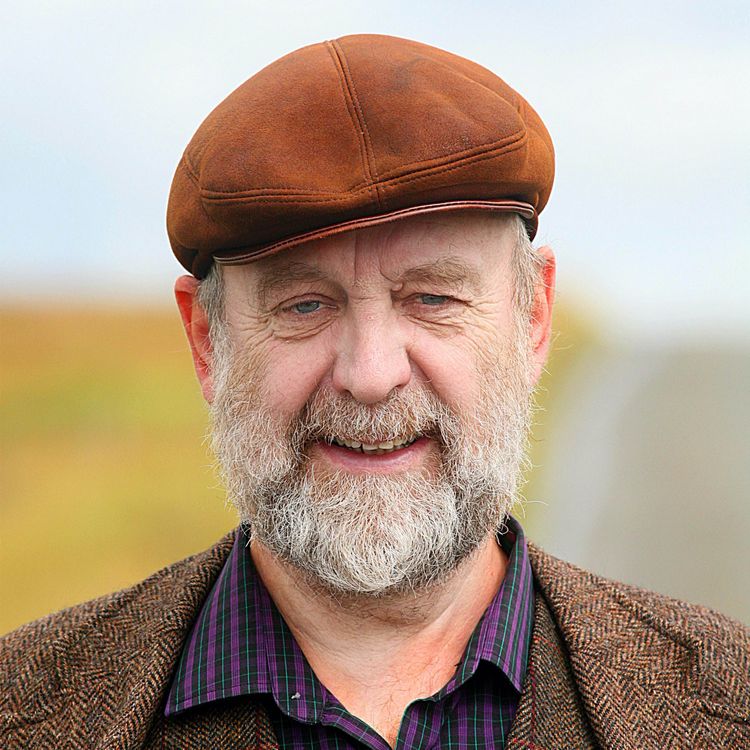
Michael Harding
How to watch television without getting angry
•
Well I thought you'd like that as a way to draw you in. Essentially, needless to say, I'm talking about Buddhist practise, and especially the concepts of Interdependence, Universal Responsibility, and Ahimsa, as they have been outlined many times by his Holiness the Dalai Lama. They sound like enormous and even exotic ideas, but as you know from every podcast I'm convinced that prayer and faith have a beneficial effect, and are useful in ordinary life. So sometimes in giving time to study the profound teachings of Buddhist philosophy, it can help you enjoy life better, and even watch the television with equanimity.
More episodes
View all episodes
Joy
01:00:37|I'm alone in Donegal, just after breakfast, and I'm wondering why I feel so happy. Despite anxieties about the fried egg, the porridge, the health, the tablets, the bills that need to be paid, I'm there at the table looking at the sunlight and the dust and wondering what makes me so deliriously joyful. Well that's where the podcast begins. and as I promised, I"m adding a few notes here that relate to the second half of the podcast. Enjoy. And enjoy the lovely winter weather. And enjoy your life. it's not a rehearsal. We often think of joy as something we have to manufacture—a fleeting feeling that arrives only when life goes our way. Yet, when we look at the great spiritual traditions of the Church, we discover something far deeper: joy is not merely a human emotion; it is the unmistakable signature of God’s actual presence.Consider the Orthodox theologian Father Alexander Schmemann, who reminded us that the absence of joy is the surest sign of the absence of God. To be truly human, he taught, is to stand before the world in thanksgiving. When our eyes are opened to see creation as a gift saturated with the divine, cynicism melts away, and joy becomes our natural breath of praise. It is the quiet realization that wherever we look, Christ is there, and we can rejoice in Him.`is it the heart or the head?
54:54|What brings peace, and wellness, and mental health. For me it's the heart. Open it. Raise it up to the mystery of life. The head is mostly full of nonsense, ideology, arguments, opinions and sometimes fiercely negative world views. But the heart is so different. open it and be at peace. So you say open to what. I say open to who; who is there, I say when I walk beneath the autumn trees. Because there is a presence there in the trees. Open to the beloved presence of divine beauty. Use your heart. And the head will take care of itself.by the way; if you are enjoying the podcast, please go to Patreon.com Michael Harding and subscribe. it would help greatly. Thanks.It's Halloween and I'm just chilling out.
39:19|This is an extra podcast this week on account of the day that's in it. I'm just talking here off the top of my head about the usual things, Death, Darkness, Light, and Love. How we belong in the universe, and how reflecting on the greatness of God's presence in the universe can be a practise that makes us happy. It's the eve of All Saints Day and then All Souls day and then the month we find comfort in remembering all the loved ones that have left us in grief because of their departure. But this month of remembering is a blessing too, as all darkness contains somewhere within it - an amazing light. the wound as Rumi says, is where the light comes in. I love November. It's the most consoling time of year if you can be still and pay attention to the universe around you. Thanks for listening and have a lovely evening.Abraham; Part Two. The Psalms.
56:58|If the psalm prays, you pray; if it laments, you lament; if it exults, you rejoice; if it hopes, you hope; if it fears, you fear. Everything written here is a mirror for us." - that's the famous quote from Augustine about the psalms and how they connect with human emotion. and that's the key. they connect with human emotion. They are like a therapy, a tunnel of transformation. Take one and go through it and you find it has gone through you; it slips into the heart with a ring of psychological truth. amazing since they are addressed to the Divine Being, the loving God, and some of them written one thousand years before Christ.Abraham
01:04:14|I remember sitting in a quiet kitchen once, watching the rain grease the windowpane, thinking about how we try to make sense of the vast, terrifying emptiness of the world. Long before our modern anxieties, there was a man named Abraham, standing under a massive, unblinking desert sky. He lived in a world crowded with small, fickle ghosts—local pagan deities hiding in trees and rivers, demanding appeasement. It must have been exhausting, trying to please a dozen different gods who didn't care about you.Then, Abraham did something radical. He looked past the fragmented clutter of nature and realized there was only one sovereign Creator, entirely independent of the world yet holding it all together. It was the birth of absolute unity; a single, universal presence for all humanity.But it wasn't just a cold, philosophical shift. This wasn't a distant cosmic engine. What changed everything for Abraham—and subsequently for the rest of us—was that this vast, singular God actually spoke. He didn't demand the frantic rituals of fear. Instead, He initiated a covenant, a personal and binding relationship built on mutual fidelity and promises. It is an extraordinary image: the infinite Divine sitting down, as it were, to strike an agreement with a fragile human being.Yet, Abraham’s calling wasn't an invitation to hide away in exclusive isolation. He was chosen as a specific starting point for a much grander story. The promise was beautiful in its reach: through his particular life, all the families of the earth would ultimately be blessed. It established a universal trajectory of faith, suggesting that our deepest spiritual movements are never just for ourselves, but are meant to ripple outward, offering comfort to a broken and searching world.Sunday Afternoon in Warsaw
47:48|I love being here in Warsaw today, reflecting on my many journeys here in the past 14 years, and entering into this present moment of being here. In Buddhism, aging is not viewed as a medical failure, but as a sacred revealing. It is the peeling away of Anatta—the illusion of a permanent, separate self.1. The BuddhaOur reflection comes from the historical Buddha himself, recorded in the ancient Pali scriptures:"All conditioned things are impermanent—when one sees this with wisdom, one turns away from suffering."Presence, Ritual and the Garden
01:05:21|Presence, Ritual and the GardenEach Friday, Michael Harding sits at his writing desk, switches on the microphone, and tries to feel that you are in the room. In this autumn reflection, he explores how repetition, far from being dull, is the way we go deeper into the present moment. Whether it’s photographing the same falling leaves year after year, sharing breakfast with a beloved for decades, or returning to the same garden each winter, life is not a straight line but a circle, and every return reveals more than the surface.Drawing on a Buddhist parable about a tree that is “not a tree,” Zen wisdom about naming the blackbird, Rumi’s field beyond good and evil, and the healing power of hearing your own name spoken with love, he considers how language can distance us from mystery. He offers a meditation of light and compassion, one that softens even our enmities and eases the body as well as the mind.The episode closes in Mullingar Cathedral, where he prepares to speak, returning to a church that remains home. There he tells the little-known love story of an icon-maker who gave Saint Anne the face of the poet Anna Akhmatova. Above all, this is an invitation to bring attention, which is a form of prayer, to your garden, your plants, and the people close to you.Taking a photograph is like stepping over the threshold into Divine Being
59:08|"Eighty or ninety years is not my lifetime. My lifetime, like that of a leaf or of a Buddha, is immeasurable."Consider the extraordinary context of a life. During the Vietnam War, Thich Nhat Hanh chose not to retreat into the safety of a monastery. Instead, he co-founded the Engaged Buddhism movement, walking directly into bombed villages, rescuing children, and facing death daily. He was banned from his own homeland for nearly forty years. When you lose your country, your home, and your friends to war, you quickly realize how fragile a single lifespan is.This weeks podcast comes at a time of wars in many quarters of the world. I thought it might be useful to dwell on a very simple notion that is shared by both Christian and Buddhist practitioners. That every moment is sacred in life, and that every moment passes and teaches us impermanence. And our engagement with every moment is like the photographer paying intense attention to the light and pressing the shutter button precisely to capture the moment, knowing that in that same moment, the moment has passed. The now is not now once we arrive there. But every moment is baked, and made complete by the recognition of God's presence. in this present moment I am paying attention to the ultimate source of meaning. Everything is God. I have no enemies. And thus I begin to find happiness. it's such a relief to think of the world in this manner, and even to think of enemies this way. it dissolves all the anger. so here we go; a podcast about nothing except paying attention in a single moment to everything. And yes, I'm still talking about the leaf and the tree and the relationship between the two. Enjoy. We're into October. Soon it will be wonderfully dark and we will find more light in that obscure place. Thank you for supporting the podcast.