Share

Menopause Matters, Let’s Talk
The Truths about HRT
We continue the conversation about HRT – one not to miss With so much noise, misinformation and frankly rubbish about HRT on social media we thought an episode to clarify a few things was needed. To help us disentangle facts from fiction we invited Dr Olivia Hum along. Olivia is an experienced GP and a registered British Menopause Society Menopause Specialist. Gosh we get through a lot – as always, well worth a listen, especially if you’ve got a few unanswered questions. Listen to clarify the 3 main reasons for considering HRT, why there aren’t any tests that can tell you what you need and what are the most common reasons for it not working for some women. HRT is such a complex topic with many women not even sure why they’re taking it or what they’re actually on. You’ll get answers to common questions like…what is the best HRT…why am I getting unscheduled bleeding...and what about taking HRT when I’m over 60. Olivia gives an insight into the realistic challenges faced by GPs today alongside empathising about the many frustrations women face. We have our regular nugget of knowledge with Heather and look at why Menopause is considered to be a wake up call for many women…a turning point in women’s lives. And, why there’s been a shift to looking at your health-span rather your life-span. There’s a reminder about where to easily find trusted information and why that’s important instead of wading through the overwhelming noise on socials. We end with the key message about self care…keeping everything simple and looking after your long term health.
More episodes
View all episodes
6. When you need trusted information and healthcare - where to go
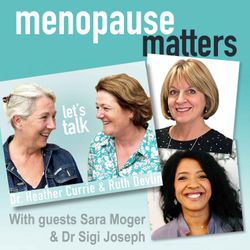
38:58||Season 7, Ep. 6After listening to this episode you will hopefully say…thank goodness for the British Menopause Society (BMS)! We invited Sara Moger the fabulous CE of this wonderful charity to help us understand what it’s all about, what the connection is with the Women’s Health Concern and why do we continually reference these invaluable charities in our resources and signposting.We also invited the wonderful Dr Sigi Joseph on to give us a GPs perspective…a really insightful conversation and extremely helpful if you’re wondering how to approach your GP. You also find out about all the different forms of education and training that is going on, of which there is a lot, contrary to popular belief!I know - 2 guests at once whatever next…great conversations and you will go away confident knowing exactly where to look for trusted information. Guests: Sara Moger : CE of the British Menopause SocietyDr Sigi Joseph:Sigi is an enthusiastic GP Partner & Trainer in Edinburgh. She has worked in Scottish General Practice since 2004 and has a real passion and joy in her job.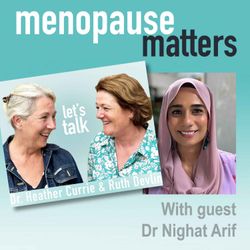
5. Marginalised communities
33:51||Season 7, Ep. 5In this episode we invited the wonderful Dr Nighat Arif to join us in conversation about minority communities, listen to understand why a more apt description is marginalised communities. This was a fascinating insight into the challenges and barriers that many women within these communities face.So much to chat about…how to build up trust…how to avoid culturally inappropriate conversations…what role do men play within these communities and showing respect for the differences within cultures.Keep listening to the end to hear Nighat’s three key messages. An interesting start to a conversation which needs to be continued on a larger scale.Guest: Dr Nighat Arif.Dr Nighat is a GP specialising in women’s health, family planning and menopause care.Alongside more than 18 years’ experience working within the NHS, she runs her own private practice in Buckinghamshire.Dr Nighat is an honorary Fellow of the Royal College of Obstetrics and Gynaecology, a board member for Wellbeing of Women and co-founder of The Health Collective.As a medical broadcaster on the BBC and ITV and content creator with YouTube Health and the WHO Fides programme, Dr Nighat is a trusted source of information on all aspects of women’s health.She hosts a podcast called ‘Time of the Month’https://drnighatarif.co.uk/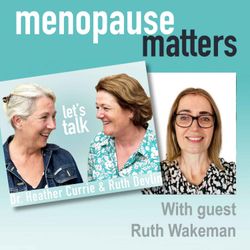
4. Osteoporosis and bone health
33:54||Season 7, Ep. 4The day we released this podcast was World Osteoporosis Day – a great reminder to stop, think about the health of your bones and find out more about osteoporosis.To help guide us through this important topic we were delighted to be joined by Ruth Wakeman, Director of services at The Royal Osteoporosis Society.There was a lot to chat about… Do you know when you reach peak bone mineral density? Because we can’t see and feel our bones, why should we all be thinking about what our bones are up to and our long term health? And how do you find out what your bones are up to.What’s the connection between menopause and bone health? Is there a greater risk of fractures after menopause and what can we do to help prevent them. Importantly - do you know how to look after your bone health - how to keep your bones strong and healthy?Listen to find out many of the answers you need about bone health, osteoporosis and where to find the Great British Bone Checker…now what’s that all about… happy listening! Guest: Ruth WakemanRuth is Director of Services, Influencing and Innovation at the Royal Osteoporosis Society, where she leads the charity’s work across health information and support, policy and public affairs, healthcare professional engagement, service improvement and research.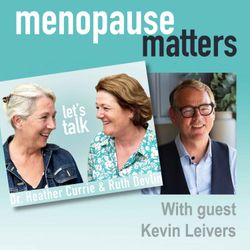
3. Supplements… find out the truth
46:58||Season 7, Ep. 3In this episode we have an enlightening conversation about supplements.An unregulated industry which has become an absolute minefield to navigate.We were delighted to be joined by Kevin Leivers, the founder and chief formulator of The Naked Pharmacy, who helps us to understand the importance of being able to make informed decisions about products based on facts not fiction. Do we really need them, how do you know if they’re safe to take and why it’s seriously not a good idea to submit your body to a cocktail of products.The most important message…keep it simple…listen to the end to find out what might be worth looking into if you’re needing additional support for symptoms associated with the menopause.Guest: Kevin Leivers M.R.Pharm.SFounder, CEO and chief formulator of The Naked Pharmacy with a career in both conventional and natural pharmaceutical industries spanning over forty years.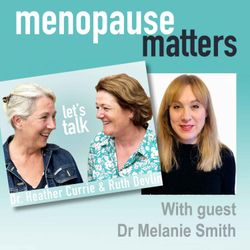
2. Stress management - an invaluable insight into coping tools and strategies
33:09||Season 7, Ep. 2Stress management…an invaluable insight into coping tools and strategies This is such a useful episode to listen to not only to hear about coping with stress whilst going through the menopause but it also gives you fabulous insight into tools and strategies for every day life stresses.We were delighted to be joined by the wonderful Dr Melanie Smith, an experienced clinical psychologist who specialises in this area. Listen to hear how to combat the perfect storm that is often brewing for many women who are usually spinning multiple plates during this significant physical transition. Chronic stress - when levels of stress are raised for prolonged periods this can have a long term impact on health and wellbeing…hear how to differentiate between everyday life stresses and the stress from the impact of menopausal symptoms. What does a bio-psycho-social approach really mean and understand why it’s not just about hormones and fixing hormones.Mel beautifully explains how Cognitive Behaviour Therapy works and how it genuinely helps to manage stress levels. I know, one not to miss…Guest: Principal Clinical Psychologist (chronic pain and MSK) at Salford Royal Hospital.Specialises in Biopsychosocial Approaches to Menopause and is co-author (with Professor Myra Hunter) of Managing Hot Flushes and Night Sweats (A cognitive behavioural self-help guide to the menopause) and Living well through the Menopause (An evidence based cognitive behavioural guide).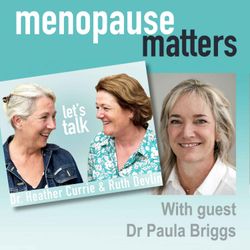
1. Doing the right research, gaining evidence – why it’s so important.
30:08||Season 7, Ep. 1This episode is well worth a listen - it gives clarity about gaining the right research, how to get it, why that is so important and what would ‘gold standard research’ look like… We chat about why you should only seek evidenced based, trusted information - we direct you to the right places you can find it. This is becoming an increasing challenge for every woman when we have social media platforms that are swamped with misinformation. We invited the fabulous Dr Paula Briggs, a consultant in sexual and reproductive health, to help us with our discussions and also had an interesting conversation about the new non-hormonal drugs which are soon to become available to help with vasomotor symptoms; what are they and how do they work. As always we have an interesting nugget of knowledge…happy listening. Guest: Dr Paula Briggs.Paula is a Consultant in Sexual and Reproductive Health based at Liverpool Women’s NHS Foundation Trust.She is an Honorary Clinical Associate Professor at the University of Liverpool and Immediate Past Chair of the British Menopause Society.She is devoted to delivery of women’s health care, research and education. Her main interest is menopause management with a particular interest in urogenital atrophy.
6. Let’s talk brain health… cognition and those psychological, emotional symptoms.
50:13||Season 6, Ep. 6One of the most interesting and reassuring episodes to listen to when once again we sort out the facts from fiction. We were delighted to be joined by Dr Pauline M. Maki who gives us a better understanding about everything and cuts through all the misinformation. What is going on when we hit perimenopause, is it dementia – no – the symptoms you’re experiencing are a by-product of your hormones going wonky and your ovaries shutting down. Our brains don’t like hormonal changes, particularly fluctuating, unpredictable changes. So many questions get answered throughout this episode… Do symptoms resolve...what does the research say...do social disparities have an impact…which other symptoms can have an impact on your brain. Mentioned before in previous episodes…it’s the perfect storm going on for many women. Listen to understand how our brains adapt to the changes in estrogen and what is brain plasticity. We talk about optimising our brain health…why it’s important to treat other symptoms you may be experiencing first and why we need to be focussing on bringing the healthiest brain into menopause.Why it’s important to make sure you’re bringing an optimally resilient brain to your menopause transition and into the post-menopausal years. Why heart health is brain health…keeping an eye on your heart health will help to optimise your brain health. Then we talk treatments - why it’s so important to treat symptoms with evidence based interventions and not woo hoo products that have not been properly tested and aren’t recognised, accredited treatments. When to use HRT and when it’s not advised…listen to get clarity on the facts about HRT and dementia.
5. The Gut-Brain axis – what’s so important about this then?
35:26||Season 6, Ep. 5This is a fascinating insight into the interaction between your gut and your brain. We were delighted to be joined by consultant gastroenterologist Dr Elena Eliadou to give us a better understanding about everything.Reassuringly Elena points out early on in this episode that it’s not your fault things can sometimes become a tad imbalanced. She has a fabulous metaphor which explains what happens when the interaction of various systems in your body go a bit wonky. Listen to understand what dyspyosis is and what the effect declining & fluctuating levels of estrogen can have on your gut. Elena importantly flags up the worrying increase in younger people presenting with symptoms of bowel cancer and highlights the alarm - the red flag symptoms, to look out for to enable early diagnosis and treatment. Getting back to the estrogen…what part does the microbiome play in recycling estrogen in the body and what’s the bio-psycho-social approach all about. Hear why it’s so important to invest time in yourself and your health and what is one of the easiest, most successful practical tools to learn which can help to combat chronic stress alongside giving you that sense of control back. We find out if there is a specific menopause diet and why it’s important not only what we eat but how we eat…then there’s gut-directed hypnotherapy and behavioural therapies …do they work? Make sure you listen to the end to find out Elena’s top 3 takeaway key messages.