Share
Medstars Podcast channel
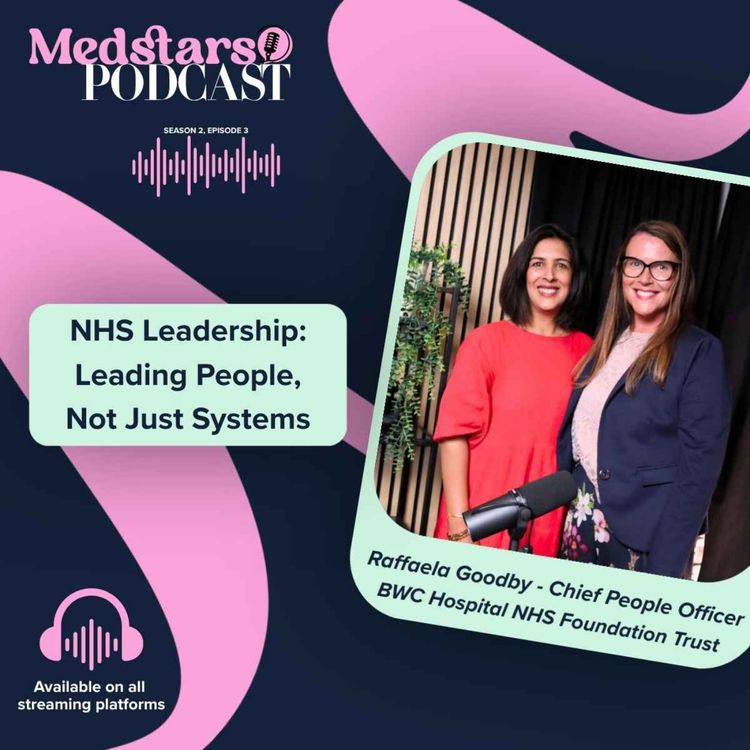
NHS Leadership: Leading People, Not Just Systems
We’re joined by Raffaela Goodby, Chief People Officer at Birmingham Women’s and Children’s Hospital NHS Foundation Trust. She shares with us insights into how to lead well within NHS, and the continued impact and recovery within NHS after COVID in 2020. She also shares how our Aria app has been used within Birmingham Women’s and Children’s Hospital NHS Foundations Trust to offer 24/7 mental health and wellbeing support to staff and how this has re-shaped their staff care.
Raffaela brings over two decades of experience in people leadership, culture and organisational development, having held senior roles across the public sectors, including Birmingham City Council, NHS England and Birmingham Women’s and Children’s Hospital NHS Foundation Trust.
For more information about Medstars or the Aria app and what we do, visit: www.medstars.co.uk 🔗
More episodes
View all episodes

5. Children's Eating, Explained
45:17||Season 2, Ep. 5We’re joined by Lucy Upton, a qualified Paediatric Dietitian and Feeding Therapist. With 10 years of NHS dietic experience, Lucy shares with us her wisdom on questions that worry many parents: from wondering “is my child eating enough” all the way to asking “how we can distinguish credible guidance from false?” Lucy has worked over 15 years in helping babies, children and their families and runs the platform ‘The Children’s Dietitian’, which continues to help parents who are struggling with their children’s feeding and eating habits. For more information about Medstars or the Aria app and what we do, visit: www.medstars.co.uk 🔗
4. NHS Maternity: How to Support Mothers
31:34||Season 2, Ep. 4We’re joined by Mari-Carmen Sanchez-Morris, former paediatric intensive care nurse and founder of Matresa which provides 1-1 support and education for new mothers. In this episode, we discuss the maternity care crisis, and how better education, earlier support and employer action can help mothers through pregnancy, postnatal recovery and the return to work. Mari-Carmen brings a breadth of knowledge and experience combines through being a mother of three and coming from working in the NHS. She shares about the issues within the NHS and provides insightful solutions which focuses on new mothers and providing education, empowerment and engagement. For more information about Medstars or the Aria app and what we do, visit: www.medstars.co.uk 🔗
2. Women, crime & mental illness - Dr Syeda Ali
45:10||Season 2, Ep. 2Dr Syeda Ali is a consultant psychiatrist specialising in forensic psychiatry and women’s mental health. Syeda has worked as Medical Director and lead psychiatrist for a women’s secure psychiatric service in the North West of England, where many patients have experienced sex-based violence and complex trauma. She’s also a contributor to discussions on femicide, sex-based violence and women’s mental health, via the Women in Mental Health Group at the RCPsych Books mentioned in the podcast:Naga Munchetty: It’s Probably Nothing: Critical Conversations on the Women’s Health Crisishttps://amzn.eu/d/08KzGjjuLisa Appignanesi : Mad, Bad And Sad: A History of Women and the Mind Doctors from 1800 to the Presenthttps://amzn.eu/d/07lOZrrDCaroline Criado Perez: Invisible Women: Exposing Data Bias in a World Designed for Menhttps://amzn.eu/d/02TPAzoC
1. What Women Aren't Told About Postnatal Recovery
01:08:38||Season 2, Ep. 1We’re joined by Lauren Williams, a women’s health physiotherapist with a specialist interest in postnatal recovery, pelvic health, pregnancy-related pain, and helping women return confidently to exercise and everyday life after childbirth.We’ll be exploring some of the things women are very commonly told after pregnancy — and why much of the advice around postnatal recovery may not be enough.Lauren Williamshttps://warwickshirehomephysio.co.uk/team/lauren-williams/Lauren's book recommendation: Alex Light - The Price of Prettyhttps://amzn.eu/d/0gOtwW2I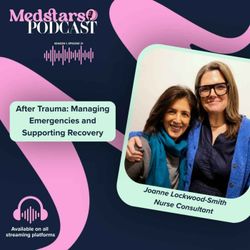
21. After Trauma: Managing Emergencies and Supporting Recovery
01:07:34||Season 1, Ep. 21In this episode we are joined by Joanne Lockwood-Smith – Nurse Consultant in a Major Trauma Centre in central London who has spent her career at the front line of trauma care. Joanne has been a key voice in advocating for better psychological support for the survivors of traumatic injuries - an area that has often been underfunded and overlooked.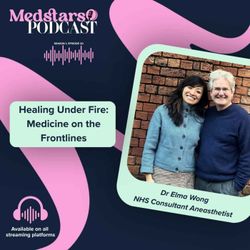
20. Healing Under Fire: Medicine on the Frontlines with Dr Elma Wong
50:23||Season 1, Ep. 20What’s it like to deliver life-saving care in a war zone? NHS consultant anaesthetist Dr Elma Wong shares with Dr Barry Lambert her frontline experiences with Médecins Sans Frontières in Yemen, Gaza and the West Bank, revealing the realities of medicine under fire and the resilience it demands.https://msf.org.uk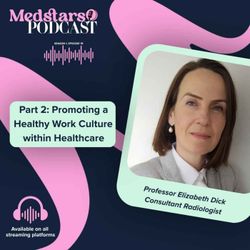
19. Professor Elizabeth Dick - Part 2. Promoting a Healthy Work Culture Within Healthcare
55:26||Season 1, Ep. 19Professor Elizabeth Dick is a Consultant Radiologist and Professor of Practice at Imperial College London, where she is Associate Director of Medical Education. She is internationally recognised for her work in Emergency and Trauma Radiology, having been instrumental as the Radiology lead in the development of Major Trauma Centres across London and the UK, which have halved mortality rates for major trauma cases since 2010.Elizabeth is an outspoken advocate for addressing bullying, racism, and toxic workplace cultures within the NHS, and for promoting compassion, diversity, and inclusion in healthcare training and practice.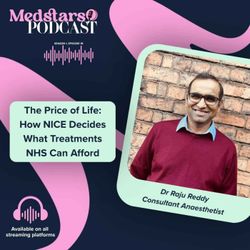
18. The Price of Life: How NICE Decides What Treatments NHS Can Afford
45:23||Season 1, Ep. 18In this episode we look into one of the most influential but least understood institutions in British healthcare: NICE, the National Institute for Health and Care Excellence. We are joined by Dr Raju Reddy, Chair of one of NICE’s Technology Appraisal Committee. A consultant anaesthetist by training and MBA-qualified, Dr Reddy sits at the heart of decisions that affect billions of pounds in NHS spending — and, crucially, where that money is spent