Share
Maple History: A Canadian History Podcast
Latest episode
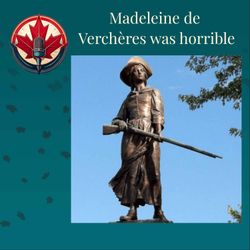
37. Madeleine de Vercheres was Horrible
31:33||Ep. 37She may be known for bravely fighting off a Haudenosaunee attack at her family fort at 14 but you can find out why I think she was a horrible in this episode. Some salty language in this one but it is warranted.Sources:Heroines & History: Representations of Madeleine de Verchèreres and Laura Secord by Colin M. Coates and Cecilia MorganNoel, Jan. “New France: Les femmes favorisées.” Atlantis 6, no. 2 (1981): 80–98. Noel, Jan. “Women in New France: Further Reflections.” Atlantis 8, no. 1 (1982): 125–130.André Vachon, “JARRET DE VERCHÈRES, MARIE-MADELEINE (baptized Marie-Magdelaine) (Madeleine, Madelon) (Tarieu de La Pérade),” in Dictionary of Canadian Biography, vol. 3, University of Toronto/Université Laval, 2003–, accessed August 19, 2026, https://www.biographi.ca/en/bio/jarret_de_vercheres_marie_madeleine_3E.html.Coates, Colin M. “Warrior Women: The Legend of Madeleine de Verchères.” The Beaver 82, no. 2 (April–May 2002): 8–13.
More episodes
View all episodes
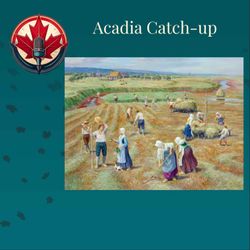
36. Acadia Catch-Up
16:09||Ep. 36Let's take a quick look at what was happening in Acadia after the feud between D'Aulney and La Tour ended.Sources:A Great and Noble Scheme by John Mack FaragherThe Aboiteau in Acadia (info about the unique dike system used in Acadian)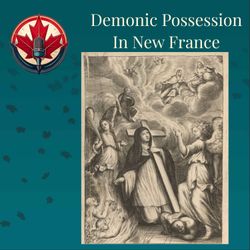
35. Demonic Possession in New France
41:33||Ep. 35New France was slowly attracting colonists in 1660 but one of the young women who came to the colony in those early days soon became tormented by demons set upon her by a jilted suitor. There were many people who tried to help her but the successful exorcist may come as a surprise.Sources:The Possession of Barbe Hallay: Diabolical Arts and Daily Life in Early Canada by Mairi CowanMarie-Emmanuel Chabot, o.s.u., “GUYART, MARIE, named de l’Incarnation (Martin),” in Dictionary of Canadian Biography, vol. 1, University of Toronto/Université Laval, 2003–, accessed July 1, 2026, https://www.biographi.ca/en/bio/guyart_marie_1E.html.Mary Dunn, "Sixteen and Possessed," Spiritus: A Journal of Christian Spirituality 22, no. 2 (Fall 2022): 232-251.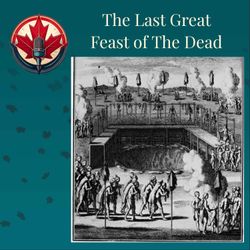
34. The Last Great Feast of the Dead
32:56||Ep. 34In 1636 the last great Wendat Feast of the Dead was held in what is now Ontario. The Wendat Confederacy only had a few years left before the devastation of the diseases brought by European colonizers and the war with the Haudenosaunee brought the Wendat to their knees. The Jesuit priest, Jean de Brebeuf recorded the events and his admiration for the ritual in the Jesuit Relations which is where we get much of the information about this particular ceremony and a greater insight into the Wendat world as it was on the precipice of disaster.This episode is going out early to subscribers and will be out next week to regular listeners.Sources:The Children of Aateantsic: A History of the Huron People to 1660 by Bruce TriggerHuron Wendat: The Heritage of the Circle by Georges E. SiouiThe Huron-Wendat Feast of the Dead: Indian-European Encounters in Early North America by Erik R. Seeman
33. Book Review of Isola
14:20||Ep. 33Is Isola by Allegra Goodman Worth Reading? - Reese Witherspoon Book Club ReviewI told the story of Marguerite de la Rocque de Roberval and how she was marooned on the Isle of Demons off the coast of Quebec in 1541. Isola is a fictionalized version of that story by Allegra Goodman and in this bonus episode I let you know if it is worth a read. If you have read the book, let me know if you agree with my assessment. Did you feel the same way or do you think I'm way off the mark?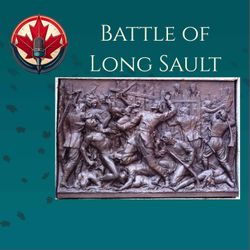
32. Battle of Long Sault
20:42||Ep. 32Adam Dollard des Ormeaux’s last stand at Long Sault became one of New France’s most enduring legends but the real battle was far messier. This week, I look at what actually happened at Long Sault, why the French lost so badly, and how a military disaster became a foundational myth.The Children of Aateantsic: A History of the Huron People to 1660 by Bruce TriggerNatives and Newcomers: Canada's Heroic Age Reconsidered by Bruce TriggerDispersed But Not Destroyed by Kathryn Magee Labelle
31. New France - A Tough Sell For Colonists
22:32||Ep. 31What made New France so hard to establish? A look at the realities of early settlement and slow colonial growth.Fischer, David Hackett. Champlain’s Dream: The European Founding of North America. New York: Simon & Schuster, 2008Jacques Mathieu, “HÉBERT, LOUIS,” in Dictionary of Canadian Biography, vol. 1, University of Toronto/Université Laval, 2003–, accessed April 15, 2026, https://www.biographi.ca/en/bio/hebert_louis_1E.html.Ethel M. G. Bennett, “HÉBERT, GUILLEMETTE (Couillard de Lespinay),” in Dictionary of Canadian Biography, vol. 1, University of Toronto/Université Laval, 2003–, accessed April 15, 2026, https://www.biographi.ca/en/bio/hebert_guillemette_1E.html.