Share
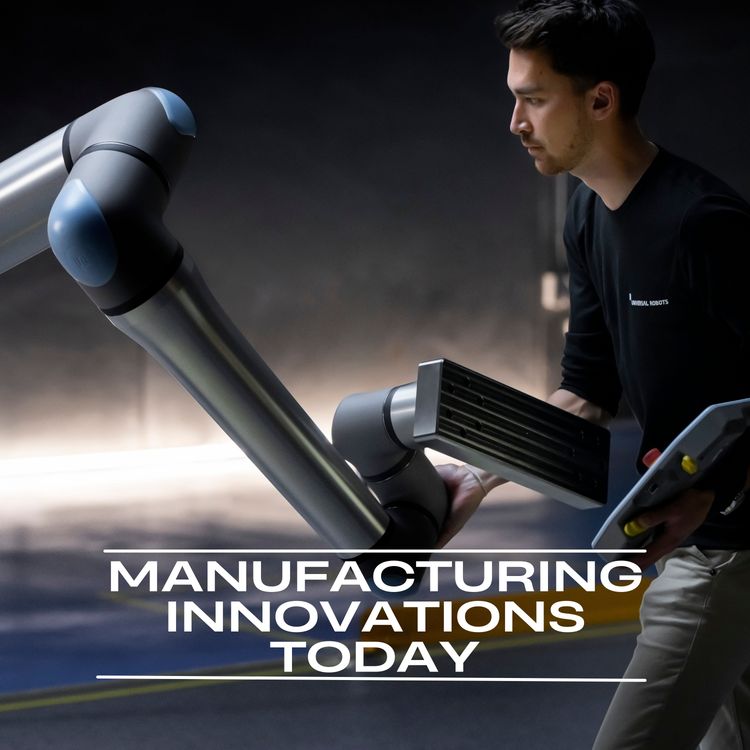
Manufacturing Innovations Today
The Critical Role of Emergency Stops In Industrial Safety
In this episode, we explore the vital importance of emergency stops (e-stops) in industrial environments. Join us as we discuss how these safety mechanisms prevent accidents, injuries, and equipment damage. We'll cover essential standards, strategic placement, and routine maintenance practices. Plus, hear expert insights on why investing in reliable e-stops, like those from ABB, is crucial for enhancing safety protocols. Tune in to ensure your operations are equipped with the best in emergency stop technology and learn how to protect your workforce and machinery effectively.
Keywords: Industrial Safety, Emergency Stops, E-Stops, Safety Standards, Maintenance, ABB, Workplace Safety, Mechanical Engineering, Automation.
AutomationDistribution.com
1-888-600-3080
orders@automationdistribution.com
More episodes
View all episodes

9. Your Next Thermo-cooling Project Could be Illegal!
18:55||Season 4, Ep. 9Refrigerant regulations are no longer a distant concern—they are here, and the enforcement landscape is shifting. In this episode of Manufacturing Innovations Today, we dive deep into the 2026 transition to low-GWP (Global Warming Potential) chillers and what it means for the engineering community. As the AIM Act and EPA’s Technology Transitions Rule push for a GWP limit of 700 for new industrial process chillers starting January 1, 2026, plant engineers must navigate a complex web of federal and state-level mandates.Key topics discussed in this episode include:The Regulatory Reality: Why waiting for federal enforcement "low priority" signals is a mistake, especially with at least 12 states (including California and New York) already enforcing their own strict requirements.Demystifying A2L Refrigerants: Addressing the anxiety surrounding the transition from A1 (non-flammable) to A2L (mildly flammable) classifications for refrigerants like R-454B, R-454C, and R-32. We explain the actual physics of low burning velocity and why these gases require high-energy ignition sources to ignite.Performance vs. Cost: An honest look at the productivity differences (typically less than 5%) and the initial cost premiums (15% to 40%) for early-generation A2L-compatible equipment.The CO2 Alternative: How CO2 (R-744) offers an A1 non-flammable, non-toxic path with a GWP of 1, providing a solution for facilities with strict "no-flammable-refrigerant" policies.Implementation Strategy: Why there are no "true" gas-only drop-in replacements, but how equipment-level drop-ins—like the new SMC Low-GWP lineup—can match legacy footprints and plumbing for a seamless transition.A Practical Roadmap for 2026: Step-by-step advice on auditing your installed base, checking local codes, and updating internal safety standards to avoid buying equipment that is heading toward obsolescence.Whether you are managing a semiconductor facility requiring ±0.02°C stability or a general manufacturing plant, this episode provides the technical clarity needed to future-proof your cooling infrastructure.https://automationdistribution.com/blog/the-lowgwp-chiller-transition-what-every-plant-engineer-needs-to-know-in-2026/Automation Distribution 1-888-600-30808. Industry 4.0 Roadmap: Practical Smart Factory Strategies for Operations Leaders & Integrator
16:22||Season 4, Ep. 8Manufacturing leaders are under pressure to modernize, but turning Industry 4.0 buzzwords into a practical roadmap is where most digital transformation efforts stall. This episode breaks down a realistic, phased Industry 4.0 implementation strategy for operations managers, system and robot integrators, and engineering partners who need measurable results—not hype.We start by defining what Industry 4.0 really means on the plant floor: the convergence of connected automation, IIoT, MES, robotics, AI, and edge/cloud computing into a data-driven, cyber‑physical production environment. You’ll hear how modern PLC platforms, connected sensors, industrial networking, and AMRs come together to create smart factories with real-time visibility, predictive capability, and adaptive operations.Then we walk through a step-by-step Industry 4.0 roadmap built around digital maturity stages—from basic computerization and connectivity through visibility, transparency, predictive analytics, and fully adaptable operations. Learn how to assess your current state, prioritize high-impact use cases, and structure phased investments in PLCs, IIoT, MES, robotics, AI, cybersecurity, and safety that deliver compounding ROI over time.You’ll also hear specific examples, including how technologies like ABB Ability Smart Sensors, Zebra Fetch100 AMRs, safety light curtains and grids, and scalable PLC solutions from partners like ABB, WAGO, and others fit into a connected control and data architecture—especially in brownfield environments. We cover common pitfalls such as unclear business objectives, integration complexity, cybersecurity gaps, workforce resistance, and rigid vendor ecosystems, and how experienced system and robot integrators help mitigate these risks.Finally, we outline a practical 5-phase Industry 4.0 plan: strategy and maturity assessment, infrastructure and connectivity foundation, visibility and analytics, predictive intelligence, and adaptive operations and continuous improvement. If you’re an operations leader or integrator building a smart factory roadmap, you’ll come away with a clear starting point, realistic timelines, and a collaboration model that aligns OT, IT, and trusted partners like Automation Distribution to support your Industry 4.0 journey with PLCs, sensors, robotics, AMRs, networking, safety, and application engineering support.7. When NOT to Buy a Robot: The Brutally Honest Truth About Palletizing Automation
06:15||Season 4, Ep. 7What if the smartest automation expert you know told you not to buy a robot?In an industry obsessed with selling more systems, one integrator is taking a radically honest approach — laying out the exact scenarios where palletizing automation is a bad investment.In this episode, we break down the real numbers behind cobot palletizing:$50,000–$150,000 system costs (plus 20–30% integration most vendors don’t mention)150–300 square feet of required floor spaceThroughput differences between traditional robots (15–20 CPM) and cobots (8–12 CPM)3–5% annual maintenance realitiesThe hidden cost of custom grippers, changeovers, and stalled installsWe also share real-world case studies — from a supplement manufacturer that increased revenue 35% with lights-out production… to a startup told to invest in marketing instead of automation.This isn’t hype. It’s a practical, metric-driven discussion about timing, volume thresholds, operational constraints, and long-term ROI.If you’re evaluating palletizing automation — or wondering whether now is the right time — this episode gives you the framework to decide.For an honest application review, visit AutomationDistribution.com and connect with our engineering team.Because sometimes the smartest automation decision… is waiting.Original article: https://automationdistribution.com/blog/the-complete-guide-to-cobot-palletizing-for-small-manufacturers-when-it-works-when-it-doesnt/Automation Distribution1-888-600-30806. The 5-Minute Routine That Prevents Accidents on the Plant Floor
06:49||Season 4, Ep. 6Every safe shift starts before the machine powers on. In this episode, we walk through a practical 10-point checklist for pre-shift machine safety checks — from verifying PPE and scanning the work area to testing emergency stops, inspecting for mechanical wear, and knowing when to tag out. Whether you're a seasoned operator or new to the floor, these quick checks can catch small issues before they become serious incidents. Based on a checklist from Automation Distribution.Original Article: Machine Safety Checks to Run Before Every Shift: A Practical 10‑Point Checklistautomationdistribution.com1-888-600-30805. Standard Pneumatics Are Killing Semiconductor & Pharma Yields
03:56||Season 4, Ep. 5Think your cleanroom is clean? Think again.Standard pneumatic automation equipment—the cylinders, valves, and actuators moving products through your semiconductor fab or pharmaceutical cleanroom—generates up to 100,000 particles per cubic meter. ISO Class 4 cleanrooms allow just 352.In this episode, we expose the contamination crisis that's costing manufacturers millions in lost yields, failed inspections, and product recalls. You'll discover:• Why a single 0.5-micron particle can cost $500,000 in semiconductor manufacturing• The three contamination mechanisms destroying your yields (mechanical wear, lubricant mist, unfiltered exhaust)• How fluoropolymer seals and electropolished surfaces eliminate particle generation at the source• The particle generation grading system that cuts equipment costs by 40-60% through strategic zoning• A real ROI case study: $12.4M annual savings with less than 1-day payback period• Actual results from semiconductor, pharmaceutical, and MEMS facilitiesWhether you're managing cleanroom operations in semiconductor, pharmaceutical, precision optics, or any high-purity manufacturing environment, this episode reveals why cleanroom-rated pneumatics aren't a premium option—they're the only economically rational choice.Stop fighting contamination. Engineer it out from the beginning.---EPISODE KEYWORDS/TAGS:cleanroom automation, semiconductor manufacturing, pharmaceutical cleanroom, particle contamination, pneumatic systems, ISO Class 4, ISO Class 5, manufacturing yield, contamination control, aseptic processing, MEMS manufacturing, precision manufacturing, cleanroom engineering, industrial automation, process engineering, quality control, GMP compliance, FDA compliance, manufacturing ROI4. The $2 Million Button: When Safety Systems Fail
06:00||Season 4, Ep. 4When a single poorly designed emergency stop button cost an automotive plant over $2 million in downtime, it became clear that industrial safety technology needed to evolve. In this episode, we explore how companies like ABB have transformed simple emergency stops into sophisticated, networked safety systems that don't just protect workers—they dramatically improve operational efficiency.Discover how modern safety buttons like ABB's INCA and Smile series are changing the game with features like daisy-chain installation (reducing setup time by up to 70%), built-in LED diagnostics (cutting troubleshooting time by 80%), and IP67-rated durability for the harshest industrial environments. We'll discuss the clever engineering behind 22.5mm standardized panels, why black pushbuttons are revolutionizing controlled stops, and how companies can upgrade their safety systems gradually without breaking the bank.Whether you manage a manufacturing facility, work in industrial automation, or you're simply fascinated by the engineering behind everyday industrial equipment, this episode reveals how something as "simple" as an emergency stop button has become a critical piece of smart factory infrastructure.Topics Covered:The true cost of outdated emergency stop systemsABB INCA and Smile series safety button technologyDaisy-chain installation and M12 connectorsLED diagnostic systems and troubleshooting efficiencyIP67 ratings and harsh environment applicationsBlack pushbuttons vs. red emergency stopsGradual safety system upgrade strategies3. Finding the Right Safety Balance: SIL Levels, Robot Cells & Press Safety | Manufacturing Safety Systems
04:39||Season 4, Ep. 3In manufacturing, safety systems can be life or death—but most companies are getting them completely wrong. The problem? They're either going dangerously basic or creating systems so complicated that operators bypass them entirely.This episode dives deep into Safety Integrity Levels (SIL) and the art of finding that "just right" balance between protection and practicality. We examine real-world scenarios across robot cells, mechanical presses, and conveyor systems to show what works, what fails, and why.Topics Covered:Safety Integrity Level (SIL) ratings explained for manufacturingRobot cell safety: Why basic door switches aren't enoughPress safety systems: Avoiding hidden failuresDistributed conveyor safety strategiesThe danger of both under-engineering and over-engineering safetyHow to design safety systems workers won't bypassBalancing safety-rated controllers with operational efficiencyPerfect for safety engineers, plant managers, maintenance supervisors, controls engineers, and anyone responsible for machine safety design or compliance in discrete manufacturing, food & beverage, material handling, or industrial automation.Related Topics: Machine guarding, emergency stop systems, safety PLCs, safety relays, interlock systems, EN ISO 13849-1, IEC 62061, safety compliance, operational safety#ManufacturingSafety #MachineSafety #SIL #IndustrialAutomation #SafetyEngineeringAutomationDistribution.com1-888-600-30802. Bolt-On Automation: Low-Friction Upgrades for the Machines You Already Own
11:14||Season 4, Ep. 2Unlock hidden capacity in your existing equipment with low-friction automation upgrades that bolt on instead of rip and replace. This episode covers practical wins with cobots, smarter pneumatics, sensing and vision, and incremental controls modernization—plus how to standardize modular cells so every new project is more configuration than invention.AutomationDistribution.com1-888-600-30801. Manufacturing vs. Design: Sharing the Hard Parts
06:06||Season 4, Ep. 1This episode explores the long‑running “Who has it harder—design or manufacturing?” debate and turns it into a much more useful conversation: how both sides can share the hard parts so products are easier to build, ship, and support. Drawing on real‑world moments—from fixtures that “worked in CAD” but fail on the floor, to design decisions that quietly lock in years of cost and pain—it highlights how design carries deep, long‑term responsibility while manufacturing absorbs immediate, visible consequences. Listeners will hear why misaligned incentives, limited visibility, and missing DFM/DFA practices fuel conflict, and how bringing manufacturing in early, putting designers on the floor, sharing metrics, and normalizing two‑way feedback can transform that friction into competitive advantage.If you’re feeling the tension between design and manufacturing on your next project, this is the moment to bring in a partner that understands both sides deeply. Automation Distribution helps teams turn clean drawings into stable, high‑performing production—without treating manufacturability as an afterthought.They work across robotics, pneumatics, motion, and controls to help you automate, simplify, and de‑risk your line from concept through launch. Whether you are fighting scrap and downtime on an existing process or trying to make sure a new design doesn’t blow up on the floor, their engineering team focuses on practical, real‑world solutions that respect both design constraints and factory reality.Reach out to Automation Distribution if you want to:Review a challenging design for manufacturability before you cut tooling.Explore automation options to improve throughput, quality, and safety on current lines.Get grounded recommendations on robots, pneumatics, controls, and sensing that fit your budget and constraints.Visit AutomationDistribution.com and head to the contact section to call, request a consult, or share your project details directly with the engineering team so they can help you design, build, and support your next automation solution.