Share
MainAthlet International – The Track & Field Podcast
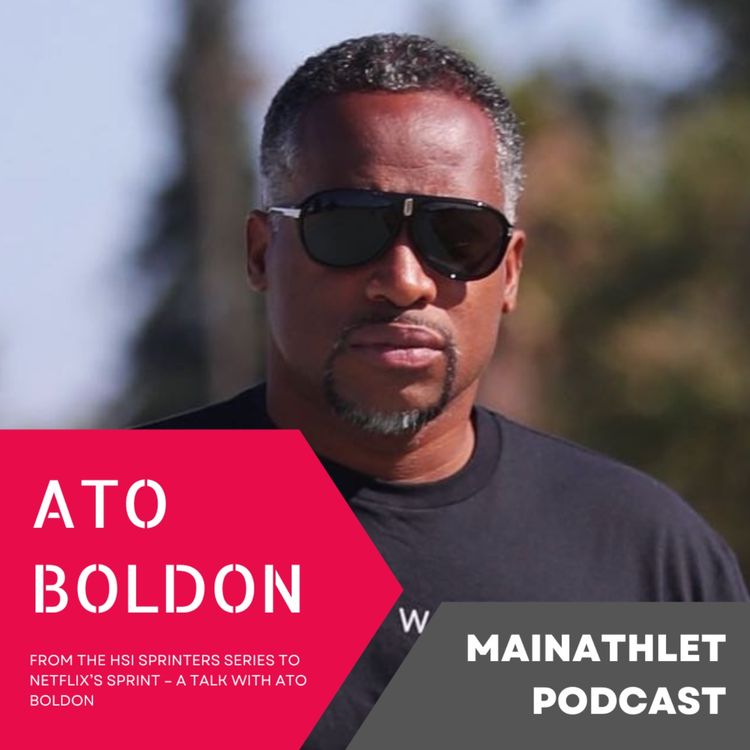
Ato Boldon: Sprint Secrets from HSI to Netflix
From HSI’s legendary sprint group to the Netflix docuseries Sprint, Ato Boldon has seen—and shaped—the sport’s evolution from every angle: Olympic medalist, world champion, and one of track & field’s most influential voices. In this episode, Ato opens up about the training culture that forged champions under coach John Smith, the “iron sharpens iron” reality of daily practice at UCLA, and why starting “late” at 16 may have saved his body and extended his prime.
We go deep on the workouts that built his 100/200m speed: high-quality 150s (5×150m with walk-back recovery, chasing 15-low) and the love-hate 300s (and why he still runs them). Ato breaks down the mental game, too—how to stay focused under Olympic-final pressure, why he wishes he’d “enjoyed the journey” more, and the exact conversation that pulled him through his toughest championship (Sydney 2000).
Ato also takes us behind the scenes of Sprint (Season 2), where he’s become “almost the voice of the series,” and explains why Paris 2024 felt like a historic high point for the sport. We unpack the sprint landscape ahead: why he’s betting on Julien Alfred to dominate the women’s 100m over the next cycle, what Sha’Carri Richardson must fix in her start, why Noah Lyles remains the man to beat in championship 100s, and how Letsile Tebogo and Kishane Thompson change the equation in the 200m and 100m respectively.
Technology matters, but context matters more. Boldon gives a measured take on super-shoes, records, and progress (“every era has its edge”), and shares what truly builds sustainable success: talent ID, the right coach, a real training group, and support systems that let athletes focus on work—not survival. You’ll hear the story that first pulled Ato from soccer to the track (“do you want a sport where you control the outcome?”), plus a Porsche-on-the-Autobahn anecdote from his 19.77 PB in Stuttgart that will make any sprint nerd smile.
Whether you’re a sprinter, coach, or fan, you’ll come away with practical takeaways: how to structure quality speed endurance, how to think about training age vs. biological age, how to use group competition without burning out, and how to balance ambition with joy. This is sprint wisdom from someone who’s lived all sides of it—athlete, analyst, and mentor.
The podcast cover was produced by Tim Peters in collaboration with Cortexfilm.
More episodes
View all episodes
Sprinting at 65 and Chasing an Asian Record
26:14|In this English episode, we sit down with Valery Zhumadilov, one of the most fascinating figures in Masters athleticsright now. Born in Kazakhstan, trained through Estonia, and now helping build the future of Masters track and field in Kazakhstan, Valery shares how he went from road running and fitness training to becoming a competitive Masters sprinter with serious goals in the 100m, 200m, and even high jump.What makes this conversation so interesting is not just Valery’s speed, but his philosophy. At 64, soon entering the M65 category, he is still chasing progress while staying brutally clear about one thing: health comes first. His approach to training is built around long-term performance, not ego. He explains why many older athletes feel strong but still hit limits when they push too hard, and why building a healthy base is the foundation for any sustainable result in Masters sprinting.We also go deep into what his actual training looks like: three running sessions per week focused on speed, technique, and special endurance, plus strength work, plyometrics, coordination, mobility, and foot strength. He also talks about his belief in barefoot training, recovery through routine, and why consistency matters more than random hard sessions.Beyond training, this episode opens a rare window into the development of Masters athletics in Kazakhstan. Valery explains the logistical and financial challenges of organizing competitions in such a massive country, how travel alone can take days, and why building a real system for older athletes matters. He also shares how he helped organize the Masters Athletics Federation in Kazakhstan, multiple championships, and an international tournament in Shymkent.Mentally, Valery’s approach is just as strong. Instead of obsessing over medals or podiums, he focuses on process: waking up, breakfast, warm-up, race rhythm, and staying present. That mindset now fuels his next major goal: chasing an Asian record in the 200 meters.This episode is for anyone interested in Masters athletics, sprint training, healthy aging, track and field performance, sports mindset, longevity, mobility, strength training for older athletes, and international athletics development. It is also a strong reminder that performance does not end with age. In some ways, it only becomes more intentional.Keywords: Valery Zhumadilov, Masters athletics, Masters sprinting, over 60 athlete, sprint training, track and field, 200m, 100m, high jump, Kazakhstan athletics, healthy aging, sports longevity, barefoot training, mobility, plyometrics, mental preparation, Masters championships.
3,500 Athletes. 8 World Records. One City: Torun
19:05|The 15th European Indoor Masters Championships in Torun, Poland – and once again, the city delivered. Over 3,500 athletes from more than 15 countries gathered at one of Europe's fastest indoor tracks for a championship that has become a landmark event on the Masters Athletics calendar. Eight new world records. Nine European records. And a field so large that restaurants, bars and streets overflowed every evening after competition.In this special episode of MainAthlet International, host Jan Boyke Seemann reports directly from Torun – and sits down with Italian multi-event athlete Alessandra de Robertis, competing in the W50 category despite battling a hamstring injury and back problems that had her questioning whether to show up at all.Alessandra shares what it means to compete at the highest international level after years of building toward that first podium finish – her best result so far being fourth at the European Masters Indoor Championships in 2024. She talks about training five to six days a week between the track and the gym, her love for the heptathlon and pentathlon, and why that one international medal feels like the final piece of a long athletic journey.Beyond the personal story, Boyke walks through the medal table, the standout performances and the atmosphere that makes Torun unlike any other Masters venue. Germany leads the medal standings with 210 medals, including 85 gold. Poland follows in second on home soil. Italy punches well above its weight with 50 medals, including 14 gold – from the 60m hurdles to the 400m and the triple jump.Notable performances covered in this episode include Lionel Martinez burning a 6.96 in the 60m sprint, Anita Westlund dominating the 60m hurdles in the W85 category, and Iris Holder setting two new world bests in the long jump and triple jump. German athletes Andy Dittmar and Olaf Schumann added world records in the field events, while Marty Hermann claimed the pentathlon title with a lead of over 400 points.This is Masters Athletics at its best – competitive, international, and full of stories that go far beyond the scoreboard. Whether you're a Masters athlete yourself, a fan of track and field, or simply someone who believes that sport has no expiration date, this episode is for you.Topics covered: Masters European Indoor Championships 2026 · Torun athletics · Alessandra de Robertis interview · W50 pentathlon · Masters world records · Italian athletics team · Germany Masters Athletics · indoor track and field
Double World Champion at 47: Zoe Doyle on Accident, Near-Death and the Road to World Class
35:07|Zoe Doyle is 47 years old, runs the 800m in 2:14, and is a double World Champion (WMA Gainesville) – but her path there is anything but ordinary.At 35, she was hit by a car during a 10K race. The doctor said: it was a miracle she survived. Instead of stopping, she joined Belgrave Harriers – and began a career that now includes British records.Then came an autoimmune hepatitis that nearly cost her life. Seven stress fractures. A COVID vaccine reaction. And yet: a British record in Pescara.In this episode, Zoe speaks openly about:- Why she only started running seriously at 35- What's behind her three mantras: "Faith over Fear", "Joy in the driving seat" and "Never give up"- How 7 stress fractures turned her into a life coach- The difference between being 17 and 47 – and why she feels stronger today than ever before- What makes Masters Athletics such a powerful longevity model- Insider tips for the WMA World Championships in DaeguZoe now works as a life coach helping athletes avoid burnout, protect their nervous system and recognise their own worth – well beyond athletic performance.An episode for everyone who wants to know: what holds us back from giving our best – and what doesn't?🎙️ MainAthlet – The Athletics PodcastSubscribe, share & leave a review.More at: https://www.mainathlet.de/podcast/international/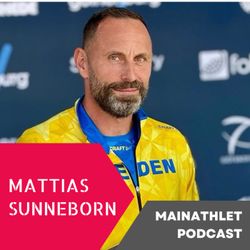
Olympic Finalist at 25. World Record Holder at 50. - Mattias Sunneborn
23:24|What does it take to build a career that peaks at 8.21 metres, lands you in an Olympic final alongside Carl Lewis — and then, two decades later, leads to Masters world records? In this episode of the MainAthlet Podcast, host Boyke sits down with Swedish long jump legend Mattias Sunneborn for a wide-ranging, candid conversation about elite athletics, the realities of ageing as a high-performance athlete, and the mental frameworks that have driven him from a small island in the Baltic Sea all the way to the Olympic final in Atlanta.Mattias grew up on the island of Gotland in Sweden — a place with no indoor track, limited resources, and tough winters. At fifteen, he made a defining choice: football or athletics. He chose the track. That decision led him to a boarding school in Bäckebo with an indoor arena, a great coach, and lifelong training partners — though the journey began under deeply painful circumstances, with his father passing away just one week before he moved.In this episode, Mattias opens up about the moments that defined his elite career: his first jump over eight metres, the 1995 World Indoor silver medal, the 1996 European Indoor Championship gold won at home in Stockholm — he admits he cried — and the 8.21m jump in Malmö where he beat world record holder Mike Powell. Then, just weeks later, standing in the Olympic final in Atlanta alongside Carl Lewis, Ivan Pedroso, and James Beckford — seven of the ten best long jumpers in history.But the conversation doesn't stop at the glory years. Mattias shares the full arc of a life in athletics: how he transitioned into Masters competition at thirty-five, why competing in multiple events (decathlon, 400m hurdles, triple jump) keeps him motivated, and how he coaches a group of over forty Masters athletes together with his training partner Peter Wallin. Their Sunday Zoom sessions cover training loads, sleep, nutrition, and mental strategies — everything it takes to keep performing at the highest level, regardless of age.You'll also hear about the importance of rest and VO2 max for older athletes, the value of low-volume, high-intensity training (maximum five reps in the weight room), and Mattias's genuine enthusiasm for neuro-athletic training methods — using visual tools to activate muscles that most athletes don't even know they have.Whether you're an elite track and field athlete, a Masters competitor, a coach, or simply someone who believes that sport is a lifelong journey — this episode is packed with insight, honesty, and inspiration. Mattias Sunneborn proves that the drive to compete, to improve, and to find meaning through athletics doesn't have an expiry date.
Inside World Masters Athletics: The Sport That Feels Like Family - WMA President Margit Jungmann
35:32|What keeps people in track & field for a lifetime — not just for a season?In this episode of the MainAthlet International – Masters Special, host Boyke sits down with Margit Jungmann, President of World Masters Athletics (WMA), for an inside look at what makes Masters Track & Field so unique — and why it’s growing into a truly global movement. Margit shares her own journey from sprinter and heptathlete to international leader, and explains why she never stopped training even when she stepped away from competing. For her, the shift was simple: training became about health, consistency, and community, while her competitive energy moved into building structures that help thousands of Masters athletes thrive.You’ll hear how Margit approached her early years as German team manager with one big mission: turning a collection of individuals into a real team — because representing your club, region, or country changes everything. She also explains the hidden leadership work behind Masters championships: creating clear guidelines, improving consistency from event to event, and balancing decisions that may be inconvenient for one athlete but necessary for the good of the entire field.A major highlight: Margit breaks down the biggest global challenges for Masters athletics — especially travel distances, accessibility, and equal opportunity across continents. What’s “close” in Europe can be a multi-stop journey elsewhere, and that reality affects participation more than most people realize. She also opens up about one of the toughest strategic topics inside WMA: finding host cities and bidders for World Championships in a changing financial landscape — and why Masters events create serious economic impact for host regions through tourism, families, and extended travel.Finally, Margit gets personal: her best experiences aren’t medals or titles — they’re friendships, trust, and the volunteer spirit that keeps Masters athletics running worldwide. The conversation ends with her three wishes for the sport… and for the world.Keywords: Masters athletics, Masters track and field, World Masters Athletics (WMA), veteran athletics, track & field community, team management, championship hosting, global sport, athletics leadership, lifelong training, healthy aging, competitive sport after 35/40/50.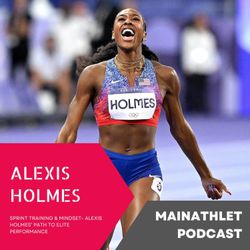
Sprint Training & Mindset- Alexis Holmes’ Path to Elite Performance
26:40|In this exciting podcast episode, we welcome Alexis Holmes, the inspiring American professional athlete who transformed from a talented college runner into an Olympic gold medalist within just two years. Alexis shares her incredible journey, offering exclusive insights into her successful transition from collegiate athletics to the professional stage.The episode provides a deep dive into the specific challenges and changes Alexis faced, including significant adjustments in training routines, dietary practices, and mindset. Particularly noteworthy is her remarkable transformation in body composition, resulting in a 30-pound weight loss to compete effectively at the professional level. Alexis discusses her nutritional strategy, highlighting her controlled calorie deficit and high-protein diet.Regarding her training, Alexis reveals her preferred workouts, such as tempo 200s and race-model training, as well as her strategies for injury prevention and optimal recovery. Her mental routines and stress management techniques, especially during major events like the 2024 Olympics and the 2023 World Championships, offer valuable insights for athletes of all levels.Additionally, Alexis shares personal advice, emphasizing the crucial lesson of trusting herself and ignoring external doubts. This episode is essential listening for anyone interested in understanding how elite athletes train, nourish, and mentally prepare themselves for peak performance.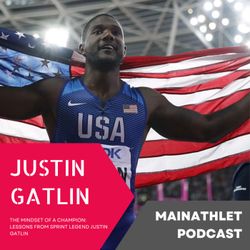
Mindset, Habits, Speed: Justin Gatlin Unfiltered
39:25|Exclusive: Justin Gatlin on Mindset, Speed & the 2017 London FinalWhat does it take to deliver the race of your life when a stadium is against you? In this in-depth conversation, Olympic champion and World 100m gold medalist Justin Gatlin opens up about the 2017 World Championships final in London, how he handled the “mental warfare” of deafening boos, and why believing in the plan—and in yourself—is non-negotiable at the highest level.We dive into mindset, habits, and the training details that kept Justin elite for two decades. You’ll hear how he rebuilt his approach to target the last 20 meters—switching from a start-dominant pattern to top-end speed work (think 120s, overspeed, patience under fatigue) that ultimately flipped the script. Justin shares the cues and structure behind his acceleration and max-velocity phases, why “discipline lies in the mind”, and the small rules he followed (no bending over between reps, nasal breathing, staying tall) to stack winning days.On the strength & power side, Justin breaks down the weight room: sled pulls, progressive overload, heavy squats, bench PR cycles—and how he used them to dominate the first 50–60m. He highlights the triple-extension chain (calves–quads–glutes), explains why quads matter so much for early acceleration, and makes a case most athletes overlook: the shoulder caps and arm cadence are your real “motor” for sprint speed. For common technical issues (e.g., ankle stiffness, early knee extension), he offers practical fixes—from barefoot grass work to single-leg cable patterns—plus the cadence and posture themes that keep mechanics clean.We also zoom out to the bigger picture: Justin shares fresh anecdotes—from a planned Spartan Race with Asafa Powell to how rivalries and friendships shape the athlete journey—and reflects on career highs (Athens 2004) and hard lessons (Beijing 2015).Who it’s for: sprinters, coaches, speed enthusiasts, and any athlete who wants actionable insights on sprint training, acceleration, top-end speed, strength & conditioning, recovery habits, and competitive mindset.
MainAthlet International — The Track & Field Podcast (Trailer)
00:28|MainAthlet International – The Track & Field Podcast is the English edition of MainAthlet. Hosts Benjamin Brömme and Linn Kleine talk to world-class athletes, coaches and legends about training, recovery, nutrition, mindset, biomechanics and race preparation—from sprints to distance, jumps, throws and combined events.Past guests include Ato Boldon, Justin Gatlin, Alexis Holmes and Maruša Mišmaš Zrimšek. Expect actionable insights you can use in your own training, plus context on the Olympics, World Championships, Diamond League and national highlights.Subscribe now and leave a rating in Apple Podcasts—this helps more track & field fans discover the show. New English episodes drop regularly. Welcome to MainAthlet International: more performance, more understanding, more track & field.