Share

Maiden Mother Matriarch with Louise Perry
DEBATE: Is it wrong to handpick your baby's genes?
MMM is sponsored by 321 - a new online introduction to Christianity, presented by former MMM guest Glen Scrivener. Check it out for free at 321course.com/MMM. Just enter your email, choose a password and you’re in — there’s no spam and no fees.
Give the gift of everyday luxury and make every moment comfortable. Head to cozyearth.com and use my code COZYMMM for 20% off sitewide. And if you get a Post-Purchase Survey, be sure to mention you heard about Cozy Earth at the Maiden Mother Matriarch podcast.
Testing a foetus or an embryo for some medical conditions is now a routine part of the modern pregnancy experience. Prenatal Down’s Syndrome tests, for instance, are now so widespread that in some Scandinavian countries almost 100 per cent of women choose to abort a foetus diagnosed with the condition, or – if using IVF – not implant the affected embryo. The result is a visible change to these populations: there are simply no more people with Down’s to be seen on the streets of Iceland and Denmark.
New technology is now available – at a high price – for those who want to go further. So-called polygenic embryo screening can give a very full picture of the adult that the embryo could become, including his or her vulnerability to an enormous number of diseases – heart disease, diabetes, cancer – and also the physical and psychological traits that he or she would likely possess: height, hair colour, athletic ability, conscientiousness, altruism, intelligence.
Is this a good thing? Should we welcome a world in which parents are routinely selecting their embryos in this way?
I'm joined today by two guests who take a very different view.
Emma Waters is a policy analyst at the Center for Technology and the Human Person at the Heritage Foundation. Her work focuses on family, biotechnology, and reproductive medicine.
Jonathan Anomaly is a philosopher, author of the book 'Creating Future People: The Science and Ethics of Genetic Enhancement', and is also the director of scientific research and communication for Herasight, a genetics startup that offers polygenic embryo screening.
More episodes
View all episodes
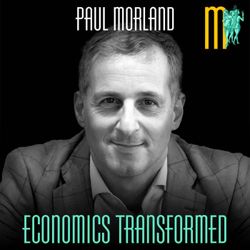
Economics transformed | Maiden Mother Matriarch 218
01:15:06|As the political economist Nicholas Eberstadt once put it, “a shrinking, aging world is something that we're intuitively, almost completely unprepared to encounter, because all of our experience, in ways that we don't even think about, has been framed by a growing world population.”Nowhere is this more true than in the discipline of economics. The great well of economic theory that we are familiar with was all written during times of population growth. We are about to enter uncharted territory, and my guest today argues that demography is now the most fundamental force shaping our economic future.The demographer Paul Morland is a former Associate Research Fellow at Birkbeck, University of London, and a Senior Member at St Antony's College, Oxford. His previous books include 'The Human Tide' and 'No One Left.' He is the co-author, with Philip Pilkington, of a new book titled 'Bust: The Economics of Population Decline', which argues that depopulation triggered by low birth rates is already transforming our economies, not only in the developed world, but everywhere.
The nature of Englishness | Maiden Mother Matriarch 217
01:08:56|This interview was actually recorded before Suella Braverman's most recent Question Time appearance, which sparked a public row over the question of English identity and ethnicity. As it happens, that was one of the topics we covered in our conversation, which is themed around Suella's new memoir, an account of her family's experiences of the British Empire, and her vision for modern Britain. Suella Braverman is a politician, barrister, and former Attorney General and Home Secretary. Earlier this year, she defected from the Conservative Party to Reform UK, and now serves as their spokesperson for education, skills, and equality. Suella's new book is titled 'Patriot: Empire, Betrayal, and Hope.'
The state-mandated girlfriend
14:50|In this bonus episode for paid subscribers, Rob Henderson and I discussed the new matchmaking scheme from the Singaporean government, which seems to be intended to boost the country's birth rate.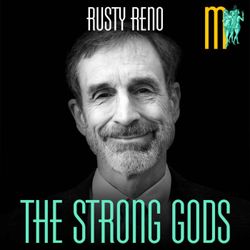
The Strong Gods | Maiden Mother Matriarch 216
48:40|In 2019, Rusty Reno – editor of First Things magazine – published ‘Return of the Strong Gods’, a book that argued that the postwar ideological order of tolerance and openness had overreached, and that we were set to see the reemergence of “strong gods” in politics—that is, the powerful loyalties that bind people to their homelands and to one another.Today, Rusty and I return to this thesis seven years on. Populism is certainly ascendent, and not only in the United States. Should we be worried about the pendulum swinging too far in the other direction? Or should the “strong gods” be welcomed?
Can you be a right-wing feminist?
12:52|For this bonus episode Meghan Murphy and I discussed the recent Women’s Convention in Rochester, NY, which we both spoke at. This was a gathering of sex realist feminists, with a lot of mothers and Christian women in attendance. Meghan and I spoke about the historic relationship between Leftism and feminism, and wondered whether we're seeing a decoupling of women's advocacy from the Left-Right binary.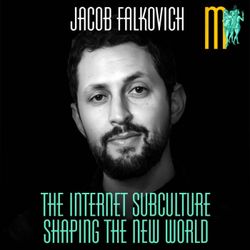
The internet subculture shaping the new world | Maiden Mother Matriarch 215
01:06:33|Just in the last few weeks, the issue of AI safety has suddenly broken into the political mainstream. What was once a fairly niche debate within the worlds of tech and philosophy is now on the front pages. And the question of AI is, predictably enough, quickly turning into a partisan issue, with the President opposing heavy federal guardrails, and the Democrats calling for aggressive regulation. Today's episode is about the subculture from which the AI safety movement emerged. Rationalism – which is tightly entwined with Effective Altruism – is an intellectual movement popular among millennials working in tech. My guest today is the writer and tech worker Jacob Falkovich, who describes himself as a post-rationalist. As you'll hear, it's pretty hard to find someone who actually calls themselves a 'rationalist' (that's the nature of the subculture), but Jacob is willing to make an earnest defence of rationalism, and of Effective Altruism, and of the AI safety movement. These are interesting and – I think – very influential subcultures. If we want to understand the AI safety movement, then we need to understand rationalism.MMM is sponsored by 321 - a new online introduction to Christianity, presented by former MMM guest Glen Scrivener. Check it out for free at 321course.com/MMM. Just enter your email, choose a password and you’re in — there’s no spam and no fees.
The chronic illness generation
19:10|In this bonus episode for paid subscribers, I spoke with The Telegraph’s Poppy Coburn about a piece she wrote recently on the rise of chronic illness among young women, and the role of the internet in this worrying phenomenon.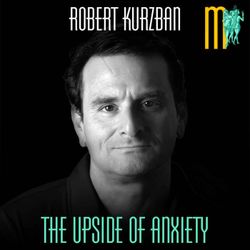
The upside of anxiety | Maiden Mother Matriarch 214
54:42|A life without pain sounds wonderful. It would also be fatal. Pain feels bad because it has a job: measuring damage to your body and motivating you to protect it. Every other feeling has a job too, built by natural selection. Hunger measures your need for calories and motivates you to eat. Envy measures others’ success and motivates you to close the gap. Frustration measures the futility of your current approach and motivates you to try a new one.In 'All the Feels', evolutionary psychologist Robert Kurzban explains the evolved function of our emotions and sensations, from anger to the urge to yawn. In today's episode we speak in particular about negative and unpleasant emotions, particularly anxiety and depression. Are they doing something useful for us? Or is evolutionary mismatch causing us to feel worse than we need to? Rob Kurzban is an evolutionary psychologist who was a professor of psychology at the University of Pennsylvania for over a decade. His new book is titled 'All the Feels: The Evolved Function of Every Human Emotion and Sensation.'
What would it take to stop the boats?
20:14|In this bonus episode for paid subscribers, I spoke with Ed West about the nativist protests in Dover and Portsmouth, and how the British government might respond. Will there be moves to ban face coverings and crack down on protest movements? Or will the government give way to the Right, and put an end to the asylum crisis?