Share
Longevity Dialogues
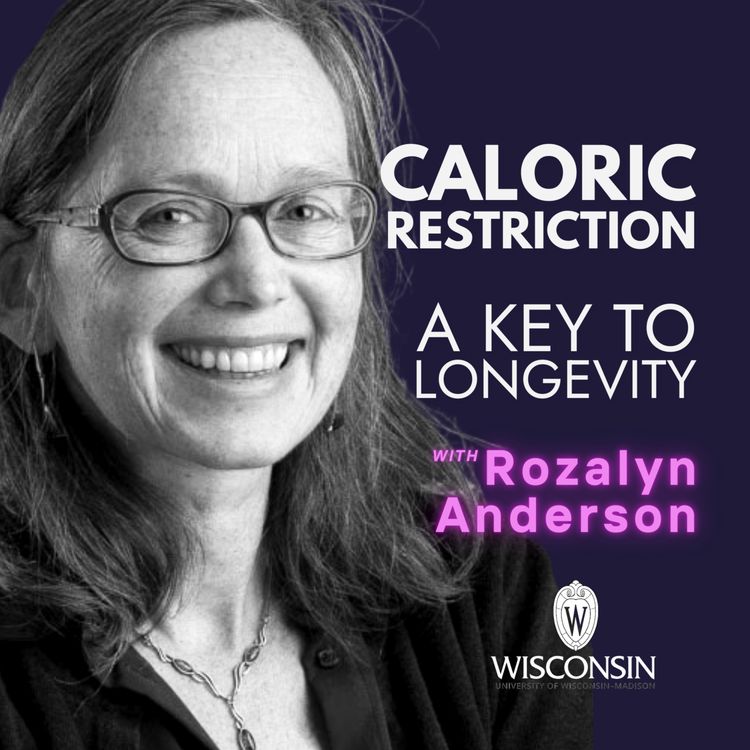
Caloric Restriction: A Key to Longevity with Rozalyn Anderson
In this conversation, Rozalyn Anderson and Martin explore the complexities of aging, the impact of caloric restriction on longevity, and the scientific journey that led Rozalyn to her current research. They discuss the intersection of aging and disease, the role of adipose tissue, and the importance of understanding aging in the context of health and disease. The conversation highlights the significance of caloric restriction studies in both animal models and humans, emphasizing the need for a deeper understanding of the aging process. In this conversation, Rozalyn Anderson discusses the implications of caloric restriction studies, the role of GLP-1 in metabolic health, and the challenges of aging in the context of obesity. She highlights the significance of senescent cells in aging and the potential of stem cell therapies. The discussion also touches on the need for more geriatricians and the importance of investing in aging research and healthcare to improve outcomes for older adults.
Stay tuned for updates from
Longevity Summit Dublin | July 2-4 | Trinity College Dublin
Takeaways from this episode
- Aging is often perceived negatively, but it brings wisdom and experience.
- Caloric restriction can delay aging and improve survival rates.
- The study of yeast has provided significant insights into aging.
- Geroscience aims to understand the relationship between aging and diseases.
- Aging is a gradual decline in bodily systems.
- Inflammation increases with age, affecting health responses.
- Adipose tissue plays a crucial role in overall health.
- Research in monkeys can provide parallels to human aging.
- Caloric restriction has been shown to have non-permissive effects on tumor growth.
- Understanding aging can lead to better treatments for age-related diseases.
- Caloric restriction studies show promise but face compliance challenges.
- The biology of aging is complex and requires extensive research.
- GLP-1 has fascinating implications for metabolic health.
- Obesity complicates aging but is not the sole issue.
- Senescent cells contribute to inflammation and aging.
- Investing in geriatric care is crucial for an aging population.
- Longitudinal studies provide better insights into aging.
- Stem cell therapies hold potential for rejuvenating tissues.
- Aging research needs more focus on practical applications.
- Collaboration in aging research can lead to significant advancements.
More episodes
View all episodes
5. Immune-Priviliged Cells Scaled for Treatments with Yuta Lee
32:26||Season 1, Ep. 5The Future of Stem Cell TherapyIn this conversation, Yuta Lee shares his journey from economics and law to the forefront of stem cell therapy and longevity research. He discusses the potential of stem cells and gene therapy in curing diseases and extending healthspan. Yuta explains the significance of exosomes in cell communication and their role in rejuvenating aging cells. He emphasizes the importance of immune privilege in stem cell therapies and the need for regulatory changes to support preventive healthcare. The conversation highlights the collaborative spirit in the longevity field and the vision for democratizing access to advanced therapies.
4. The Science Behind Longevity with Brian Kennedy
31:09||Season 1, Ep. 4Dr. Brian Kennedy, Professor at the National University of Singapore and global expert in aging research, shares key insights from decades at the forefront of longevity science.In this episode, we explore:Why aging is a complex biological network, not a single conditionThe role of the sirtuin pathway in regulating healthspanHow stem cell and reprogramming science is reshaping what’s possibleWhy global funding for aging research remains insufficientHow Singapore is positioning itself as a longevity research leaderKennedy also reflects on the personal experiences that shaped his path from early gene therapy inspiration to leading major aging research centers.This conversation challenges how we think about aging, health, and the science that could change both.Follow us for more insights from leaders in longevity science.
3. Kennedy Schaal on 7-Month Fruit Flies, AI, and the Future of Longevity Science
40:16||Season 1, Ep. 3Can fruit flies teach us how to extend human life?Kennedy Schaal, CEO of Rejuve.Bio, explains how her team bred flies to live 7 months and what it means for aging research.In this episode: – The Methuselah fruit fly experiment: world’s longest-running evolutionary biology project – What Yamanaka factors and genetic signatures reveal about aging– How AI and genomics are accelerating discovery – Real-world applications: Alzheimer’s research and preventive health – Why Kennedy is advocating for young scientists and open collaborationPlus: her early fascination with aging, working with Ben Goertzel and SingularityNet, and what comes next for reversing age-related decline.🎧Follow for more conversations with the people shaping the future of healthspan.
1. Changing Perceptions of Aging with Michael Ringel
36:42||Season 1, Ep. 1In this premier episode of Longevity Dialogues, Martin O'Dea interviews Michael Ringel, Chief Operating Officer of Life Biosciences, discussing the evolution of aging research, the potential of epigenetic reprogramming, and the moral and economic arguments for investing in aging research. They explore the challenges of public perception, the importance of awareness, and the future of aging science, emphasizing the need for a collective effort to improve health span and longevity.