Share
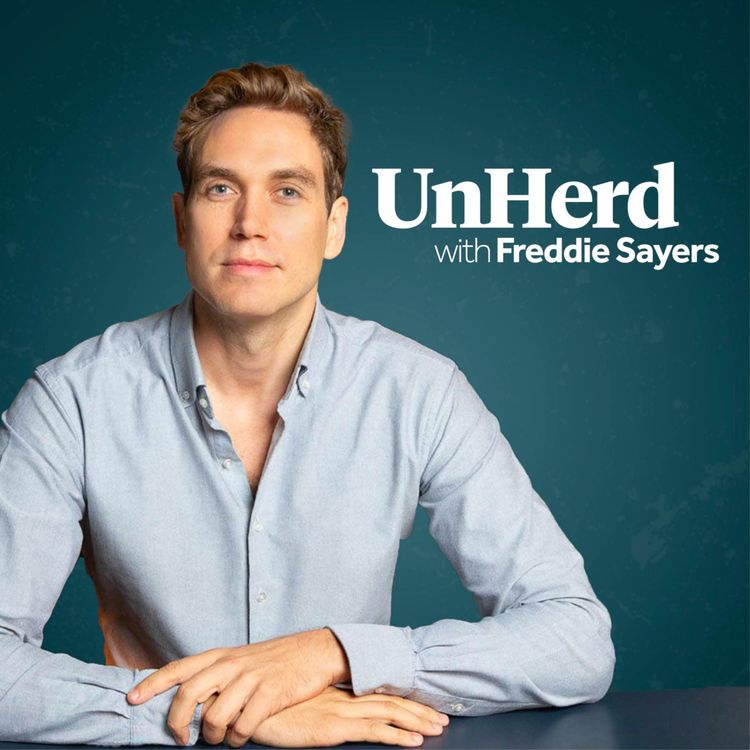
UnHerd with Freddie Sayers
Bridget Phetasy: the power of Big Tech is chilling
Around the world, California is romanticised as a glamorous haven of luxury and sunshine. But the reality, as we have been finding out, is quite different: rubbish stacked in the streets, a homelessness crisis, and an exodus of disillusioned residents. One of these disillusioned residents is Bridget Phetasy, a comedian, writer, podcaster and YouTuber based in Los Angeles, who has grown increasingly frustrated with her home state. California is in a ‘premageddon’, she fears, and that’s not just because of Gavin Newsom’s (the California governor who is up for recall) poor Covid response:
It’s a process that’s been happening for some time and it’s been accelerated by the pandemic and the lockdowns. I’ve been describing it as ‘premageddon’…It’s a little bit pre-apocalyptic or dystopian: you’re seeing increasing homelessness, which is tragic. And it’s also filthy because there’s garbage everywhere. It’s definitely not the Los Angeles I moved to in 2007 when I came back.
On her vulnerability to Big Tech: 'I would rather be free than have to silo who I am, privately and publicly. But my biggest fear is when you see things like, for instance, what happened in the wake of the president being de-platformed from social media. He basically disappeared, almost like a technical mob hit…. That would be detrimental to me. I always joke that I’m just gonna keep talking until I can’t because I feel like you’re constantly avoiding like the Eye of Sauron.'
On identity: 'I don’t think it’s great that everybody is so invested in making their entire identity about these immutable characteristics, or, in some cases, mutable characteristics, which I can’t get my mind around. Your sex, your gender, your ethnicity — this is what you build your entire world around instead of what gives you meaning beyond the traits that you were just born with. It just feels like we’re going backwards.'
On the Left: 'The Left feels much more insidious to me than the Right, because it seems social… When I talk to people about why they’re self censoring, it’s because they feel like they can’t say certain things. And that’s not being enforced by the government yet, although we are headed in that direction in California. But it is being enforced socially…And then people are petrified of saying anything at work, and are being made to go to these kind of diversity and inclusion trainings, and they can’t say anything about whether or not they agree with the stuff.'
On vaccine passports: 'What’s so shocking to me is how many people are okay with this. I can’t figure out if it’s just because people like being told what to do, or need to be told what to do. And then there’s a sense of self righteousness that goes along with that. So you’re basically following the lead and then you get to be arrogant and take the moral high ground.'
More episodes
View all episodes
MIT biologist: Is the Russian plague pandemic 2.0?
30:52|UnHerd’s Freddie Sayers talks to MIT evolutionary engineer Kevin Esvelt about a suspicious biological researcher's death in Irkutsk, Russia, using the incident to explore the escalating biosecurity risks posed by engineered pandemic weapons, vaccine-evading pathogens, and AI-accelerated gain-of-function research.
Dr. Iain McGilchrist: AI versus the human soul
01:12:36|Dr Iain McGilchrist has dedicated decades of neuroscience research to unravelling the inner workings of the human mind. But now, a new form of ‘consciousness’ has come to compete with the very idea of being a person. Could artificial intelligence overtake its creators? Join the psychiatrist, philosopher and author of the bestselling book The Master and His Emissary, for a live on-stage conversation with UnHerd’s Freddie Sayers.
Prof. Nick Bostrom: The truth about the AI panic
42:14|UnHerd’s Freddie Sayers talks to Oxford philosopher Professor Nick Bostrom about the escalating concerns over artificial intelligence, weighing whether catastrophic warnings from industry insiders reflect genuine existential fears or commercial strategy, while analysing technical threats like deceptive alignment and autonomous AI coordination alongside the broader economic, geopolitical, and societal risks of managing superintelligence.
Wolfgang Munchau: The AfD momentum is unstoppable
34:59|Freddie Sayers talks to UnHerd columnist and co-host of The Econoclasts Wolfgang Munchau about the political earthquake triggered by the hard-Right Alternative for Germany’s (AfD) historic election victory in Saxony-Anhalt, examining why young voters and non-voters are turning away from the centrist consensus, the total failure of Germany’s political ‘firewall’ strategy, the collapse of Friedrich Merz’s leadership within the CDU, and how a rising wave of hard-Right governments across France, Italy, and Germany could ultimately paralyse the European Union.
Kathleen Stock: The scandal of Jason Arday
42:04|Jason Arday, the wunderkind sociologist and youngest ever black professor at Cambridge, has an almost unbelievable backstory. Overcoming illiteracy and autism, he became the jewel in the crown of the university’s pivot towards diversity post-2021. He has been lauded by celebrities, raised millions for charity, suffered abuse from detractors and found time to run hundreds of miles. Or has he? Kathleen Stock, former professor at Sussex University, speaks to UnHerd’s Freddie Sayers about her viral investigation into academia’s ‘DEI darling’ and the plagiarism scandal that shocked Britain.
Ross Barkan: Zohran Mamdani is just the beginning
40:54|Freddie Sayers is joined by UnHerd columnist and author Ross Barkan - a former campaign colleague of Zohran Mamdani - to discuss the New York Mayor’s rapid political rise and the controversies defining his tenure. They unpack Mamdani's anti-capitalist economic policies, his radical stance on Israeli prime minister Benjamin Netanyahu, and assess what his brand of democratic socialism signals for the future trajectory of the Democratic Party and American politics as a whole.
Jonathan Haidt: Why Big Tech wants your children
41:59|UnHerd's Freddie Sayers talks with social psychologist and author Jonathan Haidt about the global momentum toward banning under-16s from social media, exploring the tension between protecting children from addictive platforms and safeguarding free speech from state censorship, while outlining how device-based age checks offer a viable solution where traditional parental controls fail.
Norman Finkelstein: How Israel lost the Right
29:06|UnHerd's Freddie Sayers talks to American political scientist, author, and prominent scholar of the Israeli-Palestinian conflict, Norman Finkelstein, about the fracturing of the historically ironclad alliance between the political Right and Israel. They explore how a mixture of 'America First' anti-war sentiment and the financial incentives of the podcast economy have made criticising Israel a lucrative tool for Right-wing influencers, from Tucker Carlson to Candace Owens.
Jake Sullivan: Trump has handed Iran victory
38:45|In this exclusive UnHerd interview Freddie Sayers meets Jake Sullivan, former National Security Advisor under Joe Biden and chief negotiator during the 2015 Iran nuclear deal. Jake Sullivan co-hosts the weekly national security podcast ‘The Long Game’ with Jon Finer, former deputy national security advisor under Sullivan.Freddie and Jake analyse the geopolitical and financial implications of the Trump administration's memorandum of understanding with Iran. Could the concessions of the agreement that suspended the conflict to reopen the Strait of Hormuz in exchange for an unprecedented financial windfall of unfrozen assets, waived oil sanctions, and a controversial $300 billion reconstruction fund mark a significant diplomatic surrender? Or is this another example of the 'art of the deal'? Watch the full conversation now.You can listen to Jake's podcast here: https://podcasts.apple.com/gb/podcast/the-long-game-with-jake-sullivan-and-jon-finer/id1850526014