Share
LitReading - Short Stories and Timeless Tales
Listen to Season's Reading — Great Stories for the Holiday Season
•
A few Christmas stories will wander through Litreading over the coming weeks. They won’t stay long.
The whole season lives on Season’s Readings: A Christmas Carol in three parts, classic holiday tales you’ve likely never heard, every new story Don McDonald wrote this fall. Some will warm you. A couple may catch you in the throat.
Search Season’s Readings wherever you listen, tap follow. It takes two seconds. Litreading will be right here when you get back.
If you enjoyed this story, buy me an e-book!
https://www.buymeacoffee.com/donmcdonald
or take a no cost path: Follow the podcast so you never miss one
and if you enjoyed this story, a five-star rating or review helps others find us.
Think of it as applause without waking anyone.
More episodes
View all episodes

Dusk by Saki — How to Determine the Truth
12:40|Hyde Park, half past six on a March evening. Norman Gortsby has taken a bench in the failing light to watch the down-and-out drift past, and to congratulate himself on seeing through every one of them. Then a well-dressed young man sits down beside him with a problem, a perfectly reasonable explanation, and twopence in his pocket.Saki needed about eleven minutes to tell one of the slyest short stories in English. First collected in 1914.A story from our archives recently remastered.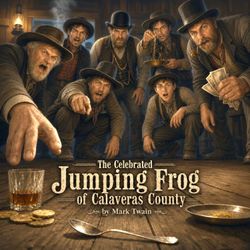
The Celebrated Jumping Frog of Calaveras County by Mark Twain — A Sure Bet Takes an Unexpected Leap
15:20|An errand, a name, a question. That's all it takes.Sent east to west on a friend's behalf, a traveler walks into a decayed mining camp in Calaveras County and asks one polite question of one agreeable old man. He is then backed into a corner, blockaded there with a chair, and told at enormous length about Jim Smiley, a gambler who would bet on a horse race, a dog fight, a camp meeting, or two birds on a fence, and who once spent three solid months in his back yard teaching a frog to jump.The frog's name was Dan'l Webster. He was, by every account, the finest jumper in the county.Then a stranger came through camp.Mark Twain published this in the fall of 1865 and woke up famous. Sixty years of American humor start here, on a barroom floor, with forty dollars on the line.Mark Twain was the pen name of Samuel Langhorne Clemens, born in Missouri in 1835. Printer's devil, riverboat pilot, and, briefly and disastrously, a silver prospector. He went west in 1861 chasing a fortune he never found, and came back with something better, which was a way of hearing how Americans actually talked.He heard this story in a tavern in Angels Camp in the winter of 1865, wrote it down, and watched it run in a New York paper that November. It was reprinted everywhere, pirated almost as fast, and read aloud in parlors and barrooms coast to coast. He was thirty and unknown that fall. By spring he was Mark Twain. Tom Sawyer was still eleven years away.This is a episode from our archives recently remastered.
The Clerk by Don McDonald — A Quiet Man, the Biggest Job
17:37|You have stood behind him in line, and you couldn’t describe him now. He lives alone, eats the same lunch on the same stool, rides the same bus home, and has never once broken the rules of the peculiar office where he works. Then a pink slip of paper crosses his desk with a name on it.An original story, written and read by Don McDonald.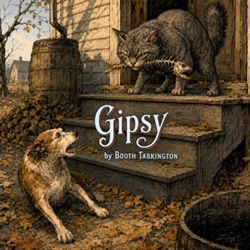
Gipsy by Booth Tarkington — One Free Spirit Upends a Respectable Household
14:09|Duke is a little old dog with a pessimistic worldview and a well-earned suspicion that life rarely improves. Gipsy is a rangy, scarred, yellow-eyed stray cat who lives by his own code and has never met a creature he could not intimidate. When Gipsy helps himself to a fishbone resting near Duke's sleeping nose, the afternoon explodes into a comic war of nerves, claws, and theatrical yelping that draws every boy in the neighborhood running to witness the spectacle.Booth Tarkington, one of only three writers to win two Pulitzer Prizes for Fiction, brings his gift for sharp character comedy to this brief, savage encounter between two animals who understand each other perfectly. The battle is brief, the casualties are mostly to dignity, and the ending involves a cistern, a miscalculation, and one of the most memorable splashes in American humor.This is a episode from our archives recently remastered.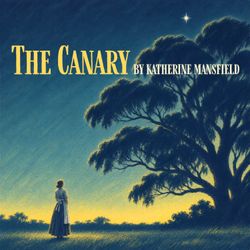
The Canary by Katherine Mansfield — A Small Bird, a Great Love
10:23|here is a big nail to the right of her front door, and she cannot bring herself to take it out.A woman who keeps a small house and cooks for three young lodgers sits on her veranda with her sewing, talking to a visitor about the best company she ever had. He was neat. He was vain about his bath. He sang whole songs, with a beginning and an end to them, and strangers stopped at the gate to listen.Katherine Mansfield wrote “The Canary” in the summer of 1922. It was the last story she finished, and it takes about twelve minutes to hear. It may take a good deal longer to shake.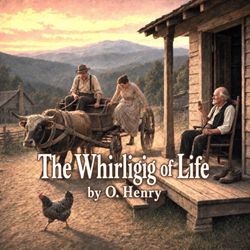
The Whirligig of Life by O. Henry — A Divorcing Couple Discovers They Cannot Stay Apart
14:21|Ransie and Ariela Bilbro come down out of the Cumberland Mountains to have their marriage undone. Justice of the Peace Benaja Widdup can find no law on the subject, so he invents one, and prices it at five dollars, which happens to be every cent Ransie made on his furs. Then Ariela wants alimony. What follows is a night ride, a masked man, a bill rolled tight and pushed down a rifle barrel, and a decree that nobody much wants by morning. O. Henry watches a single five-dollar bill travel in a perfect circle, and two stubborn people get carried around with it. A love story for anyone who ever meant it when they said they were leaving.This is a episode from our archives recently remastered.
A Chance of Death by Don McDonald — Can a Storm Bring the Calm She Never Thought She’d Find?
26:47|Please note: "A Chance of Death" is the inaugural episode of my new podcast, New Tales Told. I published it here first to share it with my large Litreading audience. However, it will eventually only be available on New Tales Told. If you haven't yet done so, please search for New Tales Told on this podcast service or visit shortstoryverses.com to listen to this and my other original stories.Publishing this story has been one of the scarier things I’ve done in my life. Reading the works of others is far different than narrating a creation of my own. Honestly, I haven’t written fiction since high school—but I’ve always wanted to. I hope to share more, depending on how this one lands.While this story is purely fictional, it unfolds in the shadow of a real disaster—one that affected communities close to my own family in Asheville, where my mother, sister, and niece live. I want to express my sincere concern and empathy for those who were impacted. That said, this is not a story about the tragedy itself. It’s a tale of personal escape, buried secrets, and a woman who may have used chaos as cover for something darker—or perhaps something justified. The events are imagined, but the setting was chosen for its emotional weight, and I’ve tried to treat that weight with care.If you'd like to share your thoughts or get periodic updates, please visit Litreading.com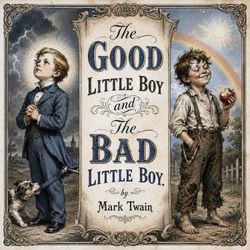
The Good and the Bad Little Boy by Mark Twain — Virtue Is Punished and Mischief Rewarded
18:19|Mark Twain had a bone to pick with the Sunday-school storybook — that pious little genre where good children are showered with rewards and bad children are struck by lightning, broken by apple trees, and buried under weeping relatives by the final page. So he wrote two stories to set the record straight.In this paired episode we run both, back-to-back, framed like an old-time radio hour. First, The Story of the Good Little Boy: meet Jacob Blivens, who obeys his parents, learns his book, never plays hooky, and longs above all else to be printed in a Sunday-school book of his own — funeral illustration and all. There is only one small problem. The world has not read the same books Jacob has, and it declines, spectacularly, to cooperate.Then, in counterpoint, The Story of the Bad Little Boy: meet Jim — not "James," though the books would prefer it — who steals the jam, robs the orchard, frames the good boy, boats on Sunday without drowning, and grows up to prosper by every kind of rascality. His luck, like Jacob's misfortune, never quite runs out.Twain's targets are sentimentality, easy moralizing, and the comfortable lie that the universe keeps a fair ledger. Told with a wink and a warm lamp, this is satire that still lands a century and a half on. Be good if it suits you. Be careful regardless.This is a episode from our archives recently remastered.