Share
LitReading - Classic Short Stories and Timeless Tales
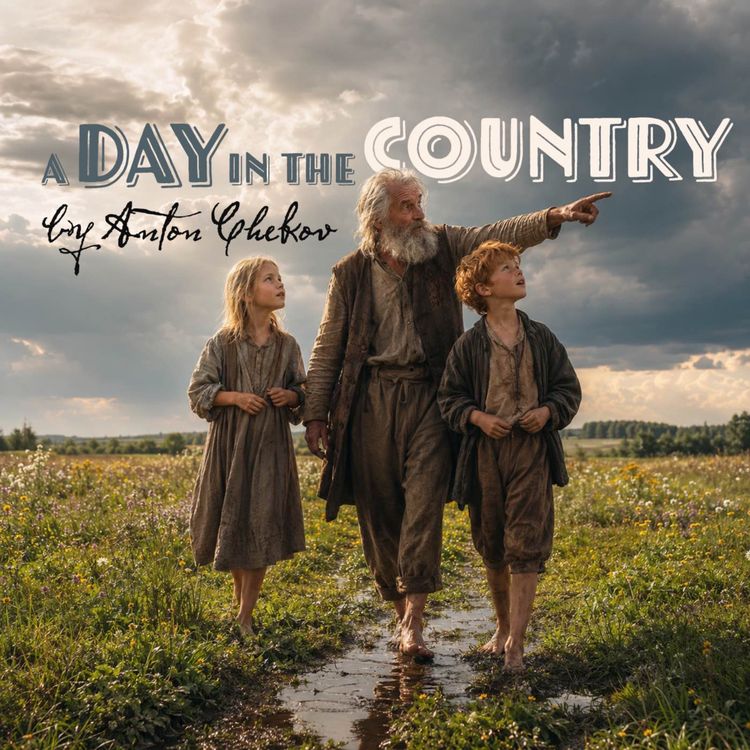
A Day in the Country by Anton Chekhov — Two Children, a Kindly Cobbler, and the Wonders After a Storm
Welcome to our first special summer story of 2026.
A May storm rolls over a Russian village, and a small beggar-girl runs through it looking for Terenty the cobbler. Her brother has jammed his hand in a hollow tree, reaching after a cuckoo's egg. What begins as a rescue becomes a long, wandering walk through fields washed clean by rain, a barefoot old man naming every living thing for a boy who cannot hear enough of it.
There's no real plot here, and that's the point. Chekhov gives us weather, wonder, and the quiet ache of a child who has no home to walk back to. The last image, offered to no one but the moon, may stay with you longer than the storm.
Anton Chekhov (1860–1904) was a Russian short-story writer and playwright, and a working doctor besides. He wrote hundreds of stories that changed what the form could do, trading tidy plots and clear morals for mood, restraint, and the quiet weight of ordinary life. "Medicine is my lawful wife," he once said, "and literature is my mistress." He died of tuberculosis at forty-four, having reshaped both the short story and the modern stage.
If you enjoyed this story, check out all of our short story podcasts on the Short Storyvesrse channel on Apple Podcasts or at shortstoryverses.com
If you enjoyed this story, buy me an e-book!
https://www.buymeacoffee.com/donmcdonald
or click FOLLOW
More episodes
View all episodes
The Romance of a Busy Broker by O. Henry — A Wall Street Love Story with a Twist
10:17|Wall Street, a spring morning at the turn of the century. The ticker is running hot, the telephone won’t quit, and Harvey Maxwell, broker, is handling it all like a man with springs where his heart should be. His clerk thinks the boss is slipping. His stenographer has something on her mind. Then a window opens, and somebody on the Exchange starts clubbing the stuffing out of Union Pacific.O. Henry at full gallop, in a nine-minute comedy from The Four Million, read by Don McDonald.This is a story from the archives recently remastered.Litreading is part of the Short Storyverses network of fiction podcasts. More stories, more feeds, at shortstoryverses.com.
Autopay by Don McDonald — Following Her Dead Mother’s Credit Card
18:05|There is a job nobody warns you about. After the dying comes the paperwork, the hold music, the strangers in call centers who need proof that she is gone.For two years she was her mother’s caregiver. Now she is her mother’s administrator. She makes lists. She keeps folders. She is very good at this.Then she reaches the bottom of the last statement.An original story, written and read by Don McDonald. Explore our multiverses of short fiction at shortstoryverses.com.
Tobermory by Saki — A Proper British Cat Tells All
19:38|Every house party has a guest who knows too much. A mild little man named Cornelius Appin has spent seventeen years on one problem. He believes he's solved it: he has taught a cat to speak. The company around Lady Blemley's tea table does not believe him — and that, as it happens, is the last comfortable moment anyone in the house will enjoy. Pour yourself some tea. Mind the saucer. Saki was the pen name of Hector Hugh Munro (1870–1916), the sharpest wit of the Edwardian age. Born in Burma and raised in Devon by a grandmother and two aunts he could not abide, he became a foreign correspondent before turning his pen on polite society. He borrowed his pen name from the cupbearer in the Rubáiyát of Omar Khayyám. When war came in 1914, he enlisted as a private at forty-three and refused a commission; he was killed by a sniper in France on November 14, 1916. His last words were “Put that bloody cigarette out.” “Tobermory” first appeared in the Westminster Gazette in 1909 and was collected in The Chronicles of Clovis in 1911. Read by Don McDonald. LitReading is part of the Short Storyverses network. shortstoryverses.com This is a story from the archives recently remastered. We are so honored to have been featured by Apple Podcasts as a great source for summer stories. If you don't want to miss our future stories, please Follow or Subscribe. Also, we have over 100 stories in our back catalog. Enough stories to keep you entertained for weeks. Looking for even more stories? Check out all our narrative podcasts at shortstoryverses.com If you enjoyed this story, buy me an e-book! https://www.buymeacoffee.com/donmcdonald
His Own Voice by Don McDonald — A Graphophone Records What Was Never Said
12:15|Winter, 1906. A clerk who speaks to no one from Saturday to Monday buys a mahogany graphophone for far less than it’s worth. The widow selling it keeps her eyes on the snow. Her husband, she says, liked to keep his own voice.He carries it home and records his diary each night, and the machine hands him back to himself, the nearest thing to company he has. Then the wax starts holding something he never put there.For more short stories, visit ShortStoryverses.com
A Jury of Her Peers by Susan Glaspell — The Women See What the Men Miss
44:53|A farmer lies dead in his bed with a rope around his neck. That morning his wife sat in the kitchen, pleating her apron, and said she slept through it.So the men come out to the farmhouse: the sheriff, the county attorney, and the neighbor who found her. They search the cold rooms for something that will hold up in court. Two of their wives ride along to gather a few things for the woman in the county jail. Nobody expects much from them.The kitchen is a mess of unfinished chores and small things left where they fell.Susan Glaspell once covered a murder case like this as a young reporter in Iowa, and it stayed with her. She wrote the story in 1917, and a century later it still hasn't loosened its grip.This is a story from the archives recently remastered.
A Foot Too Deep by Don McDonald — A Blacksmith Chooses the Terms of a New Orleans Duel
14:32|Nobody in New Orleans had ever made Bernard de Marigny look foolish in public. He was rich past counting, small as a foil, and very likely the most dangerous man in Louisiana with a pistol in his hand. Then a blacksmith from a far parish, seven feet of him and slow to speak, said something true on the floor of the legislature, and the whole chamber laughed.The card came to the forge two days later.The blacksmith was no duelist. He was, however, a man who had spent his life learning where something hard gives.From Short Storyverses. More at shortstoryverses.com.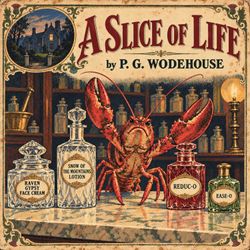
A Slice of Life by P. G. Wodehouse — A Chemist, a Baronet and a Girl Locked Upstairs
36:18|A man in a country pub insists his story is true. It concerns his brother Wilfred, a chemist of some genius, a jolly outdoor girl with a wholesome sunburn, and a Yorkshire baronet who spells his name with four small f's. Somebody is being kept behind a locked door on the second floor. Somebody else is about to regret asking what's true to life.This is P.G. Wodehouse, 1926, at his most gleefully unreliable.First published in Liberty, August 7, 1926; collected in Meet Mr. Mulliner, 1927. Read by Don McDonald. HumorUs is part of the Short Storyverses network. shortstoryverses.comThis is a story from the archives recently remastered.
The Wrong Funeral by Don McDonald — An Obituary Arrives Forty Years Too Late
12:13|An obituary arrives in the mail, folded in thirds, no note, no return address, and the creases are sharp enough to cut with.Roy Kittleson has not seen the man named in it since a Friday in 1986, and he has his reasons, and none of them are good. He drives up anyway. Three hours, most of it flat.He has rehearsed nothing. He is counting on grief to arrive on its own.“The Wrong Funeral,” is an original story written and read by Don McDonald from ShortStoryverses.com.
Care Protocol, Episode One — When Self-Driving Cars Start Killing
40:23|Here is the first episode of a new Short Storyverses limited series podcast, Care Protocol.Nobody has died on a Portland street in four years. The city handed over the wheel eight years ago and got back quiet nights, clean air, and a fatality rate of zero. Ask anyone. The algorithms saved us.Then, at 7:12 on an ordinary Tuesday, a man waiting for his morning ride is killed against a brick wall at Fifth and Glisan—in front of three witnesses who all describe the same impossible thing. Before lunch, there is a second.The company’s lawyers called the police seven minutes after the first death. That was six minutes before anyone called them.Special Agent Maya Restrepo catches the case: deaths that could not have happened, and a maintenance log with a sentence sitting in it where a number should be.You’re hearing Episode One of Care Protocol as a special LitReading bonus. The story continues on its own separate podcast, and future episodes will not appear in the LitReading feed. Search for and follow Care Protocol wherever you get your podcasts.In Episode Two of Care Protocol:Something happens on a stretch of I-5 outside Wilsonville, caught from nine angles. By Friday morning, there isn’t a screen in the country that hasn’t run it. By Saturday, the country has decided what it means—and Maya Restrepo is the only person still asking the other question.Episode Two arrives Wednesday, September 16, exclusively in the Care Protocol podcast feed.Explore our multiverse of narrated short stories at ShortStoryVerses.com.