Share
English 1000 Winter 2021: How literature helps us to deepen and clarify our lives
English 1000 Winter 2021
Latest episode
1. Introduction & Lee Maracle
17:57||Ep. 1
More episodes
View all episodes
3. Week 3: Writing & Grammar
26:58||Ep. 3Spelling is important to all types of writing, whether it's texting a friend, or sending an email, but most certainly spelling is critical when it comes to handing in your final assignments, and in your future professional life. Tune in to also hear songs from Tanya Davis with her ode to the "Thesaurus," from her album Gorgeous Morning (2008), and shake off all your spelling woes dancing to Rich Aucoin's "Undead" from his EP Public Publication (2010).
4. Week 4: Leanne Betasamosake Simpson
18:52||Ep. 4Leanne Betasamosake Simpson is a Michi Saagig Nishnaabeg writer, scholar, and musician, and is a member of Alderville Frist Nation. She is the author of five previous books, including: This Accident of Being Lost. She has released two albums including f(l)ight, which is a companion piece to This Accident of Being Lost, and is an excellent example of what musician Jeremy Dutcher, member of Tobique First Nation one of the six Wolastoqiyik reserves in New Brunswick, calls “Indigenous excellence.”In this episode, we will examine both the short stories and songs in order to understand the relationship between text, body, and sound. We will read and listen to: “under your always light,” “the oldest tree in the world,” and “I am graffiti.”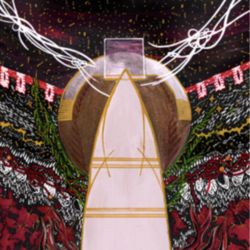
5. Week 5: Leanne Betasamosake Simpson
16:37||Ep. 5Leanne Betasamosake Simpson is a Michi Saagig Nishnaabeg writer, scholar, and musician, and is a member of Alderville Frist Nation. She is the author of five previous books, including: This Accident of Being Lost. She has released two albums including f(l)ight, which is a companion piece to This Accident of Being Lost, and is an excellent example of what musician Jeremy Dutcher, member of Tobique First Nation one of the six Wolastoqiyik reserves in New Brunswick, calls “Indigenous excellence.”In this week's episode, we will discuss "caribou ghosts & untold stories," "constellation," "this accident of being lost," and watch the videos for "road salt," and "how to steal a canoe," for our virtual salon.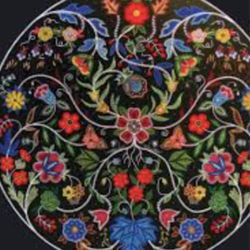
6. Week 6: Michelle Porter & Douglas Walbourne-Gough
25:17||Ep. 6Metis poet Michelle Porter believes all poetry is inquiry. A journalist by trade, and an academic by training, Porter’s debut poetry collection, Inquiries (Breakwater 2019), beautifully illustrates how she questions herself, her place, and her family through the poetic, and brings us all back to the river. Mixed/adopted Mi’kmaq Newfoundland poet Douglas Walbourne-Gough’s debut collection, Crow Gulch (Goose Lane 2019) unearths an almost forgotten history of a community known as Crow Gulch, a mostly shaded and stigmatized area around Corner Brook built when the newsprint mill was constructed in the 1920s. In this week's episode, you will hear some of the “Red River Jig,” by the Metis Fiddler Quartet, and we will dive into Porter's poem "Childhood, Remembered," and hear an exclusive recording of Walbourne-Gough's "Geraldine Winnifred Walbourne," in order to connect with place, memory, and ancestry through poetry.
7. Week 7: Shauntay Grant & Tanya Evanson
25:02||Ep. 7What is spoken word poetry? A broad designation for poetry intended for performance. Spoken word poetry has its roots in oral traditions, fusing elements of rap, hip-hop, storytelling, theatre, jazz, rock, blues, and folk music.In celebration of Black History Month, I want to share the work of two amazing spoken word artists: Shauntay Grant, a writer and storyteller from Kjipuktuk (Halifax, Nova Scotia), who served as the third poet laureate for Halifax Regional Municipality from 2009 to 2011, and Tanya Evanson, who has published two poetry collections are Bothism (Ekstasis 2017) and Nouveau Griot (Frontenac 2018). Her first novel Book of Wings (2021) is published by Véhicule Press.