Share

LINNC INR Podcasts
Expert Insights in Interventional Neuroradiology, Neurology, and Neurosurgery.
Latest episode
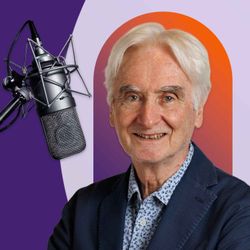
1. INR stories: Jacques Moret's uncensored interview
34:20||Season 4, Ep. 1In this episode of INR Stories, Nanthiya Sujijantarat speaks with Jacques Moret, one of the founders of modern interventional neuroradiology and creator of the LINNC course. Beyond reflecting on his career and educational legacy, he shares his views on the future of the specialty: the rise of extravascular therapies, the need to unite neurointervention and neurosurgery under a single discipline, and why MRI-guided interventions may eventually replace X-ray-based procedures.Key topics discussedHow LINNC evolved from a small live course in a Paris church basement into a global educational platform.Why recording and openly discussing complications became a cornerstone of his teaching philosophy.The innovations that transformed aneurysm treatment, from flow diversion to intrasaccular devices such as WEB.Why emerging technologies for CSF shunting and chronic subdural hematoma drainage represent a major shift toward extravascular intervention.His vision for a unified neurovascular specialty and a future driven by MRI-guided procedures rather than robotics.
More episodes
View all episodes

7. INR stories: René Chapot's uncensored interview
20:58||Season 3, Ep. 7In this episode of INR Stories, Nanthiya Sujijantarat welcomes René Chapot, head of the Department of Neuroradiology and Endovascular Therapy at the Alfried Krupp Krankenhaus in Essen, Germany. He reflects on his early inspiration under his mentor Jean-Jacques Merland in Paris, the formative complications that shaped his practice and his pioneering techniques in AVM treatment.Key topics discussedHow early clinical complications drive innovation, enhance control, and refine technique development Shifting paradigms in AVM treatment: liquid embolics, the pressure cooker technique, and multi-catheter control Deconstructing the "nidus" by utilizing color-coded volume imaging to map out arterial and venous networks The future of the field: expanding venous access, neurostimulation, and dissolving radio-opaque embolics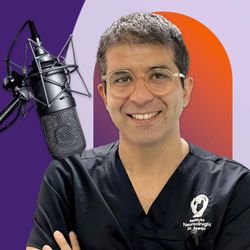
6. INR stories: Rodrigo Rivera's uncensored interview
19:19||Season 3, Ep. 6In this episode of INR Stories, Nanthiya Sujijantarat welcomes Rodrigo Rivera, chief of diagnostic and interventional neuroradiology at the Instituto de Neurocirugía Dr. Asenjo in Santiago, Chile and LINNC online editor. He reflects on his transition from neurosurgery to interventional neuroradiology, his formative training in Paris, the challenges of establishing stroke networks in South America, and his innovative work in 3D printing for vascular simulations.Key topics discussedThe transition from open neurosurgery to neurointerventionEstablishing one of Chile's first mechanical thrombectomy programs and navigating public health fundingThe technical landscape of neurointervention in Chile and the advantages of the public hospital networkDeveloping 3D-printed AVM models and AI algorithms to better understand and train for complex nidus architecturesFuture frontiers: the integration of robotics, AI, BCI, and endovascular oncological treatments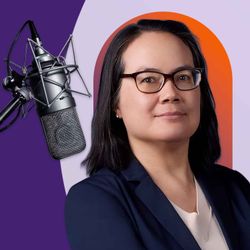
5. INR stories: Johanna Fifi's uncensored interview
15:45||Season 3, Ep. 5In this episode of INR Stories, Nanthiya Sujijantarat welcomes Johanna Fifi, professor of neurosurgery, neurology, and radiology at Mount Sinai and director of the Pediatric Neuroendovascular Program. She reflects on her journey from Trinidad to the U.S., the mentors who shaped her path, her growing focus on pediatric vascular malformations, and her experiences as president of SNIS.Key topics discussedLessons learned from major trials such as SELECT2 or other stroke systems-of-care studiesThe emerging science behind pediatric vascular malformations and the importance of multidisciplinary centersCommon misconceptions about vein of Galen malformations and why most cases today can achieve good outcomesGender representation in neurointervention and the role of mentorship in building confidenceHow the field may evolve: subspecialization, neuromodulation via endovascular routes, venous access innovations, and robotics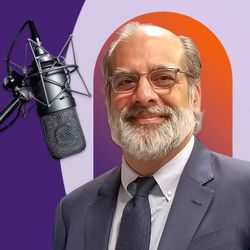
4. INR stories: Ajay Wakhloo's uncensored interview
27:28||Season 3, Ep. 4In this episode of INR Stories, Nanthiya Sujijantarat welcomes Ajay Wakhloo. He reflects on his journey from early experimental work in Europe to becoming one of the pioneers of flow diversion for brain aneurysms. Ajay Wakhloo shares his vision for the future of neurointervention, from regenerative aneurysm healing and laser-based technologies to endocisternal approaches.Key topics discussedThe origins of flow diversion and how experimental observations led to a paradigm shift in aneurysm treatmentInnovation at the intersection of medicine, engineering, and fluid mechanicsRegenerative approaches to aneurysm healing and the role of laser-induced vascular repairEmerging technologies, including endocisternal access, neuromodulation, and direct carotid puncture for stroke careAdvice for young physicians on creativity, perseverance, and building an innovation mindset
3. INR stories: Jan Gralla's uncensored interview
27:31||Season 3, Ep. 3In this episode of INR Stories, Nanthiya Sujijantarat welcomes Jan Gralla, Head and Director of the Institute of Diagnostic and Interventional Neuroradiology at the Inselspital of Bern University Hospital. He reflects on his transition from neurosurgery to endovascular neuroradiology and on how evidence-based trials transformed the field. He also shares his perspective on emerging areas such as distal thrombectomy, chronic occlusions, intracranial stenosis, and dural AV fistulas.Key topics discussed:Building and organizing regional and national stroke networks, with insights from the Swiss stroke systemLessons learned from major stroke trials and the impact of trial design on clinical practiceFuture directions in neurointervention, including cyclic aspiration and new approaches to chronic total occlusions and intracranial stenosisWhy dural AV fistulas and CSF venous fistulas remain among the most intellectually rewarding and underdiagnosed conditions
2. INR stories: Adam Arthur's uncensored interview
27:40||Season 3, Ep. 2In this episode of INR Stories, Nanthiya Sujijantarat welcomes Adam Arthur, Chair of Neurosurgery at the University of Tennessee Health Science Center. They discuss the evolving landscape of neurointervention, exploring emerging treatments, ethical dilemmas in clinical trials, and the importance of mentorship. Adam Arthur shares candid insights on the future of the field and the challenges of balancing innovation with patient care.Key topics discussed:The shifting focus in neurointervention, from aneurysms and large vessel occlusions to chronic subdural hematomas and migraine-related pain.Investigating vascular links to chronic pain, with potential neurosurgical approaches to treating migraines.Ethical complexities in clinical trials and research integrity, with reflections on the ESCAPE-MeVO and DISTAL studies.The importance of interdisciplinary collaboration, highlighting teamwork between interventional and non-interventional neurosurgeons, neurologists, and radiologists to improve patient outcomes.The evolving role of mentorship in medicine, and how listening and honest communication shape successful mentor-mentee relationships.