Share
Let's Talk Religion
What is Sufism?
Ep. 98
•
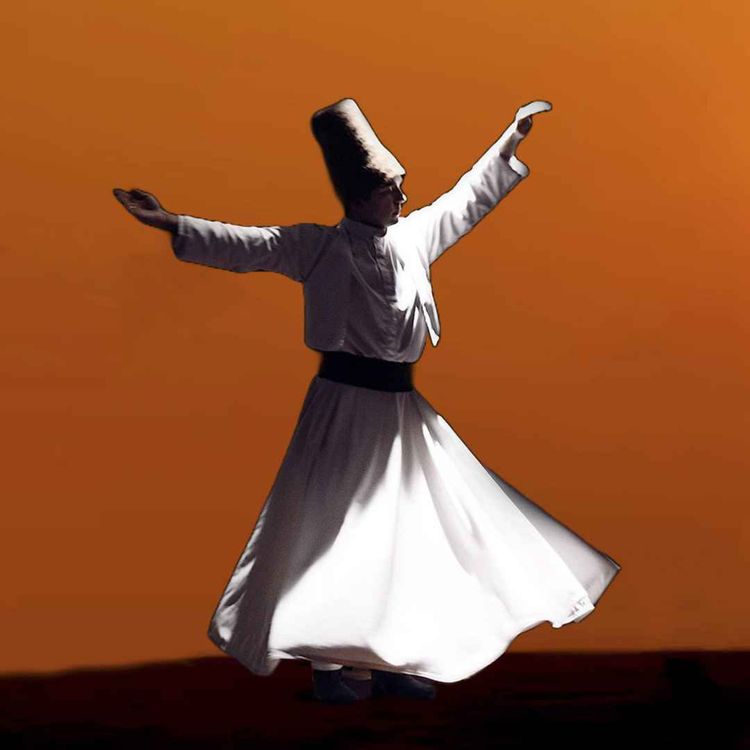
Embark on an intellectual journey into the realm of Sufism. Explore the intricate history, philosophical underpinnings, and mystical practices that have shaped this fascinating tradition. Join me as we delve into the topic of Sufi mysticism, shedding light on its profound impact on Islam & its history.
Sources/Recomended Reading:
- Abu-n Nasr, Jamil M. (2007). "Muslim Communities of Grace: The Sufi Brotherhoods in Islamic Religious Life". C Hurst & Co Publishers Ltd.
- "Al-Qushayri's Epistle on Sufism - Al-Risala Al Qushayriyya Fi 'ilm Al-Tasawwuf". Translated by Alexander Knysh. 2020. The Center for Muslim Contribution to Civilization.
- Avery, Kenneth S. (2004). "A Psychology of Early Sufi Sama: Listening and altered states". Routledge.
- Casewit, Yousef (2017). "The Mystics of al-Andalus: Ibn Barrajan and Islamic Thought in the Twelfth Century". Cambridge University Press.
- Chittick, William (1989). "The Sufi Path of Knowledge: Ibn 'Arabi's Metaphysics of Imagination".
- Chittick, William (1998). "The Self-Disclosure of God: Principles of Ibn al-'Arabi's Cosmology". State University of New York Press.
- Cornell, Vincent J. (1998). "Realm of the Saint: Power and Authority in Moroccan Sufism". University of Texas Press.
- Caner Dagli (translated by) (2004). Ibn 'Arabi - "The Ringstones of Wisdom (Fusus al-Hikam)". Great Books of the Islamic World. Kazi Pubns Inc.
- Ernst, Carl W. & Bruce B. Lawrence (2003). "Sufi Martyrs of Love: The Chishti Order in South Asia and beyond". Palgrave Macmillan.
- Homerin, Emil (Translated by) (2001). "'Umar Ibn al-Farid: Sufi Verse, Saintly Life". Classics of Western Spirituality. Paulist Press.
- Homerin, Emil (2019). "Aisha al-Ba'uniyya: A Life in Praise of Love". Makers of the Muslim World Series. Oneworld Publications.
- Karamustafa, Ahmet T. (2006). God's Unruly Friends: Dervish Groups in the Islamic Middle Period 1200-1550. Oneworld Publications.
- Karamustafa, Ahmet T. (2007). "Sufism - the formative period". Edinburgh University Press.
- Knysh, Alexander (2000). "Islamic Mysticism: A Short History". Brill.
- Knysh, Alexander (2019). "Sufism: A New History of Islamic Mysticism". Princeton University Press.
- Lewis, Franklin D. (2000). "Rumi: Past and Present, East and West". Oneworld publications.
- Malik, Jamal & John Hinnells (ed.) (2006). "Sufism in the West". Routledge.
- Ridgeon, Lloyd (ed.) (2015). "The Cambridge Companion to Sufism". Cambridge University Press.
- Schimmel, Annemarie (1975). "Mystical Dimensions of Islam". The University of North Carolina Press.
- Van Bruinessen, Martin & Julia Day Howell (ed). (2007). "Sufism and the Modern in Islam". I.B. Tauris.
More episodes
View all episodes
168. Women in the Life and Thought of Ibn Arabi
01:00:41||Ep. 168The great Sufi mystic Ibn Arabi was taught by a woman. In Part 2 of our series on Sufi women in history, we explore the female saints, teachers, and muses who shaped the thought of Islam's greatest mystical philosopher.Find me and my music here:https://linktr.ee/filipholmSupport Let's Talk Religion on Patreon: https://www.patreon.com/letstalkreligion Or through a one-time donation: https://paypal.me/talkreligiondonateSources/Recommended Reading:Addas, Claude (1993). "Quest for the Red Sulphur". The Islamic Texts Society.Austin, R.W.J. (translated by) (1988). "The Sufis of Andalusia: The Ruh Al-Quds' and 'Al-Durrat al-Fakhirah'". Beshara Publications.Chittick, William (1989). "The Sufi Path of Knowledge: Ibn 'Arabi's Metaphysics of Imagination".Chodkiewicz, Michel (1993). "Seal of the Saints: Prophethood and sainthood in the doctrine of Ibn 'Arabi". Translated by Liadain Sherrard. The Islamic Texts Society.Caner Dagli (translated by) (2004). Ibn 'Arabi - "The Ringstones of Wisdom (Fusus al-Hikam)". Great Books of the Islamic World. Kazi Pubns Inc.Shaikh, Sa'diyya (2012). "Sufi Narratives of Intimacy: Ibn Arabi, Gender & Sexuality". The University of North Carolina Press.Ibn 'Arabi - "The Openings Revealed in Makkah: al-futuhat al-makkiyya". Translated by Eric Winkel. Volumes 1-7. Pir Press.
168. John Scotus Eriugena & The Division of Nature
01:00:49||Ep. 168John Scotus Eriugena was one of the most radical thinkers of the early Middle Ages — a philosopher who fused eastern and western Christian theology with Neoplatonism to create a vision of God, nature, and creation centuries that is breathtaking and unique. In this episode, we explore his masterwork Periphyseon (On the Division of Nature), his controversial ideas on negative theology, and why the Church eventually condemned his work as heretical.Find me and my music here:https://linktr.ee/filipholmSupport Let's Talk Religion on Patreon: https://www.patreon.com/letstalkreligion Or through a one-time donation: https://paypal.me/talkreligiondonateSources/Recommended Reading:Carabine, Deirdre (2000). "John Scottus Eriugena". Oxford University Press USA.Laird, Martin (2004). "Gregory of Nyssa and the grasp of faith: union, knowledge and divine presence". Oxford University Press.Luibheid, Colm (Translated by) (1987). "Pseudo-Dionysius: The Complete Works". Classics of Western Spirituality. Paulist Press International.McGinn, Bernard. "The Presence of God" Series, in several volumes. Perhaps the best and most comprehensive introduction to Christian mysticism. Published by Crossroad Publishing Co.Sheldon-Williams, I.P. & John J. O'Meara (translated and edited by) (2025). "Periphyseon: The Division of Nature". Dumbarton Oaks Research Library & Collection. (This is the translation used for the Periphyseon except when noted).
167. The Talmud Explained (w. Zevi Slavin)
38:52||Ep. 167In this episode, Zevi and I explore what the Talmud is, what it is not, and the role it plays in the Jewish religion.Find me and my music here:https://linktr.ee/filipholmSupport Let's Talk Religion on Patreon: https://www.patreon.com/letstalkreligion Or through a one-time donation: https://paypal.me/talkreligiondonate
166. Porphyry On The Cave of the Nymphs in Homer's Odyssey
41:47||Ep. 166In this episode we explore one of the most fascinating texts in the history of Western esotericism: Porphyry's Commentary on the Cave of the Nymphs. Written in the 3rd century, this short but remarkable work interprets a mysterious passage from Homer's Odyssey as a profound allegory for the soul's descent into matter and its eventual return to the divine. We explore how Porphyry reads the cave, its nymphs, its looms and its two gates as a complete symbolic map of the cosmos, drawing on Platonic metaphysics, ancient astrology, and even the Cult of Mithras.Find me and my music here:https://linktr.ee/filipholmSupport Let's Talk Religion on Patreon:https://www.patreon.com/letstalkreligionOr through a one-time donation:https://paypal.me/talkreligiondonateTranslations of the commentary:Lamberton, Robert (translated by) (1983). "Porphyry: On the Cave of the Nymphs". Station Hill Press.Thomas Taylor's translation (from the 1800's) is a classic. It is available through Lamp of Trismegistus.John M. Duffy, Philip F. Sheridan, Leendert G. Westerink, and Jeffrey A. White (ed.) (1969). "Porphyry: The Cave of the Nymphs in the Odyssey". State University of New York.Secondary sources:Akçay, Nilüfer (2019). "Porphyrys On the Cave of the Nymphs in its Intellectual Context". Brill.Beck, Roger (2006). "The Religion of the Mithras Cult in the Roman Empire: Mysteries of the Unconquered Sun". OUP Oxford.Cooper, John M. (ed.) (1997). "Plato: Complete Works". Hackett Publishing Company.Dillon, John (1996). "The Middle Platonists". Bristol Classical Press.Gerson, Loyd P. (ed.) (2019). "Plotinus: The Enneads". Cambridge University Press. (This is the translation of the Enneads I have been using in this episode).Gerson, Loyd P (2008). "Cambridge Companion to Plotinus". Cambridge University Press.Gregory, John (ed.) (1998). "The Neoplatonists: a reader". Routledge.Iamblichus "On the Mysteries". Tranlsated by Emma C. Clarke, John M. Dillon & Jackson P. Hershell. Writings from the Graeco-Roman World. Society of Biblical Literature.Proclus "The Elements of Theology: A Revised Text with Translation, Introduction, and Commentary". Translated by E.R. Dodds. Second Edition. Oxford University Press.O'Meara, Dominic J. (1999). "Plotinus: An Introduction to the Enneads". Oxford University Press.Shaw, Gregory (2014). "Theurgy and the Soul: The Neoplatonism of Iamblichus". Angelico Press/Sophia Perennis.Wallis, R.T. (1998). "Neoplatonism". Second Edition. Bristol Classical Paperbacks. Hackett Publishing Company.
165. The History of "Hare Krishna" (Gaudiya Vaishnavism)
55:28||Ep. 165The Hare Krishna movement didn't start with chanting monks in airports, it began over 500 years ago with a Bengali mystic named Chaitanya Mahaprabhu. This video traces the full history of Gaudiya Vaishnavism, from its roots in 16th-century devotional Hinduism to its transformation into the global ISKCON movement, brought to the West by A.C. Bhaktivedanta Swami Prabhupada in 1965. We cover the theology of Krishna Consciousness, the bhakti tradition, and how an obscure regional sect became one of the most visible spiritual movements in modern history.Written by Anmol Kohli Co-written by Filip HolmFind me and my music here:https://linktr.ee/filipholmSupport Let's Talk Religion on Patreon: https://www.patreon.com/letstalkreligion Or through a one-time donation: https://paypal.me/talkreligiondonateSources/Recommended Reading:Swami Tapasyananda, Bhakti Schools of Vedanta (Sri Ramakrishna Math Chennai,1990).o Chapter on ‘Sri Caitanya Mahāprabhu: Life’, pages 323-407.o Chapter on ‘Sri Caitanya Mahāprabhu: Philosophy’, pages 408-451.Bryant, Edwin (2004). "The Hare Krishna Movement: The Postcharismatic Fate of a Religious Transplant". Columbia University Press.Bryant, Edwin (translated by) (2017). "Bhakti Yoga: Tales and Teachings from the Bhagavata Purana". North Point Press.Bryant, Edwin. Bhakti Yoga: Tales and Teachings from the Bhagavata Purana (Pan Macmillan India, 2018).Dwyer, Graham & Richard J. Cole (ed.) (2007). "The Hare Krishna Movement: Forty Years of Chant and Change". I.B. Tauris.
164. Rabi'a - Mystic, Saint, and the Mother of Sufi Love
49:09||Ep. 164Who was Rabi'a al-Adawiyya? Explore the life, teachings, and spiritual legacy of one of history’s most influential mystics. From divine love to radical devotion, this video examines how Rabi'a transformed Islamic spirituality and continues to inspire people centuries later.Sources/Recommended Reading:Cornell, Rkia Elaroui (translated by) (1999). "Early Sufi Women: Dhikr an-niswa al-muta 'abbidat as sufiyyat". Fons Vitae.Cornell, Rkia Elaroui (2019). "Rabi'a From Narrative to Myth: The Many Faces of Islam's Most Famous Woman Saint, Rabi'a al-'Adawiyya". Oneworld Academic.Helminski, Camille Adams (2003). "Women of Sufism: A Hidden Treasure". Shambhala. Knysh, Alexander (2000). "Islamic Mysticism: A Short History". Brill.Safi, Omid (2019). "Radical Love: Teachings from the Islamic Mystical Tradition". Yale University Press.
163. Religion in Ancient Greece
01:15:39||Ep. 163Explore the fascinating world of religion in Ancient Greece, from the powerful Olympian gods like Zeus, Athena, and Apollo to sacred rituals, temples, myths, and festivals that shaped daily Greek life.Find me and my music here:https://linktr.ee/filipholmSupport Let's Talk Religion on Patreon: https://www.patreon.com/letstalkreligion Or through a one-time donation: https://paypal.me/talkreligiondonateSources/Recommended Reading:Bowden, Hugh (2010). "Mystery cults in the Ancient World". Thames and Hudson Ltd.Burkert, William (1987). "Greek Religion: Archaic and Classical". Wiley-Blackwell. Burkert, Walter (1988). "Ancient Mystery Cults". Harvard University Press.Chulp, Radek (2016). "Proclus: An Introduction". Cambridge University Press.Cooper, John M. et. al (translated by) (1997). "Plato: Complete Works". Hackett Publishing.Dodds, E.R. (2004). "The Greeks & The Irrational". University of California Press.Eidinow, Esther & Julia Kindt (ed.) (2017). "The Oxford Handbook of Ancient Greek Religion". Oxford University Press.Gerson, Loyd P. (ed.) (2019). "Plotinus: The Enneads". Cambridge University Press. (This is the translation of the Enneads I have been using in this episode).Gerson, Loyd P (2008). "Cambridge Companion to Plotinus". Cambridge University Press.Gregory, John (ed.) (1998). "The Neoplatonists: a reader". Routledge.Huffman, Carl A. (ed.) (2017). "A History of Pythagoreanism". Cambridge University Press.Iamblichus "On the Mysteries". Tranlsated by Emma C. Clarke, John M. Dillon & Jackson P. Hershell. Writings from the Graeco-Roman World. Society of Biblical Literature.Inwood, Brad (ed.) (2003). "The Cambridge Companion to the Stoics". Cambridge University Press.Kirk, G.S., J.E. Raven & M. Schofield (1983). "The Presocratic Philosophers". Second Edition. Cambridge University Press.Parker, Robert C.T. (2011). "On Greek Religion". Cornell University Press.Proclus "The Elements of Theology: A Revised Text with Translation, Introduction, and Commentary". Translated by E.R. Dodds. Second Edition. Oxford University Press.Shaw, Gregory (2014). "Theurgy and the Soul: The Neoplatonism of Iamblichus". Angelico Press/Sophia Perennis.Ustinova, Yulia (2017). "Divine Mania: Alterations of Consciousness in Ancient Greece". Routledge.Wallis, R.T. (1998). "Neoplatonism". Second Edition. Bristol Classical Paperbacks. Hackett Publishing Company.Zhmud, Leonid (2012). "Pythagoras and the Early Pythagoreans". Translated by Kevin Windle & Rosh Ireland. OUP Oxford.
162. The Lost Suras of the Quran?
38:21||Ep. 162Did the Quran once contain additional suras that are no longer part of the standard text? In this video, we explore reports about the codex of Ubayy ibn Ka'b and examine claims about “lost” or excluded suras during the Uthmanic recension.Find me and my music here:https://linktr.ee/filipholmSupport Let's Talk Religion on Patreon: https://www.patreon.com/letstalkreligion Or through a one-time donation: https://paypal.me/talkreligiondonateSources/Recommended Reading:Amir-Moezzi, Mohammad Ali. 2022. The Shi’is and the Qur’an: Between Apocalypse, Civil Wars, and Empire. Religions 13: 1.Anthony, Sean W. (2019). "TWO ‘LOST’ SŪRAS OF THE QURʾĀN: SŪRAT AL-KHALʿ AND SŪRAT AL-ḤAFD BETWEEN TEXTUAL AND RITUAL CANON (1st-3rd/7th-9th CENTURIES)". JSAI 46 (2019).Harvey, R., & College, E. (2017). "The Legal Epistemology of Qur'anic Variants: The Readings of Ibn Masʿūd in Kufan fiqh and the Ḥanafī madhhab".Karimi-Nia, Morteza. (2019). A New Document in the Early History of the Qurʾān. Journal of Islamic Manuscripts. 10. 292-326. 10.1163/1878464X-01003002. Sadeghi, Behnam & Bergmann, Uwe. (2010). The Codex of a Companion of the Prophet and the Qurān of the Prophet. Arabica. 57. 343-436. 10.1163/157005810X504518. Sinai, Nicolai (2017). "The Qur'an: A Historical-Critical Introduction". Edinburgh University Press.
161. Mazdak & Mazdakism - Ancient Persian Communism?
38:36||Ep. 161Who was Mazdak, and did he really preach a form of “ancient communism”? In this video, we explore Mazdakism—a radical movement in Sasanian Persia that challenged wealth, power, and social inequality over 1,500 years ago.Find me and my music here:https://linktr.ee/filipholmSupport Let's Talk Religion on Patreon: https://www.patreon.com/letstalkreligion Or through a one-time donation: https://paypal.me/talkreligiondonateSources/Recommended Reading:Boyce, Mary (2000). "Zoroastrians: Their Religious Beliefs and Practices". Routledge; 2nd edition.Crone, Patricia (2012). “The Nativist Prophets of Early Islamic Iran: Rural Revolt and Local Zoroastrianism”. Cambridge University Press.Moazami, Mahnaz (ed.) (2016). "Zoroastrianism: A collection of Articles from the Encyclopedia Iranica". ENCYCLOPAEDIA IRANICA FOUNDATION. 2 Volumes.Rose, Jenny (2019). "Zoroastrianism: An Introduction". I.B. Tauris Introduction to Religions. Bloomsbury Academic.Yarshater, Ehsan (1983). “Mazdakism”. In “The Cambridge History of Iran”, vol. 3. Cambridge University Press.https://www.iranicaonline.org/articles/mazdak-crossref/