Share

Let's Talk Religion
What is Sufi Music?
Ep. 60
•
In this episode, we finally dive into one of my favorite topics - Sufi Music. We discuss its history, practical uses as well as theoretical, philosophical perspectives on the role and power of music to affect the human soul, all from the perspective of Muslim Sufi writers.
Sources/Suggested Reading:
- Abu Nasr Abdallah b. Ali al-Sarraj al-Tusi - "Kitab al-Luma' fi al-Tasawwuf". Translated & summarized by Reynold A. Nicholson. E.J. Brill. 1914.
- Adamson, Peter (ed.) (2005). "The Cambridge Companion to Arabic Philosophy". Cambridge University Press.
- Addas, Claude (1993). "Quest for the Red Sulphur: The Life of Ibn 'Arabi". The Islamic Texts Society.
- "Al-Qushayri's Epistle on Sufism - Al-Risala Al Qushayriyya Fi 'ilm Al-Tasawwuf". Translated by Alexander Knysh. 2020. The Center for Muslim Contribution to Civilization.
- Alvarez, Lourdes Maria (2009). "Abu-l Hasan al-Shushtari: Songs of Love and Devotion". In the "Classics of Western Spirituality" series. Paulist Press.
- Alvarez, Lourdes Maria (2005). "The Mystical Language of Everyday Life": Vernacular Sufi Poetry and the Songs of Abu Al-Hasan Al-Shustari". Exemplaria. 17:1, 1-32, DOI: 10.1179/exm.2005.17.1.1.
- Avery, Kenneth S. (2004). "A Psychology of Early Sufi Sama: Listening and altered states". Routledge.
- Chishti, Muhammad Tanveer Jamal & Dr. Abdul Zahoor Khan (2015). "Approaches of The Early Sufis From 10th Century to 12th Century Towards 'SAMA'". Mediterranean Journal of Social Sciences. 6, 5:51.
- Cornell, Vincent J. (transl.) (1996). "The Way of Abu Madyan: The Works of Abu Madyan Shu'ayb". The Islamic Texts Society.
- Ernst, Carl W. & Bruce B. Lawrence (2003). "Sufi Martyrs of Love: The Chishti Order in South Asia and beyond". Palgrave Macmillan.
- Hammarlund, Anders; Tord Olsson & Elisabeth Özdalga (1997). "Sufism, Music and Society - In Turkey and the Middle East". Swedish Research Institute in Istanbul. Transactions Vol. 10.
- Homerin, Th. Emil (2011). "Passion Before Me, My Fate Behind: Ibn al-Farid And the Poetry of Recollection". SUNY Press.
- Homerin, Th. Emil (2001). "From Arab Poet to Muslim Saint: Ibn al-Farid, His Verse, and His Shrine". The American University in Cairo Press.
- Ibn Sina - "A Treatise on Love". Translated by Emil L. Fackenheim. Medieval Studies.
- Khan, Inayat (1991). "The Mysticism of Sound and Music". Revised Edition. Shambala Dragon Editions.
- Lewis, Franklin D. (2000). "Rumi: Past and Present, East and West". Oneworld publications.
- Ibn 'Arabi - "The Ringstones of Wisdom (Fusus al-Hikam)". Translation by Caner K. Dagli. Great Books of the Islamic World.
- Qureshi, Regula Burckhardt (1995). "Sufi Music of India and Pakistan: Sound, Context and Meaning in Qawwali". The University of Chicago Press.
- Ridgeon, Lloyd (ed.) (2015). "The Cambridge Companion to Sufism". Cambridge University Press.
- Shehadi, Fadlou (1995). "Philosophies of Music in Medieval Islam". E.J. Brill.
- Wright, Owen (translated and edited by) (2010). "Epistles of the Brethren of Purity: On Music. An Arabic Critical Edition and English Translation of Epistle 5. Oxford University Press.
#Sufism #Music #Islam
More episodes
View all episodes
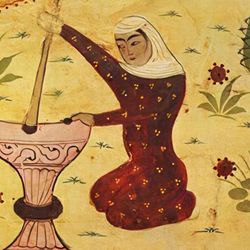
164. Rabi'a - Mystic, Saint, and the Mother of Sufi Love
49:09||Ep. 164Who was Rabi'a al-Adawiyya? Explore the life, teachings, and spiritual legacy of one of history’s most influential mystics. From divine love to radical devotion, this video examines how Rabi'a transformed Islamic spirituality and continues to inspire people centuries later.Sources/Recommended Reading:Cornell, Rkia Elaroui (translated by) (1999). "Early Sufi Women: Dhikr an-niswa al-muta 'abbidat as sufiyyat". Fons Vitae.Cornell, Rkia Elaroui (2019). "Rabi'a From Narrative to Myth: The Many Faces of Islam's Most Famous Woman Saint, Rabi'a al-'Adawiyya". Oneworld Academic.Helminski, Camille Adams (2003). "Women of Sufism: A Hidden Treasure". Shambhala. Knysh, Alexander (2000). "Islamic Mysticism: A Short History". Brill.Safi, Omid (2019). "Radical Love: Teachings from the Islamic Mystical Tradition". Yale University Press.
163. Religion in Ancient Greece
01:15:39||Ep. 163Explore the fascinating world of religion in Ancient Greece, from the powerful Olympian gods like Zeus, Athena, and Apollo to sacred rituals, temples, myths, and festivals that shaped daily Greek life.Find me and my music here:https://linktr.ee/filipholmSupport Let's Talk Religion on Patreon: https://www.patreon.com/letstalkreligion Or through a one-time donation: https://paypal.me/talkreligiondonateSources/Recommended Reading:Bowden, Hugh (2010). "Mystery cults in the Ancient World". Thames and Hudson Ltd.Burkert, William (1987). "Greek Religion: Archaic and Classical". Wiley-Blackwell. Burkert, Walter (1988). "Ancient Mystery Cults". Harvard University Press.Chulp, Radek (2016). "Proclus: An Introduction". Cambridge University Press.Cooper, John M. et. al (translated by) (1997). "Plato: Complete Works". Hackett Publishing.Dodds, E.R. (2004). "The Greeks & The Irrational". University of California Press.Eidinow, Esther & Julia Kindt (ed.) (2017). "The Oxford Handbook of Ancient Greek Religion". Oxford University Press.Gerson, Loyd P. (ed.) (2019). "Plotinus: The Enneads". Cambridge University Press. (This is the translation of the Enneads I have been using in this episode).Gerson, Loyd P (2008). "Cambridge Companion to Plotinus". Cambridge University Press.Gregory, John (ed.) (1998). "The Neoplatonists: a reader". Routledge.Huffman, Carl A. (ed.) (2017). "A History of Pythagoreanism". Cambridge University Press.Iamblichus "On the Mysteries". Tranlsated by Emma C. Clarke, John M. Dillon & Jackson P. Hershell. Writings from the Graeco-Roman World. Society of Biblical Literature.Inwood, Brad (ed.) (2003). "The Cambridge Companion to the Stoics". Cambridge University Press.Kirk, G.S., J.E. Raven & M. Schofield (1983). "The Presocratic Philosophers". Second Edition. Cambridge University Press.Parker, Robert C.T. (2011). "On Greek Religion". Cornell University Press.Proclus "The Elements of Theology: A Revised Text with Translation, Introduction, and Commentary". Translated by E.R. Dodds. Second Edition. Oxford University Press.Shaw, Gregory (2014). "Theurgy and the Soul: The Neoplatonism of Iamblichus". Angelico Press/Sophia Perennis.Ustinova, Yulia (2017). "Divine Mania: Alterations of Consciousness in Ancient Greece". Routledge.Wallis, R.T. (1998). "Neoplatonism". Second Edition. Bristol Classical Paperbacks. Hackett Publishing Company.Zhmud, Leonid (2012). "Pythagoras and the Early Pythagoreans". Translated by Kevin Windle & Rosh Ireland. OUP Oxford.
162. The Lost Suras of the Quran?
38:21||Ep. 162Did the Quran once contain additional suras that are no longer part of the standard text? In this video, we explore reports about the codex of Ubayy ibn Ka'b and examine claims about “lost” or excluded suras during the Uthmanic recension.Find me and my music here:https://linktr.ee/filipholmSupport Let's Talk Religion on Patreon: https://www.patreon.com/letstalkreligion Or through a one-time donation: https://paypal.me/talkreligiondonateSources/Recommended Reading:Amir-Moezzi, Mohammad Ali. 2022. The Shi’is and the Qur’an: Between Apocalypse, Civil Wars, and Empire. Religions 13: 1.Anthony, Sean W. (2019). "TWO ‘LOST’ SŪRAS OF THE QURʾĀN: SŪRAT AL-KHALʿ AND SŪRAT AL-ḤAFD BETWEEN TEXTUAL AND RITUAL CANON (1st-3rd/7th-9th CENTURIES)". JSAI 46 (2019).Harvey, R., & College, E. (2017). "The Legal Epistemology of Qur'anic Variants: The Readings of Ibn Masʿūd in Kufan fiqh and the Ḥanafī madhhab".Karimi-Nia, Morteza. (2019). A New Document in the Early History of the Qurʾān. Journal of Islamic Manuscripts. 10. 292-326. 10.1163/1878464X-01003002. Sadeghi, Behnam & Bergmann, Uwe. (2010). The Codex of a Companion of the Prophet and the Qurān of the Prophet. Arabica. 57. 343-436. 10.1163/157005810X504518. Sinai, Nicolai (2017). "The Qur'an: A Historical-Critical Introduction". Edinburgh University Press.
161. Mazdak & Mazdakism - Ancient Persian Communism?
38:36||Ep. 161Who was Mazdak, and did he really preach a form of “ancient communism”? In this video, we explore Mazdakism—a radical movement in Sasanian Persia that challenged wealth, power, and social inequality over 1,500 years ago.Find me and my music here:https://linktr.ee/filipholmSupport Let's Talk Religion on Patreon: https://www.patreon.com/letstalkreligion Or through a one-time donation: https://paypal.me/talkreligiondonateSources/Recommended Reading:Boyce, Mary (2000). "Zoroastrians: Their Religious Beliefs and Practices". Routledge; 2nd edition.Crone, Patricia (2012). “The Nativist Prophets of Early Islamic Iran: Rural Revolt and Local Zoroastrianism”. Cambridge University Press.Moazami, Mahnaz (ed.) (2016). "Zoroastrianism: A collection of Articles from the Encyclopedia Iranica". ENCYCLOPAEDIA IRANICA FOUNDATION. 2 Volumes.Rose, Jenny (2019). "Zoroastrianism: An Introduction". I.B. Tauris Introduction to Religions. Bloomsbury Academic.Yarshater, Ehsan (1983). “Mazdakism”. In “The Cambridge History of Iran”, vol. 3. Cambridge University Press.https://www.iranicaonline.org/articles/mazdak-crossref/
160. Atlantis of the Sands - The Legend of the Lost City of Arabia
29:33||Ep. 160Was the legendary “Atlantis of the Sands” real? In this video, we explore the mystery of Iram of the Pillars, the lost city often linked to the ancient people of ʿĀd mentioned in the Qurʾān. We explore whether it was originally a city or the name of a people, and all the legends surrouding it until this very day.Music by Filip HolmFind me and my music here:https://linktr.ee/filipholmSupport Let's Talk Religion on Patreon: https://www.patreon.com/letstalkreligion Or through a one-time donation: https://paypal.me/talkreligiondonateSources/Recommended Reading:Al-Jallad, A.الجلادأ. (2025). The Epigraphy of the Tribe of ʿĀd [النقوش القديمة التي تذكر عاد]. Athīrat: Journal of Ancient Arabia, 1(1-2), 281-289. https://doi.org/10.1163/30504880-12340015Clapp, Nicholas (1999). “The Road to Ubar: Finding the Atlantis of the Sands”. Houghton Mifflin Company.Elmaz, Orhan (2018). “A Paradise in the Desert: Iram at the Intersection of One Thousand and One Nights, Quranic Exegesis, and Arabian History”. In “To the Madbar and Back Again: Studies in the Languages, Archaeology, and Cultures of Arabia, Dedicated to Michael C.A. Macdonald”. Edited by Laïla Nehmé &Ahmad Al-Jallad. Brill.Thomas, Bertram (1932). “Arabia Felix: Across the Empty Quarter of Arabia”. Jonathan Cape.Thomas, Bertram (1933). “Ubar—the Atlantis of the sands of Rub’ Al Khali”. Journal of The Royal Central Asian Society, 20(2), 259–265. https://doi.org/10.1080/03068379308725252Webb, P. A. (2019). Iram. In K. Fleet, G. Krämer, D. Matringe, J. Nawas, & E.Rowson (Eds.), Encyclopaedia of Islam 3 (pp. 117-121). Brill.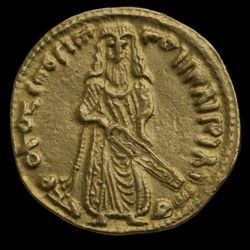
159. Abd al-Malik - The Caliph Who Shaped Islam?
43:59||Ep. 159How did Abd al-Malik shape the development of Islam? This video explores the reign of the Umayyad caliph Abd al-Malik, including his reforms, the construction of the Dome of the Rock, and his role in shaping early Islamic identity. Was he the most important caliph in Islamic history?Find me and my music here:https://linktr.ee/filipholmSupport Let's Talk Religion on Patreon: https://www.patreon.com/letstalkreligion Or through a one-time donation: https://paypal.me/talkreligiondonateSources/Recommended Reading:Donner, Fred (2012). "Muhammad and the Believers: At the Origins of Islam". Harvard University Press.Dov Goitein, Shelomo (1950). "The Historical Background of the Erection of the Dome of the Rock". In Journal of the American Oriental Society , Apr. - Jun., 1950, Vol. 70, No. 2, pp. 104-108. Elad, Amikam (2008). "֒ABD AL-MALIK AND THE DOME OF THE ROCK: A FURTHER EXAMINATION OF THEMUSLIM SOURCES". In JERUSALEM STUDIES IN ARABIC AND ISLAM 35 (2008). Marsham, Andrew (2023). "The Umayyad Empire". Edinburgh University Press.Robinson, Chase F. (2012). "'Abd al-Malik". Makers of the Muslim World. Oneworld Academic.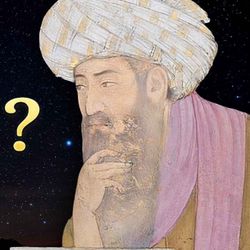
158. The Islamic Idealism of Ibn 'Arabi
48:08||Ep. 158Was the great Sufi thinker Ibn 'Arabi actually a kind of idealist philosopher? In this video we explore the metaphysics of the Akbari tradition and the famous doctrine of Wahdat al-Wujud (Oneness of Being).I examine Ibn ‘Arabi’s view that God (al-Haqq) is the only true Reality, while the universe is a divine self-disclosure within Being. Along the way we look at concepts like wujūd (Being), imagination (khayāl), the immutable entities (a‘yān thābita), and the idea that the world is a reflection of the divine attributes.Find me and my music here:https://linktr.ee/filipholmSupport Let's Talk Religion on Patreon: https://www.patreon.com/letstalkreligion Or through a one-time donation: https://paypal.me/talkreligiondonateSources/Recommended Reading:Abdel-Hadi, Faris (2025). "Ibn 'Arabi's Religious Pluralism: Levels of Inclusivity". Routledge.Addas, Claude (1993). "Quest for the Red Sulphur". The Islamic Texts Society.Austin, R.W.J. (translated by) (1980). "The Bezels of Wisdom". Classics of Western Spirituality Series. Paulist Press.Chittick, William (1989). "The Sufi Path of Knowledge: Ibn 'Arabi's Metaphysics of Imagination".Chittick, William (1998). "The Self-Disclosure of God: Principles of Ibn al-'Arabi's Cosmology". State University of New York Press.Chittick, William (2005). "Ibn Arabi: Heir to the Prophets". OneWorld Publications.Chodkiewicz, Michel (1993). "Seal of the Saints: Prophethood and sainthood in the doctrine of Ibn 'Arabi". Translated by Liadain Sherrard. The Islamic Texts Society.Caner Dagli (translated by) (2004). Ibn 'Arabi - "The Ringstones of Wisdom (Fusus al-Hikam)". Great Books of the Islamic World. Kazi Pubns Inc.Dyczkowski, Mark S.G. (1987). "The Doctrine of Vibration: An Analysis of the Doctrines and Practices of Kashmir Shaivism". SUNY Press.https://hareesh.org/blogpageIbn Arabi - "The Universal Tree and the Four Birds (al-ittihad al-kawni). Translated by Angela Jaffray. Oxford: Anqa Publishing.Ibn 'Arabi - "The Openings Revealed in Makkah: al-futuhat al-makkiyya". Translated by Eric Winkel. Volumes 1-7. Pir Press.Kastrup, Bernardo (2019). "Idea of the World, The: A multi-disciplinary argument for the mental nature of reality". Iff Books.Kastrup, Bernardo (2024). "Analytic Idealism in a Nutshell: A straightforward summary of the 21st century’s only plausible metaphysics". Iff Books. Muller-Ortega, Paul (1988). "The Triadic Heart of Siva: Kaula Tantricism of Abhinavagupta in the Non-Dual Shaivism of Kashmir". SUNY Press.Rory Dickson, William (2024). "Dissolving into Being: The Wisdom of Sufi Philosophy". Anqa Publishing.Singh, Jaideva (Translated by) (1990). "The Doctrine of Recognition: A Translation of the Pratyabhijnahrdayam with an Introduction and Notes, by Ksemaraja". SUNY Press.Torella, Raffaele & Bettina Bäumer (2016). "Utpaladeva: Philosopher of Recognition". D.K. Printworld.Torella, Rafaele (Translated by) (2013). "The Isvarapratyabhijnakarika of Utpaladeva: Critical edition and annoted translation". Motilal Banarsidass Publishers.
157. al-Ghazali, Ibn 'Arabi & The Sufi School of Love | w. Omid Safi
01:42:45||Ep. 157Find Omid here:Instagram: brotheromidAnd Illuminated Tours/Courses:https://www.illuminatedcourses.comFind me and my music here:https://linktr.ee/filipholmSupport Let's Talk Religion on Patreon: letstalkreligionOr through a one-time donation: https://paypal.me/talkreligiondonateAlso check out the 'Let's Talk Religion' Youtube channel: Let's Talk Religion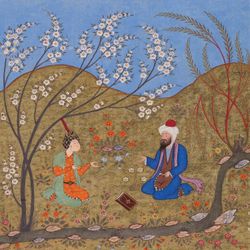
156. The Sufi School of Love
01:05:15||Ep. 156What is the “School of Love” in Sufism? In this video, we explore Madhhab-e Ishq — the Sufi path centered on divine love (ishq) as the highest way to know God. From the poetry of Rumi to the teachings of Ahmad Ghazali, discover how love became a spiritual methodology, a theology, and a transformative path within Islamic mysticism.Find me and my music here:https://linktr.ee/filipholmSupport Let's Talk Religion on Patreon: https://www.patreon.com/letstalkreligion Or through a one-time donation: https://paypal.me/talkreligiondonateSources/Recommended Reading:Caner Dagli (translated by) (2004). Ibn 'Arabi - "The Ringstones of Wisdom (Fusus al-Hikam)". Great Books of the Islamic World. Kazi Pubns Inc.Chittick, William & Peter Lamborn Wilson (translated by) (1982) "Fakhruddin Iraqi: Divine Flashes". Classics of Western Spirituality Series. Paulist Press.Ernst, Carl W. & Bruce B. Lawrence (2003). "Sufi Martyrs of Love: The Chishti Order in South Asia and beyond". Palgrave Macmillan.Ernst, Carl W (translated by) (2018). "Hallaj: Poems of a Sufi Martyr". Northwestern University Press.Inayat Khan, Pir Zia (ed.) (2001). "A Pearl in Wine: Essays on the Life, Music & Sufism of Hazrat Inayat Khan". Omega Publications.Knysh, Alexander (2000). "Islamic Mysticism: A Short History". Brill.Lewis, Franklin D. (2000). "Rumi: Past and Present, East and West". Oneworld publications.Lumbard, Joseph E.B. (2016). "Ahmad al-Ghazālī, Remembrance, and the Metaphysics of Love". SUNY Press.Pourjavady, Nasrollah (translated by) (2015). "Sawanih: Inspirations from the World of Pure Spirits". Routledge.Rustom, Muhammed (translated and edited by) (2022). "The Essence of Reality: A Defense of Philosophical Sufism". New York University Press.Rustom, Muhammed (2024). "Inrushes of the Heart: The Sufi Philosophy of Ayn al-Qudat". State University of New York Press.Safi, Omid (2019). "Radical Love: Teachings from the Islamic Mystical Tradition". Yale University Press.