Latest episode
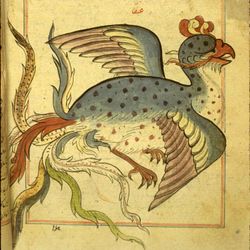
173. Anqa - Arabic Folklore's Most Elusive Creature
31:30||Ep. 173What is the Anqa? In this episode we explore the Anqa (عنقاء), the elusive, legendary bird of Arabic and Islamic tradition, often compared to the phoenix and the Persian Simurgh. We look at its origins in pre-Islamic Arabian lore, the story of how it vanished from the world, and how "the Anqa of the West" (ʿanqāʾ mughrib) became a proverb for something that exists in name but can never be found. We also trace how Sufi mystics like Ibn ʿArabi and Farid al-Din ʿAttar turned this mythical creature into a powerful symbol of the hidden, the unknowable, and the divine.Find me and my music here: https://linktr.ee/filipholm Support Let's Talk Religion on Patreon: https://www.patreon.com/letstalkreligion Or through a one-time donation: https://paypal.me/talkreligiondonateSources/Recommended Reading: Chittick, William (1989). "The Sufi Path of Knowledge: Ibn 'Arabi's Metaphysics of Imagination". Elmore, Gerald T. (1999). "ISLAMIC SAINTHOOD IN THE FULLNESS OF TIME - Ibn al-Arabl’s Book of the Fabulous Gryphon". Brill. Jaffray, Angela (translated by) (2006). "The Universal Tree and the Four Birds". Anqa Publishing. Ron-Gilboa, Guy (2021). "ʿAnqāʾ Mughrib: The Poetics of a Mythical Creature". Journal of Abbasid Studies 8 (2021) 75–103. Ibn 'Arabi - "The Openings Revealed in Makkah: al-futuhat al-makkiyya". Translated by Eric Winkel. Volumes 1-7. Pir Press.
More episodes
View all episodes
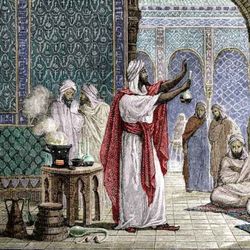
172. Alchemy in the Islamic World
43:07||Ep. 172In this episode, we explore the fascinating history of alchemy in the Islamic(ate) world, from the writings of Jabir ibn Hayyan, to the Emerald Tablet, Abu Bakr al-Razi & the Sufis. Music by: Filip Holm Find me and my music here: https://linktr.ee/filipholm Support Let's Talk Religion on Patreon: https://www.patreon.com/letstalkreligion Or through a one-time donation: https://paypal.me/talkreligiondonateSources/Recommended Reading: Abt, Theodore (ed.) (2007). "Corpus Alchemicum Arabicum: Book of the Explanation of the Symbols Kitab Hall Ar-Rumuz". Psychological Commentary by Marie-Louise Von Franz. Living Human Heritage Publications. Adamson, Peter (2021). "Al-Rāzī". Great Medieval Thinkers. OUP USA. Corriente, Federico & Ed Emery (translated by) (2004). "Twenty-seven Muwashshashaat and One Zajal by Ibn al-'Arabi of Murcia (1165-1240)". Dodge, Bayard (translated by) (1998). "The Fihrist: A 10th Century Ad Survey of Islamic Culture". Kazi Pubns Inc. Grimes, Shannon (2018). "Becoming Gold: Zosimos of Panopolis and the Alchemical Arts in Roman Egypt". Rubedo Press. HamadnAllah, Shabaan (2025). "The 14th-century alchemist al-Jildakī and his book al-Miṣbāḥ fī asrār ʿilm al-miftāḥ". Journal of Arabic and Islamic Studies , 25, 2025, 109–131. Hirtenstein, Stephen (translated by) (2018). "The Alchemy of Human Happiness (Mystical Treatises of Muhyiddin Ibn 'Arabi)". Anqa Publishing. Melvin-Koushki, Matthew & Noah Gardner (2017). "Islamicate Occultism: New Perspectives". Brill. Pingree, David (1981). “Between the Ghaya and the Pixatrix”. In “Journal of the Warburg and Courtauld Institutes, Volume 44, 1981”. University of Chicago Press. Principe, Lawrence (2013). "The Secrets of Alchemy". University of Chicago Press. Saif, Liana (2015). "The Arabic Influences on Early Modern Occult Philosophy". Palgrave Macmillan. Saif, Liana; Francesca Leoni; Matthew Melvin-Koushki & Farouk Yahya (2021). "Islamicate Occult Sciences in Theory and Practice". Brill. Savage-Smith, Emily (ed.) (2004). "Magic & Divination in Early Islam". Ashgate Publishing.
171. 'The Religion of Love' - Ibn 'Arabi's Most Famous Poem
02:16:06||Ep. 171Ibn 'Arabi's famous "Religion of Love" verses are some of the most striking lines in Islamic mysticism - a declaration that the heart can take the form of every temple, church, and shrine. In this episode, we do a deep dive into the poem itself, its context in the Tarjuman al-Ashwaq, and what it reveals about Ibn 'Arabi's views on love, God, and universality in Sufi thought. Find me and my music here: https://linktr.ee/filipholm Support Let's Talk Religion on Patreon: https://www.patreon.com/letstalkreligion Or through a one-time donation: https://paypal.me/talkreligiondonate Sources/Recommended Reading: Abdel-hadi, Faris (2024). "Ibn ‘Arabi’s Religious Pluralism: Levels of Inclusivity". Routledge. Addas, Claude (1993). "Quest for the Red Sulphur". The Islamic Texts Society. Ali, Mukhtar H. (2023). "Philosophical Sufism: An Introduction to the School of Ibn al-'Arabi". Routledge. Chittick, William (1989). "The Sufi Path of Knowledge: Ibn 'Arabi's Metaphysics of Imagination". Caner Dagli (translated by) (2004). Ibn 'Arabi - "The Ringstones of Wisdom (Fusus al-Hikam)". Great Books of the Islamic World. Kazi Pubns Inc. Dickson, William Rory (2024). "Dissolving into Being: The Wisdom of Sufi Philosophy". Anqa Publishing. Ibn 'Arabi - "The Openings Revealed in Makkah: al-futuhat al-makkiyya". Translated by Eric Winkel. Volumes 1-7. Pir Press. Nicholson's Translation of the Tarjuman (Published by different houses. Sells, Michael (translated by) (2021). "The Translator of Desires: Poems". Princeton University Press.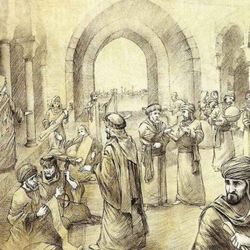
170. The House of Wisdom (Bayt al-Hikma) in Baghdad
31:50||Ep. 170The House of Wisdom (Bayt al-Hikma) is one of the most mythologized institutions in history, but what do the actual medieval sources say? In this video, we separate legend from evidence, tracing what the House of Wisdom really was in Abbasid Baghdad & what role it played in the translation movement.Find me and my music here:https://linktr.ee/filipholmSupport Let's Talk Religion on Patreon: https://www.patreon.com/letstalkreligion Or through a one-time donation: https://paypal.me/talkreligiondonateSources/Recommended Reading:Dodge, Bayard (translated by) (1970). "The Fihrist of al-Nadim: A Tenth Century Survey of Muslim Culture". Columbia University Press. El-Hibri, Tayeb (2021). "The Abbasid Caliphate". Cambridge University Press.Gutas, Dimitri (1998). "Greek Thought, Arabic Culture: The Graeco-Arabic Translation Movement in Baghdad and Early 'Abbasaid Society (2nd-4th/5th-10th c.)". Routledge. Kennedy, Hugh (2006). "When Baghdad Ruled the Muslim World: The Rise and Fall of Islam's Greatest Dynasty". Da Capo Press.The Encyclopedia of Islam. Brill.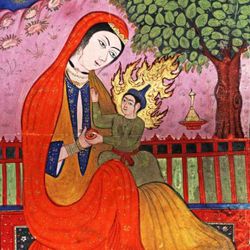
169. Women in the Life and Thought of Ibn Arabi
01:00:41||Ep. 169The great Sufi mystic Ibn Arabi was taught by a woman. In Part 2 of our series on Sufi women in history, we explore the female saints, teachers, and muses who shaped the thought of Islam's greatest mystical philosopher.Find me and my music here:https://linktr.ee/filipholmSupport Let's Talk Religion on Patreon: https://www.patreon.com/letstalkreligion Or through a one-time donation: https://paypal.me/talkreligiondonateSources/Recommended Reading:Addas, Claude (1993). "Quest for the Red Sulphur". The Islamic Texts Society.Austin, R.W.J. (translated by) (1988). "The Sufis of Andalusia: The Ruh Al-Quds' and 'Al-Durrat al-Fakhirah'". Beshara Publications.Chittick, William (1989). "The Sufi Path of Knowledge: Ibn 'Arabi's Metaphysics of Imagination".Chodkiewicz, Michel (1993). "Seal of the Saints: Prophethood and sainthood in the doctrine of Ibn 'Arabi". Translated by Liadain Sherrard. The Islamic Texts Society.Caner Dagli (translated by) (2004). Ibn 'Arabi - "The Ringstones of Wisdom (Fusus al-Hikam)". Great Books of the Islamic World. Kazi Pubns Inc.Shaikh, Sa'diyya (2012). "Sufi Narratives of Intimacy: Ibn Arabi, Gender & Sexuality". The University of North Carolina Press.Ibn 'Arabi - "The Openings Revealed in Makkah: al-futuhat al-makkiyya". Translated by Eric Winkel. Volumes 1-7. Pir Press.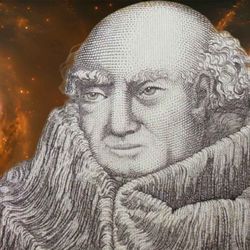
168. John Scotus Eriugena & The Division of Nature
01:00:49||Ep. 168John Scotus Eriugena was one of the most radical thinkers of the early Middle Ages — a philosopher who fused eastern and western Christian theology with Neoplatonism to create a vision of God, nature, and creation centuries that is breathtaking and unique. In this episode, we explore his masterwork Periphyseon (On the Division of Nature), his controversial ideas on negative theology, and why the Church eventually condemned his work as heretical.Find me and my music here:https://linktr.ee/filipholmSupport Let's Talk Religion on Patreon: https://www.patreon.com/letstalkreligion Or through a one-time donation: https://paypal.me/talkreligiondonateSources/Recommended Reading:Carabine, Deirdre (2000). "John Scottus Eriugena". Oxford University Press USA.Laird, Martin (2004). "Gregory of Nyssa and the grasp of faith: union, knowledge and divine presence". Oxford University Press.Luibheid, Colm (Translated by) (1987). "Pseudo-Dionysius: The Complete Works". Classics of Western Spirituality. Paulist Press International.McGinn, Bernard. "The Presence of God" Series, in several volumes. Perhaps the best and most comprehensive introduction to Christian mysticism. Published by Crossroad Publishing Co.Sheldon-Williams, I.P. & John J. O'Meara (translated and edited by) (2025). "Periphyseon: The Division of Nature". Dumbarton Oaks Research Library & Collection. (This is the translation used for the Periphyseon except when noted).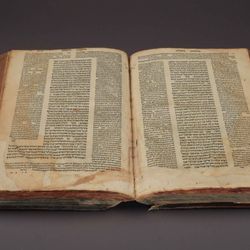
167. The Talmud Explained (w. Zevi Slavin)
38:52||Ep. 167In this episode, Zevi and I explore what the Talmud is, what it is not, and the role it plays in the Jewish religion.Find me and my music here:https://linktr.ee/filipholmSupport Let's Talk Religion on Patreon: https://www.patreon.com/letstalkreligion Or through a one-time donation: https://paypal.me/talkreligiondonate