Share
Let's Talk About
Let’s Talk About: Big Data | Episode 1
When I began researching for this, the pilot episode, it was immediately apparent to me that Big Data was fundamentally different from data as we have known it for hundreds of years. We could just do so much more with it. It was changing industries, governments, people, and relationships between these entities rapidly and permanently. But what I couldn’t get a finger on was why. Why was Big Data different from data as we have known it for hundreds of years? If it’s something ancient, just bigger, why does it change the world?
I didn’t have to wait too long to find the answer. In the very first chapter of Victor Meyer Schonberger’s Big Data, a book written about seven years ago, he gets to it pretty straight. When things change a lot in scale, they begin to change in essence also. If the rate of change is dramatic (double differential is out of whack), the thing itself begins to change. This is what makes Big Data essentially different from data ever before in human civilization.
This is how he explains it: an image is an image is an image. But speed these images up so the brain sees them as a continuum, and what you have made is a movie. A change in speed led to a change in essence. Here’s another example: gravity acts on all of us, but if you’re really small, like an insect, it barely has any effect on you. Again, change scale dramatically, and the essence begins to change.
A glass of water is fundamentally different from a tsunami. A drizzle is fundamentally different from a hurricane.
Think about the coronavirus pandemic. We’ve had economic downturns before. We’ve had unemployment before. We’ve had urban-rural migrations before. We’ve all experienced sickness before. Viruses come and go every year. We’ve had natural disasters before. What makes this pandemic so destructive is the scale and speed of it. The coming together of mass unemployment, global economic collapse, mental health falling off a precipice, distorted patterns of living and migration and human behaviour. Together, at this scale and at this speed, the essence of life today is different from the essence of life at the beginning of 2020.
The idea that after a point quantity and quality are inherently related is not a new one. It’s one of the three forgotten laws of Dialectical Materialism which inspired a lot of Karl Marx’s work. When quantity changes a lot, after a point, quality begins to change as well. This is the idea that explains why big changes in wealth distribution bring big changes in the essence of social structures.
This law, in turn, comes from a much older philosophical idea: Aristotle’s Heap Paradox.
This is the Heap Paradox: if you have a heap of sand and you remove one grain from it, it’s still a heap. Remove one more, it’s still a heap. One more, it’s still a heap. But if you do this long enough, if you scale up the removal of grains, it’ll no longer be a heap. The essence of the sand heap will change.
This is at the core of understanding what Big Data is. When the quantity of data changed, its essence changed as well.
Listen.
More episodes
View all episodes
Teaser | Let’s Talk About: Chandrayaan-3, ISRO, and the pros and cons of India’s space programme
15:55|NL TeamFour months after Chandrayaan-3 successfully landed on the moon, Newslaundry dives into the tricky questions that lie behind it. What are the benefits of a moon mission? Do we need a space programme at all? What does it take to run the Indian Space Research Organisation?Welcome to Let’s Talk About: ISRO and Chandrayaan, where host Abhinandan Sekhri sits down with EK Kutty, former director (project planning program management) at ISRO, and Jayaram Kolangara, former deputy director at ISRO. They’re joined by subscribers too who got to ask questions during a live Zoom session.Tune in for a free-wheeling chat on ISRO’s role in development communication, the future of space travel, the efforts of people behind the scenes at ISRO, and a lot more.Produced by Chanchal Gupta, edited by Chanchal Gupta and Samarendra K Dash.ReferencesIndia in Space: Between Utility and Geopolitics by Marco AlibertiChristopher Nolan’s InterstellarRobert Zemeckis’s ContactAlfonso Cuarón’s GravityAdam McKay’s Don’t Look UpWhy Civil Rights Activists Protested the Moon LandingThe Moon Landing was Opposed by Majority of US List of 6 manned moon missions: People who stepped on the moon after Neil Armstrong How Many Times Has the US Landed on the Moon?लेट्स टॉक अबाउट इरफानः कच्ची उम्र में बड़े मुकाम हासिल करने वाले खान (Teaser)
21:50|शराफत की दुनिया का किस्सा ही खत्म, अब जैसी दुनिया वैसे हम… फिल्म जज्बा के इस आमफहम डायलॉग को इरफान ने जिस कविताई के साथ अदा किया वह करोड़ों हिंदुस्तानियों के दिलों में उतर गया. लगभग इसी बहते हुए अविकल झरने की तरह अपनी अदायगी से इरफान हम हिंदुस्तानियों की दुनिया का हिस्सा बने थे. फिर 29 अप्रैल 2020 को अचानक वो हमारी इस दुनिया से अलग हो गए. यह सिर्फ इरफान के परिजनों, दोस्तों, रिश्तेदारों या उनके प्रशंसकों के लिए दिल तोड़ने वाली खबर नहीं थी बल्कि फिल्मों से जुड़े, फिल्मों में दिलचस्पी रखने वाले हर शख्स के लिए एक बड़ा झटका थी. इरफान तिरपन की कच्ची उम्र में हमारे बीच से चले गए. इरफान न्यूरोएंडोक्राइन नाम की एक असाध्य बीमारी से घिर गए थे. यह बीमारी दुर्लभ किस्म का कैंसर है, जिस पर दुनिया में बहुत कम खोजें और रीसर्च उपलब्ध हैं. लेकिन इस कच्ची उम्र में इरफान ने बहुत ही पकी उम्र वाले मुकाम हासिल किए. इरफान ने लगभग हर तरह का किरदार निभाया. न सिर्फ निभाया बल्कि उसे जीया भी. मार्च 2020 में आई फिल्म 'अंग्रेजी मीडियम' इरफान की आखिरी फिल्म थी. न्यूरोएंडोक्राइन ट्यूमर की बीमारी के बारे में खुद इरफान खान ने साल 2018 में ट्विटर के जरिए जानकारी दी थी. उनका ट्वीट कुछ इस प्रकार था- "जीवन में अनपेक्षित बदलाव आपको आगे बढ़ना सिखाते हैं. पता चला है कि मुझे न्यूरोएंडोक्राइन ट्यूमर है. इसे स्वीकार कर पाना मुश्किल है. लेकिन मेरे आसपास जो लोग हैं, उनका प्यार और उनकी दुआओं ने मुझे ताकत दी है. कुछ उम्मीद भी बंधी है. फिलहाल बीमारी के इलाज के लिए मुझे देश से दूर जाना पड़ रहा है. लेकिन मैं चाहूंगा कि आप अपने संदेश भेजते रहें.”इरफान की मौत के बाद उनके बेटे बाबिल ने उनकी आखिरी याद को कुछ इन शब्दों में साझा किया था- 'उनकी मौत से दो तीन दिन पहले मैं अस्पताल में था. वो होश खोते जा रहे थे. अंतिम पलों में उन्होंने मेरी ओर देखा, मुस्कुराए और कहा- मैं मरने वाला हूं, मैंने उन्हें कहा ऐसा नहीं होगा, वो फिर मुस्कुराए और सो गए.' इरफान ने मौत को भी हंसते हंसते ही गले लगाया. लेट्स टॉक अबाउट में न्यूज़लॉन्ड्री के कार्यकारी संपादक अतुल चौरसिया ने फिल्म समीक्षक शुभ्रा गुप्ता और अजय ब्रह्मात्मज के साथ इरफान के सफर, शख्सियत, अदायगी, कला, फन और जीवन के अन्य पहलुओं पर लंबी बातचीत की है. तो आनंद लीजिए..4. Ep 4 (Teaser) | Let’s Talk About: BJP’s new power duo and shadow on Indian polity
06:18||Season 1, Ep. 4With Atal Bihari Vajpayee’s retirement and LK Advani’s poll rout, the 2014 Lok Sabha election paved the way for a new power duo to take over the BJP. It was after the RSS greenlighted Gujarat chief minister Narendra Modi as a prime ministerial candidate.Welcome to the final episode of Let’s Talk About: BJP, which focuses on the ascendance of Modi, and his journey from a Sangh pracharak to Raisina Hill. With subsequent image makeovers, he managed to recast himself as a “saviour” of the Indian security state and win a landmark mandate for his party in the 2019 polls.3. Ep 3 (Teaser) | Let’s Talk About: The old and new BJP from Vajpayee to Modi
06:13||Season 1, Ep. 3In the 90s and 00s, the BJP emerged as a pole in the coalition era as Atal Bihari Vajpayee forged new partnerships in power. However, as prime minister, his own jugalbandi with LK Advani saw fault lines. These were years of a series of minority governments – a trend only reversed by Narendra Modi’s decisive victory in 2014.Welcome to the third episode of Let’s Talk About: BJP, which takes us through NDA governments, disagreements within the BJP in the wake of the Gujarat riots, the UPA’s scam taint, the Anna Hazare-led anti-corruption protests, and the emergence of Modi.To listen to the full podcast, subscribe to Newslaundry.2. Ep 2 (Teaser) | Let’s Talk About: BJP’s ideological dilemma and voter base
05:20||Season 1, Ep. 2In the sociopolitical landscape of the ’80s and ’90s, the BJP found itself at a crossroads, trying hard to consolidate its support base while navigating between Gandhian socialism and Hindu nationalism under the leadership of Atal Bihari Vajpayee and LK Advani.Welcome to the second episode of Let’s Talk About: BJP, which looks at events that helped the party recast itself within the Indian polity, from Indira Gandhi’s assassination, to the Mandal Commission, the Shah Bano case, Advani’s Rath Yatra and the Babri demolition.1. Ep 1 (Teaser) | Let’s Talk About: BJP’s origins and RSS role
06:30||Season 1, Ep. 1The Bharatiya Janata Party is today the most dominant political force in India, with two consecutive landslide victories in the Lok Sabha and a march to power in several states. But what’s the backstory behind the BJP’s enduring rise, and who are the faces who cemented its formidable organisation?Welcome to the first episode of Let’s Talk About: BJP, a series tracing the BJP’s origins, and the antecedents of its ecosystem, from the pre-independence era to the Jana Sangh and the birth of the party in 1980.This is a sneak peek into the first episode. To listen to the full podcast, subscribe to Newslaundry. Pay To Keep News Free.लेट्स टॉक अबाउट: सच्चिदानंद हीरानंद वात्स्यायन अज्ञेय (Teaser)
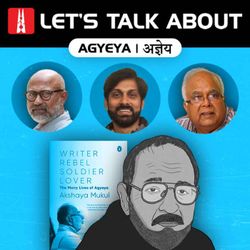
09:23|सच्चिदानंद हीरानंद वातस्यायन अज्ञेय. जितना भारी भरकम नाम, उतना ही भारी भरकम व्यक्तित्व. अज्ञेय का जिक्र आने पर एक मूर्धन्य कवि, शैलीकार, कथा साहित्य को एक महत्त्वपूर्ण मोड़ देने वाले कथाकार, निबन्धकार, दिग्गज सम्पादक की छवि हमारे सामने आती है. लेकिन अज्ञेय का व्यक्तित्व इससे भी विराट और बहुआयामी था. अज्ञेय की लेखकीय पहचान से अलग उनका विद्रोही अतीत, क्रांतिकारी झुकाव, उनका सैन्य अतीत, उनका राजनीतिक झुकाव, उनका निजी जीवन इतना परतदार और विशद हैं, जिसे समग्रता में आज तक समेटा नहीं गया है. अज्ञेय के तमाम अनछुए पहलुओं को भारी-भरकम किताब की शकल में हमारे सामने लेकर आए हैं पत्रकार और लेखक अक्षय मुकुल. अक्षय की हालिया किताब ‘राइटर, रेबेल, सोल्ज़र, लवर- मेनी लाइव्स ऑफ अज्ञेय’, अज्ञेय की ज़िंदगी के तमाम अनदेखे पक्ष उजागर करती है. लेट्स टॉक अबाउट के इस अंक में हम बात करेंगे अक्षय मुकुल और उनके साथ ओम थानवी से. अज्ञेय के बहुत करीब रहकर काम करने का सौभाग्य रहा है ओम थनवी को. चार दशकों तक पत्रकारिता का अनुभव, हिंदी पत्रकारिता में मील का पत्थर रही जनसत्ता अखबार के संपादक पद से पदमुक्त हुए ओम थानवी के नाम अज्ञेय की जन्मशती के मौके पर एक ग्रंथनुमा पुस्तक अपने-अपने अज्ञेय का संकलन-संपादन का श्रेय है. तो अक्षय मुकुल और ओम थानवी के साथ लेट्स टॉक अबाउट अज्ञेय.
Let's Talk About: RSS | LIVE with Vijai Trivedi
01:09:35|Lets Talk About the Rashtriya Swayamsevak Sangh is our three-part deep-dive podcast into the RSS and how it became the formidable force that it is.This live session is in conversation with Abhinandan Sekhri, Shardool Katyayan, and Vijai Trivedi.Tune into Let's Talk About the RSS here: https://www.newslaundry.com/podcast/lets-talk-about/lets-talk-about-rss3. Let’s Talk About: RSS | Episode 3 (Teaser)
09:52||Season 1, Ep. 3In the third and final episode of this series, we pick up from where we left off – the blossoming of the RSS under its third chief, Balasaheb Deoras. Moving through the JP movement to the Emergency to the birth of the Janata Party, this episode tracks the role of the RSS across epochal moments in India’s history. From Deoras to Rajendra Singh to KS Sudarshan to Mohan Bhagwat, the episode moves into the 21st century, spanning the consolidation of the Hindutva establishment and Babri Masjid demolition, the first BJP-led union government, and the ascent of Narendra Modi. It also tries to answer a fundamental question: where will the RSS go from here?Download the Newslaundry app.