Share
Let Me Explain
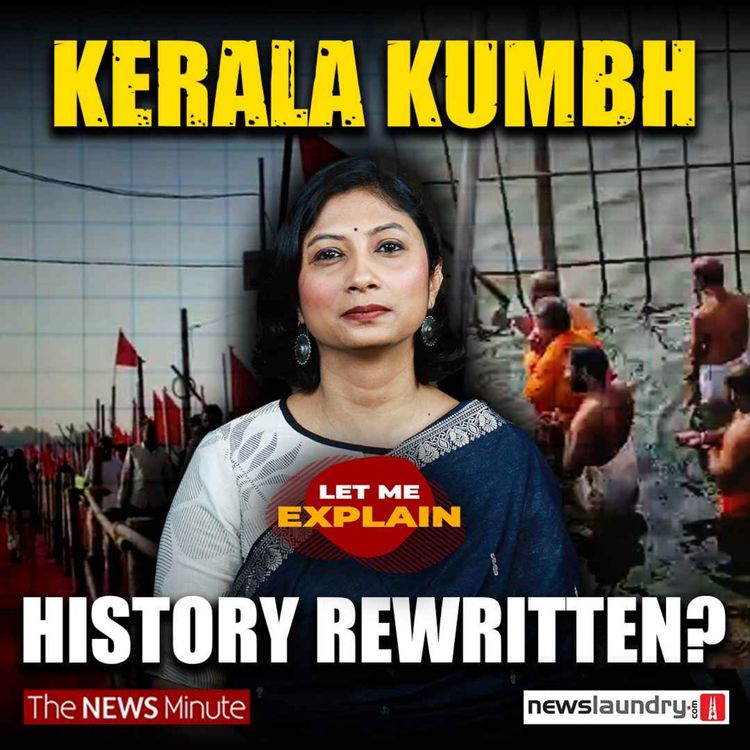
Kerala’s ‘Kumbh’: What’s unfolding on the ground | Let Me Explain 112 | Pooja Prasanna
In Kerala’s Malappuram district, an ancient gathering from the past is being revived, but in a very different form.
Mamankam, a gathering in Kerala that once centred on power, trade and multiple communities is now being projected as a “Kerala’s Kumbh Mela.”
Mamankam was not a Hindu pilgrimage. It was a secular, political and ritual assembly where kingship was contested and Muslims were part of its structure.
So what does it mean when Mamankam is rebranded as Kumbh?
In this episode of Let Me Explain, we hit the ground to bring you the real story and unpack how a plural past is being reshaped into a singular religious narrative.
For suggestions and feedbacks, write to lme@thenewsminute.com
Like Pooja’s LME? Support the show: https://rzp.io/rzp/support-lme
If you are watching from abroad, click this link: https://buy.stripe.com/28o01q9md0OPdtm8wR
Become a TNM subscriber- https://www.thenewsminute.com/subscription
Producer: by Megha Mukundan, Script: Pooja Prasanna, Megha Mukundan, Reporting: Haritha Manav, Megha Mukundan, Camera: Ajay R, Megha Mukundan, Edit: Nikhil Sekhar ET
More episodes
View all episodes
How much do candidates actually spend in elections? | LME 125 | Pooja Prasanna
11:01|Every election in India looks like a scoreboard—vote share, turnout, seat count. But there’s one number you rarely see: the real cost of fighting elections. While the official spending cap is Rs 40 lakh per candidate, ground reports suggest that serious candidates often spend up to Rs 20–30 crore per constituency.So where does this money come from? And how is it actually used?In this episode of Let Me Explain, Pooja Prasanna breaks down the hidden economy of Indian elections, from cash distribution and booth operations to funding networks and voter targeting.For suggestions and feedbacks, write to lme@thenewsminute.comContribute to NL-TNM election fund: https://rzp.io/rzp/zTQadhQFFT Follow the Let Me Explain channel on WhatsApp: https://whatsapp.com/channel/0029VbDIedz2phHLQZTyNj1WLike Pooja’s LME? Support the show: https://rzp.io/rzp/support-lmeIf you are watching from abroad, click this link: https://buy.stripe.com/28o01q9md0OPdtm8wRBecome a TNM subscriber- https://www.thenewsminute.com/subscription
The problem with BJP’s ‘no Hindu MLA in Guruvayur’ politics | LME 124 | Pooja Prasanna
05:20|A BJP candidate’s speech in Kerala’s Guruvayur has sparked controversy after he asked why the constituency does not have a Hindu MLA and invoked the temple deity in his campaign.Kerala BJP vice president and Guruvayur candidate B Gopalakrishnan framed the election around religious identity, raising concerns about whether such appeals violate India’s Model Code of Conduct.Critics argue that elections are meant to focus on governance and policy — not religious representation. They also point out that constituencies across India, from Ajmer to Velankanni, have long elected representatives from different faiths without controversy.In this episode of Let Me Explain, Pooja Prasanna breaks down what was said, why it may violate election rules, and how religion is being brought into campaign politics.For suggestions and feedbacks, write to lme@thenewsminute.comThe 2026 reset: Assam to Puducherry Election Fund: https://rzp.io/rzp/zTQadhQFFTFollow the Let Me Explain channel on WhatsApp: https://whatsapp.com/channel/0029VbDIedz2phHLQZTyNj1WLike Pooja’s LME? Support the show: https://rzp.io/rzp/support-lmeIf you are watching from abroad, click this link: https://buy.stripe.com/28o01q9md0OPdtm8wRBecome a TNM subscriber- https://www.thenewsminute.com/subscriptionProduced by Bhuvan Malik, Script by Dhanya Rajendran, Camera by Ajay R, Edit by Nikhil Shekhar
Vairamuthu gets Jnanpith: What does this say about #MeToo? | LME 123 | Pooja Prasanna
08:24|Lyricist Vairamuthu has been chosen for the Jnanpith Award, India’s most prestigious literary honour. But the announcement has triggered intense debate. Several women accused Vairamuthu of sexual harassment during the #MeToo movement, allegations he has denied. While many political leaders and film stars have congratulated him, critics say honouring someone facing such accusations sends a troubling message to women in the arts and media industries. Writers and musicians have also questioned whether his work merits the award. In this episode of Let Me Explain, Pooja Prasanna breaks down the allegations, the reactions, and why the Jnanpith decision is controversial.For suggestions and feedbacks, write to lme@thenewsminute.comFollow the Let Me Explain channel on WhatsApp: https://whatsapp.com/channel/0029VbDIedz2phHLQZTyNj1WLike Pooja’s LME? Support the show: https://rzp.io/rzp/support-lmeIf you are watching from abroad, click this link: https://buy.stripe.com/28o01q9md0OPdtm8wRBecome a TNM subscriber- https://www.thenewsminute.com/subscriptionProduced by Megha Mukundan, Script by Lakshmi Priya, Camera by Ajay R, Edit by Dharini Prabaharan
Opposition vs CEC Gyanesh Kumar & Om Birla | LME 122 | Pooja Prasanna
09:32|Two key constitutional offices in India are facing political scrutiny. Opposition parties moved a motion to remove Lok Sabha Speaker Om Birla, accusing him of partisan conduct, citing suspensions of over 120 MPs and limiting debates. The motion was defeated, but the controversy continues. Meanwhile, opposition leaders are preparing a move against Chief Election Commissioner Gyanesh Kumar, raising concerns over voter roll revisions and transparency in the Election Commission of India. Why are these institutions under scrutiny, and how difficult is it to remove officials holding these positions? Pooja Prasanna explains. For suggestions and feedbacks, write to lme@thenewsminute.comFollow the Let Me Explain channel on WhatsApp: https://whatsapp.com/channel/0029VbDIedz2phHLQZTyNj1WLike Pooja’s LME? Support the show: https://rzp.io/rzp/support-lmeIf you are watching from abroad, click this link: https://buy.stripe.com/28o01q9md0OPdtm8wRBecome a TNM subscriber- https://www.thenewsminute.com/subscriptionProduced by Megha Mukundan, Script by Lakshmi Priya & Pooja Prasanna, Camera by Ajay R, Edit by Dharini Prabharan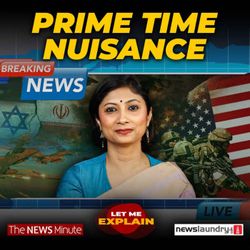
Indian Govt ban on TV channel ratings during war time | LME 121 | Pooja Prasanna
12:43|The Narendra Modi government has paused the weekly TRP rankings for television news channels for four weeks, citing concerns that coverage of the Iran–US–Israel conflict has become too sensational.But what exactly are TRPs? How do television ratings work in India? And why do these numbers matter so much to news channels?In this episode of Let Me Explain, Pooja Prasanna breaks down the business model behind prime-time television news — from dramatic war graphics and studio “war rooms” to the advertising money that fuels the race for ratings.For suggestions and feedbacks, write to lme@thenewsminute.comFollow the Let Me Explain channel on WhatsApp: https://whatsapp.com/channel/0029VbDIedz2phHLQZTyNj1WLike Pooja’s LME? Support the show: https://rzp.io/rzp/support-lmeIf you are watching from abroad, click this link: https://buy.stripe.com/28o01q9md0OPdtm8wRBecome a TNM subscriber- https://www.thenewsminute.com/subscriptionProduced by Megha Mukundan, Script by Pooja Prasanna, Camera by Ajay R, Edit by Nikhil Sekhar ET, Dharini Prabharan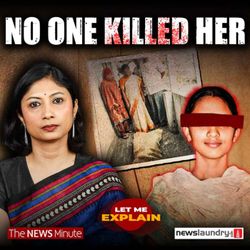
A teen was murdered. How did no one get convicted? | LME 120 | Pooja Prasanna
11:33|In December 2007, 17-year-old Ayesha Meera was found murdered in a hostel bathroom near Vijayawada. The brutal crime shocked Andhra Pradesh.Police arrested Pidathala Satyam Babu, who was later convicted and sentenced to life. But years later, the Andhra Pradesh High Court criticised the investigation, acquitted him, and ordered a reinvestigation.The case was handed to the CBI in 2018. Investigators revisited evidence and even exhumed Ayesha’s body more than a decade after her death.But in 2026, the court accepted the CBI’s closure report, saying there was no evidence to prosecute anyone. Nearly two decades later, the case has no accused.In this episode of Let Me Explain, Pooja Prasanna breaks down how a case that once had a life sentence ended with no one to prosecute.For suggestions and feedbacks, write to lme@thenewsminute.comFollow the Let Me Explain channel on WhatsApp: https://whatsapp.com/channel/0029VbDIedz2phHLQZTyNj1WLike Pooja’s LME? Support the show: https://rzp.io/rzp/support-lmeIf you are watching from abroad, click this link: https://buy.stripe.com/28o01q9md0OPdtm8wRBecome a TNM subscriber- https://www.thenewsminute.com/subscriptionProduced by Megha Mukundan, Script by Pooja Prasanna, Camera by Ajay R, Edit by Nikhil Sekhar ET
The Kerala Story 2 review nobody asked for | LME 119 | Pooja Prasanna
09:24|Someone had to watch The Kerala Story 2. We did.From ominous background scores during namaz scenes to “rate cards” straight out of old conspiracy forwards, The Kerala Story 2 doubles down on fear, spectacle and panic. Three states. Three women. One sweeping thesis about love, conversion, progressive parenting and who the “real” villains are. In this special episode of #LetMeExplain, @PoojaPrasanna4 breaks down the propaganda patterns, the symbolism, the beef controversy, the bulldozer hero entry and why this sequel may be more polished, and more dangerous. If you were planning to spend 2 hours and 15 minutes on this film, consider this your alternative.For suggestions and feedbacks, write to lme@thenewsminute.comFollow the Let Me Explain channel on WhatsApp: https://whatsapp.com/channel/0029VbDIedz2phHLQZTyNj1WLike Pooja’s LME? Support the show: https://rzp.io/rzp/support-lmeIf you are watching from abroad, click this link: https://buy.stripe.com/28o01q9md0OPdtm8wRBecome a TNM subscriber- https://www.thenewsminute.com/subscriptionProduced by Megha Mukundan, Script by Pooja Prasanna, Camera by Megha Mukundan, Edit by Nikhil Sekhar ET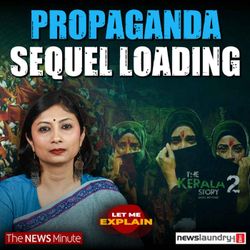
The Kerala Story 2 and the Hindutva network powering it | LME 118 | Pooja Prasanna
10:04|A beef-feeding scene in the trailer of The Kerala Story 2 has triggered outrage. Once again, Kerala has been pushed to the centre of a national culture war. But this episode is not about a single trailer moment.We examine the ecosystem behind The Kerala Story films. This includes public statements by an RSS-linked cultural organisation that says it supported the ideation of such movies as part of “nation-building.” We also look at the production house’s CSR donation to a trust run by a figure associated with anti-conversion campaigns. And we explore the wider network that frames interfaith relationships as a threat.For suggestions and feedbacks, write to lme@thenewsminute.comFollow the Let Me Explain channel on WhatsApp: https://whatsapp.com/channel/0029VbDIedz2phHLQZTyNj1WLike Pooja’s LME? Support the show: https://rzp.io/rzp/support-lmeIf you are watching from abroad, click this link: https://buy.stripe.com/28o01q9md0OPdtm8wRBecome a TNM subscriber- https://www.thenewsminute.com/subscriptionProduced by Megha Mukundan, Script by Dhanya Rajendran, Inputs by Nandini Chandrashekar, Camera by Ajay R, Edit by Nikhil Sekhar ET, Graphics by Dharini Prabharan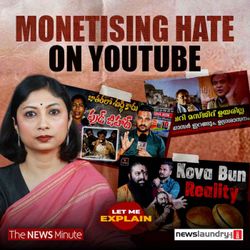
From “Food Jihad” to “Love Jihad”: Rise of communal content online | LME 117 | Pooja Prasanna
11:24|A Telugu YouTube channel recently accused Muslim vendors of selling “poisoned” food at a tribal festival in Telangana, without medical evidence, official complaints, or verification from authorities. Instead of investigation, the videos relied on confrontation, repeated use of conspiracy phrases like “food jihad,” and public shaming of small traders.But this is not just about one festival or one channel.Across India, a growing number of YouTube platforms are using a similar format: provoke in public, frame suspicion as reporting, upload quickly, and monetise outrage. From Telangana to Karnataka, Tamil Nadu to Kerala, isolated incidents are increasingly communalised online — often without evidence.In this week’s Let Me Explain, Pooja Prasanna examines how hate is produced, amplified, defended, and normalised on YouTube, and why the consequences don’t stay online.For suggestions and feedbacks, write to lme@thenewsminute.comFollow the Let Me Explain channel on WhatsApp: https://whatsapp.com/channel/0029VbDIedz2phHLQZTyNj1WLike Pooja’s LME? Support the show: https://rzp.io/rzp/support-lmeIf you are watching from abroad, click this link: https://buy.stripe.com/28o01q9md0OPdtm8wRBecome a TNM subscriber- https://www.thenewsminute.com/subscriptionProduced by Megha Mukundan, Script by Lakshmi Priya, Inputs by Anjana Meenakshi, Camera by Ajay R, Edit by Nikhil Sekhar ET